Toyota Hilux: Car or Van? What UK Buyers Need to Know
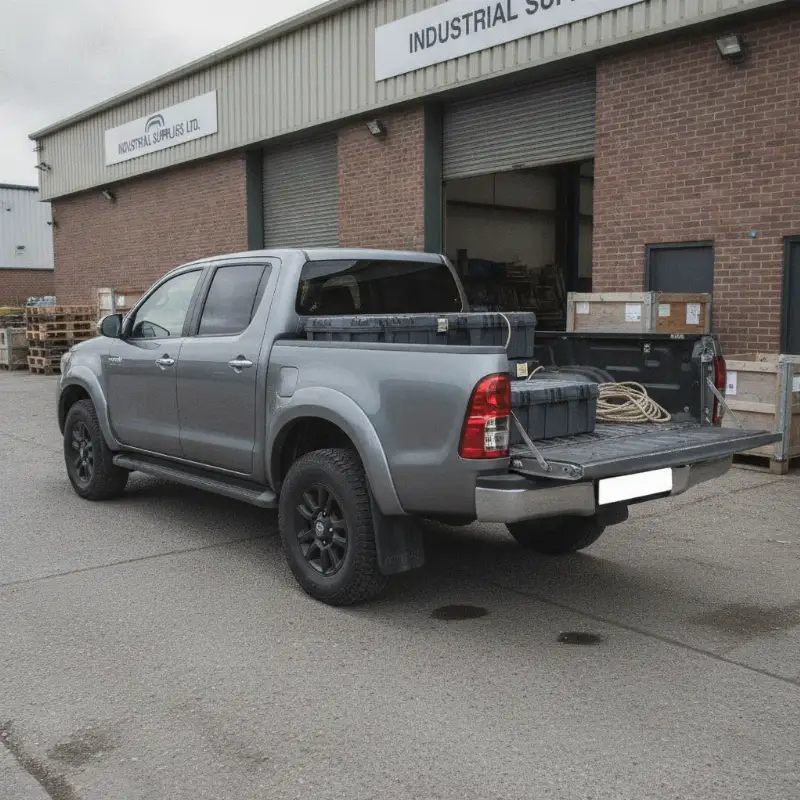
Toyota Hilux: Car or Van? The Classification Explained
The Toyota Hilux is one of the most recognisable pickups on UK roads, but its classification is a question that trips up plenty of buyers. In the eyes of HMRC and the DVLA, a vehicle is generally treated as a van (specifically a light commercial vehicle, or LCV) when it has a payload capacity of one tonne or more. The Toyota Hilux, in its standard double cab configurations, comfortably clears that threshold, which is why it is registered and taxed as a commercial vehicle rather than a passenger car.
That said, the picture is not always black and white. Single cab, Extra Cab and Double Cab variants can all be treated differently depending on payload, and recent HMRC guidance on double cab pickups has added a further layer of nuance. In broad terms, though, the Hilux you see on a builder's site, a farm or a fleet operator's yard is legally a van, even if it seats five and drives much like an SUV.
Why It Matters: Tax, VAT and Insurance Implications
Whether the Hilux is classed as a car or a van has real financial consequences. It affects the rate of road tax you pay, the way HMRC treats it if it's provided as a company vehicle, whether you can reclaim VAT on the purchase, and even how insurers price the risk. Getting the classification right — and understanding what it means for your specific use case — can save (or cost) thousands over the life of the vehicle.
Company Car Tax vs Van Benefit-in-Kind
If your employer provides you with a Hilux and it qualifies as a van, you're taxed under the van benefit-in-kind (BIK) regime, which uses a flat rate rather than the CO2-based percentages applied to company cars. For higher earners, and for vehicles with significant emissions, that flat van rate is usually far more favourable than car BIK. If any part of the classification changes — for example, if HMRC treats a particular double cab as a car for benefit purposes — the tax bill can rise sharply, so it's worth checking the current guidance before ordering.
Private use rules also matter. If the vehicle is used only for work and ordinary commuting, the van BIK charge may be reduced or removed altogether. If there's regular private use, the full charge applies, along with a separate fuel benefit if the employer pays for private fuel.
VAT Reclaim on a Toyota Hilux
VAT-registered businesses can typically reclaim the VAT on a commercial vehicle used for business purposes. Because the Hilux double cab meets the payload threshold to be treated as a van by HMRC for VAT purposes, businesses can usually recover the input VAT, subject to the normal rules on business use. If the vehicle is used partly for private journeys, the reclaim may need to be apportioned, and if it's used exclusively privately, no reclaim is possible. Always confirm your position with your accountant, particularly given ongoing reviews of pickup treatment.
Toyota Hilux Diesel Double Cab Van: The Standard Working Configuration
The diesel double cab is by far the most common Hilux specification in the UK, and it's the one most buyers picture when they think of the model. Powered by Toyota's proven 2.8-litre turbodiesel, it combines four full-size doors and seating for five with a load bed capable of carrying more than a tonne. That combination is what earns it commercial vehicle status while still making it a practical family or crew transport during evenings and weekends.
For tradespeople, farmers and fleet operators, the diesel double cab hits a sweet spot: enough cabin space to carry a team to site, enough payload and towing capacity (typically up to 3.5 tonnes braked) to move materials and machinery, and enough refinement to serve as a personal vehicle outside working hours.
Toyota Hilux Diesel Double Cab Vans in the Current Line-Up
The current diesel Hilux line-up spans workmanlike Active specification through mid-range Icon to the well-appointed Invincible and flagship Invincible X. Every double cab in the range is engineered around that one-tonne-plus payload, which keeps them firmly in van territory for tax and VAT purposes. Buyers can choose between six-speed manual and automatic transmissions, and all variants come with selectable four-wheel drive and a low-range transfer case for serious off-road work.
Standard equipment has moved on considerably in recent years. Even entry-level trims include Toyota Safety Sense, touchscreen infotainment with smartphone mirroring, and air conditioning, while higher trims add leather, heated seats, larger alloys and additional driver assistance. In other words, the Hilux drives like a modern SUV but is still built, sold and taxed as a working vehicle.
Toyota Hilux Hybrid: How the New Powertrain Changes the Question
Toyota has introduced a 48V mild-hybrid version of the 2.8-litre diesel Hilux, and this raises fair questions about classification. The good news is that the hybrid system is a supplementary electric assist rather than a full hybrid drivetrain — it doesn't alter the fundamentals of the vehicle, and payload remains above the one-tonne threshold. That means the mild-hybrid Hilux is still treated as a light commercial vehicle for tax and VAT purposes.
What does change is efficiency and drivability: modest fuel savings, smoother stop-start, and a small boost to low-speed response. For businesses looking at running costs and emissions reporting, the hybrid is worth a closer look, but the classification story stays the same.
05 Toyota Hilux 4x4: How Older Models Were Classified
Buyers looking at an older Hilux — for instance a 2005 (05-plate) 4x4 — often ask whether the same van rules apply. In broad terms, yes: the seventh-generation Hilux double cab of that era was designed and registered as a light commercial vehicle, with payload comfortably above one tonne. That said, single cab and Extra Cab variants of some earlier trucks had different payload characteristics, and their V5C documents will confirm the body type recorded at first registration.
If you're buying used, always check the V5C to see whether the vehicle is recorded as an LCV. That single detail affects road tax bands, MOT class, speed limits on certain roads, and insurance quotes. An older Hilux that has been converted with a hardtop or additional seating may also have had its classification questioned, so buy from a reputable source and keep documentation in order.
Toyota Hilux Invincible and Invincible X: Trim-Level Considerations
Invincible and Invincible X sit at the top of the Hilux range and add the kind of equipment you'd expect in a premium SUV — leather upholstery, larger alloy wheels, upgraded infotainment, JBL audio on Invincible X, and cosmetic touches inside and out. It's understandable that some buyers assume this lifestyle-focused specification might change how the vehicle is classified, but it doesn't. Payload remains above the one-tonne threshold, and both trims are sold, registered and taxed as vans.
Where the trim level does matter is in total cost of ownership. Higher list prices mean a bigger VAT reclaim for eligible businesses, but they also mean higher insurance groups and, in some cases, more expensive tyres and servicing. Weigh the extra kit against how you'll actually use the truck — Invincible X is superb as a dual-purpose vehicle, while Icon or Active may make more sense for a pure work role.
Buying, Leasing or Financing a Toyota Hilux Through Our Dealership
Because the Hilux double cab is a commercial vehicle, businesses have a range of acquisition routes open to them. Outright purchase suits operators who want to own the asset and take advantage of capital allowances, while contract hire and finance lease are popular with fleets that prefer predictable monthly costs and simpler accounting. Hire purchase remains a strong option for owner-operators who want to build equity in the vehicle.
Our team can walk you through each option, explain how VAT is handled in each case, and help you match the right specification to your working needs. If you're weighing up a Hilux against another pickup, we can arrange a demonstrator so you can judge the load bed, cabin space and driving experience for yourself. Get in touch and we'll talk you through current availability, lead times on new orders, and the used stock we have ready to drive away.
Frequently Asked Questions
FAQs
Is the Toyota Hilux classified as a car or a van in the UK?
In the UK, the Toyota Hilux double cab is classified as a light commercial vehicle — a van — because its payload capacity exceeds one tonne. This classification applies to how it's registered with the DVLA and, in most cases, how HMRC treats it for VAT and benefit-in-kind purposes. Single cab and Extra Cab variants are also generally treated as vans, but you should always check the V5C for the specific vehicle to confirm its recorded body type.
Can I reclaim VAT on a Toyota Hilux if I'm a VAT-registered business?
Yes, in most cases. Because the Hilux meets the payload threshold to be treated as a van, VAT-registered businesses can typically reclaim the input VAT on the purchase, provided the vehicle is used for business purposes. If there's significant private use, the reclaim may need to be apportioned. Speak to your accountant to confirm your specific position, particularly in light of recent HMRC reviews of pickup taxation.
Does the Hilux mild-hybrid change how the vehicle is taxed?
No. The 48V mild-hybrid system on the current 2.8-litre diesel Hilux is a supplementary electric assist rather than a full hybrid drivetrain, and it doesn't alter the vehicle's payload or its commercial vehicle status. The mild-hybrid Hilux is taxed as a light commercial vehicle in the same way as the non-hybrid version, while offering modest improvements in fuel economy and refinement.
What's the difference in company car tax between a Hilux treated as a van and one treated as a car?
Vans are taxed under a flat-rate van benefit-in-kind charge, while cars are taxed as a percentage of list price based on CO2 emissions. For a vehicle with the emissions profile of a diesel pickup, van BIK is usually significantly cheaper than car BIK, especially for higher-rate taxpayers. If a Hilux were to be reclassified as a car for BIK purposes, the annual tax bill could rise substantially, which is why HMRC's current guidance on double cab pickups is worth checking before you order.
Do older Toyota Hilux models like an 05-plate 4x4 count as vans too?
Generally, yes — the double cab Hilux of that era was designed with a payload above one tonne and was registered as a light commercial vehicle. Always check the V5C to confirm the recorded body type, and be cautious with any vehicle that has been modified with additional seating or bodywork changes, as this can sometimes affect classification, insurance and MOT class.