Call us on
 Renault Master

Renault Master: Everything You Need
The Renault Master stands as a cornerstone in the commercial vehicle market, offering a versatile solution for businesses and individuals alike. This popular van has gained a reputation for its reliability, spaciousness, and adaptability, making it a top choice for various industries. From its robust engine options to its impressive cargo capacity, the Renault Master has become synonymous with efficiency and practicality in the world of commercial transport. See all our vans for sale
In this comprehensive guide, we'll delve into everything you need to know about the Renault Master for sale. We'll explore its performance and powertrain options, examine its cargo capacity and dimensions, and look at the technology and safety features that set it apart. Additionally, we'll discuss the comfort and convenience aspects that make the Renault Master a pleasure to drive. Whether you're considering a new Renault Master for your business or simply want to learn more about this iconic van, this article aims to provide valuable insights into its capabilities and features. See all Renault Vans for sale
Overview of the Renault Master
The Renault Master stands as a versatile and robust commercial vehicle, designed to meet the diverse needs of businesses and fleet operators. As the largest van in Renault's lineup, it offers superior load-hauling capabilities compared to its smaller siblings, the Trafic and Kangoo. The Master competes with other popular models in the large van category, such as the Ford Transit and Mercedes Sprinter. See all Renault Vans
Key Features
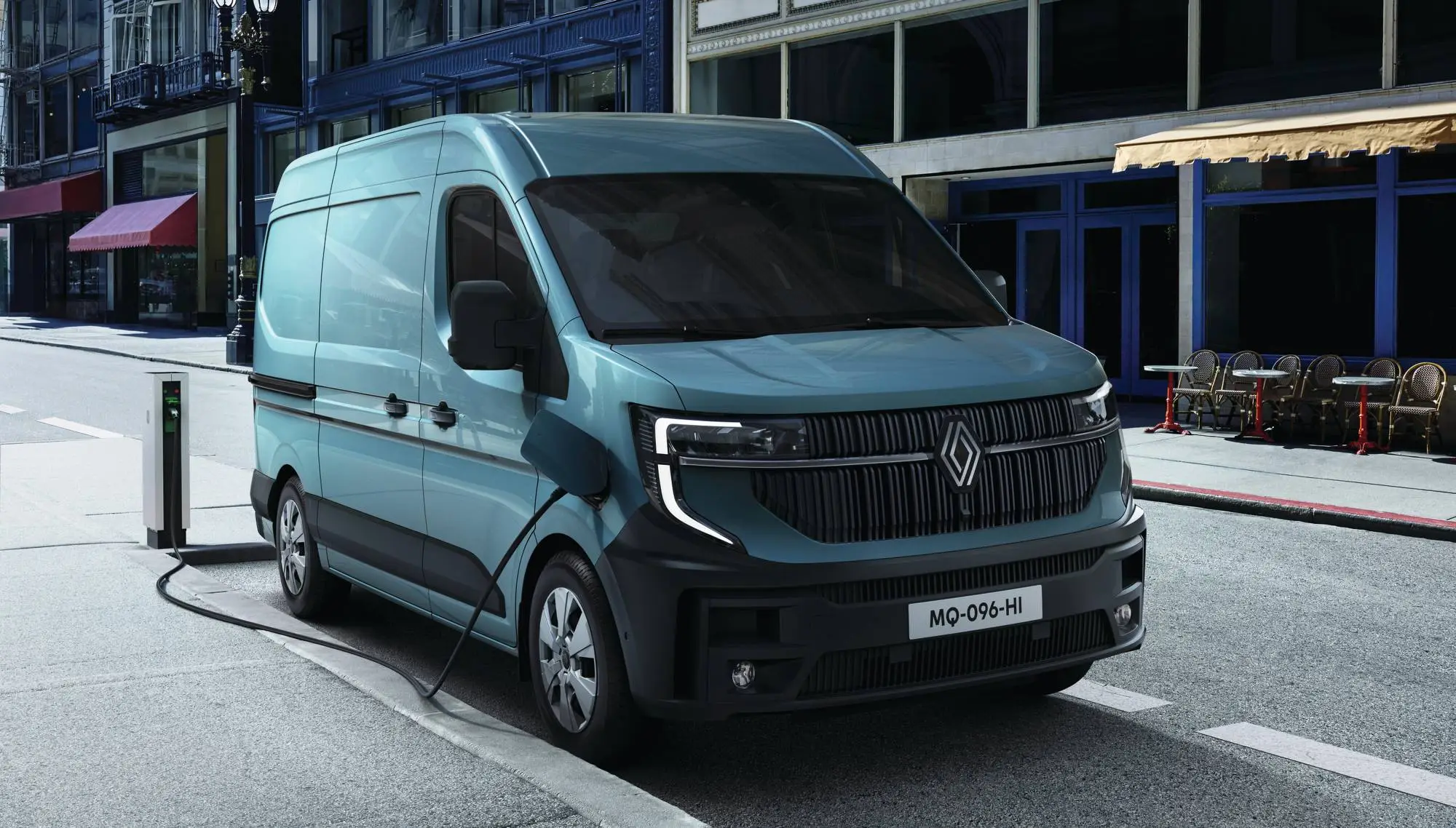
The fourth-generation Renault Master represents a significant leap forward in design and efficiency. Renault has redesigned the van from the ground up, focusing on aerodynamic performance to enhance fuel efficiency and extend the range of electric variants. The new model boasts a 20% reduction in drag compared to its predecessor, achieved through subtle design decisions such as a more steeply-raked windscreen and small aerodynamic elements in the front bumper. See Renault Master Lease
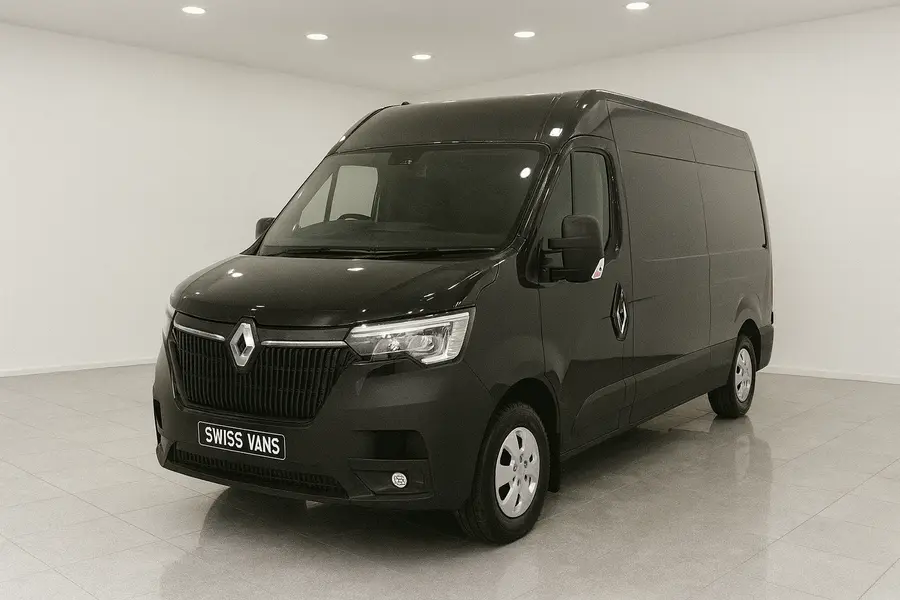
The Master's exterior has been updated with a more prominent and contemporary grille, complemented by sleeker LED headlights that improve both visibility and esthetic appeal. The van's robust wheel arches and durable body panels emphasize its tough, work-ready character. Large sliding side doors and wide-opening rear doors maintain the van's practical nature, facilitating easy loading and unloading.
Inside, the cabin has been significantly updated with a more car-like dashboard layout and improved ergonomics, prioritizing both comfort and functionality for drivers who spend long hours on the road.
Available Configurations
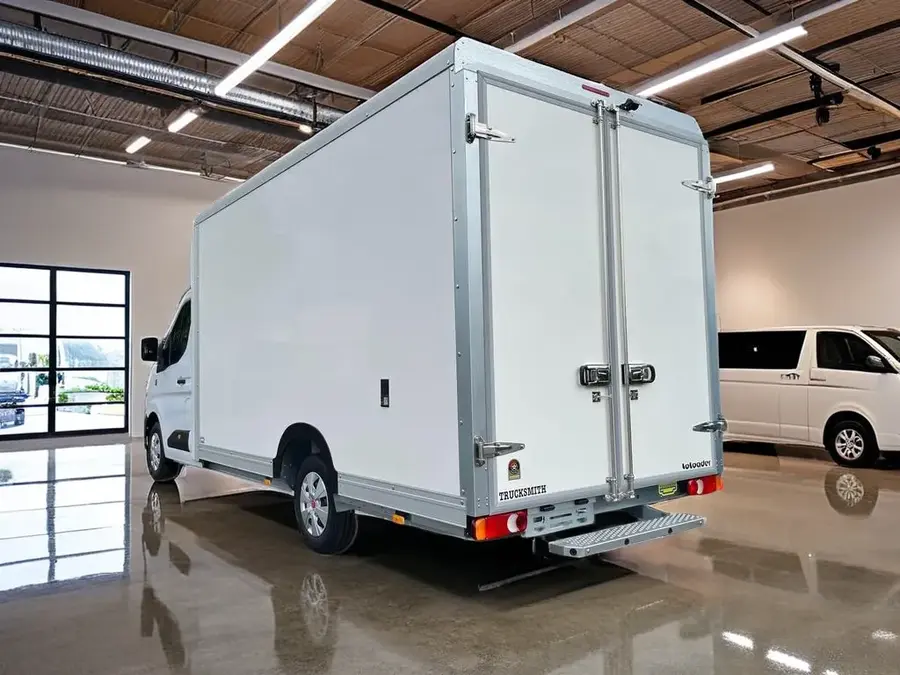
The Renault Master offers an impressive array of configurations to suit various business needs. There are currently three different length and height combinations available for the panel and crew cab bodies, along with a range of factory conversions. In total, Renault claims there are 40 body configurations on offer, providing exceptional versatility for customers. We especially love the Low Loader
The Master is available in both front-wheel drive and rear-wheel drive variants, catering to different operational requirements. The front-wheel drive panel vans come in four body lengths and three body heights, while the rear-wheel drive options offer additional payload capacity for heavier loads. Many people look for used Renault Master to build their own Renault Master Campervan.
Engine options include diesel variants with three power levels ranging from 128bhp to 168bhp. A six-speed manual gearbox is standard, with a new nine-speed automatic transmission available for all but the least powerful model. For those seeking an eco-friendly option, the electric Master E-Tech impresses with its class-leading range of up to 285 miles, made possible by its aerodynamic design and substantial 87kWh battery.
Target Market
The Renault Master targets a wide range of commercial users, from small businesses to large fleet operators. Its versatility makes it suitable for various applications, including:
- Cargo transport: With a spacious cargo area offering up to 19m³ of load volume (depending on the model) and a payload capacity of up to 1,625 kg, the Master is ideal for delivery services and logistics companies.
- Mobile workshops: The van's adaptable interior makes it perfect for tradespeople and service technicians who need a mobile workspace.
- Passenger transport: Available in crew van configurations, the Master can serve as a comfortable people carrier for shuttle services or workforce transportation.
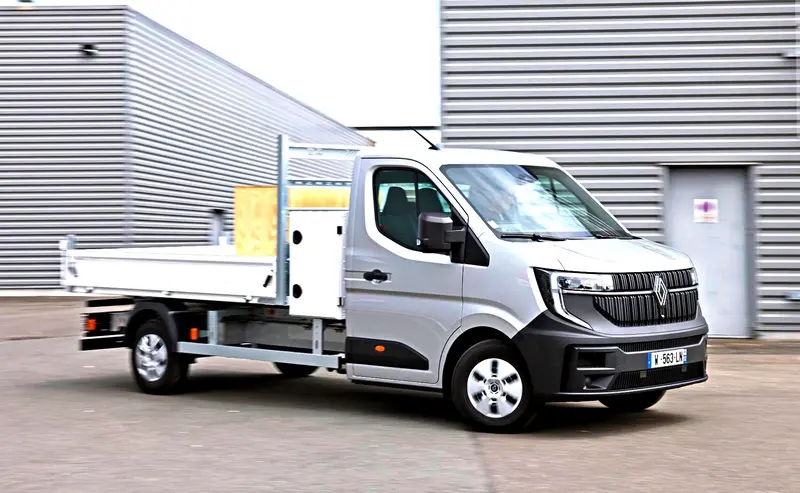
- Specialized industries: The Master's adaptability allows for custom conversions, making it suitable for industries such as construction (with tipper and dropside variants), refrigerated transport, and even as a base for motorhomes.
- Municipal services: Local authorities and their subcontractors find the Master, especially its electric variants, attractive for various applications, including cage tippers, cherry-pickers, and social services transport.
With its combination of practicality, efficiency, and adaptability, the Renault Master continues to be a popular choice in the commercial vehicle market, offering solutions for a diverse range of business needs.
Performance and Powertrain Options
The Renault Master offers a range of powertrain options to suit various business needs, including both diesel and electric variants. Each option provides unique performance characteristics and efficiency levels, catering to different operational requirements.
Diesel Engines
The Renault Master's diesel lineup features a 2.0-liter Blue dCi engine, available in three power outputs: 128bhp, 148bhp, and 168bhp. These engines are designed to deliver optimal versatility across a wide range of applications.
The 148bhp variant, with its 360Nm of torque, proves to be a capable performer. During testing with a 400kg payload, it demonstrated ample power for both urban and highway driving. The engine's pulling power is most noticeable at lower revs, making it well-suited for everyday commercial use.
For those requiring additional power, the 168bhp option offers marginally more thrust. This becomes particularly evident when overtaking at highway speeds or when the van approaches its maximum load capacity. Both the 148bhp and 168bhp variants provide 360Nm of torque, ensuring comfortable performance even under heavy loads.
Transmission options include a six-speed manual gearbox as standard for the 128bhp and 148bhp models. The manual transmission features a short throw and robust action, facilitating easy gear changes. The 168bhp variant comes equipped with a new nine-speed automatic gearbox, enhancing driving comfort and efficiency.
Electric Powertrain
The Master E-Tech represents Renault's foray into the electric commercial vehicle market. It features a single powertrain configuration in the UK, pairing an 87kWh battery with a 140hp (138bhp) electric motor. While not the most powerful option in the electric van segment, it offers a balance of performance and efficiency.
The electric Master delivers 300Nm of torque, which, although less than its diesel counterparts, provides smooth and silent operation. In testing with a 400kg payload, the E-Tech demonstrated adequate performance for urban environments, though it may not match the acceleration or outright performance of some competitors like the E-Transit.
One of the standout features of the Master E-Tech is its impressive range. Renault claims an official electric range of up to 285 miles, although this may vary slightly depending on the specific model and configuration. For instance, the MM (L2H2) version offers an official maximum range of 261 miles.
Fuel Efficiency
Renault has made significant strides in improving the Master's fuel efficiency across both diesel and electric variants.
For the diesel models, official fuel economy ratings hover around the 30mpg mark. The most efficient front-wheel-drive models can achieve up to 32.1mpg, while the least efficient dip to 28.5mpg. It's worth noting that rear-wheel-drive versions are less economical, managing an official figure of 21.1mpg.
The electric Master E-Tech, with its zero tailpipe emissions, offers a compelling option for businesses looking to reduce their carbon footprint. Its efficiency is reflected in its impressive range, making it suitable for a variety of urban and suburban delivery routes.
Charging capabilities are a crucial aspect of the E-Tech's efficiency. When connected to a 22kW public AC charging point, the van can be fully recharged in 4 hours and 35 minutes. For faster charging, the E-Tech is capable of accepting up to 130kW DC charging, potentially allowing for a full charge in just 1 hour and 10 minutes.
Overall, the Renault Master's powertrain options offer a balance of performance, efficiency, and versatility, catering to a wide range of commercial needs. Whether opting for the tried-and-tested diesel engines or the forward-thinking electric variant, businesses can find a configuration that aligns with their operational requirements and sustainability goals.
Cargo Capacity and Dimensions
The Renault Master offers an impressive range of cargo capacities and dimensions, catering to various business needs. With over 500 derivatives available, the Master provides flexibility and versatility for different load requirements.
Loading Volume
The Renault Master comes in multiple configurations, offering load volumes ranging from 8 to 17 cubic meters. The van is available in three wheelbases, four load lengths, and three roof heights, allowing businesses to choose the most suitable option for their specific needs.
For the short wheelbase model, which is only available in front-wheel drive, the load volume starts at 8 cubic meters for the low roof version, increasing to 9 cubic meters for the medium roof variant. The medium wheelbase option, also in front-wheel drive, provides a load volume of 10.8 cubic meters.
The long wheelbase versions, available in both front and rear-wheel drive, offer a load volume of 13 cubic meters for front-wheel drive models. However, this reduces slightly to 12.4 cubic meters for rear-wheel drive versions due to the raised floor.
The largest configuration, the long wheelbase with extra overhang (L4), is exclusively available in rear-wheel drive. It offers impressive load volumes of either 14.9 or 17 cubic meters, depending on the roof height chosen.
Payload Capacity
The Renault Master's payload capacity varies depending on the specific model and configuration. Front-wheel drive versions generally offer higher payload ratings at the 3.5-ton (3,500kg) gross vehicle weight (GVW).
Payload capacities range from 1,529 kg to 2,435 kg across different models. The most capable variants can handle payloads of up to 2,158 kg, particularly in the 4.5-ton GVW models. However, it's important to note that regular car driving license holders are restricted to 3.5-ton GVW vehicles only.
For businesses requiring even greater carrying capacity, the Renault Master has a maximum towing capacity of 3,500kg, depending on the specific variant.
Interior Dimensions
The interior dimensions of the Renault Master vary across different models, providing options to suit various cargo types and sizes.
Load lengths range from 2,583mm in the shortest configuration to 4,383mm in the longest variant. The usable interior width remains consistent at 1,765mm across all models, while the width between wheel arches is 1,380mm for most variants. However, twin-wheel rear axle models have a reduced width between wheel arches of 1,080mm.
Loading heights vary depending on the roof configuration, with options including 1,700mm, 1,894mm, and 2,048mm for low, medium, and high roof models respectively.
Here's a summary of key interior dimensions for selected models:
| Model | Load Length (mm) | Interior Width (mm) | Loading Height (mm) |
|---|---|---|---|
| Short | 2,583 | 1,765 | 1,700 (Low Roof) |
| Medium | 3,083 | 1,765 | 1,894 (Medium Roof) |
| Long | 3,733 | 1,765 | 2,048 (High Roof) |
| Extra Long | 4,383 | 1,765 | 2,048 (High Roof) |
The Renault Master also offers practical features to enhance its cargo-carrying capabilities. All panel van versions come standard with a single sliding side door on the passenger side, with an option for a second door on the opposite side. The rear doors open to 180 degrees as standard, with a 270-degree hinge upgrade available on most models.
To secure cargo, the Master provides either 8 or 10 load lashing points, depending on the body length. A full-height steel bulkhead comes as standard, enhancing safety and separating the cargo area from the cabin.
Technology and Safety Features
The Renault Master comes equipped with a range of advanced technologies and safety features designed to enhance the driving experience and ensure the well-being of its occupants.
Infotainment System
The Master offers a sophisticated infotainment system that has evolved over the years. Since 2014, almost every model has been fitted with satellite navigation as standard, with only the entry-level versions missing out. However, even these basic models can be upgraded to the more modern R-Link infotainment setup, which is used in Renault's passenger cars.
One of the standout features of the R-Link system is its innovative placement. Instead of occupying space in the center console, the sat-nav touchscreen is positioned where the rear-view mirror would typically be in a conventional vehicle. This clever design allows drivers to keep the screen in their line of sight without having to look too far from the road.
In 2019, Renault further upgraded the infotainment systems. All versions now feature Android Auto compatibility, while the top-tier system also supports Apple CarPlay. Additionally, a DAB radio with USB connectivity and Bluetooth has been standard across all models since 2014, ensuring seamless connectivity for drivers.
Driver Assistance Systems
The Renault Master incorporates several advanced driver assistance systems (ADAS) to enhance safety and comfort. These intelligent systems rely on advanced technologies such as radars, software, and cameras to assist the driver during journeys.
One notable feature is the blind spot warning system. Active above 15 km/h, it alerts the driver via a signal in the rearview mirror when vehicles are present in areas not visible in their field of vision. This system significantly reduces the risk of accidents during lane changes or merging.
The Master also offers traffic sign recognition with speed alert. This feature helps drivers adhere to speed limits by recognizing traffic signs and providing alerts. Vehicles equipped with the easy link multimedia system can receive updates through the Alliance Connect Toolbox software, ensuring the most up-to-date information.
For improved maneuverability, the Master offers a 360° around view camera system. Four cameras work together to provide a comprehensive view of the vehicle's surroundings, allowing drivers to complete their maneuvers safely and confidently.
Safety Equipment
Renault has made significant strides in improving the Master's safety features, particularly in response to Euro NCAP ratings. While earlier models offered minimal standard safety equipment, recent updates have addressed these concerns.
Electronic Stability Control (ESC) is now standard across the entire range, including features such as hill-start assist, trailer stabilization, and Renault's Grip Xtend technology for improved traction on low-grip surfaces. The Master also comes equipped with a single airbag as standard, with the option to add up to three more for enhanced protection.
In 2019, Renault introduced crosswind assist (referred to as side wind assistance) as a standard feature. This system helps maintain vehicle trajectory above 43 mph when encountering gusts of side wind or during overtaking maneuvers. Additionally, vans built from July 2019 offer optional features such as blindspot monitors, autonomous emergency braking (AEB), and front parking sensors.
The emergency brake assist system is another crucial safety feature. In the event of a potential head-on collision, the system warns drivers to take appropriate action. If the driver's reaction is too slow, the system automatically intensifies braking and can even bring the vehicle to a complete stop if necessary.
While the Master has made significant improvements in safety, it's worth noting that some advanced features like cruise control, automatic lights and wipers, and lane-departure warning are still available only as optional extras on most models (with lane-departure warning standard on 4.5-ton variants).
Comfort and Convenience
The Renault Master has undergone significant improvements to enhance comfort and convenience for drivers and passengers alike. The latest updates focus on creating a more user-friendly and ergonomic environment, catering to the needs of professionals who spend long hours in their vehicles.
Cabin Design
The 2019 update brought a complete overhaul to the Master's dashboard design, transforming the interior into a more car-like and modern space. The new layout features a dark color scheme throughout the cabin, replacing the previous light gray sections and creating a more cohesive look. This redesign not only improves esthetics but also enhances functionality.
A standout feature of the new cabin is the larger touchscreen infotainment system, which takes center stage on the dashboard. This system offers intuitive control over navigation, entertainment, and vehicle settings, making it easier for drivers to access important information and features while on the road. The integration of Android Auto compatibility across all versions, with Apple CarPlay support in top-tier models, ensures seamless connectivity for drivers.
The instrument cluster now combines analog dials with a digital display, providing clear and customizable information at a glance. This setup allows drivers to easily monitor their vehicle's performance and status without taking their eyes off the road for extended periods.
Storage Solutions
One of the Master's strongest suits is its abundance of storage options, designed to make life easier for professionals on the go. The cabin boasts an impressive 135 liters of storage space, carefully distributed throughout the interior for maximum convenience.
Key storage features include:
- A full-width parcel shelf above the windscreen
- A 7.6-liter glovebox capable of holding two 1.5-liter bottles
- Door compartments large enough for 1.5-liter bottles
- Multiple smaller compartments with card holders and coin holders
- Four drinks holders
- Dashboard storage for A4 documents
- A vast stowage area under the passenger bench seat
The 2019 update introduced dash-top storage areas with hinged lids, addressing a common complaint in competing models. This thoughtful addition provides secure storage for valuable items while maintaining easy access.
Ergonomics
The Master's ergonomic design focuses on driver comfort and functionality. The driver's area has been significantly updated to prioritize ease of use and reduce fatigue during long journeys.
Key ergonomic features include:
- Adjustable seats and steering wheel to adapt the driving position
- A multi-functional steering wheel allowing control of various features without taking hands off the wheel
- Redesigned seats offering better support for long journeys
- Optimized soundproofing for a quieter cabin environment
- Air conditioning for climate control
The fold-down center seatback is a particularly clever feature, functioning as a mobile desk complete with a swiveling laptop tray. This innovation transforms the cabin into a mobile office, perfect for professionals who need to work on the go.
Additional ergonomic touches include a clipboard that pops out of the top of the dash and a mobile phone holder that mounts near the instrument cluster, close to a power socket. These features demonstrate Renault's commitment to creating a workspace that adapts to the needs of modern professionals.