Peugeot Boxer Van: Where Is the Horn and How Do You Use It?
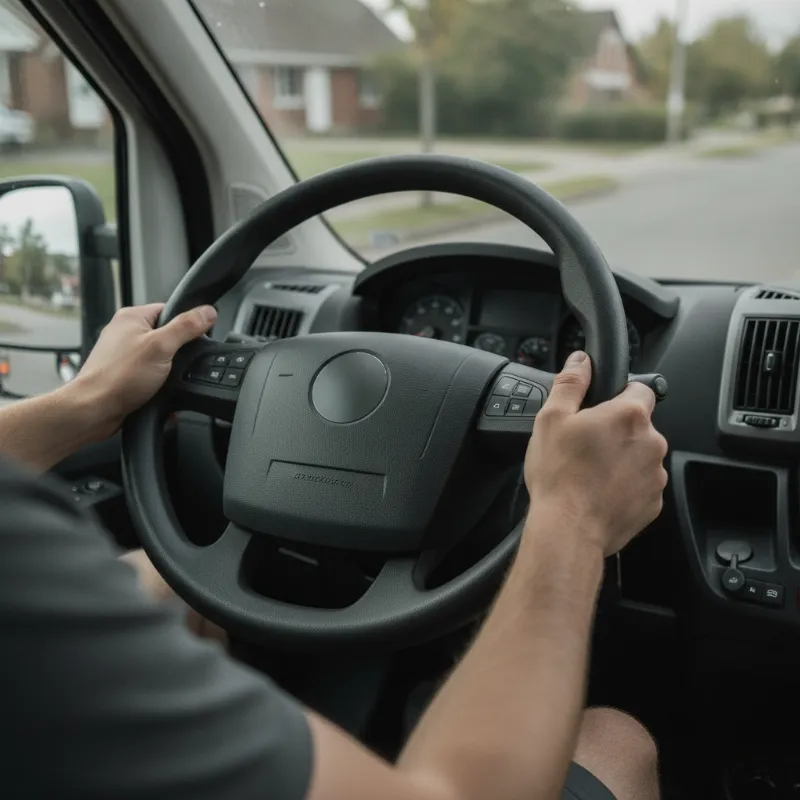
Where is the horn on a Peugeot Boxer van?
On every Peugeot Boxer built from the third generation onwards, the horn is operated from the steering wheel — not from a stalk or a button on the dashboard. That's the short answer, but exactly where on the wheel you press depends on the age of the van. If you've just picked up a Boxer and can't work out how to give a quick warning beep, don't worry — it catches a lot of new owners out, especially those coming from older commercial vehicles where the horn was often on the end of the indicator stalk.
The horn unit itself (the part that actually makes the noise) is mounted behind the front bumper or in the engine bay, typically near the front grille or offside headlight area. That's useful to know if you ever need to inspect it, but for day-to-day driving all you need to worry about is the button in the cab.
How to sound the horn: steering wheel controls explained
Peugeot has used two slightly different horn button layouts across the Boxer's production life. Both are simple once you know where to press, but they aren't in the same spot, which is why a lot of drivers get caught out when they switch between an older and newer Boxer.
Location on pre-facelift Boxer models (2006-2014)
On earlier third-generation Boxers, the horn is sounded by pressing the centre pad of the steering wheel — the section with the Peugeot lion badge. You need to give it a firm push directly on the badge or the padded area immediately around it. A light tap sometimes isn't enough to make contact, which is one reason owners occasionally think their horn has failed when it's actually just a matter of pressing harder and more centrally.
The spokes of the wheel on these earlier models don't activate the horn, so if you find yourself pressing the plastic spoke areas nothing will happen. Aim for the middle.
Location on newer Boxer models (2014-present)
From the 2014 facelift onwards — and continuing through the current Boxer range — the horn is still operated from the centre of the steering wheel, but the pad is larger and more responsive. You can press anywhere on the central boss (the area containing the Peugeot badge and surrounded by the audio and cruise control buttons on higher-spec vans) and the horn will sound.
On models fitted with steering wheel-mounted controls for the radio and cruise control, be careful not to confuse those side buttons with the horn. Those side buttons operate infotainment functions only. The horn is always the central pad.
Common Peugeot Boxer horn problems and quick fixes
The Boxer horn is generally reliable, but like any electrical component it can develop faults — especially on older, high-mileage vans that have spent years in wet and salty conditions. If yours has stopped working or sounds weaker than it used to, there are a few things worth checking before booking it into a workshop.
Horn not working: fuse and relay checks
If pressing the wheel produces no sound at all, the first suspect is the horn fuse. On the Boxer, the fuse box is located behind a panel on the end of the dashboard (driver's side) or under the bonnet, depending on the model year. The owner's manual will identify the exact fuse position — it's usually a low-amperage fuse clearly labelled for the horn circuit. Pull it out, check whether the wire inside is broken, and replace with a fuse of the same rating if needed.
If the fuse is intact, the next likely culprit is the horn relay, found in the engine bay fuse box. Swapping it with an identical relay from a non-critical circuit is a quick way to diagnose it. Beyond that, corroded wiring at the horn unit itself (behind the front bumper) is a common issue on older Boxers due to road spray.
Weak or intermittent horn sound
A muffled, weak or crackly horn is almost always down to water ingress or corrosion at the horn unit. Because the horn sits low at the front of the van, it takes a battering from spray, mud and salt over the years. Sometimes a spray of contact cleaner on the terminals and connections is enough to restore a full, healthy note. If the horn only works intermittently — sounding one day but not the next — you're looking at either a failing horn unit or a poor earth connection, both of which are inexpensive to sort.
When to see a Peugeot specialist
If you've checked the fuse, the relay and the wiring and the horn still won't play ball, it's time to get it looked at professionally. A non-working horn is an MOT failure, so it's not something you can put off if your test is coming up. A Peugeot specialist or a good commercial vehicle garage will be able to test the steering wheel contact (the clock spring behind the airbag can fail and cause horn issues), inspect the horn unit itself and check wiring continuity in a fraction of the time it takes to diagnose at home.
It's also worth having the horn checked as part of any pre-purchase inspection if you're buying a used Boxer — it's a small thing, but a failed horn can hint at wider electrical neglect.
Looking at a Peugeot Boxer? Explore our stock
Whether you're upgrading from an older van or buying your first Boxer, we regularly stock a range of Peugeot Boxer panel vans, Luton conversions and crew cabs across different ages, mileages and specifications. Every van we sell is fully checked over — horn included — so you can drive away confident that all the small details are working as they should. Get in touch with our team if you'd like to arrange a viewing or talk through what's currently available.
FAQs
Where is the horn located on a Peugeot Boxer van and how do you use it?
The horn on a Peugeot Boxer is operated by pressing the centre pad of the steering wheel — the area containing the Peugeot lion badge. This applies to both pre-facelift models (2006-2014) and newer post-2014 Boxers. Press firmly in the middle of the wheel to sound the horn. The horn unit itself is mounted behind the front bumper or grille.
Why isn't my Peugeot Boxer horn working?
The most common causes are a blown fuse, a failed relay, or corrosion at the horn unit behind the front bumper. Start by checking the horn fuse in the dashboard-end or engine-bay fuse box, then test the relay. If both are fine, water ingress or a failed clock spring behind the steering wheel could be to blame.
Will a broken horn fail an MOT?
Yes. A working horn is a legal requirement and an MOT test item. If your Boxer's horn doesn't sound, is too quiet, or only works intermittently, it will fail the test — so it's worth getting any horn issue sorted before booking your MOT.
Is the horn button in the same place on all Peugeot Boxer models?
Broadly yes — on all third-generation Boxers (2006 onwards) the horn is activated from the central pad of the steering wheel. The pad became slightly larger and more responsive from the 2014 facelift, but the location has stayed the same. The steering wheel side buttons on higher-spec vans control audio and cruise, not the horn.
Can I replace a Peugeot Boxer horn myself?
Yes, replacing the horn unit is a straightforward DIY job on most Boxers. The horn is accessed from behind the front bumper or through the wheel arch, secured by a single bolt and a two-pin electrical connector. Just make sure you disconnect the battery first and buy a replacement of the correct voltage and mounting type.