LDV V80 Specs: Full UK Specification Guide
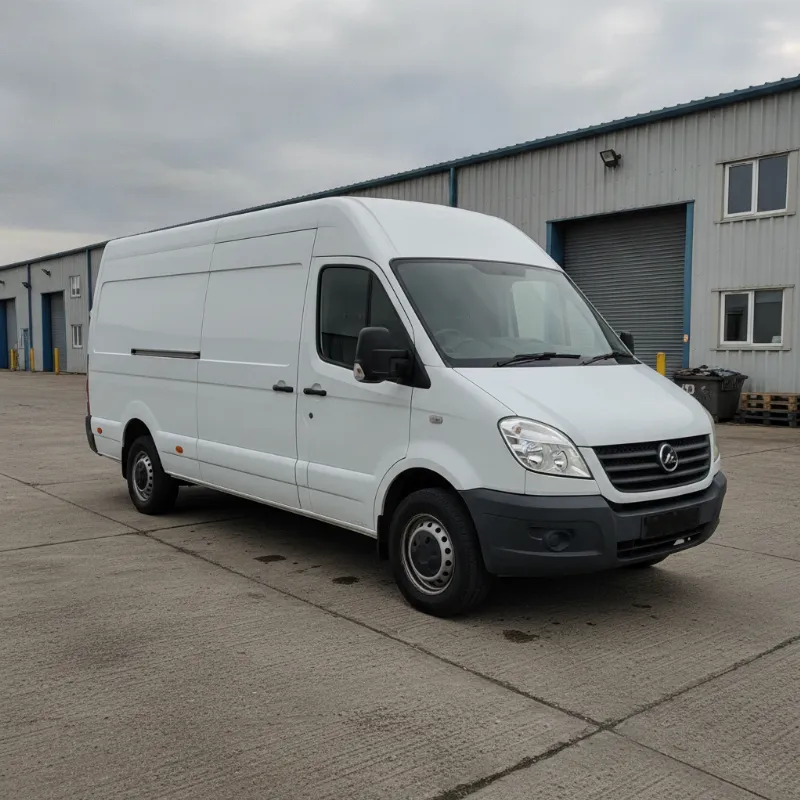
LDV V80 Specs at a Glance
The LDV V80 is a full-size panel van built to compete in the large van segment against the likes of the Ford Transit, Mercedes-Benz Sprinter and Fiat Ducato. Positioned as a value-focused workhorse, it pairs a proven 2.5-litre turbo diesel engine with a choice of short, medium and long-wheelbase bodies, plus chassis cab and minibus derivatives for operators who need something more specialised.
At its core, the V80 offers generous load volumes of up to around 11.6 cubic metres, payloads pushing beyond 1,300kg on higher-rated variants, and a gross vehicle weight ratings of 3.5 tonnes. It comes as standard with a six-speed manual gearbox, rear-wheel drive, and a straightforward cabin designed for long working days rather than showroom flair. Below, we break down the full UK specification of the LDV V80 so you can see exactly what each variant brings to the table.
Engine, Power and Performance
Under the bonnet, every UK-market LDV V80 uses the same fundamental powertrain: a 2.5-litre four-cylinder turbo diesel driving the rear wheels through a six-speed manual transmission. There is no automatic option in the current line-up, and no petrol or electric derivative of the V80 in this generation — LDV's electric large van offering sits under the separate EV80 badge.
2.5L Diesel Engine Output
The 2.5-litre VM Motori-sourced turbo diesel produces 134bhp (100kW) at around 3,600rpm and 243lb-ft (330Nm) of torque from roughly 1,600rpm. That torque figure is the important number for van operators: it arrives low in the rev range, which suits fully loaded pulling away and hill starts. Top speed is quoted at around 90mph, though the V80 is far happier at motorway cruising speeds where the six-speed gearbox keeps engine revs manageable.
Braked towing capacity sits at 2,000kg on most panel van variants, making the V80 a credible tow vehicle for trailers, plant and small caravans, provided the combined weight stays within the gross train weight rating shown on the VIN plate.
Fuel Economy and Emissions
Official combined fuel economy for the LDV V80 is quoted in the region of 32–34mpg depending on wheelbase, roof height and body configuration, with CO2 emissions from around 220g/km. Real-world figures typically land in the high 20s to low 30s mpg for mixed urban and motorway work, and drop when the van is loaded to its full payload or used predominantly on short urban runs.
The V80 meets Euro 6 emissions standards using AdBlue selective catalytic reduction, so operators working in London's ULEZ, the Birmingham CAZ and other UK clean air zones will not face daily charges in a compliant V80. It is worth checking the specific Euro standard on any used example, however, as earlier V80s were sold to Euro 5.
Dimensions, Payload and Load Space
Load space is where the V80 earns its keep. Three wheelbase options combined with standard and high roof choices mean there is a body configuration to suit couriers, tradespeople, removals firms and conversion specialists alike.
SWB, MWB and LWB Variants
The short-wheelbase (SWB) V80 measures approximately 5,168mm in overall length with a load area around 2,570mm long, offering roughly 6.4 cubic metres of cargo volume with the standard roof. The medium-wheelbase (MWB) high-roof stretches the load length to around 3,050mm and lifts capacity to approximately 9.2 cubic metres, giving standing room inside for most operators.
The long-wheelbase (LWB) high-roof is the flagship for volume, with an overall length of around 5,700mm, a load bay of approximately 3,470mm long and cargo capacity in the region of 11.6 cubic metres. Load width between the wheel arches is around 1,270mm across the range — enough for a Euro pallet loaded lengthwise — and rear barn doors opening to nearly 270 degrees make forklift and pallet-truck loading straightforward.
Payload and Gross Vehicle Weight
All UK LDV V80 panel vans are rated at 3,500kg gross vehicle weight, keeping them within the standard category B driving licence for drivers who passed their test after 1997. Payload varies with body style: SWB models typically carry around 1,300kg, MWB versions between 1,200kg and 1,300kg, and the LWB high-roof usually somewhere in the 1,100–1,200kg range once the extra bodywork weight is accounted for.
Chassis cab variants, designed for conversion into tippers, dropsides, Lutons and box bodies, offer a higher payload potential because the finished body weight is decided at conversion. Always cross-reference the individual VIN plate figures before quoting a customer job — kerb weights vary slightly between build years and specifications.
Interior, Technology and Safety Features
Inside, the V80 takes a functional approach rather than chasing car-like refinement. The three-seat cab layout includes a driver's seat with height and lumbar adjustment, a fold-down centre seat with cupholders and document storage, and a passenger seat suitable for two adults. Storage runs to a large glovebox, overhead shelving, door bins sized for A4 folders, and dash-top trays for paperwork and phones.
Standard equipment across the range includes electric front windows, electrically adjustable and heated door mirrors, remote central locking, air conditioning, cruise control, a DAB radio with Bluetooth hands-free, USB connectivity and a multifunction steering wheel. Higher trims and later model years added reversing sensors, a reversing camera and a touchscreen infotainment display.
On the safety side, the V80 comes with dual front airbags, ABS with electronic brakeforce distribution, electronic stability control (ESC), traction control, hill-hold assist and ISOFIX mounts in the twin passenger seat. It has not been Euro NCAP tested in the same way as the newer European rivals, but the fitted safety kit meets modern UK Type Approval requirements.
LDV V80 Variants: Panel Van, Chassis Cab and Minibus
The V80 family extends beyond the panel van. The chassis cab is popular with conversion firms building tippers, dropsides, box vans and Luton bodies with tail-lifts — its ladder-frame construction and rear-wheel-drive layout suit heavy-duty bodywork better than many monocoque rivals in the class.
The V80 minibus is offered in various seat configurations, most commonly as a 17-seater with tachograph readiness for community transport, school runs and private hire work. Glazed crew van and window van derivatives are also available for operators who need a mix of passenger and cargo capacity. All non-panel-van variants share the same 2.5-litre diesel, six-speed manual gearbox and 3.5-tonne GVW as the standard V80, so drivers stepping between vehicles in a mixed fleet will find the driving experience consistent.
How the LDV V80 Compares to Rival Vans
Against the Ford Transit, Mercedes-Benz Sprinter, Peugeot Boxer, Citroen Relay and Fiat Ducato, the LDV V80 competes primarily on price. New and nearly new V80s typically undercut equivalently specified European rivals by a meaningful margin, which is why they have found favour with cost-conscious tradespeople, small fleets and conversion buyers.
Where the rivals pull ahead is in refinement, driver-assistance technology and residual values — the newer Transit and Sprinter offer things like lane-keep assist, adaptive cruise and automatic emergency braking that the V80 does not match. Load volume and payload, however, are broadly comparable, and the V80's simple mechanical layout is often praised by owner-drivers who prefer straightforward diesel engineering over highly complex modern powertrains.
Buying an LDV V80 in the UK
LDV vans are sold through a network of franchised UK dealers, with parts and servicing supported by the same network. When buying new, expect a three-year manufacturer warranty; used examples are widely available from around three years old onwards, often ex-fleet with full service history. Popular searches focus on the MWB high-roof panel van and the LWB high-roof, with tipper and dropside conversions holding value well thanks to strong demand from construction and landscaping trades.
Before committing, check the AdBlue system has been maintained, confirm the Euro emissions standard for clean air zone compliance, and inspect the rear suspension and load floor on any van that has led a hard commercial life. With the right example and the right spec for the job, the LDV V80 remains one of the most practical value propositions in the UK large van market.
FAQs
What are the full technical specifications of the LDV V80 van?
The LDV V80 uses a 2.5-litre four-cylinder turbo diesel engine producing 134bhp and 330Nm of torque, paired with a six-speed manual gearbox driving the rear wheels. It comes in SWB, MWB and LWB wheelbases with standard or high roofs, offering load volumes from around 6.4 to 11.6 cubic metres and payloads typically between 1,100kg and 1,300kg on a 3,500kg gross vehicle weight. Fuel economy is quoted at around 32–34mpg combined, with Euro 6 emissions on current models. Panel van, chassis cab and 17-seat minibus variants are all available in the UK.
Is the LDV V80 ULEZ compliant?
Current Euro 6 LDV V80s meet London ULEZ, Birmingham CAZ and other UK clean air zone standards, so they will not incur daily charges. Earlier V80s were built to Euro 5 and are not ULEZ compliant, so always check the emissions standard on the V5C or VIN plate before buying a used example if you intend to work in a low emission zone.
What payload can an LDV V80 carry?
Payload varies by body style and wheelbase. Short-wheelbase panel vans typically carry around 1,300kg, medium-wheelbase versions between 1,200kg and 1,300kg, and long-wheelbase high-roof models around 1,100–1,200kg once the extra bodywork is accounted for. Chassis cab variants can offer more payload depending on the finished conversion. Always check the individual VIN plate for the exact figures on any specific vehicle.
Does the LDV V80 come with an automatic gearbox?
No, the LDV V80 is only offered with a six-speed manual gearbox in the UK. There is no automatic or dual-clutch option in the current range. Buyers who need an automatic large van will need to look at rivals such as the Ford Transit, Mercedes-Benz Sprinter or Fiat Ducato, or consider LDV's own EV80 electric variant which uses a single-speed transmission.
How reliable is the 2.5-litre diesel engine in the LDV V80?
The 2.5-litre turbo diesel is a VM Motori-derived unit with a solid track record in commercial applications. Owners generally report it as straightforward and durable provided servicing is kept up, particularly oil changes and AdBlue system maintenance. As with any modern diesel van, the DPF and EGR system benefit from regular motorway running, so it suits mixed-route operators better than purely urban stop-start work.