How to Change the Air Filter on a Nissan Primastar: Step-by-Step Guide
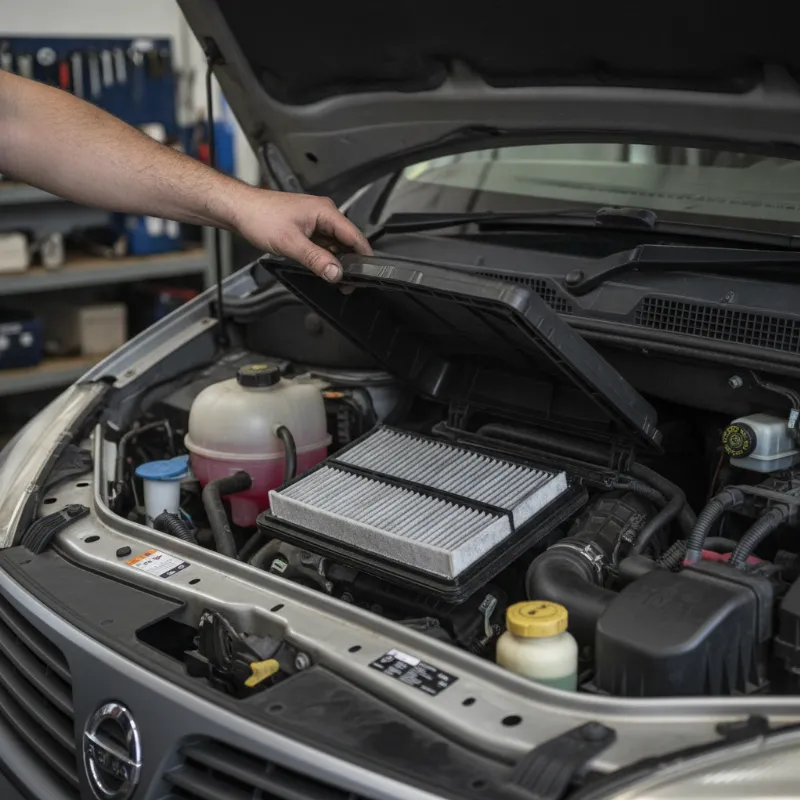
Why the air filter matters on a Nissan Primastar
The air filter on your Nissan Primastar has a simple but critical job: it stops dust, grit, insects and road debris from being sucked into the engine along with the air it needs to burn fuel. On a working van that spends its days on motorways, building sites or dusty rural lanes, that filter takes a real beating — and a clogged filter is one of the most common causes of sluggish performance, poor MPG and a smoky exhaust.
Because the Primastar shares much of its mechanical DNA with the Renault Trafic and Vauxhall Vivaro of the same era, the airbox layout and filter design are broadly similar across the range. The good news for owners and small fleet operators is that it's a genuinely DIY-friendly job. You don't need a workshop, ramps or specialist tools — just a flat driveway, ten minutes, and the right replacement filter.
Skipping this service item is a false economy. A restricted filter forces the turbo to work harder, hurts fuel returns and, on the 1.9 dCi and 2.0 dCi engines especially, can contribute to soot build-up in the intake system. Change it on time and the engine breathes freely, the ECU sees the airflow it expects, and the van pulls the way Nissan intended.
Tools and parts you'll need
You won't need much. For most Primastar variants, the toolkit is:
- A new air filter suitable for your engine (1.9 dCi or 2.0 dCi)
- A flat-blade screwdriver or small socket set (usually 7mm or 8mm for the airbox clips or screws)
- A soft cloth or vacuum to clean out the airbox
- Nitrile gloves (the old filter can be greasy and sooty)
That's it. No diagnostic tool, no coolant to drain, no jacking the van up. If your Primastar has been serviced regularly, the clips and clamps should release easily. If it's been a while, have some penetrating spray handy in case a plastic clip is stiff.
Choosing the right air filter for your Primastar
The Nissan Primastar was sold with several engine options over its production run — most commonly the 1.9 dCi (80PS and 100PS) and the later 2.0 dCi and 2.5 dCi units. Each takes a slightly different filter shape, so don't just buy on the badge. The quickest way to get the correct part is to quote your registration or VIN to a motor factor, or cross-reference the OE part number printed on your existing filter.
Stick to a reputable brand — Mann, Bosch, Mahle, Purflux or a genuine Nissan filter. Cheap unbranded filters can have inconsistent pleating and poor sealing edges, which lets unfiltered air past and defeats the whole point of the exercise. A good-quality filter usually costs less than a tank of diesel and will comfortably last a full service interval.
Step-by-step: how to change the air filter on a Nissan Primastar
Once you've got the right filter and a few minutes spare, here's how the job goes from start to finish. Work with the engine cold and the ignition off, and park on level ground with the handbrake on.
Locating the airbox under the bonnet
Pop the bonnet and look towards the driver's side of the engine bay (on right-hand-drive UK vans). The airbox is a large black plastic housing, roughly the size of a shoebox, with a thick corrugated intake pipe running from it to the turbo inlet. On the 1.9 dCi it sits fairly high and is easy to spot; on the 2.0 dCi you may need to unclip a plastic engine cover first to see it clearly.
The housing splits horizontally into two halves. The upper half is held down by a mix of metal spring clips (usually four) and, on some models, one or two screws or bolts at the front edge. Trace the intake pipe from the top of the engine back to the box so you're sure you've got the right component before you start undoing anything.
Removing the old filter
Release the spring clips by pulling them outwards and downwards with your fingers or a flat screwdriver. Undo any retaining screws and place them somewhere safe. If a MAF (mass airflow) sensor plug is fitted to the intake pipe near the box, you generally won't need to disconnect it — just be careful not to strain the wiring as you lift the lid.
Carefully raise the top half of the airbox. On some Primastars the pipework flexes enough to lift the lid clear; on others you'll need to tilt it to one side. Lift the old filter straight out. Take a look at it — if it's black, matted with debris or shedding fibres, it was well overdue. Wipe out the base of the airbox with a clean cloth to remove any grit or leaves that have collected in the bottom.
Fitting the new filter and resealing the airbox
Drop the new filter in the same way the old one came out, making sure the rubber sealing edge sits flush all the way around the airbox lip. If it's a directional filter, an arrow on the frame will indicate airflow direction — follow it. A filter that's twisted or sitting proud will not seal, and unfiltered air will bypass it.
Lower the top half of the airbox back down, checking that the sealing lip mates cleanly with no wires or hoses trapped underneath. Clip the spring clips back into place and refit any screws. Give the intake pipe a gentle wiggle to confirm nothing's come loose, then start the van. It should idle smoothly straight away — if you hear any hissing or whistling, switch off and check the lid is properly seated.
Air filter change on the Nissan Primastar 1.9 dCi 100PS SE 2700 SWB Panel Van
The 1.9 dCi 100PS SE 2700 short-wheelbase panel van is one of the most common Primastars still in daily use in the UK, and the air filter job on this specification is about as straightforward as van servicing gets. The airbox lives on the offside of the engine bay, sitting on top of a plastic mounting bracket, and uses a rectangular paper element filter.
On this variant, expect four metal spring clips and no screws — the whole lid lifts off in under a minute once the clips are released. The filter itself is around 25cm long and drops in with a clear top-and-bottom orientation. From opening the bonnet to closing it again, most owners can wrap this job up in 10 to 15 minutes. Because the 1.9 dCi is sensitive to airflow restriction, a fresh filter often produces a very noticeable improvement in throttle response, particularly if the old one has done more than 20,000 miles.
How often should you replace the Primastar's air filter?
Nissan's official service schedule calls for the air filter to be replaced every 40,000 miles or every two years on most Primastar variants, whichever comes first. In real-world UK use, though, that interval is often too long — especially for vans working in construction, agriculture, or heavy urban stop-start traffic.
As a rule of thumb: if your Primastar spends most of its life on clean tarmac and motorways, the manufacturer's interval is fine. If it lives on farm tracks, building sites or dusty industrial estates, halve it. It's worth pulling the filter out at every oil service to have a quick look — if it's noticeably darker than a new one or shedding material, swap it out early. At the price of a decent filter, there's no reason to run one to failure.
Common issues after an air filter change (and quick fixes)
Nine times out of ten the van fires up and runs perfectly after a filter change. When something's not right, it's almost always down to one of a handful of easy-to-fix causes. A rough idle or engine management light usually points to the airbox lid not being fully seated — recheck all the clips and make sure the sealing edge of the filter isn't pinched. A whistling or sucking noise from the engine bay means air is bypassing the filter somewhere, so lift the lid and reseat it.
If the van feels flat or hesitant, check that the intake pipe between the airbox and the turbo hasn't been knocked loose while you were working. On higher-mileage vans, the MAF sensor can be disturbed by the change in airflow and throw a fault code — a gentle clean with MAF-specific cleaner spray usually sorts it. Persistent warning lights that don't clear after a short drive are worth reading with an OBD tool before you assume the worth.
Related jobs: service light reset, airbag light and radio code
While you're under the bonnet, it's a natural point to tick off a few other quick maintenance tasks. Resetting the service light on the Primastar is done through the dashboard button sequence and takes about 30 seconds once you know the trick. If an airbag light has been nagging you, that's typically down to a wiring connector under a front seat rather than a fault with the SRS system itself. And if you've had the battery disconnected for any reason during the work, be ready with your radio code — the factory head unit will lock out until you enter it.
Looking for a Nissan Primastar? Browse our stock
If your current Primastar is getting long in the tooth — or you're looking to add a reliable workhorse to your fleet — it's worth taking a look at what's on the used market. The Primastar remains a popular choice with tradespeople, couriers and small businesses thanks to its simple mechanicals, sensible load space and low running costs. Well-serviced examples in the 1.9 dCi 100PS SE spec, in particular, still offer excellent value for money.
Whether you're after a short-wheelbase panel van for city work or a longer variant for bigger loads, our team can talk you through the options, service history and any finance considerations. Give us a call or drop in to view the current stock — and if you're part-exchanging your existing Primastar, we'll happily take a look at that too.
FAQs
How do you change the air filter on a Nissan Primastar?
Open the bonnet and locate the black plastic airbox on the driver's side of the engine bay. Release the four spring clips (and any retaining screws) holding the top half of the airbox down, lift the lid, and remove the old paper filter. Wipe out any debris from inside the housing, drop in the new filter making sure the rubber sealing edge sits flush all the way round, then refit the lid and clip it back down. The whole job takes 10–15 minutes with no special tools.
How often should the air filter be changed on a Nissan Primastar?
Nissan's schedule specifies every 40,000 miles or two years, whichever comes first. If your van works in dusty conditions — building sites, farm tracks, unsealed roads — halve that interval. It's a good idea to inspect the filter at every oil service and replace it early if it looks dark or clogged.
Which air filter do I need for my Primastar?
It depends on the engine — the 1.9 dCi, 2.0 dCi and 2.5 dCi versions use different filters. The most reliable way to buy the right part is to quote your registration or VIN to a motor factor, or cross-reference the OE part number printed on the frame of your existing filter. Stick to reputable brands like Mann, Bosch, Mahle, Purflux or genuine Nissan.
Will changing the air filter improve fuel economy?
If the old filter is heavily clogged, then yes — you should notice both better throttle response and improved MPG, particularly on the 1.9 dCi engines which are sensitive to intake restriction. A fresh filter allows the engine to draw air freely, so the turbo doesn't have to work as hard and the fuel/air mixture stays in the right range.
Do I need to reset anything after changing the air filter?
No — the air filter itself doesn't require any resets or ECU relearning. If the engine management light comes on after the change, check the airbox lid is fully seated and the intake pipe is secure. Occasionally the MAF sensor can throw a code if it's been disturbed; a short drive usually clears it, or an OBD reader can reset the code if needed.