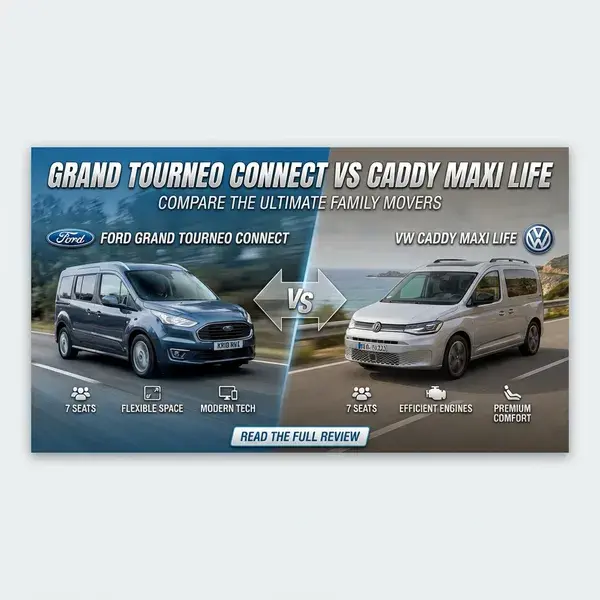
Ford Grand Tourneo Connect VS VW Caddy Maxi Life
Ford Grand Tourneo Connect VS VW Caddy Maxi Life
The world of Multi-Purpose Vehicles (MPVs) is highly competitive, with various models vying for supremacy. Among these contenders, the Ford Grand Tourneo Connect vs VW Caddy Maxi Life comparison has gained significant attention. These versatile vehicles offer a blend of spaciousness, practicality, and comfort, making them popular choices for families and businesses alike. The Volkswagen Caddy Maxi Life MPV, in particular, has established itself as a strong player in this segment.
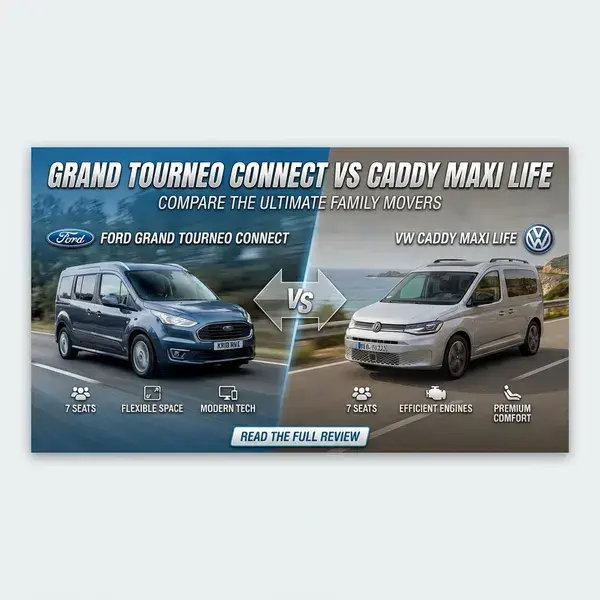
This article aims to analyze how the VW Caddy Maxi Life stacks up against its rivals. We’ll look at design, interior space, performance, fuel efficiency, and features. The comparison will include other notable competitors like the Sharan, providing a comprehensive view of the MPV market. By examining these aspects, readers will gain valuable insights to help them make an informed decision when choosing their next family vehicle or business transport solution.
Design and Exterior
VW Caddy Maxi Life Exterior
The Volkswagen Caddy Maxi Life showcases a sleek and modern design that sets it apart from typical van-based MPVs. This fourth-generation model has successfully transformed the Caddy Cargo van’s esthetics into an attractive family vehicle. The exterior design is a testament to Volkswagen’s commitment to style and functionality.
The Caddy Maxi Life is available in two distinct forms: the standard ‘Caddy’ and the more upscale ‘Caddy Life’. The latter is easily recognizable by its 16-inch ‘Wien’ alloy wheels and black roof rails, which add a touch of sophistication to its appearance. Both variants feature twin side sliding doors, enhancing accessibility and practicality.
One of the standout features of the Caddy Maxi Life is its extended length. As a long-wheelbase version, it offers 353mm more length compared to the standard model. This extra space not only improves the vehicle’s visual proportions but also significantly enhances its interior capacity. The Maxi variant’s sliding doors are notably wider at 844mm, providing 143mm more width than the short wheelbase version. This increased door width facilitates easier entry and exit, especially for passengers in the rear seats.
Competitor Exteriors
When comparing the VW Caddy Maxi Life to its competitors, such as the Citroen Berlingo, some distinct differences emerge. While the Berlingo utilizes a platform primarily reserved for cars, the Caddy takes a different approach. This design choice influences not only the exterior appearance but also the driving dynamics of the vehicle.
Design Comparison
In a head-to-head comparison, the VW Caddy Maxi Life stands out for its more refined and car-like appearance. Its design successfully bridges the gap between a practical van and a stylish family vehicle. The sleek lines and well-proportioned body give it a more premium look compared to some of its competitors.
The Caddy Maxi Life’s exterior design also incorporates practical elements that enhance its versatility. For instance, the huge rear tailgate serves a dual purpose. Not only does it provide easy access to the cargo area, but it also doubles as an umbrella when open, offering protection from rain during outdoor activities.
Another unique feature of the Caddy Maxi Life is its adaptability for camping purposes. The Caddy California Maxi variant showcases this versatility with its well-thought-out design elements. For example, the rear area includes a mini-kitchen setup on the left side, complete with a single-burner cooker and integrated gas bottle near the side door. This feature demonstrates how the exterior design seamlessly integrates with functional interior elements.
The attention to detail in the Caddy Maxi Life’s design extends to storage solutions as well. Custom-made bags attached to the underside of the bed are designed to hold foldable chairs and a table for outdoor dining. Additionally, where rear windows would typically be found, there are four removable bags, adding to the vehicle’s practicality without compromising its esthetic appeal.
In conclusion, the VW Caddy Maxi Life’s exterior design successfully combines style, functionality, and versatility. Its sleek appearance, practical features, and thoughtful design elements make it a strong contender in the MPV market, offering a compelling alternative to both traditional vans and car-based competitors.
Interior Space and Comfort
VW Caddy Maxi Life Interior
The VW Caddy Maxi Life offers a spacious and versatile interior that caters to various needs. As a long-wheelbase version, it provides ample room for passengers and cargo alike. The standard configuration includes five seats, but there’s an option to upgrade to seven seats for an additional £840. This flexibility makes it an ideal choice for families or those who occasionally need to transport more people.
The Caddy Maxi Life’s interior is designed with practicality in mind. While it may not feature luxurious materials, it compensates with durability and functionality. The cabin is fitted with hard-wearing plastics and strong, family-friendly fabric seats, ensuring longevity even with heavy use. The build quality is typical of Volkswagen – robust and durable – which contributes to the vehicle’s long-term reliability.
One of the standout features of the Caddy Maxi Life is its impressive boot space. In the standard five-seat configuration, it offers a massive 1,213 liters of cargo capacity behind the rear seats. This is significantly more than what you’d find in a typical family hatchback. For those needing even more space, removing the back bench entirely creates a cavernous 2,556-liter load area, showcasing the vehicle’s MPV practicality.
Competitor Interiors Ford Grand Tourneo Connect VS VW Caddy Maxi Life
When comparing the Caddy Maxi Life to its competitors, such as the Citroen Berlingo XL, some differences become apparent. The Berlingo XL, built on the EMP2 platform, offers a slightly different interior layout. It comes standard with seven seats, all of which fold individually. This “Magic Flat modularity” system allows for independent folding and sliding of the middle row seats, providing flexibility in balancing passenger space and cargo capacity.
The Berlingo XL’s interior also features a tall roofline, offering more headroom than the Caddy. This extra height has been utilized for clever storage solutions, including overhead compartments. Additionally, the Berlingo’s third row of seats is slightly elevated, creating a stadium-seating effect that improves visibility for rear passengers, especially children.
Space and Comfort Comparison Ford Grand Tourneo Connect VS VW Caddy Maxi Life
In terms of overall space, both the Caddy Maxi Life and its competitors offer generous room, but with some notable differences. The Caddy provides a good level of space, although it’s not quite as roomy as the Citroen Berlingo inside. The third row in the Caddy is tighter, with less legroom and slightly less headroom compared to some rivals.
The second row of the Caddy feels more car-like than its van-based competitors, which can make it feel a bit more claustrophobic when carrying five or more passengers. However, this design choice contributes to a more refined driving experience.
Both the Caddy and its competitors offer versatile seating arrangements. The Caddy’s middle-row seats slide and fold independently, allowing users to tailor the configuration to their needs. The middle row can be folded and the whole bench pivoted up to create additional space when required.
Access to the second and third rows in the Caddy is facilitated by sliding doors, enhancing convenience for passengers. However, accessing the third row through the boot might be slightly more challenging compared to some competitors, particularly for adults.
In terms of boot space, the Caddy Maxi Life holds an advantage. In seven-seat configuration, it offers 530 liters of cargo space, which is more than some of its rivals. With the third-row seats removed, this increases to 1,650 liters, and with only the front seats in place, the Caddy can accommodate up to 4,130 liters of cargo.
Overall, while the VW Caddy Maxi Life may not lead in every aspect of interior space and comfort, it offers a well-rounded package that balances practicality, versatility, and a car-like feel. Its robust build quality and thoughtful design make it a strong contender in the MPV market, particularly for those prioritizing durability and cargo capacity alongside passenger comfort.
Performance and Handling VW Caddy Maxi Life Performance
The VW Caddy Maxi Life offers a range of engine options to suit different needs. The 2.0-liter TDI diesel engine is a popular choice, available in 101bhp and 120bhp variants. For those preferring petrol, a 1.5-liter TSI engine with 112bhp is also on offer. These engines come paired with a six-speed manual gearbox as standard, while the petrol and the most powerful diesel variants have the option of a seven-speed double-clutch automatic transmission.
Performance-wise, the Caddy Maxi Life is not designed for speed but for practicality. The diesel variants accelerate from 0-62mph in about 11.8 seconds, with the petrol version taking 11.9 seconds. While these figures might not impress sports car enthusiasts, they provide sufficient power for everyday driving, including fully loaded motorway journeys.
The automatic gearbox, though slightly hesitant at initial acceleration, delivers quick and smooth gear changes once the vehicle is in motion. The manual gearbox, as experienced in the Caddy Cargo van, offers a slick and purposeful shift action.
Competitor Performance
When compared to its competitors, the Caddy Maxi Life holds its ground well. In a comparison with the Citroen Berlingo, the Caddy’s 2.0-liter TDI engine, producing 101bhp and 250Nm of torque, matched the output of the Citroen’s 1.5-liter unit. However, the Caddy proved faster in the 0-60mph sprint, completing it in 13.3 seconds.
Interestingly, while the Volkswagen showed better full-throttle performance, it lacked the Citroen’s flexibility in in-gear acceleration tests. The French competitor outperformed the Caddy in every in-gear test, showcasing better mid-range punch.
Handling Comparison Ford Grand Tourneo Connect VS VW Caddy Maxi Life
The Caddy Maxi Life shines when it comes to handling. Thanks to its car-like coil-sprung suspension, a departure from the van-like leaf-sprung setup of older models, the Caddy offers a more refined driving experience. This improvement is further enhanced by the use of Volkswagen’s Modular Transverse Matrix platform, shared with popular car models like the Golf, Passat, and Tiguan.
The Caddy’s steering is accurate and responsive, benefiting from a fresh electrically assisted power steering rack with a more direct feel. The brakes are strong, contributing to a driving experience that’s remarkably car-like for an MPV. However, due to its height and weight, it can’t quite match the composure of more car-oriented MPVs like the VW Touran.
Ride comfort is a strong point for the Caddy Maxi Life. On standard 16-inch wheels, the ride is pleasantly supple, comparable to competitors like the Dacia Jogger. Despite its height, body lean is less pronounced than one might expect, even when pushed through corners. The vehicle maintains ample levels of grip, instilling confidence in the driver.
It’s worth noting that while the Caddy offers a comfortable ride, there are some compromises. The diesel engine can be a bit grumbly at idle, and road noise is more noticeable than in more car-like MPVs. The steep windscreen and chunky door mirrors contribute to increased wind noise at higher speeds.
In summary, the VW Caddy Maxi Life offers a well-rounded package in terms of performance and handling. While it may not be the fastest in its class, it provides sufficient power for most needs, coupled with handling characteristics that make it one of the better-driving options in the MPV segment. Its improved suspension and platform have significantly enhanced its on-road behavior, making it a strong contender for those seeking a practical yet enjoyable driving experience in an MPV.
Fuel Efficiency and Running Costs
VW Caddy Maxi Life Efficiency
The Volkswagen Caddy Maxi Life offers a range of engine options, each with its own fuel efficiency characteristics. The diesel variants, featuring a 2.0-liter TDI engine, demonstrate impressive fuel economy, with reports suggesting they can achieve figures in the mid-50s mpg range. This level of efficiency is particularly noteworthy for a vehicle of this size and capacity.
On the other hand, the petrol option, which comes with a 1.5-liter TSI engine, also performs admirably in terms of fuel consumption. While not as frugal as its diesel counterparts, the petrol variant can still manage to exceed 40mpg. This makes it a viable option for those who prefer petrol engines or have lower annual mileage.
It’s worth noting that these fuel efficiency figures are respectable for this type of vehicle, especially considering its size and practicality. The Caddy Maxi Life’s ability to balance performance with fuel economy is a significant factor in its appeal to both families and businesses looking for a cost-effective MPV solution.
Competitor Efficiency Ford Grand Tourneo Connect VS VW Caddy Maxi Life
When comparing the Caddy Maxi Life’s fuel efficiency to its competitors, it’s essential to consider various factors, including engine size, fuel type, and vehicle weight. One notable competitor is the Citroen Berlingo, which offers a 1.5-liter four-cylinder turbodiesel engine producing 99bhp. While specific fuel economy figures for the Berlingo are not provided in the available data, its smaller engine displacement suggests it might offer competitive fuel efficiency.
It’s important to mention that the MPV market is evolving, with electric and plug-in hybrid options becoming increasingly available. For instance, the Citroen e-Berlingo, Peugeot e-Rifter, and Vauxhall Combo-e Life are electric alternatives that offer significantly lower running costs and very low company car tax rates. These electric options are particularly attractive for business users looking to minimize their tax liability.
Cost Comparison Ford Grand Tourneo Connect VS VW Caddy Maxi Life
When it comes to running costs, the Caddy Maxi Life presents a compelling case. While exact figures for the Caddy are not provided, we can make some inferences based on the available data and comparisons with similar vehicles.
For context, let’s look at some electric vehicle running costs:
- Hyundai IONIQ Electric Premium & Premium SE:
- CO2 emissions: 20.93g/km
- Cost per mile: Approximately £0.04
- Annual cost: £495.56
- Volkswagen e-UP:
- CO2 emissions: 21.29g/km
- Cost per mile: Approximately £0.04
- Annual cost: £504.91
- Fiat 500e ACTION Electric 24kW 95hp:
- CO2 emissions: 23.66g/km
- Cost per mile: Approximately £0.04
- Annual cost: £535.20
While these figures are for electric vehicles and not directly comparable to the Caddy Maxi Life, they provide a benchmark for low running costs in the market. The Caddy’s diesel variants, with their impressive fuel economy, are likely to offer competitive running costs, especially for high-mileage users.
For company car users, it’s crucial to consider the tax implications. Traditional diesel and petrol MPVs like the Caddy Maxi Life typically have higher company car tax rates compared to their electric counterparts. This is an area where electric MPVs have a significant advantage, offering very low company car tax rates.
In terms of overall value, the Caddy Maxi Life’s combination of fuel efficiency, practicality, and versatility makes it an attractive option for many users. While it may not match the ultra-low running costs of electric vehicles, its fuel economy is competitive within its class of conventionally powered MPVs.
Features and Technology VW Caddy Maxi Life Features
The VW Caddy Maxi Life offers a blend of practicality and comfort features that cater to family needs. The longer wheelbase of the Maxi version provides an additional 353mm of length, resulting in more seating room in the second and third rows. This extra space translates into impressive cargo capacity, with 446 liters available even with all three seating rows in place. In five-seat configuration, the Maxi offers a substantial 1,720 liters of space, which expands to a van-like 3,105 liters with the second row seats folded.
The Caddy Maxi Life’s interior is designed with functionality in mind. It features a large tray above the driver and front passenger’s heads, a clever space above the dash, and cavernous door pockets. Additional storage solutions include hidden trays beneath the front seats and four elasticated nets above each door. The middle row offers ample head and legroom, comfortably accommodating three adults.
In terms of technology, the Caddy Life variants come equipped with an 8.25-inch ‘Composition’ central infotainment screen. This system includes ‘App Connect’, enabling Apple CarPlay and Android Auto smartphone integration. The ‘We Connect Plus’ preparation allows users to interact with the screen and the car using their smartphones.
Competitor Features
Competitors like the Citroen Berlingo XL offer similar practicality features. The Berlingo XL comes standard with seven seats, all of which fold individually. Its ‘Magic Flat modularity’ system allows the middle row seats to fold and slide independently, offering flexibility in balancing passenger space and cargo capacity.
The Berlingo’s cabin design focuses on maximizing usable space. It features a larger 8-inch touchscreen with built-in navigation, Apple CarPlay, Android Auto, and DAB radio. Additional features include air conditioning and tray tables on the rear of the front seats.
Technology Comparison
When comparing the technology offerings, the VW Caddy Maxi Life holds its ground but doesn’t necessarily lead the pack. Its 8.25-inch infotainment screen, while functional, is smaller than some competitors’ offerings. The Berlingo, for instance, features a more modern-looking 8-inch unit.
Both vehicles offer smartphone integration and navigation capabilities. However, the Caddy’s ‘We Connect Plus’ preparation provides an additional layer of connectivity, allowing for more extensive interaction between the user’s smartphone and the vehicle.
In terms of safety technology, both vehicles prioritize family security. The Caddy comes equipped with six airbags, stability control, and automatic activation of hazard warning lights during emergency braking. While it scored four out of five stars in NCAP’s crash testing program, it’s worth noting that this was under the old-style test in 2007.
The Berlingo also offers a comprehensive suite of safety features, which is crucial for a vehicle designed for family transport. Both models include parking sensors, a helpful addition given their sizeable dimensions.
One area where the Caddy Maxi Life stands out is its optional Webasto heater, which adds to comfort during colder months. The vehicle also offers the option of a detachable towbar with 13-pin electrics, enhancing its versatility for those who need towing capabilities.
While both vehicles offer robust feature sets, the choice between them may come down to specific needs and preferences. The Caddy Maxi Life leans more towards a car-like ambiance, especially in the front, which may appeal to those transitioning from smaller vehicles. On the other hand, the Berlingo XL maximizes interior space and flexibility, which could be a deciding factor for larger families or those prioritizing cargo capacity.
Conclusion Ford Grand Tourneo Connect VS VW Caddy Maxi Life
The VW Caddy Maxi Life proves to be a strong contender in the MPV market, offering a blend of practicality, comfort, and efficiency. Its spacious interior, versatile seating arrangements, and impressive cargo capacity make it an attractive option for families and businesses alike. The vehicle’s fuel efficiency, especially in its diesel variants, has a positive impact on running costs, while its car-like handling enhances the overall driving experience.
While the Caddy Maxi Life may not lead in every aspect, its well-rounded package sets it apart from many competitors. Its robust build quality, thoughtful design elements, and balance between performance and efficiency make it a compelling choice to consider. As the MPV market continues to evolve, with electric options gaining ground, the Caddy Maxi Life holds its own, offering a reliable and versatile solution for those seeking a practical yet enjoyable family or business vehicle.
FAQs
- What vehicles are comparable to the VW Caddy?
The VW Caddy is often compared to city vans like the Citroen Berlingo and Ford Transit Connect. These vehicles are available in various sizes, including standard or short-wheelbase (SWB) and long-wheelbase (LWB) models, the latter sometimes referred to as Maxi. - What are the size differences between the VW Caddy and the VW Caddy Maxi?
The standard VW Caddy is approximately 173.5 inches (4,408 millimeters) long, whereas the Maxi version extends to about 191.9 inches (4,876 millimeters). Both models share the same width of 70.6 inches (1,794 millimeters). - Is the VW Caddy Maxi considered a high-quality vehicle?
Yes, the VW Caddy Maxi is a vital component of Volkswagen’s effective light commercial vehicle lineup. It offers a slightly larger size which may be crucial for certain users. It features reliable engines, appealing styling, and a high-quality interior. - How does the Caddy Maxi Life differ from the Caddy Life?
The Caddy Maxi Life is 470mm longer than the Caddy Life, providing an additional 340 liters of luggage space, making it more suitable for those needing extra storage capacity.