Fiat Scudo Won't Start When Warm? Causes, Fixes and Buyer Advice
Why Your Fiat Scudo Won't Start When Warm: The Short Answer
If your Fiat Scudo cranks happily from cold but refuses to fire once the engine is up to temperature, the fault is almost always heat-related — and on this van it points to one of a handful of well-known culprits. By far the most common is a failing crankshaft position sensor, which becomes unreliable as it warms up and stops sending a signal to the ECU. Close behind are fuel system pressure issues, tired starter motors that suffer heat soak, and poor battery earths that only reveal themselves once resistance rises with temperature.
The good news is that a warm-start fault on a Scudo is rarely terminal. It's usually a specific, replaceable component rather than a deep engine problem, and most owners can either diagnose it themselves at the roadside or have a competent independent garage sort it for a modest bill. Below we walk through each likely cause, how to test for it, what the repair should cost, and what it all means if you're thinking about buying — or selling — a used Scudo.
Common Causes of a Hot-Start Failure on the Fiat Scudo
The Fiat Scudo shares much of its mechanical DNA with the Peugeot Expert and Citroën Dispatch, so any fault that appears on one tends to appear on all three. Warm-start problems are a classic example, and the pattern is consistent across the 1.6 and 2.0 HDi/Multijet diesel engines that power most vans on UK roads.
Faulty Crankshaft Position Sensor (The Usual Culprit)
If you had to bet on one component, this is it. The crankshaft position sensor sits low down on the bellhousing and tells the ECU exactly where the crank is in its rotation — without that signal, the engine has no idea when to fire the injectors, so it simply cranks and cranks with no result. As the sensor ages, its internal windings become sensitive to heat: cold, it works fine; hot, it drops out. You'll often find the van starts perfectly first thing in the morning, then fails after a delivery drop or a fuel stop when the engine has heat-soaked. Leave it 20 to 30 minutes and it fires up again as if nothing happened. That symptom pattern is almost diagnostic on its own.
Fuel Pressure Regulator and Injector Leak-Off Issues
The second most likely cause is a fuel delivery problem. On common-rail diesels like the Scudo, the high-pressure fuel system needs to build and hold rail pressure quickly during cranking. A tired fuel pressure regulator, a weak lift pump, or worn injector seals allowing back-leak into the return line can all cause rail pressure to collapse when the fuel is hot and thinner. The van cranks longer than normal, may cough once or twice, then dies. Excessive back-leak from one or more injectors is a common finding on higher-mileage Scudos.
Starter Motor Heat Soak
The starter motor sits close to the exhaust manifold and turbo, and after a long run it gets extremely hot. As the solenoid and internal windings expand, resistance rises and the motor either cranks very slowly or produces just a click. If your Scudo turns over briskly from cold but sounds tired and laboured when warm, suspect the starter. This is particularly common on vans that have done a lot of stop-start delivery work.
Battery, Earth Straps and Voltage Drop
Don't overlook the basics. A battery that's borderline healthy will often mask its condition until heat and electrical load conspire against it. Corroded or loose earth straps between the engine, chassis and battery are a frequent Scudo issue — the van will crank but not with enough voltage to fire the ECU, injectors and glow plug system properly. A quick voltage-drop test across the earth points can save hours of chasing phantom faults.
How to Diagnose a Warm Fiat Scudo That Won't Start
Before spending money on parts, work through the checks systematically. Guessing at components on a modern diesel gets expensive very quickly.
Checks You Can Do at the Roadside
When the van fails to start warm, first listen carefully as you turn the key. If the starter cranks at normal speed but the engine simply doesn't fire, you're most likely looking at a sensor or fuel issue rather than an electrical one. If cranking is slow or you hear a single click, suspect the starter, battery or earths. Check the battery terminals are tight and clean, and wiggle the main earth strap where it bolts to the gearbox or chassis. Turn the ignition on and listen for the fuel pump priming for two or three seconds — silence there points to a pump or relay fault. Finally, give it 20 minutes to cool: if it then starts normally, that's a strong hint the problem is heat-triggered, which narrows the list considerably.
Workshop Tests and Diagnostic Codes to Look For
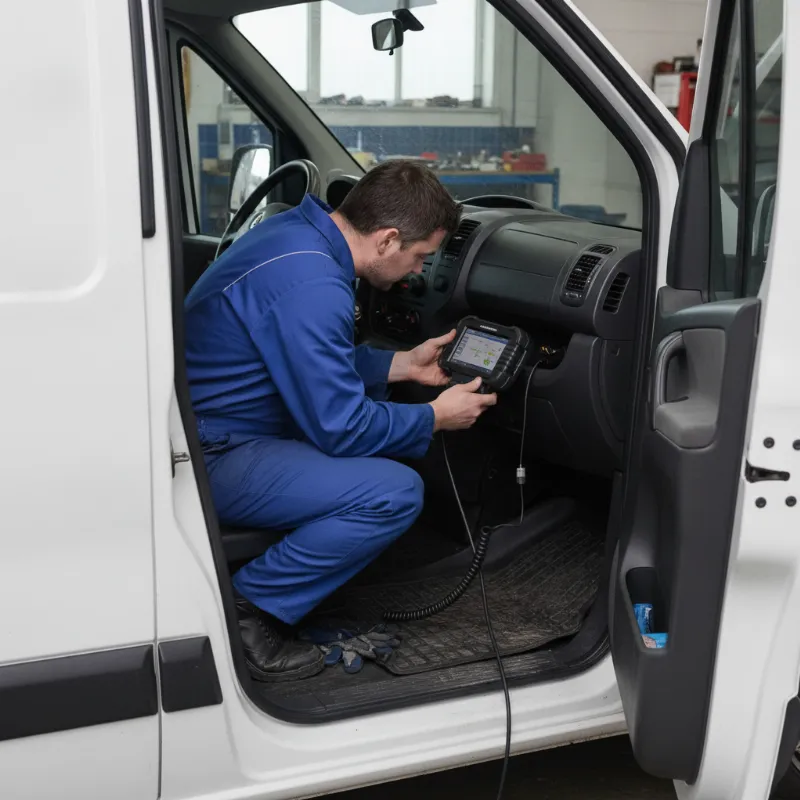
A proper diagnostic scan is the next step. On a warm Scudo that won't start, technicians typically look for fault codes relating to the crankshaft position sensor (often P0335 or manufacturer-specific equivalents), camshaft sensor correlation, or low rail pressure during cranking. Live data is more useful than stored codes here — watching engine RPM during cranking will show whether the ECU is even seeing the crank turn. If RPM reads zero while the starter is spinning, the crank sensor is confirmed. A fuel pressure reading below around 200 bar during cranking suggests a fuel supply or leak-off problem, and an injector back-leak test will identify the culprit. A voltage-drop test across the starter circuit takes minutes and rules the electrical side in or out.
Typical Repair Costs and When to Walk Away
Most warm-start faults on a Scudo are affordable to fix. A new crankshaft position sensor is a cheap part, typically £25 to £60, and fitting is usually under an hour of labour — expect a total bill of around £80 to £150 at an independent garage. A replacement starter motor, fitted, tends to run between £200 and £400 depending on whether a reconditioned or new unit is used. Battery and earth strap work is rarely more than £150 all-in.
Where costs escalate is with injector or high-pressure pump failures. A single replacement injector, coded and fitted, can be £250 to £500, and if all four need doing on a high-mileage van you're quickly into four figures. A new high-pressure fuel pump is a similarly hefty bill. If the van is otherwise tired — worn clutch, rusty sills, high mileage on the original turbo — spending £1,500 on fuel system work rarely makes financial sense. That's the point at which many owners decide to move the vehicle on.
Fiat Scudo Camper Conversions: Extra Things to Check Before Buying
The Scudo is a popular base for small camper conversions thanks to its manageable size and car-like drive. If you're looking at a converted Scudo and the seller mentions any hot-start history, be extra cautious. Campers often sit for weeks between uses, then get worked hard on a long tour — exactly the pattern that flushes out marginal sensors, weak batteries and tired fuel systems. Check when the leisure battery and starter battery were last replaced, ask whether the earth straps have been renewed, and look for evidence that the vehicle has had a recent diagnostic health check. Campers also carry more weight than a standard panel van, which puts extra load on the starter every time the engine fires, so a heat-soaked starter shows up sooner.
Is It Worth Fixing, or Time to Replace Your Scudo?
For most warm-start faults, repair is comfortably worthwhile. A Scudo with a fresh crank sensor, healthy battery and clean earths can genuinely soldier on for another 50,000 to 100,000 miles without drama. If the fault turns out to be a single sensor or the starter, fix it and enjoy the van — you'll spend more than the repair cost in depreciation on a replacement.
The calculation shifts if the diagnosis points at multiple injectors, the high-pressure pump, or a combination of issues alongside other tired components. At that point, weigh the repair bill against the van's market value and how long you realistically intend to keep it. If the numbers don't stack up, selling on and buying a fresher example is usually the smarter move — just be transparent with any buyer about the fault so you don't lose sleep or reputation over it.
Buying a Reliable Used Fiat Scudo: What to Look For
If you're in the market for a used Scudo, a few simple checks will steer you away from a warm-start nightmare. Ask the seller to leave the van cold when you view it — a vehicle that's already warm on the drive when you arrive is a classic way to hide a hot-start fault. After the test drive, switch off, sit for 15 to 20 minutes, then try to restart. A healthy Scudo will fire within a second or two.
Check the service history for evidence of regular oil and fuel filter changes, look underneath for corroded earth points and leaking injector seals (you'll see black soot around the injector bases), and take a scan tool along or ask the seller to allow a pre-purchase inspection. Mileage matters less than maintenance on these vans: a well-kept 150,000-mile Scudo is a better bet than a neglected 80,000-mile one. Buy from a dealer who's willing to warrant the vehicle and stand behind it, and you'll sidestep most of the pitfalls covered in this guide.
FAQs: Fiat Scudo Warm Start Problems
FAQs
Why won't my Fiat Scudo start when the engine is warm, and how do I fix it?
The most common cause is a failing crankshaft position sensor, which works fine when cold but drops its signal as it heats up, leaving the ECU unable to time the injectors. Other likely culprits are fuel pressure or injector leak-off problems, a heat-soaked starter motor, and poor battery earth connections. The fix depends on the diagnosis: a new crank sensor is typically £80 to £150 fitted, a starter motor £200 to £400, and battery or earth work rarely more than £150. Start with a diagnostic scan and a voltage-drop test rather than guessing at parts.
How long should I wait before trying to start my Scudo again if it won't fire warm?
Around 20 to 30 minutes is usually enough for the crankshaft sensor or starter to cool sufficiently to work again. If your van consistently restarts after that kind of cool-down, it's a strong indicator that the fault is heat-related rather than a fuel or ECU issue, and the crank sensor should be the first thing checked.
Can I still drive my Fiat Scudo if it sometimes won't start when warm?
You can, but it's risky and inconvenient — you may find yourself stranded at a fuel station or customer drop. More importantly, an intermittent fault tends to become a permanent one, often at the worst possible moment. Get it diagnosed sooner rather than later; most warm-start faults are cheap to fix if caught early.
Does the same warm-start problem affect the Peugeot Expert and Citroën Dispatch?
Yes. The Scudo, Expert and Dispatch share the same platform and engines, so the crankshaft sensor, starter heat soak and fuel system issues described here apply almost identically across all three. If you're cross-shopping used vans, the same pre-purchase checks are worthwhile on any of them.
Will a diagnostic scan always show a fault code for a warm-start problem?
Not always. Intermittent sensor faults often clear themselves once the engine cools and may not log a permanent code. That's why live data during a failed start attempt — watching whether the ECU sees crankshaft RPM while the starter turns — is more useful than relying on stored fault codes alone.