Best Crew Cab Van Review: The Top Picks for UK Businesses
What is a crew cab van and who is it for?
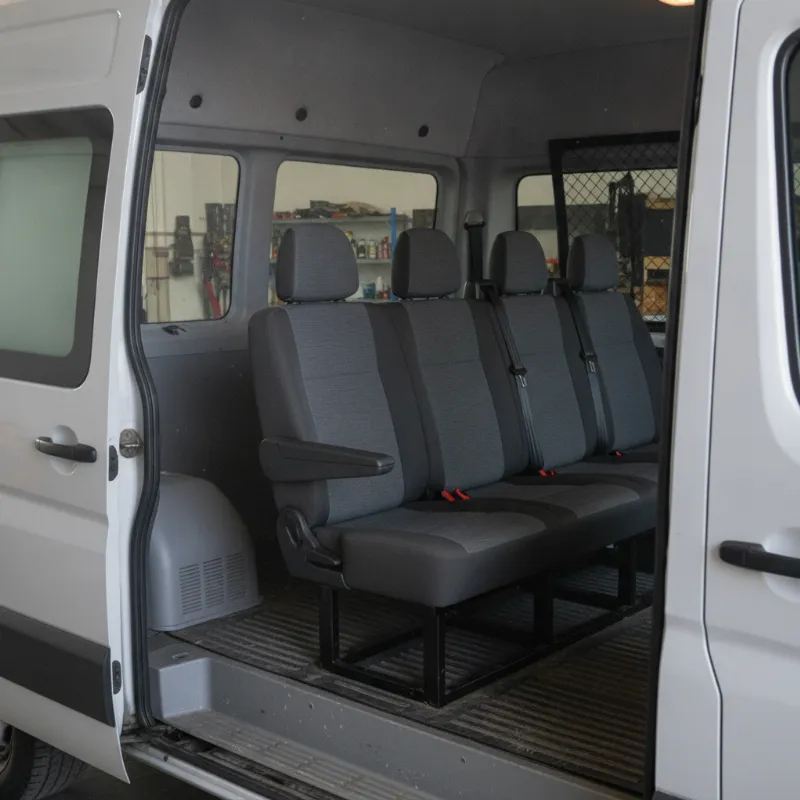
A crew cab van, sometimes called a double cab-in-van or kombi, is a light commercial vehicle that combines a second row of seats behind the driver with a load area at the rear. Instead of choosing between carrying passengers or cargo, you get both — usually with seating for five or six people and a partition separating the crew from the goods behind them.
They're a natural fit for trades and businesses that need to move a team and their kit together. Think construction firms transporting crews to site, groundworkers and landscapers, scaffolders, telecoms engineers, festival and event crews, utility companies and any operator running mobile teams who need tools, materials and people arriving in one vehicle. They also appeal to family users who want the practicality of a van with the flexibility of extra seats for weekends away.
How we reviewed the best crew cab vans
To put this shortlist together we looked at the crew cab conversions offered directly by mainstream manufacturers, along with the most popular factory-approved options available through UK dealer networks. We considered how each van performs in daily working conditions rather than showroom figures alone, drawing on published specs, real-world operator feedback and the kind of questions buyers ask when they're weighing up a fleet purchase.
Key criteria: payload, seating, comfort and running costs
Four factors shaped our verdicts. Payload matters because adding a second row of seats eats into the weight you can legally carry — so we looked at how much useful capacity is left once the crew is on board. Seating quality and access were assessed on legroom, headroom, and how easy it is to climb in and out with work boots on. Comfort covered cabin refinement, driver assistance tech and the standard of trim. Running costs took in fuel economy, service intervals, insurance groupings and expected residual values, all of which affect total cost of ownership over a typical three or four-year cycle.
The best crew cab vans reviewed
Below are the six crew cab vans we rate most highly for UK businesses right now. Each has its own character, and the right choice will depend on the balance you want between payload, comfort and budget.
Ford Transit Custom Double Cab-in-Van
The Transit Custom has been Britain's best-selling van for years, and the Double Cab-in-Van version inherits all the qualities that made it a fleet favourite. You get a proper second row of three seats with a solid bulkhead behind, plus a load area that remains genuinely usable for tools, materials and longer items. Ford offers it in short and long wheelbase forms, with a strong range of EcoBlue diesels and the plug-in hybrid option for lower-emission zones.
Behind the wheel it feels more like a car than a commercial vehicle, with sharp steering, a comfortable ride and Ford's SYNC infotainment. Payloads are competitive, dealer coverage across the UK is excellent, and residual values remain among the strongest in the class — which is why so many operators keep coming back to it.
Volkswagen Transporter Kombi
The VW Transporter Kombi is the crew cab of choice for buyers who want a premium feel. The cabin is built to a genuinely high standard, the seats are supportive and the driving experience is polished. Rear passengers benefit from proper windows and a bright, airy space that feels more like an MPV than a van.
It's not the cheapest option on paper, but it holds its value exceptionally well, so lease and finance monthly costs are often more competitive than the sticker price suggests. Payloads are respectable, and VW's range of TDI engines and 4MOTION all-wheel drive make it a strong pick for rural operators or anyone regularly working off tarmac.
Vauxhall Vivaro Doublecab
The Vivaro Doublecab offers arguably the best value in the sector. Sharing its underpinnings with the Peugeot, Citroën and Toyota equivalents, it delivers a well-equipped, easy-to-drive package at a keen price. The six-seat layout is practical, the load area is a good size for its class and there's a fully electric Vivaro Electric variant for businesses committed to zero-emission fleets.
Standard kit is generous, servicing costs are reasonable and Vauxhall's dealer network is broad. For SMEs and sole traders watching every pound, it's a very sensible buy.
Peugeot Expert Crew Van
Mechanically similar to the Vivaro but with its own distinct cabin design, the Peugeot Expert Crew Van pairs stylish looks with strong practicality. The i-Cockpit driving position won't suit everyone at first — the compact steering wheel and raised instruments take some getting used to — but most drivers warm to it quickly.
Compact and standard wheelbase versions are both available, and the Expert has a reputation for good fuel economy from its BlueHDi diesels. A fully electric version is offered too, giving city-based operators a genuine zero-emission option without stepping up to a larger vehicle.
Mercedes-Benz Vito Crew Cab
If image and refinement matter as much as workhorse credentials, the Vito Crew Cab is hard to beat. It looks and feels like a Mercedes inside, with premium materials, a slick infotainment system and the option of nine-speed automatic gearboxes on higher-spec models. Rear-wheel drive on longer versions gives it a more assured feel when towing or fully loaded.
The Vito commands a price premium, but for businesses where the vehicle represents the brand — think executive relocations, high-end trades or client-facing services — it's money well spent. An eVito variant is available for operators moving to electric.
Renault Trafic Crew
The Trafic has quietly built a strong following among UK trades, and the crew cab version continues that story. It's practical, well priced and offers one of the more comfortable driver's seats in the segment, which matters if you're behind the wheel all day. Renault's dCi diesels are well proven, and the load area is a sensible shape for carrying awkward loads.
Look out for the Trafic's SafetyPack options, which bring adaptive cruise control and lane-keeping assist to a segment that hasn't always prioritised driver aids. Warranty terms are competitive too.
Crew cab van comparison at a glance
Ranking crew cabs against one another isn't straightforward because each excels in a slightly different area. The Ford Transit Custom is the all-rounder — the safe choice that does almost everything well. The VW Transporter Kombi wins on cabin quality and residuals. The Vauxhall Vivaro and Peugeot Expert are the value picks, sharing a strong platform at a keen price. The Mercedes Vito is the premium option. The Renault Trafic sits somewhere in the middle: comfortable, capable and often generously specced.
On payload, watch the figures carefully. Once you add a second row of seats, useful capacity typically drops by around 200–300kg compared with the equivalent panel van, so make sure the version you're pricing genuinely carries what you need on a working day.
How to choose the right crew cab van for your business
Start with the honest questions. How many people are you moving on a typical day, and how many on your busiest? What's the heaviest and bulkiest load you regularly carry? How many miles will the van cover each year, and where — urban, motorway, or off the beaten track? Do you need to enter Clean Air Zones or the London ULEZ regularly, and is an electric drivetrain viable given your daily mileage and access to charging?
Next, think about the total cost rather than the headline price. A cheaper van that depreciates faster, uses more fuel or costs more to service can easily work out more expensive over three or four years than a pricier model with strong residuals. Consider warranty length, service intervals and the availability of dealer support near your base — downtime is expensive, and a nearby dealer with a proper commercial workshop is worth a lot.
Finally, get behind the wheel. Take the shortlist for a proper test drive with a realistic load and, if possible, with the people who'll actually be travelling in the back. A ten-minute demo around a car park won't tell you much; a longer run on the roads you drive every day will.
Buying, leasing or financing a crew cab van
Most UK businesses acquire crew cab vans in one of three ways. Outright purchase suits operators who plan to keep the vehicle for the long term and want to build an asset on the balance sheet — you're free of monthly commitments once it's paid for, but you carry all the depreciation risk. Hire purchase spreads the cost over a fixed term with ownership transferring at the end, which many trades prefer as a middle ground.
Contract hire and leasing are increasingly popular for crew cab vans because monthly payments are predictable, maintenance can often be bundled in, and you simply hand the vehicle back at the end of the term. That removes any worry about residual values and makes fleet budgeting straightforward. Finance lease sits somewhere between the two, offering flexibility on the end-of-term arrangement.
Which route works best depends on your cash flow, tax position and how long you plan to keep the vehicle. Talk to your accountant about VAT recovery and capital allowances, and get quotes on more than one funding structure before you commit — the same van can look very different when priced as an outright purchase versus a contract hire deal.
Final verdict: which crew cab van is best?
If we had to pick one, the Ford Transit Custom Double Cab-in-Van is the crew cab van we'd recommend to most UK businesses. It's the most complete package — well built, well supported, comfortable to drive, strong on residuals and available in enough variants to suit almost any operator. The plug-in hybrid option also gives it a genuine edge for anyone working in and out of low-emission zones.
That said, the "best" crew cab depends on what you value most. Choose the VW Transporter Kombi for cabin quality and long-term value, the Mercedes Vito for premium image, the Vauxhall Vivaro or Peugeot Expert for outright value, and the Renault Trafic for a comfortable, well-equipped alternative. Any of these six will serve a UK business well — the trick is matching the van to the way you actually work.
FAQs
Which is the best crew cab van to buy in the UK?
The Ford Transit Custom Double Cab-in-Van is our overall pick for most UK businesses thanks to its all-round strengths: comfortable driving experience, competitive payload, strong dealer support and excellent residual values. That said, the VW Transporter Kombi is the best choice if cabin quality and long-term value matter most, while the Vauxhall Vivaro Doublecab and Peugeot Expert Crew Van offer the best value for money. The right answer depends on your payload needs, budget and how you use the vehicle day to day.
How many seats does a crew cab van have?
Most crew cab vans seat six people in total — three in the front row and three in the second row — though some models are offered as five-seaters. Behind the second row you'll find a bulkhead separating the crew from the load area, so you don't lose the ability to carry tools, materials or equipment.
What payload can a crew cab van carry?
Payload varies by model, wheelbase and specification, but adding a second row of seats typically reduces useful capacity by around 200–300kg compared with the equivalent panel van. Most crew cabs in this review can still carry between around 800kg and 1,200kg. Always check the specific gross vehicle weight and unladen weight of the exact variant you're considering, especially if you're regularly running close to the limit.
Are crew cab vans classed as commercial vehicles for tax?
In most cases yes, provided the van meets HMRC's definition of a goods vehicle — broadly, a payload capacity of at least one tonne. That affects VAT recovery, benefit-in-kind treatment and capital allowances. However, some crew cab and combi vehicles have been reclassified by HMRC in the past, so it's important to check the specific model's classification with your accountant before purchase to avoid unexpected tax bills.
Can I get a crew cab van on lease or finance?
Yes. Crew cab vans are widely available on contract hire, hire purchase, finance lease and business contract purchase, as well as outright purchase. Leasing is particularly popular because it gives predictable monthly costs and removes residual value risk, while hire purchase suits businesses that want to own the vehicle at the end of the term. Speak to a commercial finance specialist to compare structures based on your cash flow and tax position.