When to Change the Cambelt on a Peugeot Expert: Mileage, Age & Warning Signs
Why the Cambelt Matters on a Peugeot Expert
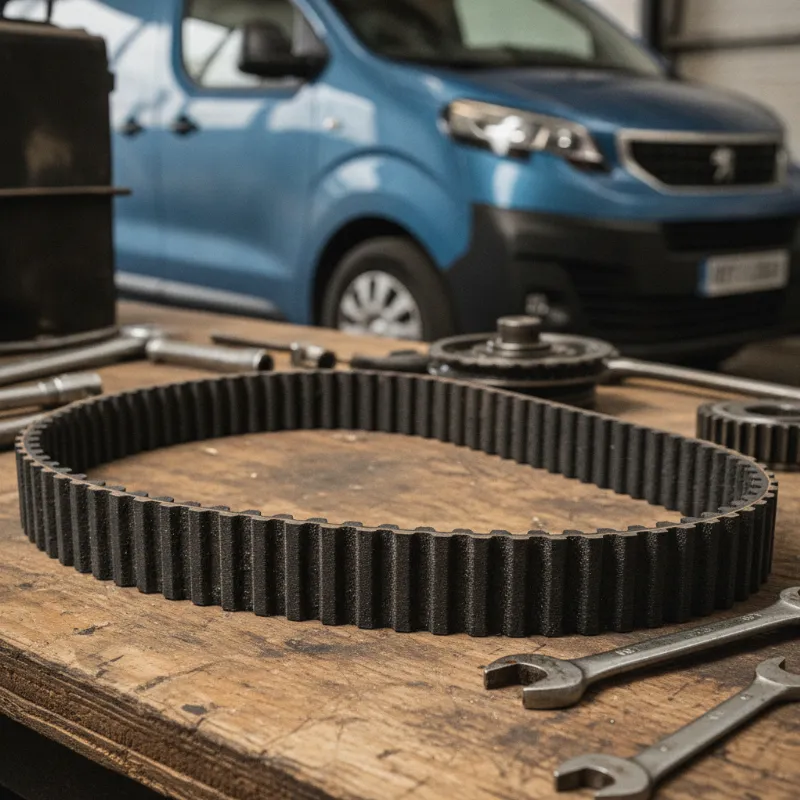
The cambelt (also known as the timing belt) is one of the most critical components inside your Peugeot Expert's engine. Its job is to keep the crankshaft and camshaft rotating in perfect synchronisation, ensuring the valves open and close at precisely the right moment relative to the pistons. If that timing slips even slightly, the consequences can range from rough running to catastrophic engine failure.
Unlike a chain-driven engine, a cambelt is a rubber-composite component that wears steadily over time. Heat, oil contamination, tension changes and simple age all degrade the belt whether you're clocking up motorway miles or leaving the van parked for weeks between jobs. That's why manufacturers set both a mileage limit and a time limit for replacement — and why Peugeot Expert owners need to keep a close eye on service history rather than waiting for a warning light that may never come.
Peugeot Expert Cambelt Change Intervals by Engine
Peugeot has fitted the Expert with several diesel engines across its three generations, and cambelt intervals differ depending on which unit sits under your bonnet. Always cross-check the recommended interval against your service book or a franchised dealer, as Peugeot has revised guidance for some engines over the years. Below are the intervals most commonly quoted for the two engine families you're likely to encounter.
1.6 HDi Cambelt Interval
The 1.6 HDi (and later 1.6 BlueHDi) is a popular choice in the smaller-capacity Expert and shares its architecture with equivalent Citroën Dispatch and Ford/Toyota derivatives. Peugeot's typical recommendation is a cambelt change every 96,000 miles or 10 years, whichever comes first. Many independent specialists suggest bringing that forward to around 80,000 miles if the van has led a hard life — think heavy urban stop-start work, dusty sites or short journeys where the engine rarely reaches full temperature.
It's also worth replacing the water pump at the same time. It's driven by the cambelt on this engine, and the labour to access it is largely already done, so combining the two jobs saves a significant amount on future bills.
2.0 HDi and BlueHDi Cambelt Interval
The 2.0 HDi and 2.0 BlueHDi engines fitted to higher-payload Experts generally follow a similar schedule of 96,000 miles or 10 years, though earlier 2.0 HDi units were sometimes quoted at 100,000 miles. Later BlueHDi engines used in the third-generation Expert (from 2016 onwards) can push closer to 112,000 miles under light use, but again the ten-year age limit often arrives well before the mileage cap for vans used part-time or by owner-operators.
If you've bought your Expert used and can't verify from the paperwork that the belt has been done, treat it as due immediately. It's far cheaper to change a belt that had life left in it than to rebuild an engine that didn't.
Signs Your Peugeot Expert Cambelt Needs Changing
Cambelts rarely give dramatic warnings before they let go, which is exactly why the mileage and time intervals matter so much. That said, there are a few symptoms that suggest the belt or its associated tensioners and pulleys are on their way out. A high-pitched whining or ticking noise from the front of the engine, particularly on cold start, can indicate a worn tensioner or a belt that's beginning to fray. Difficulty starting, misfires, uneven idling or a noticeable loss of power under load can all point to timing that has started to drift.
Visually, if you can safely see the belt through an inspection cover, look for cracking, glazing, missing teeth or oil contamination. Any of these means the belt should be changed without delay. And if you've recently had a coolant leak from the water pump or a front crankshaft seal, get the belt checked — engine oil and coolant both dramatically shorten a cambelt's lifespan.
What Happens If the Cambelt Fails
Both the 1.6 and 2.0 HDi engines in the Peugeot Expert are what's known as "interference" designs. That means the valves and pistons share the same physical space inside the cylinder — just at different moments in the engine cycle. If the cambelt snaps or jumps teeth while the engine is running, that timing collapses and the pistons will strike the open valves at high speed.
The typical outcome is bent valves at best, and at worst damaged pistons, a cracked cylinder head and even a scored block. Repair bills for a cambelt failure on an Expert routinely run into four figures, and in many cases the economical fix is a replacement engine rather than a rebuild. Compared with the cost of a scheduled belt change, it's a false economy to delay.
Estimated Cambelt Replacement Cost for a Peugeot Expert
At a UK independent garage, a cambelt change on a Peugeot Expert typically costs somewhere between £400 and £650 including parts and labour, depending on the engine and your location. A franchised Peugeot dealer will usually charge more — often £700 to £900 — but will use genuine parts and update your digital service record. Adding the water pump generally increases the bill by £80 to £150, which is well worth spending given the shared labour.
Prices vary with the age of the van, the complexity of accessing the belt (the 2.0 units are a little more involved), and whether ancillary components like the auxiliary belt, tensioner and idler pulleys are being swapped at the same time. A reputable garage will quote for a full kit rather than the belt alone — accept nothing less, because reusing tired tensioners on a fresh belt is a recipe for a repeat visit.
Should You Repair or Replace Your Peugeot Expert?
For most Expert owners, a cambelt change is straightforward preventative maintenance and absolutely worth doing. Even at main-dealer prices, it's a small fraction of what a replacement van costs, and a well-maintained Expert can comfortably run to 200,000 miles and beyond. If your van is otherwise in good shape — clean bodywork, healthy gearbox, no major DPF or turbo issues — get the belt done and carry on.
Where the calculation changes is if the belt is due at the same time as a stack of other big-ticket jobs: a failing clutch, a tired turbo, corrosion on the sills, or an MOT list as long as your arm. At that point you need to weigh the total spend against the van's market value and think about whether an upgrade to a newer Expert — ideally one with a fresh cambelt already in the service history — makes better commercial sense. Either way, don't let the belt run past its interval while you decide; a failed cambelt takes the choice out of your hands entirely.
FAQs
At what mileage or age should you replace the cambelt on a Peugeot Expert van?
Peugeot's guidance for most Expert diesel engines (1.6 HDi, 2.0 HDi and BlueHDi) is to replace the cambelt every 96,000 miles or 10 years, whichever comes first. Some later BlueHDi units are quoted at up to 112,000 miles, while earlier models may be closer to 80,000. Always check your specific engine and service book, and if the van has been used heavily in urban stop-start work, consider bringing the change forward.
Does the Peugeot Expert have a cambelt or a timing chain?
All the common HDi and BlueHDi diesel engines fitted to the Peugeot Expert use a rubber cambelt rather than a metal timing chain. That means it must be replaced at a set interval — it will not last the life of the engine.
Should the water pump be replaced with the cambelt on a Peugeot Expert?
Yes. On both the 1.6 and 2.0 HDi engines the water pump is driven by the cambelt, so the labour to reach it is already covered during a belt change. Replacing the pump at the same time typically adds only £80 to £150 and prevents a costly repeat job if it fails later.
How long does a cambelt change take on a Peugeot Expert?
A typical cambelt and water pump change on a Peugeot Expert takes a competent garage between four and six hours, depending on the engine variant and whether tensioners, idlers and the auxiliary belt are being replaced at the same time. Most workshops will ask you to leave the van for a full day.
Can I drive my Peugeot Expert if the cambelt is overdue?
It's strongly advised not to. Both the 1.6 and 2.0 HDi engines are interference designs, so if the belt snaps the valves and pistons will collide, causing severe internal damage. Book the change as soon as possible and, in the meantime, avoid heavy loads or high revs.