What Are Fiat Ducato Vans Like? An Honest UK Buyer's Guide
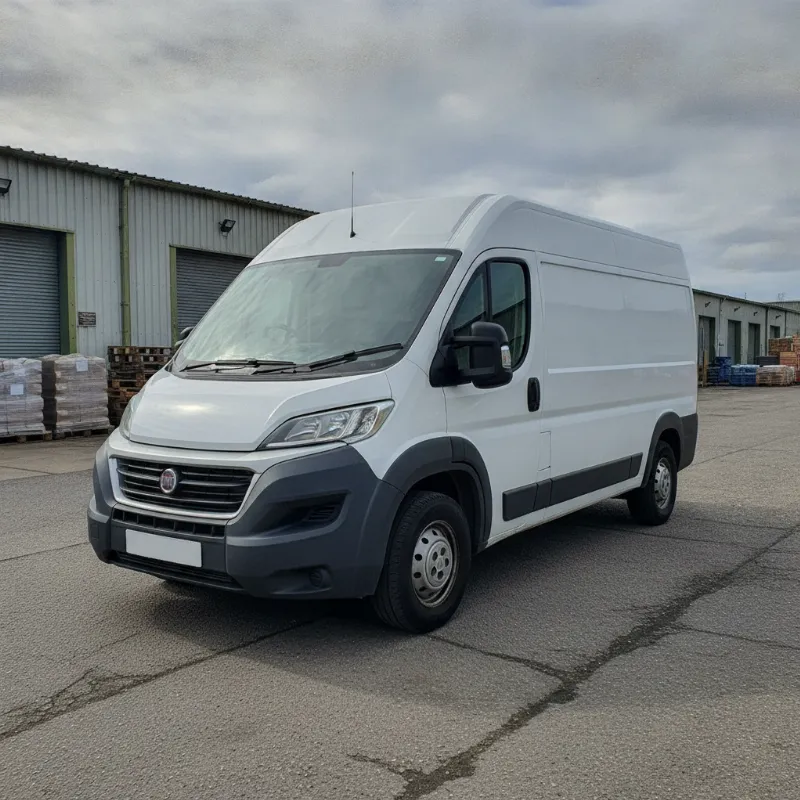
What Are Fiat Ducato Vans Like? The Short Answer
If you've been asking around about the Fiat Ducato, you'll have heard the same phrases again and again: big, dependable, easy to live with. And honestly, that's a fair summary. The Ducato is one of the most widely used large panel vans in the UK and across Europe, and it's earned that position over decades of shifting parcels, tools, furniture and holidaymakers up and down the motorway network.
What makes the Ducato stand out isn't flashy tech or a premium badge — it's the sheer usability of the thing. The cab feels more like a small lorry than a car, the load area is genuinely cavernous, and the 2.3 MultiJet diesel engine has a reputation for racking up serious mileage without drama. Whether you're a tradesperson looking for a workhorse, a courier chasing efficiency, or a family dreaming of a self-build camper, the Ducato tends to make sense on paper and in practice.
Is it perfect? No — the ride can feel bouncy when unladen, and the interior plastics are functional rather than plush. But as an honest tool for the job, few large vans do it better for the money.
Driving Experience: What It's Like Behind the Wheel
Climb into a Ducato and the first thing you notice is the seating position — you sit high, upright, with a commanding view of the road. The steering wheel is car-like, the pedals well spaced, and the gear lever falls neatly to hand on the dashboard rather than the floor. It's a layout that feels natural within a few miles, which matters when you're spending all day in the cab.
The Fiat Ducato 2.3 MultiJet Engine Explained
The heart of the modern Ducato is the 2.3-litre MultiJet turbo diesel, an engine shared across various Stellantis commercial vehicles and long trusted by fleet operators. It's offered in several power outputs — typically 120, 140, 160 and 180 bhp — with the mid-range 140 being the sweet spot for most UK buyers. Torque is plentiful from low revs, which means you rarely need to work the gearbox hard, even when the van is loaded up.
Fuel economy is a genuine strength. Driven sensibly on a mix of motorway and A-roads, most drivers report figures in the mid-30s to low-40s mpg, which is impressive for a vehicle this size. The MultiJet is also known for its longevity — service it on time, don't ignore warning lights, and 200,000-mile examples are far from rare.
Ride, Handling and Cabin Comfort
The Ducato uses front-wheel drive, which is unusual for a van of this size and gives it a couple of real advantages: a lower load floor and better traction when the load bay is full. On the road it feels planted and stable, particularly on motorways where it settles into a relaxed cruise.
Unladen, the rear end can feel slightly skittish over potholes and speed bumps — that's the trade-off of leaf-sprung heavy-duty suspension designed to carry over a tonne. Once you've got weight in the back, the ride smooths out noticeably. The cab itself is quiet enough for long stints, with decent sound insulation, air conditioning on most trims, and enough storage cubbies to swallow the usual driver clutter of flasks, paperwork and phone chargers.
Load Space, Fiat Ducato Dimensions and Practicality
This is where the Ducato really earns its keep. The load area is designed with the working driver in mind — square walls, a low load lip, twin rear doors that open wide, and a nearside sliding door as standard on most variants.
Fiat Ducato Size Options: L1 to L4 and H1 to H3
Fiat offers the Ducato in four lengths (L1, L2, L3 and L4) and three roof heights (H1, H2 and H3), giving you an enormous range of combinations. At the compact end, the L1H1 gives you around 8 cubic metres of load space in a footprint that's still car-park friendly. Step up through L2 and L3 and you gain useful extra length for longer items like ladders, timber and pipework. At the top of the range, the L4H3 offers a genuinely enormous 17 cubic metres — the kind of capacity usually associated with box vans.
Payload varies with configuration, but the Maxi variants can carry up to around 2,000 kg. Gross vehicle weights range from 3.0 to 4.25 tonnes, so it's worth checking your licence category if you're looking at the heaviest models.
Payload and Everyday Usability
Beyond the raw numbers, it's the small details that make the Ducato easy to work out of. The load floor sits relatively low thanks to that front-wheel-drive layout, so lifting heavy items in and out is less of a back-breaker. Load lashing points are plentiful, the side door opening is wide enough for a Euro pallet, and the rear doors open to 180 degrees on most models (270 degrees is a common option).
For couriers and multi-drop operators, the walk-through bulkhead option is a genuine time-saver, letting you nip between cab and load bay without stepping out into the rain.
Reliability, Running Costs and Ownership
The Ducato's reputation for reliability is well founded, but it comes with an important caveat: these vans reward proper maintenance. Stick to the service schedule, use decent oil, keep on top of the timing belt (or chain, depending on age and variant) and the drivetrain will generally look after itself. Neglect it, and like any hard-working diesel, it will let you know.
Common wear items to be aware of on higher-mileage examples include the DPF and EGR systems — inevitable on any modern diesel used for lots of short journeys — plus the usual suspension bushes and brake components you'd expect on a van that carries heavy loads. Parts availability is excellent thanks to the sheer number on the road, and independent specialists are widely available if you'd rather not use a main dealer.
Insurance groupings are reasonable, road tax is at the standard commercial vehicle rate, and fuel returns — as mentioned — are genuinely competitive. Residual values also hold up well, particularly on tidy examples with a full service history and camper-friendly specifications.
Camper Vans For Sale Fiat Ducato: Why It's the UK's Favourite Motorhome Base
If you've been browsing motorhomes for any length of time, you'll have noticed the same shape cropping up under different brand names — Auto-Trail, Swift, Bailey, Adria, Rapido, Bürstner, Hymer, Pilote and many more all build on the Ducato chassis. Estimates suggest around two-thirds of European motorhomes are based on it, which is a staggering share of the market.
The reasons are practical. The AL-KO extended chassis option gives converters a wider rear track and lower floor for cavernous garage storage. The front-wheel-drive layout means no propshaft running down the middle, which is gold dust when you're trying to fit a fixed bed or wet room. And the cab itself is spacious enough to double as extra living space when you swivel the seats.
Fiat Ducato Campervan Layouts and Conversions
Ducato-based campers come in every conceivable layout. Compact L2 conversions typically feature a rear kitchen with a rock-and-roll bed, ideal for couples and weekenders. L3 models often add a fixed rear bed and a proper shower room, while L4 coachbuilts and A-classes provide fully fitted homes-from-home with island beds, drop-down beds and full-size fridges.
Self-build conversions are hugely popular too, and there's a thriving online community sharing advice on insulation, electrical systems, water tanks and log burners. The Ducato's square load bay makes it far easier to fit off-the-shelf furniture and standard-sized appliances than more curvaceous alternatives.
Fiat Ducato Campervans For Sale: What to Look For When Buying
If you're shopping for a Ducato camper, a few checks will save you heartache down the line. Look for a full service history and evidence of regular use — camper vans that have sat unused for months often suffer more than daily drivers. Check the habitation certificate is up to date; damp is the number one killer of coachbuilts, so bring a damp meter or budget for a habitation check.
On the mechanical side, listen for a smooth idle, check for any dashboard warning lights (particularly around the DPF and AdBlue systems on newer models), and take it for a proper test drive with weight on board if possible. Automated MTA gearboxes on older Ducatos can be quirky — not faulty, just an acquired taste — so try before you buy.
Panel Van vs Passenger Van vs Fiat Ducato Motorhome
The Ducato wears three quite different hats. As a panel van, it's a pragmatic workhorse — the choice for tradespeople, couriers and small businesses who need volume and reliability without paying a premium badge tax. As a passenger van or minibus (Combi and Panorama variants), it seats up to nine and works well for schools, community transport and larger families, though it's less refined than dedicated MPVs.
As a motorhome base, it's arguably peerless. The combination of layout flexibility, robust running gear, wide parts availability across Europe and strong resale value is hard to beat. If you're weighing up which version suits you, think honestly about how you'll use it 90% of the time — a camper is a poor daily driver, and a panel van is a poor holiday home, even if both share the same underpinnings.
Who Should Buy a Fiat Ducato Van?
The Ducato suits a specific kind of buyer: someone who values substance over style. If you want a large van that can be worked hard, serviced affordably and specified to fit an unusual job, it's an obvious choice. Tradespeople upgrading from a medium van will appreciate the extra volume without a huge jump in running costs. Couriers will find the fuel economy and payload compelling. And anyone even vaguely tempted by the campervan life should have the Ducato at the top of their shortlist.
Who might it not suit? If you prioritise a plush car-like interior, cutting-edge driver-assistance tech, or the badge cachet of a German alternative, you may find the Ducato feels a little utilitarian. But for most working buyers, that honest, functional character is exactly the appeal.
Find Your Fiat Ducato With Us
Whether you're after a straightforward panel van for the business, a nine-seat crew bus for the team, or a base vehicle to convert into your dream camper, we've got Ducatos to suit every budget and use case. Every van we sell is inspected, prepared and backed by proper aftersales support, so you can drive away with confidence. Get in touch or drop by the forecourt — we're always happy to talk Ducatos, whether you're buying today or just doing your homework.
FAQs
What are Fiat Ducato vans actually like to drive, own and use in the UK?
Fiat Ducatos are practical, comfortable and easy to live with. They drive well for a large van thanks to a high seating position, car-like controls and a strong 2.3 MultiJet diesel engine. Ownership costs are reasonable, fuel economy is competitive at 35-40+ mpg, and reliability is generally very good with proper servicing. They're used heavily by UK tradespeople, couriers and — most famously — as the base for the majority of European motorhomes.
How long do Fiat Ducato engines typically last?
The 2.3 MultiJet diesel is known for its longevity. With regular servicing, timely oil changes and attention to the DPF and EGR systems, examples reaching 200,000 miles and beyond are common. Fleet and camper owners regularly report even higher figures. As with any modern diesel, mostly motorway use is kinder than short urban journeys.
Is a Fiat Ducato good as a first campervan?
Yes — it's arguably the ideal first camper. Parts and specialists are widely available across the UK and Europe, insurance is reasonable, layouts are plentiful whether you buy a factory conversion or self-build, and resale values are strong. Just make sure any used camper has a recent habitation check and no signs of damp before you buy.
What's the difference between a Fiat Ducato Maxi and a standard Ducato?
Maxi models have a higher gross vehicle weight (typically 3.5 to 4.25 tonnes), uprated suspension, larger brakes and often wider rear track. They're designed to carry heavier payloads and are popular as motorhome bases where the extra weight capacity is needed for water tanks, furniture and passengers. Standard Ducatos are lighter and suit buyers who don't need the extra capacity.
Are Fiat Ducato vans expensive to insure and service in the UK?
No, they're generally affordable to run. Insurance groupings are in line with other large vans, servicing at independent specialists is competitively priced, and parts are plentiful thanks to how many are on the road. The main ongoing costs to budget for are tyres (they're large), brakes if you carry heavy loads, and eventual DPF maintenance on higher-mileage examples.