 Call us on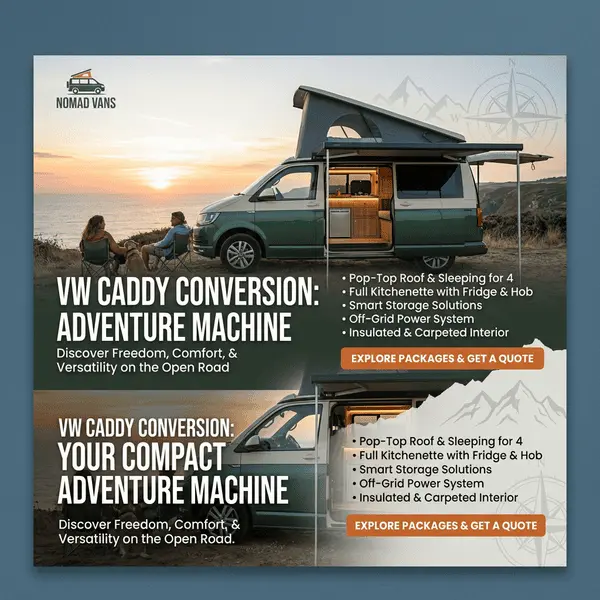
VW Caddy Conversion
Transform Your VW Caddy with a Professional Conversion
The VW Caddy conversion has become a popular choice for those seeking to transform their van into a versatile camper. This compact vehicle offers an ideal balance of maneuverability and living space, making it perfect for adventurers who want to explore the open road without the bulk of larger campervans. The Caddy’s practical design and efficient use of space have led to its rising popularity among DIY enthusiasts and professional converters alike. Source 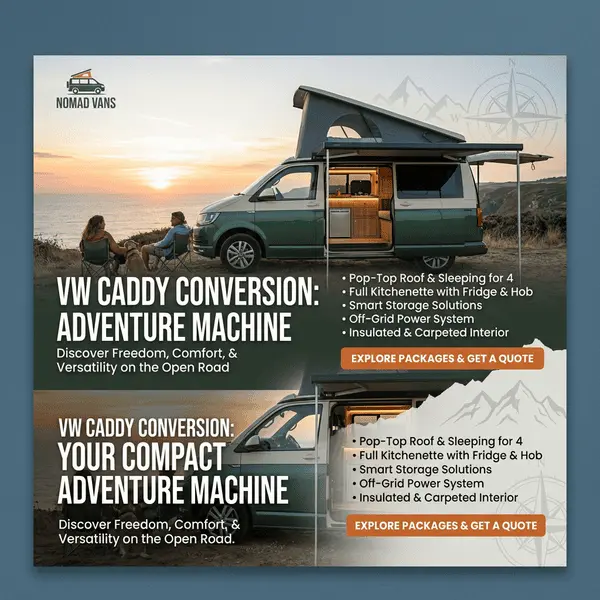
This guide will walk readers through the process of converting a VW Caddy into a fully functional camper. It covers the reasons to choose a Caddy for conversion, essential components to include, a step-by-step conversion guide, and tips to maximize space and functionality. Whether you’re a seasoned camper or new to the world of van life, this comprehensive resource will help you create your ideal mobile home using a VW Caddy as your base vehicle. See all VW Caddy for sale
Why Choose a VW Caddy for Your Camper Conversion
The VW Caddy has become a popular choice for camper conversions, offering a perfect balance of practicality and comfort for those seeking adventure on the open road. This compact van provides an ideal platform for creating a versatile and efficient mobile home. See all VW Caddy lease deals
Ideal for campers, trades and lifestyle-focused van owners
One of the main advantages of choosing a VW Caddy for your camper conversion is its compact size. The Caddy is probably the smallest vehicle suitable for a campervan conversion, making it much easier to drive and more akin to a car. This feature is particularly beneficial when navigating tight roads or busy urban areas. The smaller size also means better fuel efficiency, with owners reporting higher miles per gallon compared to larger vans like the VW Transporter. See all VW Caddy Maxi
The compact nature of the Caddy doesn’t mean sacrificing comfort or functionality. Despite its size, this small vehicle is surprisingly spacious and versatile. With careful planning and efficient use of space, a VW Caddy Camper can provide all the necessary amenities for comfortable living, including sleeping areas, a compact kitchen, and storage solutions. See VW Caddy Maxi for sale
VW Caddy Models Suitable for Conversion
When considering a VW Caddy for camper conversion, there are several models to choose from. The standard length VW Caddy can be converted into a campervan, but many enthusiasts prefer the VW Caddy Maxi for its extra space. The Caddy Maxi offers more room in the rear, allowing for a full camper kitchen and the possibility of fitting most appliances you’d find in larger conversions, albeit in smaller versions. See VW Caddy alloy wheels
For those looking to purchase a VW Caddy for conversion, it’s recommended to look for models from late 2015 and newer, preferably with the 2.0 TDI engine. This combination offers the best fuel economy and performance, making it ideal for life on the road. See all VW Caddy Camper vans
Comparison with Other Popular Van Models
When compared to other popular van models, the VW Caddy stands out in several ways. It’s generally cheaper to buy than larger vans like the VW Transporter, which can result in significant savings. The initial cost savings extend to the conversion process as well, with a Caddy conversion typically costing £5,000 to £15,000 less than a Transporter conversion.
The Caddy also offers advantages in terms of insurance and maintenance costs. Being a smaller, cheaper vehicle means less risk for insurance companies, potentially saving owners hundreds of pounds a year compared to larger vans. Additionally, the compact size means less surface area to clean and maintain.
Essential Components of a VW Caddy Camper Conversion
When converting a VW Caddy into a camper, several key components are essential to create a functional and comfortable living space. These elements transform the van into a versatile mobile home, perfect for adventures on the open road. See VW Caddy Accessories
Bed and Seating Options
A comfortable sleeping area is crucial in any camper conversion. For the VW Caddy, a popular choice is a convertible bed system that doubles as seating during the day. Many opt for a pod bed system, which can be easily installed and removed when needed. These systems often come with hinged lids for better access to storage space underneath. Some designs include a smaller table top that fits into the bed board, creating a versatile living area. See VW Caddy Accessories
Kitchen and Storage Solutions
Maximizing storage in a compact space like the VW Caddy is vital. A well-designed kitchen unit is a centerpiece of any camper conversion. It typically includes space for essentials like a sink, cooker, and storage cupboards. To make the most of the limited space, consider installing slide-out drawers, pull-out shelves, and overhead lockers. Mason jars for dry food storage and magnetic knife holders can help keep the kitchen organized and functional. See VW caddy Maxi Life
Electrical Systems and Lighting VW Caddy Conversion
A reliable electrical system is crucial for powering appliances and lighting in your VW Caddy camper. Many conversions include a leisure battery, which can be charged while driving or through solar panels. A control panel with multiple outlets, USB ports, and a voltmeter is essential for managing your power needs. LED lights are a popular choice for their energy efficiency and brightness. Consider installing both ceiling lights and reading lights for versatility. See VW Caddy Swamper
Insulation and Ventilation VW Caddy Conversion
Proper insulation is key to maintaining a comfortable temperature inside your VW Caddy camper. It helps keep the interior warm in cold weather and cool in hot conditions. Various insulation materials are available, including thermal acoustic layers and space quilts. Ventilation is equally important to prevent condensation and ensure fresh air circulation. Installing a roof vent or window vents can significantly improve air quality and comfort inside the camper. See VW Caddy Automatic
By incorporating these essential components, a VW Caddy can be transformed into a functional and cozy camper, ready for adventures big and small. The key is to maximize the use of space while ensuring comfort and practicality in your mobile home.
Step-by-Step Guide to Converting Your VW Caddy
Converting a VW Caddy into a camper van is an exciting project that requires careful planning and execution. This guide will walk you through the essential steps to transform your van into a comfortable mobile home.
Planning and Design
Before starting the conversion, it’s crucial to create a detailed plan for your VW Caddy camper. Consider your needs and priorities, such as sleeping arrangements, storage space, and kitchen facilities. Measure your van’s interior carefully and create a layout that maximizes the available space. Many VW Caddy owners opt for a design that includes a convertible bed, a compact kitchen unit, and ample storage solutions.
When planning your conversion, keep in mind the following priorities: • Comfortable sleeping area for two people • Usability with and without back seats • Easy access to essential items • Independence for at least 7 days (water, gas, food) • Indoor solution for rainy days
Stripping and Preparing the Van VW Caddy Conversion
The first step in the conversion process is to strip the van’s interior and prepare it for the build. This involves:
- Removing any existing ply lining, flooring, and fixtures
- Cleaning the van thoroughly, including the floor, walls, and ceiling
- Addressing any rust or damage to the van’s body
- Removing the bulkhead if present (often requires taking up the floor first)
When removing components, be careful not to damage the van’s structure. Some parts, like wheel boxes, may be challenging to remove due to rusted bolts. If you encounter difficulties, consider seeking professional help or borrowing specialized tools.
Installing Core Components VW Caddy Conversion
Once the van is stripped and cleaned, it’s time to install the core components of your camper conversion:
- Insulation: Apply sound deadening material and insulation to the walls, floor, and ceiling to improve temperature regulation and reduce noise.
- Electrical system: Install a leisure battery, control panel, and wiring for lights and appliances. Consider adding solar panels for off-grid power.
- Flooring: Lay a new floor, typically starting with a layer of insulation, followed by plywood and a durable, easy-to-clean surface.
- Wall and ceiling cladding: Install wooden cladding or carpet lining to create a cozy interior.
- Bed frame: Build a convertible bed frame that can double as seating during the day.
- Kitchen unit: Install a compact kitchen with essentials like a sink, cooker, and storage space.
Finishing Touches and Personalization
The final stage of your VW Caddy conversion involves adding personal touches and finishing details:
- Install curtains or window coverings for privacy
- Add cushions and upholstery to the bed and seating areas
- Install lighting fixtures, including ceiling lights and reading lamps
- Add storage solutions like overhead lockers and under-bed compartments
- Install a table for dining and work
- Consider adding a pop-top roof for extra headroom and sleeping space
Remember to personalize your camper with colors, fabrics, and accessories that reflect your style and make your VW Caddy camper feel like a home away from home.
Maximizing Space and Functionality in Your Caddy Camper
When it comes to a VW Caddy conversion, making the most of the limited space is crucial. With clever storage solutions, multi-purpose furniture, and space-saving accessories, you can transform your compact van into a functional and comfortable mobile home.
Clever Storage Solutions
In a VW Caddy camper, every inch counts. One popular storage option is overhead lockers, which utilize vertical space and provide ample room for storing clothing, books, and kitchen supplies. These lockers can be easily installed and are perfect for keeping items organized and within reach.
Under-bed storage is another excellent way to maximize space in your Caddy camper. Consider building a platform bed with drawers or sliding compartments underneath. This allows you to store larger items like bedding, camping gear, or even a portable toilet out of sight when not in use.
For smaller items, packing cubes and baskets can be incredibly helpful. These organizational tools keep your belongings tidy and easily accessible, preventing clutter in your limited living space. Mason jars are also an excellent option for storing dry foods, offering a space-efficient and visually appealing alternative to plastic bags.
Multi-purpose Furniture Ideas
When converting a VW Caddy into a camper, opt for furniture that serves multiple functions. A popular choice is a convertible bed system that doubles as seating during the day. Many Caddy owners install a pod bed system, which can be easily transformed from a bench seat into a comfortable sleeping area.
Another versatile piece of furniture is a foldable table. This can serve as a dining area, workspace, or food preparation surface when needed, and can be tucked away when not in use to free up valuable floor space. Some designs even incorporate the table into the bed board, creating a truly multi-functional setup.
Consider installing a kitchen unit that combines storage, cooking, and washing facilities in one compact area. Look for units with slide-out drawers and pull-out shelves to maximize accessibility and storage capacity.
Space-saving Accessories and Gadgets
To further optimize your Caddy camper’s interior, incorporate space-saving accessories and gadgets. A magnetic knife holder, for example, keeps your kitchen tools organized and easily accessible without taking up drawer space. Similarly, a spice rack can be mounted on a wall or inside a cabinet door, freeing up valuable counter space.
Suction hooks are versatile storage solutions that can be easily installed and removed as needed. Use them to hang towels, jackets, or bags, keeping these items off the floor and organized.
For outdoor enthusiasts, consider adding a roof rack or back box to your VW Caddy. These exterior storage options allow you to carry bulky items like camping gear or sports equipment without sacrificing interior space.
Lastly, don’t forget about technology. Invest in compact, multi-functional devices like portable power banks or solar chargers to keep your gadgets powered without cluttering your living space. With these clever storage solutions, multi-purpose furniture ideas, and space-saving accessories, your VW Caddy conversion can become a highly functional and comfortable home on wheels, ready for any adventure.
Conclusion
The VW Caddy Conversion offers a unique opportunity to create a compact and versatile mobile home. By carefully planning the layout, maximizing storage, and incorporating multi-functional components, even the smallest van can be transformed into a cozy retreat on wheels. The process of converting a VW Caddy Conversion into a camper has an impact on how we view travel and living spaces, pushing the boundaries of what’s possible in a compact vehicle.
For those looking to embark on their own VW Caddy conversion journey, this guide serves as a starting point to explore the possibilities. With creativity and careful planning, a Caddy camper can provide the freedom to explore, the comfort of home, and the satisfaction of a well-executed DIY project. Whether you’re a weekend warrior or a full-time traveler, a VW Caddy camper conversion opens up a world of adventure and possibility.
FAQs VW Caddy Conversion
Is it possible to convert a VW Caddy into a camper?
Yes, a VW Caddy can be successfully transformed into a camper. Our VW Caddy Maxi Camper conversion includes all the essentials you need in a micro camper, and it drives as smoothly as a car. We specialize in VW conversions and can tailor the conversion to meet all your requirements. For guidance on selecting a base van, refer to our comprehensive guide.
What is the typical duration for converting a van into a camper?
The time it takes to convert a van into a camper can vary widely based on the amount of time and effort invested in each step. On average, most van conversions take between three months to a year. However, for some, the process could extend to two or even three years, depending on the complexity and customization involved.
What are the necessary items for a campervan conversion?
For a campervan conversion, you will need a variety of supplies, including a solar system, shore power, split charging, leisure batteries, an inverter, electrical appliances, lighting, power outlets, fusing, electrical tools, insulation, a water system, toilet, shower, sink, gas system, heating, cooking facilities, metalwork, woodworking tools, joinery, security features, and kitchen accessories.
Is it more advantageous to convert your own campervan or buy a pre-converted one?
Deciding whether to convert your own campervan or purchase a pre-converted one depends on your preferences for cost, time, and customization. DIY conversions can be more cost-effective and allow for extensive customization but require a significant time and effort investment. On the other hand, buying a ready-made camper offers convenience and saves time but typically involves a higher initial cost.