Vauxhall Movano Won't Start When Hot: Causes & Fixes
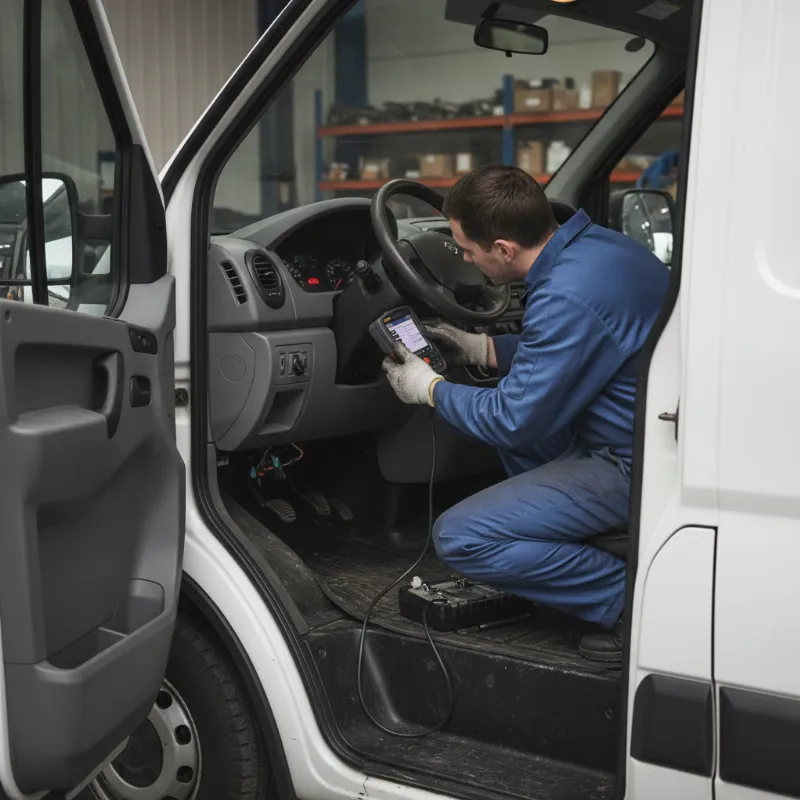
Why Your Vauxhall Movano Won't Start When Hot: The Short Answer
If your Vauxhall Movano cranks perfectly from cold but refuses to fire once the engine has been up to temperature, you're almost certainly dealing with a heat-related electrical or fuel-delivery fault. The most common culprits are a starter motor solenoid suffering from heat soak, a failing crankshaft position sensor that drops out when hot, low residual fuel pressure, or heat-damaged wiring near the turbocharger and exhaust manifold. In the vast majority of cases the van will crank but not start, or refuse to crank at all for 10–30 minutes until things cool down, and then behave normally again.
The good news is that most hot-start faults on the Movano are well-known, cheap to diagnose, and can often be fixed for under £250 if you catch them early. Below we walk through every likely cause, how to narrow it down on your driveway, and what to expect if you take it to a garage.
Common Causes of a Hot-Start Failure on a Vauxhall Movano
The Movano's 2.3 dCi and 2.5 CDTi engines share a lot of components with the Renault Master and Nissan Interstar, which means the hot-start failure modes are well documented across all three vans. Here are the five faults we see most often.
Failing Starter Motor Solenoid (Heat Soak)
This is the number-one cause of a hot Movano refusing to start. The starter motor sits low on the engine block, directly in the path of radiated heat from the exhaust manifold and turbo. Over time the solenoid windings and contacts inside the starter become heat-sensitive — when the metal is cold everything closes cleanly, but once soaked in engine bay heat the solenoid can't pull in properly and you get a single click, a rapid clicking, or complete silence when you turn the key.
A dead giveaway is that the dashboard lights stay bright and the battery reads fine, but nothing happens at the starter. Tap the starter body gently with a rubber mallet or a piece of wood — if the engine then fires, you've found your fault. A replacement starter motor for a Movano typically costs £120–£220 for the part, plus an hour or two of labour.
Faulty Crankshaft Position Sensor
The crankshaft position sensor (CKP) tells the ECU where the engine is in its rotation so it knows when to fire the injectors. These sensors are known to fail when hot on the Movano — the internal windings expand, break contact, and the ECU stops seeing a signal. The engine will crank over merrily but simply won't fire until the sensor cools down and continuity returns.
You'll usually get a P0335 or P0336 fault code stored, though not always. The sensor is mounted on the bellhousing near the flywheel and costs around £30–£60 for a genuine or good-quality aftermarket part. Fitting is straightforward — one bolt, one connector — but access can be awkward.
Fuel Pressure & Injector Issues
Common-rail diesels need very high fuel pressure to start, and if your high-pressure pump, fuel pressure regulator, or one of the injectors is leaking back internally, residual pressure bleeds off quickly when the engine is hot. The result is extended cranking with no start, sometimes accompanied by clouds of white smoke once it eventually fires.
A leak-off test on the injectors is the quickest diagnostic — a garage will fit clear pipes to each injector return and crank the engine to see which one (if any) is overflowing. A single leaking injector will often be enough to prevent a hot start while a cold start still works, because cold fuel is denser and the pump can build pressure faster.
Weak Battery or Poor Earth Connections
Batteries lose cranking amps as they age, and a tired battery that just about copes with a cold start will often fail to spin a hot engine over fast enough to fire. Hot diesels need to be cranked at 200+ rpm to build the compression heat and fuel pressure needed for ignition. Load-test the battery and check that it's holding at least 12.4V at rest.
Equally important on a van of this age is the earth strap between the engine and the chassis. Corrosion here creates extra resistance that only shows up under load — cold cranking gets away with it, but a hot engine with slightly higher electrical demand won't. Unbolt both ends of the earth strap, clean the mating faces back to bare metal, and refit with a smear of copper grease.
Wiring Loom Heat Damage Near the Turbo/Manifold
Sections of the engine loom on the Movano run uncomfortably close to the turbo and exhaust manifold. Over years of heat cycles the insulation hardens, cracks, and can short intermittently against the block — often only when everything is fully expanded and hot. The injector loom in particular is a known weak spot.
Look for melted, brittle or discoloured insulation, and check connectors for green corrosion inside the pins. Repair sections can be spliced in, or a full replacement injector harness fitted for £80–£150 in parts.
How to Diagnose a Hot-Start Problem at Home
Before spending money on parts, work through the fault logically. Start by plugging in an OBD2 code reader — even a £20 one will pull generic codes and give you a huge head start. Note anything crank/cam/fuel-related.
Next, wait until the van refuses to start when hot and try these checks in order: turn on the headlights and crank the engine — if the lights dim significantly, suspect the battery or earth. If the lights stay bright and you hear a single click, tap the starter and try again — if it fires, replace the starter. If it cranks normally but won't catch, listen for the fuel pump priming when you turn the ignition to position II, and try a small squirt of easy-start into the intake (sparingly!) — if it fires briefly, you have a fuel delivery problem, most likely a sensor or pressure fault.
Finally, let the van cool for 30 minutes and try again. If it starts perfectly cold every single time and only fails hot, that's the clearest possible fingerprint of a heat-soak fault — almost always the starter or CKP sensor.
Model-Specific Notes Across the Vauxhall Movano Range
Not every Movano suffers equally. Body style, engine size and age all change which faults come up most often.
2008 Vauxhall Movano 3500 LWB High Roof 2464cc Hot-Start Quirks
The 2008 pre-facelift Movano with the 2.5 CDTi (2464cc) engine is particularly prone to starter motor heat soak because of the tight packaging around the turbo on the LWB high-roof platform. Airflow through the engine bay is restricted compared to the panel van, and heat lingers after shutdown. If you own one of these and are chasing a hot-start fault, replace the starter first — it's the statistically most likely fix. Also check the CKP sensor, which on this engine is a known weak point after 100,000 miles.
Vauxhall Movano Tipper: Extra Heat Load Considerations
Tipper conversions typically work harder than panel vans — repeated heavy loading, low-speed manoeuvring and the hydraulic PTO all put more heat into the engine bay for longer. This accelerates every heat-related fault we've listed. If your tipper is throwing hot-start problems, pay particular attention to the wiring loom around the manifold and to the earth connections, which see more mechanical stress from the chassis flex.
How Long Is a Vauxhall Movano LWB and Why Length Affects Wiring Runs
The LWB Movano measures around 6.2 metres nose to tail, and the extra-long-wheelbase (L4) variants push past 6.8 metres. That length matters because the main wiring runs from front to rear are longer, resistance is higher, and any corrosion or damage anywhere along that run has more impact on voltage delivery. On longer variants, a poor earth or a corroded chassis connector can drop enough voltage to prevent a hot-start even when the battery itself is healthy. It's worth chasing every earth point from the battery back to the tail lights on a long-wheelbase van with intermittent electrical gremlins.
Repair Costs and When to Call a Mechanic
As a rough guide: a new battery is £90–£140 fitted, cleaning earth straps is a free DIY job, a crankshaft position sensor is £60–£120 fitted, a starter motor is £250–£450 fitted, an injector loom repair is £150–£300, and a full set of injectors (worst case) can run to £1,200 or more including coding.
Call a mechanic if you're not comfortable working near the exhaust manifold, if you don't have access to a diagnostic tool that reads live fuel pressure data, or if the van has thrown injector-related fault codes. Modern common-rail systems can be dangerous to work on with the engine running — fuel pressures of 1,600 bar can cut skin — so leak-off tests and injector work are best left to a specialist. On the other hand, replacing a starter, cleaning earths, or swapping a CKP sensor are all reasonable driveway jobs for a competent home mechanic.
Thinking of Upgrading? Browse Our Vauxhall Movano Stock
Chasing intermittent hot-start faults on an ageing Movano can become a game of whack-a-mole — fix one heat-damaged component and the next one along the loom fails six months later. If you've already spent significant money on your current van, or if downtime is costing you jobs, it may be more economical to move into a newer example with fresh electrics, a healthy battery and a fault-free starting system.
We keep a rolling stock of inspected, workshop-prepared Vauxhall Movano vans in panel, tipper, dropside and Luton configurations, across short, medium and long wheelbases. Every van we sell is HPI-checked, freshly serviced, and comes with a warranty so you can get back on the road with confidence. Give us a call or drop in to the yard and we'll happily talk through the options — and if you'd rather fix what you've got, our workshop team can quote for that too.
FAQs
Why won't my Vauxhall Movano start when the engine is hot, but it starts fine cold?
The classic hot-only no-start pattern on a Movano is almost always caused by heat soak affecting either the starter motor solenoid or the crankshaft position sensor. When these components are cold they work normally; once soaked in engine bay heat, internal expansion breaks the electrical connection until they cool. Less commonly, injector leak-back, a weak battery, or heat-damaged wiring near the turbo can produce the same symptom. Start by tapping the starter when hot — if the van then fires, you've found it.
How much does it cost to fix a hot-start problem on a Vauxhall Movano?
Costs vary with the cause. A new crankshaft position sensor is around £60–£120 fitted, cleaning earth connections is free, a replacement starter motor runs £250–£450 fitted, and an injector loom repair is £150–£300. Worst case, if the fault is a leaking injector, budget £300–£1,200 depending on how many need replacing and whether coding is required.
Can I still drive my Movano if it only fails to start when hot?
You can, but with a big caveat — an intermittent hot-start fault will eventually become a no-start fault, and it tends to happen at the worst possible moment (loaded up, away from home, on a hot day). It's safe to keep using the van short-term, but book it in for diagnosis before the problem strands you. Keep a set of jump leads and a portable jump pack in the van in the meantime.
Is the hot-start issue a known fault on the Renault Master and Nissan Interstar too?
Yes — the Movano, Master and Interstar are effectively the same van under different badges, and they share the same starter motors, crankshaft position sensors and wiring layouts. The same hot-start faults appear across all three, and the fixes are identical. Independent Renault/Vauxhall LCV specialists tend to be very familiar with the pattern and can often diagnose it in minutes.