Vauxhall Combo Life 7 Seater Spec: Full UK Guide
Vauxhall Combo Life 7 Seater: Overview
The Vauxhall Combo Life 7 seater is one of the most practical family vehicles on sale in the UK, blending the space and sliding-door convenience of a light commercial vehicle with the comfort, safety and refinement expected from a modern people carrier. Based on the same platform as the Citroën Berlingo and Peugeot Rifter, the Combo Life offers a genuinely usable third row of seats, a huge boot and a choice of efficient diesel or fully electric power.
For buyers looking at the seven-seat specification specifically, the Combo Life is only available as a seven-seater in its longer XL body style. That extra length makes room for a fold-out third row while still leaving useful luggage space, and it is offered across both combustion and electric drivetrains. Below is a full breakdown of the spec, trims, electric version and the leasing and finance routes to getting one on your driveway.
Full Specification: Dimensions, Engines and Payload
The seven-seat Combo Life XL measures approximately 4,753mm long, 1,921mm wide (excluding mirrors) and 1,880mm tall, riding on a 2,975mm wheelbase. That extra 350mm over the standard five-seat model is where the third row and additional boot space come from. Kerb weight sits between roughly 1,500kg and 1,800kg depending on drivetrain, and gross vehicle weight allows payloads of around 700–800kg — impressive for a family MPV and useful if you regularly tow, carry bikes, or head to the tip.
Engine options for UK buyers centre on the 1.5-litre BlueHDi turbodiesel producing around 100PS or 130PS, paired with either a six-speed manual or eight-speed automatic gearbox. Petrol availability has been limited in seven-seat form, so most family buyers choose between diesel and the fully electric Combo-e Life. Braked towing capacity on diesel models is up to 1,500kg, making it capable of pulling a small caravan or trailer.
Interior Layout and Third-Row Seating
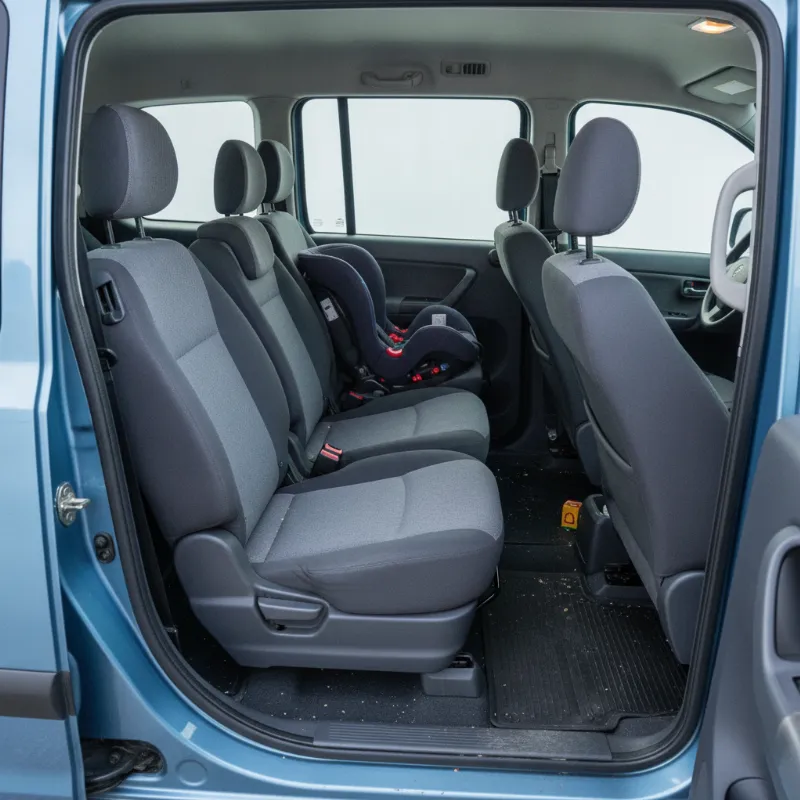
Inside, the Combo Life XL is laid out in a classic 2-3-2 configuration. The middle row consists of three individual seats, each with ISOFIX points on the outer positions, and each can be folded, tumbled or removed entirely. The rearmost two seats fold flat into the boot floor when not in use, so you effectively have a five-seat MPV with a cavernous boot until you need the extra chairs.
Access to the third row is genuinely easier than in most rival seven-seaters thanks to the twin sliding side doors and the tumble-forward middle seats. Adults can just about fit in row three for shorter journeys, and children will be perfectly comfortable. Overhead storage cubbies, generous glazing and optional panoramic roof combine to make the cabin feel far airier than the price suggests.
Boot Space with 5 and 7 Seats in Use
Boot capacity is one of the Combo Life XL's biggest selling points. With all seven seats in place, you still get around 322 litres — enough for a weekly shop or several soft bags. Fold the third row flat and that rises to roughly 850 litres, and dropping the middle row unlocks up to around 2,693 litres of near-flat load space. The tailgate is a top-hinged one-piece design, though an opening rear window is offered on higher trims, which is genuinely useful when reversing into tight parking bays.
Trim Levels and Standard Equipment
Vauxhall has kept the Combo Life range simple, with a small handful of trim levels catering to budget-conscious families up to those wanting near-premium kit. Specification names have shifted slightly over the years, but the structure typically runs from Design at the entry point up through SE and Elite at the top.
Design Trim
Design is the workhorse entry point and still comes surprisingly well equipped. Expect twin sliding side doors, air conditioning, cruise control with a speed limiter, DAB radio, Bluetooth, a multi-function steering wheel, electric front windows and lane departure warning as standard. It's a sensible starting point if you want the practicality of the seven-seat layout without paying for luxuries.
SE and Elite Trims
Stepping up to SE adds alloy wheels, rear parking sensors, a colour touchscreen infotainment system with Apple CarPlay and Android Auto, automatic headlights and wipers, and additional safety kit such as blind spot warning on some builds. Elite (or equivalent top-tier trim) piles on climate control, a reversing camera, keyless entry and start, part-leather upholstery on some editions, LED headlights and larger alloys. Optional extras across the range include a panoramic sunroof, opening rear window and a modular roof storage system.
Vauxhall Combo Life Electric 7 Seater Spec
The fully electric Combo-e Life is available in the same XL seven-seat body, giving families a genuine zero-emission MPV option that isn't a compromised SUV or a converted van. It looks near-identical to the diesel outside, with only subtle badging and closed-off grille details giving the game away.
Battery, Range and Charging
The Combo-e Life uses a 50kWh lithium-ion battery paired with a 100kW (136PS) electric motor driving the front wheels. Official WLTP range is around 174–175 miles for the seven-seat XL variant, with real-world figures typically landing between 130 and 160 miles depending on driving style, load and weather. More recent updates to the platform have introduced a larger 50kWh+ pack in some markets, so it's worth checking the exact spec sheet for the model year you're buying.
Charging is supported at up to 100kW DC, which delivers a 0–80% top-up in around 30 minutes at a suitable rapid charger. On a 7kW home wallbox, a full charge takes roughly 7.5 hours — ideal for overnight top-ups. A three-pin emergency cable is included, but a proper home wallbox is strongly recommended for daily use.
Electric Model Standard Kit
Electric Combo Life models tend to come in higher trims by default, so standard equipment is generous. You typically get the 10-inch touchscreen infotainment system with sat-nav, dual-zone climate control, a heated windscreen, rear parking sensors and a reversing camera, along with EV-specific features such as regenerative braking modes, pre-conditioning via a smartphone app, and driving modes for Eco, Normal and Power. Payload drops slightly compared with the diesel due to battery weight, but towing capacity of up to 750kg is still handy for smaller trailers.
Vauxhall Combo Life Electric Leasing Explained
Leasing has become the go-to route for many Combo-e Life drivers, especially given the fast-moving nature of EV technology. Rather than committing to outright ownership, a lease lets you enjoy the vehicle for a fixed period and hand it back at the end, sidestepping concerns about long-term battery health or future residual values.
What to Expect from a Combo-e Life Lease
A typical personal contract hire (PCH) or business contract hire (BCH) deal will span two to four years, with annual mileage allowances ranging from around 5,000 up to 30,000. You'll pay an initial rental — usually the equivalent of three, six or nine monthly payments — followed by fixed monthly rentals for the duration of the contract. Road tax, manufacturer warranty and often breakdown cover are included, and optional maintenance packages can bundle in servicing, tyres and MOTs where applicable.
At the end of the term, you simply return the van subject to fair wear and tear and mileage limits. There's no depreciation risk and no worrying about resale — a big plus in a market where used EV values can be volatile.
Business vs Personal Lease Considerations
For sole traders, limited companies and VAT-registered businesses, a business contract hire on the Combo-e Life can be particularly attractive. Because the seven-seat Combo Life is classified as a passenger car (M1) rather than a light commercial vehicle, VAT reclaim rules follow car leasing conventions — typically 50% of the VAT on the finance element is reclaimable, with 100% on any maintenance element. Benefit-in-kind company car tax on electric vehicles remains extremely low, making the Combo-e Life a genuinely tax-efficient family and business vehicle.
Personal leases are simpler: quoted prices include VAT, and you get predictable motoring costs with no surprises. Just be realistic about mileage — excess charges at the end of the contract can add up quickly if you underestimate.
Combo Life vs Combo Cargo Van: Which One Suits You?
It's worth being clear about the difference between the Combo Life (the passenger MPV covered here) and the Combo Cargo (the panel van version). Mechanically they share a great deal, but the Combo Cargo is a light commercial vehicle with a bulkhead, load area and van-specific tax and VAT treatment. It's the right choice if you're using the vehicle purely for work and need cargo capacity, ply-lining and full VAT reclaim.
The Combo Life, by contrast, is a fully trimmed passenger vehicle with rear windows, seats for up to seven, and car-like tax rules. If you're carrying family, running a taxi or private hire operation, or need something that doubles as a lifestyle vehicle at weekends, the Combo Life is the obvious pick. Some businesses even combine the two — a Combo Cargo for weekday work and a Combo Life for family duties.
Running Costs, Tax and Real-World MPG
Running costs are a strong point across the range. Diesel Combo Life models routinely return 50–55mpg on a mixed run, with careful drivers seeing closer to 60mpg on longer motorway journeys. Servicing is competitively priced through the Vauxhall dealer network, and insurance groups are reasonable given the vehicle's family-friendly nature.
The Combo-e Life goes further on the running costs front: home charging on an off-peak EV tariff can bring the effective "fuel" cost down to just a few pence per mile, and there's zero road tax to pay on pure-electric models until upcoming VED changes take effect. Both diesel and electric variants benefit from long service intervals and a strong parts and dealer support network across the UK.
How to Buy, Finance or Lease a Vauxhall Combo Life
There are three main routes to a Combo Life 7-seater: outright purchase, finance, or leasing. Outright purchase suits high-mileage drivers who plan to keep the vehicle for many years and want no monthly commitment beyond running costs. Finance options such as hire purchase (HP) and personal contract purchase (PCP) spread the cost over fixed monthly payments, with PCP offering a lower monthly figure and a final optional balloon payment if you want to keep the vehicle at the end.
Leasing — either personal or business contract hire — is often the most cost-effective way to run the electric Combo-e Life, thanks to predictable payments, included road tax and warranty, and no residual value risk. Whichever route you choose, it pays to compare quotes from franchised Vauxhall dealers and specialist brokers, factor in the specific trim and options you want, and be honest about your annual mileage. Get those numbers right and the Combo Life 7-seater is one of the most sensible, practical and affordable ways to move a family — or a small business — around the UK.
FAQs
What is the full specification of the Vauxhall Combo Life 7 seater, including the electric version and leasing options?
The Vauxhall Combo Life 7 seater is only offered in the longer XL body (around 4,753mm long) with a 2-3-2 seating layout, twin sliding doors and boot space ranging from around 322 litres (all seats up) to around 2,693 litres (rear rows folded). Engines include the 1.5 BlueHDi diesel in 100PS or 130PS forms with manual or automatic gearboxes, while the Combo-e Life uses a 50kWh battery and 100kW (136PS) electric motor for a WLTP range of around 175 miles and 100kW rapid charging. Trims typically run from Design through SE to Elite, with kit ranging from air con and cruise control up to a 10-inch touchscreen, dual-zone climate, reversing camera and part-leather seats. Leasing is available as personal (PCH) or business (BCH) contract hire, usually over two to four years with fixed monthly rentals, road tax and warranty included.
Is the Vauxhall Combo Life 7 seater classed as a car or a van for tax purposes?
The Combo Life is classified as an M1 passenger car, not a light commercial vehicle, because it has rear seats, windows and no bulkhead. That means it follows standard car VED road tax rules, car benefit-in-kind rates for company drivers, and car-style VAT reclaim rules on leases — typically 50% VAT reclaim on the finance element for VAT-registered businesses. If you need full van VAT treatment, you'd need the Combo Cargo panel van instead.
How much boot space does the Combo Life XL have with all 7 seats in use?
With all seven seats in place, the Combo Life XL offers around 322 litres of boot space, which is enough for a supermarket shop or several soft bags. Fold the two third-row seats flat into the floor and capacity rises to around 850 litres, and folding the middle row as well opens up to roughly 2,693 litres of near-flat load space.
Can you tow with the Vauxhall Combo Life 7 seater?
Yes. Diesel Combo Life models can typically tow up to 1,500kg braked, which is enough for a small caravan, box trailer or car transporter. The electric Combo-e Life has a lower braked towing limit of around 750kg, so it's better suited to lightweight trailers, bike racks or a small utility trailer.
Is it better to lease or buy a Vauxhall Combo-e Life?
For most drivers, leasing the electric Combo-e Life makes strong financial sense because EV technology and used values are still moving quickly, and a lease removes any residual value risk. You get fixed monthly payments, included road tax and warranty, and simply hand the vehicle back at the end. Buying outright or via HP/PCP finance can be better if you plan to keep the vehicle long-term, cover very high mileage, or want an asset on the balance sheet — but for typical family or business use, leasing usually offers the lowest total cost and least hassle.