Nissan NV400 Van Review: The Complete Buyer's Guide
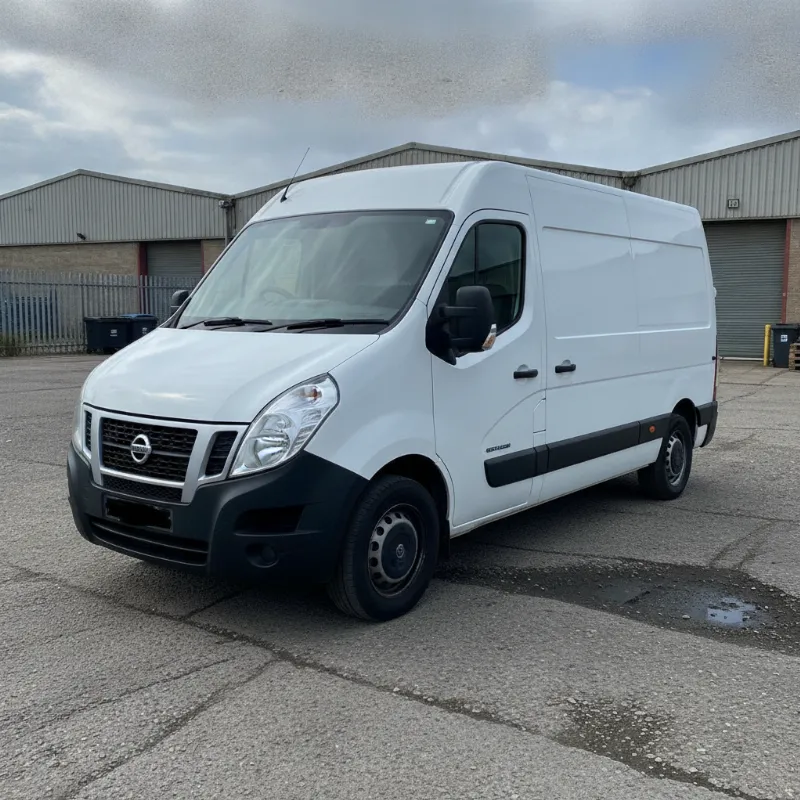
Nissan NV400 Van Review: Overview
The Nissan NV400 is a large panel van that has quietly earned a reputation as a dependable workhorse for tradespeople, fleet operators and courier drivers across the UK. Sitting at the top of Nissan's commercial vehicle range, the NV400 competes head-on with the Ford Transit, Mercedes-Benz Sprinter and Volkswagen Crafter, offering a genuinely useful blend of load-carrying ability, driveability and long-term running costs.
Under the skin, the NV400 shares its platform with the Renault Master and the Vauxhall Movano, which means parts are widely available and independent garages tend to know their way around it. That familiarity, combined with a broad choice of body lengths, roof heights and weights, makes the NV400 one of the most versatile large vans on the used market. In this review we'll look at how it drives, what it can carry, how reliable it has proven to be and whether it deserves a place on your shortlist.
History of the Nissan NV400
The NV400 replaced the ageing Nissan Interstar in 2011, arriving as part of a wider commercial vehicle partnership between Nissan and Renault. From day one it was offered in an unusually wide range of configurations: front-wheel drive and rear-wheel drive versions, panel van, chassis cab, tipper, dropside and minibus variants, plus three lengths (L1, L2, L3 and later L4) and three roof heights (H1, H2, H3). That flexibility meant it could be tailored to almost any working brief, from a compact urban delivery van up to a heavy 4.5-tonne conversion.
2012 Nissan NV400: The Launch Year
The first full year of UK sales saw the NV400 arrive with a 2.3-litre dCi diesel engine borrowed from Renault, offered in a choice of power outputs and paired with a six-speed manual gearbox. Early buyers appreciated the relatively car-like driving position, the deep, square load area and the competitive list price. Trim levels were kept simple, with the emphasis on utility rather than luxury, and most examples left the factory with a solid bulkhead, twin sliding side doors as an option and asymmetric rear barn doors as standard.
2013 Nissan NV400 Updates
For 2013, Nissan made a series of small but welcome refinements to the NV400. Cabin plastics were tidied up, more sound deadening was added and the infotainment options were broadened to include Bluetooth and a basic navigation system on higher-specification vans. Euro 5 engines were rolled out across the range, improving fuel economy on paper and helping fleet operators keep an eye on running costs. Nissan also expanded the number of factory conversions, making it easier to order a Luton, tipper or dropside straight from the dealer.
2014 Nissan NV400 Improvements
2014 brought further engineering tweaks, most notably to the six-speed manual gearbox, which received revised ratios for smoother motorway cruising and better low-speed manoeuvring. Nissan also introduced additional safety kit on some trims, including electronic stability programme calibration tuned for the heavier gross vehicle weight variants. Later in this period a facelift saw the arrival of a new twin-turbo version of the 2.3-litre engine, which offered a broader spread of torque and helped fully-laden vans feel less breathless on inclines.
Engines, Performance and Fuel Economy
Virtually every NV400 you'll find on the UK market is powered by the 2.3-litre dCi four-cylinder diesel, offered over the years in a range of outputs from around 100bhp up to roughly 165bhp on the twin-turbo versions. The single-turbo engines are perfectly adequate for lighter loads and shorter distances, but if you regularly run close to gross vehicle weight or spend a lot of time on motorways, the twin-turbo variants are the ones to look for. They pull much more strongly from low revs and make overtaking on A-roads far less of an event.
Fuel economy is one of the NV400's stronger suits. Real-world figures of 30 to 38mpg are realistic for a mid-length, medium-roof panel van driven sensibly, with the lower-powered engines and front-wheel drive layouts generally proving most economical. The six-speed manual is the only gearbox for most of the range, and it's a light, easy-to-use unit that suits stop-start delivery work well. AdBlue was introduced with later Euro 6 models, which is worth budgeting for if you're comparing running costs against an earlier example.
Cab, Comfort and In-Cab Technology
Step inside the NV400 and you'll find a cab designed around the working day rather than showroom sparkle. The driving position is high and commanding, visibility over the bonnet is excellent, and the seat has enough adjustment to suit most drivers on long shifts. There's a generous amount of storage: a deep glovebox, overhead shelves, door bins big enough for A4 folders and a fold-down middle seat that doubles as a desk with a clipboard tray.
Technology on early vans is fairly basic, with a simple radio and manual air conditioning, but later models can be found with a colour touchscreen, DAB radio, Bluetooth, cruise control and rear parking sensors. Higher-spec Tekna trims add satellite navigation and a reversing camera, both of which are worth seeking out if you'll be squeezing into tight loading bays. Ride comfort is generally good for a large van, though unladen the rear axle can feel bouncy over broken surfaces.
Load Space, Payload and Dimensions
Load-carrying ability is where the NV400 really justifies its existence. Depending on the variant, load volume ranges from around 8 cubic metres in the shortest L1H1 body up to a cavernous 17 cubic metres in the long-wheelbase L4H3 rear-wheel-drive version. Maximum load length varies from roughly 2.6 metres up to 4.4 metres, and the load bay width between the wheel arches is enough to accept a Euro pallet loaded sideways.
Payloads span from about 1,000kg on lighter front-wheel-drive vans up to around 2,100kg on the heaviest 4.5-tonne chassis cabs, which puts the NV400 firmly among the class leaders. Rear barn doors open to 270 degrees on most vans, making forklift loading straightforward, and side loading is available through either single or twin sliding doors. Tie-down points, ply lining and internal lighting are commonly fitted, though quality varies between original Nissan kit and aftermarket conversions, so it's worth inspecting these carefully on any used purchase.
The Electric Nissan e-NV400 Explained
Given Nissan's long history with electric vehicles, it's no surprise that a battery-powered version of the NV400 eventually appeared. The e-NV400 uses a battery pack and motor closely related to those found in the smaller e-NV200, offering a realistic working range of around 75 to 120 miles depending on load, weather and driving style. Rapid charging capability makes it a plausible choice for urban multi-drop routes where the van returns to base regularly.
Load space and payload are broadly similar to the diesel equivalents, though buyers should check individual conversions carefully because the battery installation does affect maximum permitted weights on some variants. Running costs per mile are significantly lower than the diesel, and access to clean air zones without charges makes the e-NV400 particularly attractive for operators working in London and other UK cities with emissions restrictions.
Reliability, Running Costs and Common Issues
Overall, the NV400 has a solid reliability record, helped by the fact that its 2.3-litre engine is used in millions of vans worldwide and is well understood by independent specialists. That said, there are known issues to check for. Early examples suffered occasional problems with the diesel particulate filter, particularly on vans used mostly for short urban journeys, and a small number of injectors have been replaced under warranty. Turbocharger failures on high-mileage twin-turbo engines are not unheard of, though usually only after very heavy use.
Elsewhere, look out for worn clutch and dual-mass flywheel assemblies on vans that have spent their lives loaded heavily or towing, and inspect the sliding door runners for wear because these take a hammering on delivery work. Servicing costs are reasonable, and because the underlying platform is shared with Renault and Vauxhall, parts pricing is competitive. Insurance groups are typical for the class, and residual values, while not the strongest in the segment, are stable enough on well-cared-for examples.
Nissan NV400 Reviews: What Owners Say
Owner feedback on the NV400 tends to be pragmatic rather than gushing. Drivers praise the comfortable cab, easy manual gearbox and impressive load space, and many highlight the strong real-world fuel economy compared with older large vans they've traded in. Fleet managers often mention the flexibility of the range, being able to specify exactly the right length, roof height and payload for the job without paying for capability they don't need.
Criticism tends to focus on the ride quality when unladen, occasional cabin rattles as vans rack up high mileages, and a slightly dated infotainment system on earlier trims when compared with the latest rivals. Long-term owners running vans past 150,000 miles generally report that mechanical issues are minor and predictable, provided servicing has been kept up to schedule. The consensus is that the NV400 is a straightforward, honest van that does what's asked of it without drama.
Verdict: Should You Buy a Nissan NV400?
The Nissan NV400 makes a strong case for itself, particularly on the used market where its slightly lower profile compared with the Ford Transit or Mercedes Sprinter often translates into keener pricing for equivalent specifications. If you need a large panel van with a wide choice of bodies, a proven diesel engine and running costs that won't derail your accounting, it deserves serious consideration.
Buy on condition and service history rather than headline mileage, favour the twin-turbo engines if you'll be running heavy, and pay close attention to the DPF, clutch and sliding door mechanisms during inspection. Do that, and the NV400 should reward you with years of reliable, cost-effective service — whether you're a sole trader looking for your first big van or a fleet operator adding another workhorse to the yard.
FAQs
Is the Nissan NV400 a good van to buy?
Yes, the Nissan NV400 is a solid choice in the large panel van class. It offers a broad range of body lengths, roof heights and payloads, a proven 2.3-litre diesel engine shared with the Renault Master and Vauxhall Movano, and generally strong real-world fuel economy of around 30 to 38mpg. Provided you buy on condition and service history, and check known wear points like the DPF, clutch and sliding doors, it should give many years of dependable service.
What engine does the Nissan NV400 use?
The vast majority of NV400s use the 2.3-litre dCi four-cylinder diesel developed by Renault. It has been offered in several power outputs over the years, from around 100bhp up to roughly 165bhp in twin-turbo form, always paired with a six-speed manual gearbox. Later models added AdBlue to meet Euro 6 emissions standards.
How much can a Nissan NV400 carry?
Payloads range from around 1,000kg on the lightest front-wheel-drive panel vans up to about 2,100kg on the heaviest 4.5-tonne rear-wheel-drive chassis cabs. Load volume varies from roughly 8 cubic metres in the short L1H1 body up to 17 cubic metres in the long, high-roof L4H3 variant, with maximum load lengths of up to about 4.4 metres.
What are the common problems with the Nissan NV400?
The most frequently reported issues are DPF blockages on vans used mainly for short urban journeys, occasional injector problems on earlier engines, and turbocharger wear on high-mileage twin-turbo variants. Clutch and dual-mass flywheel wear can appear on vans that have been consistently overloaded or used for towing, and the sliding side door runners can wear on heavy delivery use. None of these are dealbreakers, but they're worth checking on any used example.
Is there an electric version of the Nissan NV400?
Yes, the e-NV400 is the fully electric version, using battery and motor technology related to the smaller e-NV200. It offers a realistic working range of around 75 to 120 miles depending on load and conditions, supports rapid charging and is particularly well suited to urban multi-drop work where the van returns to a depot regularly. It also avoids clean air zone charges in cities like London.