Maxus eDeliver 3 Wiki: The Complete Guide to the Electric Van
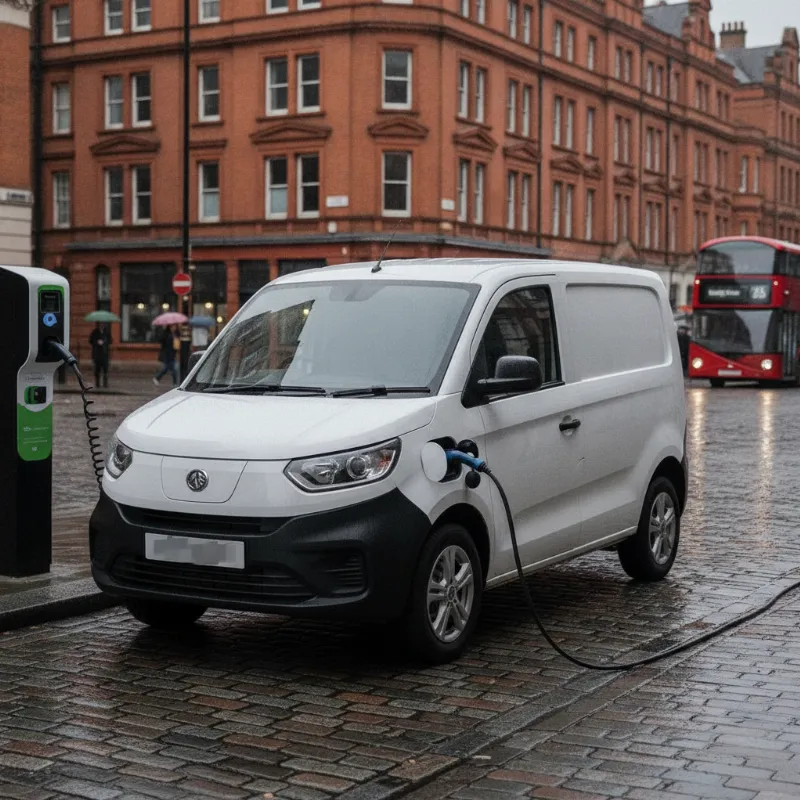
Maxus eDeliver 3: Quick Facts and Background
The Maxus eDeliver 3 is a fully electric small panel van aimed squarely at urban delivery drivers, tradespeople and fleet operators looking for a clean, zero-emission alternative to diesel light commercial vehicles See current Maxus eDeliver 3 stock and pricing.. Sitting in the compact van class alongside models like the Ford Transit Connect and Peugeot Partner, the eDeliver 3 launched in the UK in 2020 and has since become one of the more widely adopted electric vans on British roads, particularly with last-mile logistics firms and local authorities.
What makes the eDeliver 3 notable is that it was designed from the ground up as an electric vehicle rather than being adapted from an existing diesel platform. This EV-first approach means the battery pack sits low in the chassis, freeing up load space and giving the van a low centre of gravity. It comes in two wheelbase lengths, two battery sizes and a choice of panel van or chassis cab configurations, making it a flexible option for a wide range of business uses.
Who Makes the Maxus eDeliver 3?
The Maxus eDeliver 3 is manufactured by SAIC Motor, one of the largest automotive groups in China and a company that has been building commercial vehicles for decades. While Maxus may still feel like a relatively new name to some UK buyers, the brand has a long heritage that stretches back to the British LDV commercial vehicle marque, and today it is sold and supported across Europe through an established dealer network.
SAIC Motor and the Maxus Brand History
SAIC Motor acquired the intellectual property and tooling of the former LDV Group in 2010 following LDV's collapse, and relaunched the range under the Maxus name. The lineage of the brand actually goes back further still, with roots in Leyland DAF and British Leyland's commercial vehicle operations. Today Maxus is a global brand with a strong focus on electrification, and the eDeliver 3 was one of the first fully electric vans to reach the UK market at an accessible price point. SAIC also owns MG, which gives the group significant scale and engineering resource, particularly around battery technology and electric drivetrains.
Maxus e Deliver 3 Electric Van: Specifications and Variants
The eDeliver 3 is offered in a fairly straightforward range designed to keep buying decisions simple. Buyers choose between a short wheelbase (SWB) or long wheelbase (LWB) body, and between a smaller or larger battery pack. On top of that, there is a chassis cab variant intended for conversion into tippers, dropsides, refrigerated bodies and specialist builds.
Battery Options and Electric Range
Two lithium-ion battery options are available: a 35kWh pack and a larger 50kWh (sometimes marketed as 52.5kWh) pack. The smaller battery delivers a WLTP combined range of around 141 miles, while the larger battery pushes that figure up to around 213 miles on the combined cycle, or well over 200 miles in city driving where regenerative braking is at its most effective. For most urban delivery routes, even the smaller battery covers a full working day comfortably, while the larger option opens the van up to regional multi-drop work.
Payload, Load Volume and Dimensions
Load volume ranges from 4.8 cubic metres in the short wheelbase to 6.3 cubic metres in the long wheelbase, which is competitive against similarly sized diesel rivals. Payload varies by variant but sits in the region of 830kg to 1,020kg depending on wheelbase and battery choice. The load bay is accessed via twin rear doors that open to 180 degrees as standard, plus a nearside sliding side door, and the load floor is flat and unobstructed thanks to the underfloor battery layout.
Short Wheelbase vs Long Wheelbase
The short wheelbase model measures around 4.55 metres in overall length, making it easy to thread through narrow city streets and slot into standard parking bays. The long wheelbase stretches to roughly 5.15 metres and adds useful extra load length for longer items such as building materials, flat-pack furniture or bulky courier parcels. Both share the same 1,780mm overall height, which keeps them below the 2-metre barrier common to multi-storey car parks — a genuinely useful feature for urban operators.
Performance, Charging and Real-World Use
Power comes from a front-mounted electric motor producing around 90kW (approximately 120bhp) with instant torque of 255Nm, giving the eDeliver 3 brisk acceleration away from the lights and easy motorway merging. Top speed is limited to around 75mph, which is more than adequate for UK use. Charging is where the eDeliver 3 shines for fleet operators: it accepts AC charging up to 6.6kW and DC rapid charging up to around 80kW via a CCS Combo 2 socket, allowing a rapid top-up from 20% to 80% in roughly 45 minutes on a suitable charger.
In real-world use, drivers generally report a comfortable, quiet cabin, light steering that suits stop-start city work, and predictable range figures provided you avoid heavy motorway running with the larger vans. Regenerative braking is adjustable, and one-pedal driving is possible in the higher setting, which helps reduce driver fatigue on busy delivery rounds.
Safety, Technology and Standard Equipment
Standard equipment on the eDeliver 3 is generous for the segment. Every van comes with a 10-inch touchscreen infotainment system with Bluetooth, DAB radio and a reversing camera, along with electric windows, electric mirrors, air conditioning and cruise control. Higher trim levels add heated seats, keyless entry and additional driver assistance features.
On the safety side, the eDeliver 3 is fitted with ABS, electronic stability control, hill hold assist, tyre pressure monitoring and multiple airbags. Some variants include lane departure warning and autonomous emergency braking. It's worth noting that the eDeliver 3 has not been through a full Euro NCAP commercial vehicle safety test, so buyers used to the extensive driver-aid packages found on the latest European rivals should compare specifications carefully before ordering.
Warranty, Reliability and Running Costs
Maxus backs the eDeliver 3 with a five-year or 60,000-mile vehicle warranty and a separate five-year or 100,000-mile warranty on the battery, which is in line with most mainstream electric van manufacturers. Running costs are where the eDeliver 3 really makes sense: electricity is significantly cheaper per mile than diesel, the van qualifies for zero road tax as a pure EV, and it is exempt from the London ULEZ and Congestion Charge as well as other clean air zones around the UK. Servicing is straightforward with fewer moving parts than a diesel equivalent, and brake wear is typically lower thanks to regenerative braking.
Reliability reports have been broadly positive, though as with any relatively new model buyers should choose a dealer with a strong aftersales presence and confirm the availability of parts and trained EV technicians in their area.
How the eDeliver 3 Compares to Rival Electric Vans
The eDeliver 3's main rivals in the UK are the Vauxhall Combo Electric, Peugeot e-Partner, Citroën ë-Berlingo, Ford E-Transit Courier and Renault Kangoo E-Tech. Against those competitors, the Maxus typically offers a larger load volume in its long wheelbase form and often a longer real-world range with the 50kWh battery, but the Stellantis rivals have the edge on refinement and interior fit and finish. The Renault Kangoo E-Tech is a strong all-rounder with a car-like cabin, while the Ford brings the badge familiarity many fleet buyers still favour.
Where the eDeliver 3 tends to win is on price and practicality — it is often several thousand pounds cheaper than equivalent European rivals, particularly in long wheelbase form, and the flat load floor plus low roof height make it easy to load and easy to park. For high-mileage urban fleets working to tight margins, that value case is compelling.
Where to Find a Maxus eDeliver 3 in the UK
Maxus operates through a growing network of franchised dealers across the UK, covering most major cities and many regional centres. Both new and used eDeliver 3 vans are widely available, and demonstrator drives can usually be arranged through your local dealer. When buying used, look for a full service history, evidence of the battery state-of-health check, and confirmation that any outstanding manufacturer warranty transfers with the vehicle. Whether you're a sole trader looking for a clean, low-cost van for city work or a fleet manager planning a full electrification programme, the eDeliver 3 is worth putting on the shortlist alongside its more established European rivals.
FAQs
What is the Maxus eDeliver 3 and who makes it?
The Maxus eDeliver 3 is a fully electric small panel van made by SAIC Motor, a large Chinese automotive group that acquired the former British LDV commercial vehicle brand in 2010 and relaunched it as Maxus. It is designed for urban delivery and light commercial use and is sold across the UK through a franchised Maxus dealer network.
What is the range of the Maxus eDeliver 3?
The eDeliver 3 is offered with two battery sizes. The 35kWh battery delivers a WLTP combined range of around 141 miles, while the larger 50kWh (52.5kWh) battery achieves around 213 miles combined, with even higher figures possible in pure city driving thanks to regenerative braking.
How long does the Maxus eDeliver 3 take to charge?
On a home or depot AC wallbox, the eDeliver 3 charges at up to 6.6kW, giving a full charge overnight. Using a DC rapid charger with a CCS Combo 2 connector, it accepts up to around 80kW and can be topped up from 20% to 80% in approximately 45 minutes.
What warranty does the Maxus eDeliver 3 come with?
Maxus offers a five-year or 60,000-mile warranty on the vehicle itself, plus a separate five-year or 100,000-mile warranty on the traction battery. This is broadly in line with what other mainstream electric van manufacturers offer in the UK.
Is the Maxus eDeliver 3 exempt from the ULEZ and Congestion Charge?
Yes. As a pure battery electric vehicle with zero tailpipe emissions, the eDeliver 3 is exempt from the London ULEZ and, currently, the London Congestion Charge, as well as other Clean Air Zones around the UK. It also qualifies for zero Vehicle Excise Duty.