How Long Is a 3.5 Tonne Luton Van? Full Dimensions Guide
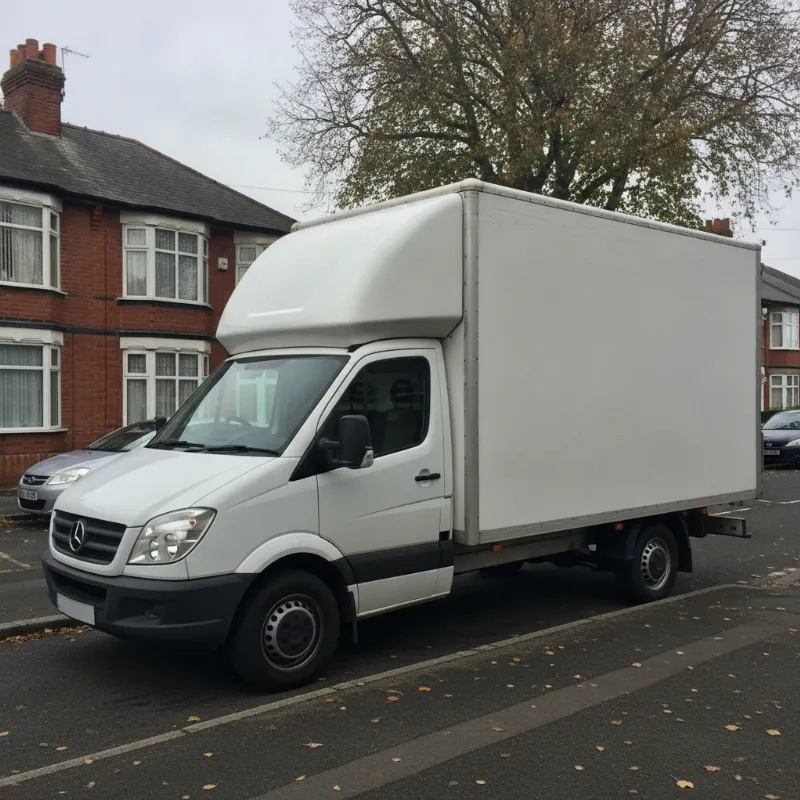
How long is a 3.5 tonne Luton van?
A typical 3.5 tonne Luton van in the UK measures around 6.9 to 7.5 metres (roughly 22 to 24.5 feet) in total exterior length, with a load area length of approximately 4.0 to 4.3 metres (13 to 14 feet). Exact figures depend on the base chassis cab used to build the Luton conversion — Ford Transit, Mercedes-Benz Sprinter, Vauxhall Movano, Peugeot Boxer and Renault Master are the most common donor vehicles on UK roads.
The reason there's no single answer is that a Luton isn't a factory van in the traditional sense. It's a box body built onto a chassis cab, so the length varies with the wheelbase chosen and the box length specified by the converter. Most operators end up with something in the 7-metre bracket, which is long enough for a full house move or a large parcel round but still manageable on a standard car licence.
Typical 3.5t Luton dimensions at a glance
Before drilling into individual models, it helps to know the ballpark figures you're likely to see across the market. The numbers below apply to the vast majority of 3.5t Luton vans sold or hired in the UK.
Overall length (exterior)
Overall exterior length is measured from the front bumper to the rear of the box (including the tail-lift if fitted, though this is sometimes quoted separately). Expect a total of 6,900mm to 7,500mm, with 7,100–7,300mm being the most common. Adding a column or cantilever tail-lift can extend the effective footprint by a further 300–500mm when stowed, and considerably more when deployed for loading.
This is worth remembering when you're planning where to park. A 7.2m Luton is roughly the length of one and a half average family cars parked nose to tail.
Load area length (interior)
Inside the box, you'll typically find a usable load length of 4,000mm to 4,300mm at floor level, plus an additional overhang above the cab — the classic "Luton peak" — of around 800mm to 1,000mm. That peak is ideal for long, lightweight items such as rolled carpet, mattresses, sofas or lengths of timber, and it's what gives the Luton its distinctive silhouette.
Total internal load volume usually sits in the region of 18 to 22 cubic metres, which is why Lutons are so popular with removal firms and courier operators handling bulky but relatively light loads.
Width and height to be aware of
Length is only half the story. A 3.5t Luton is typically 2.2 to 2.4 metres wide (excluding mirrors — add another 250–300mm each side with mirrors extended) and stands around 3.2 to 3.5 metres tall overall. Internal load height is normally 2.1 to 2.2 metres.
Height is the dimension that catches drivers out most often. Height-restricted car parks, drive-through canopies, low bridges and multi-storey access points are all off-limits, and even some domestic driveways with overhanging branches can be a squeeze.
How length varies by base chassis (Transit, Sprinter, Movano, Boxer, Master)
The choice of base vehicle has a real impact on the final dimensions. A Ford Transit Luton, built on the popular 350 chassis cab, tends to come in at around 6.9 to 7.2 metres overall, with a load length near 4.1 metres. It's a favourite with owner-drivers because the cab feels car-like and parts are widely available.
Mercedes-Benz Sprinter Luton conversions are typically a touch longer, often 7.2 to 7.5 metres overall, with load lengths of up to 4.3 metres on the longest wheelbase chassis. Sprinters are common in the higher-mileage removals and national delivery sectors.
The Vauxhall Movano, Peugeot Boxer and Renault Master (which share a platform in various configurations) generally sit in the 7.0 to 7.3 metre bracket overall, with 4.0 to 4.2 metre load lengths. All three are popular with fleets thanks to competitive pricing and generous payloads for a 3.5t plated vehicle.
Whichever badge is on the front, converters like Luton Vans UK, Ingimex, VFS and others build to broadly similar specs, so like-for-like comparisons across brands rarely differ by more than 300mm in any direction.
Why length matters: parking, access and load capacity
Getting the length right isn't just an academic exercise. A longer Luton gives you more cubic capacity, which matters if you're moving furniture, pallets of light goods, or long items like flat-pack kitchens. But every extra 300mm of body length is 300mm more to reverse into a customer's driveway, thread down a narrow terraced street, or manoeuvre around a busy loading bay.
Parking is the day-to-day pain point. Standard UK parking bays are 4.8 metres long, so a 7-metre-plus Luton will overhang at both ends of a single bay. Many town-centre delivery windows and residential permit zones weren't designed with Lutons in mind, so route planning becomes part of the job.
Access under bridges, into industrial estates and through farm gates is the other consideration. Combined with the 3.3m-ish height, the length can make three-point turns very awkward — always plan your exit before you commit to a driveway.
Choosing the right Luton length for your business
For a solo removals operator or a house-clearance business, a mid-length Luton around 7.0m overall usually strikes the best balance: enough volume for a two-bedroom flat move in a single load, but still driveable through residential streets. For parcel and pallet networks running trunk routes, the longer 7.4–7.5m Sprinter-based Lutons give you the extra cubic metres to make each trip pay.
If you're new to driving a Luton, remember that anything registered after 1 January 1997 with a plated weight of 3.5 tonnes can be driven on a standard category B (car) licence — but the physical size is a big step up from a panel van. Many hire companies recommend a familiarisation drive around a quiet industrial estate before your first job. Whichever length you settle on, always check the exterior dimensions on the V5C or manufacturer's spec sheet rather than assuming, because converter variations mean two Lutons of the same badge can still differ by half a metre.
If you need exact payload figures alongside these dimensions, see our guide to high payload Luton vans.
FAQs about 3.5 tonne Luton van length
FAQs
What is the total length of a typical 3.5 tonne Luton van?
Most 3.5 tonne Luton vans in the UK measure between 6.9 and 7.5 metres (22 to 24.5 feet) overall, with 7.1 to 7.3 metres being the most common. The exact figure depends on the base chassis (Transit, Sprinter, Movano, Boxer or Master) and the box specification chosen by the converter. Add a further 300–500mm if a tail-lift is fitted.
How long is the load area inside a 3.5t Luton?
The interior load length is typically 4.0 to 4.3 metres at floor level, plus an additional 800mm to 1,000mm in the overcab "Luton peak" for long, lightweight items. Total load volume is usually 18 to 22 cubic metres, with an internal height of around 2.1 to 2.2 metres.
Can I drive a 7-metre Luton on a normal car licence?
Yes. If you passed your car test after 1 January 1997 and the van is plated at 3.5 tonnes gross vehicle weight or less, you can drive it on a standard category B licence — regardless of its physical length. That said, a 7-metre-plus vehicle handles very differently from a car, so take time to get used to the mirrors, blind spots and turning circle before tackling tight streets.
Will a 3.5 tonne Luton fit in a standard parking space?
No, not really. UK parking bays are typically 4.8 metres long, so a 7-metre Luton will overhang by more than two metres and usually needs to occupy two bays end-to-end or a designated commercial vehicle space. Height restrictions on multi-storey and supermarket car parks (usually 2.0–2.1m) will also exclude a Luton, which stands around 3.3 metres tall.
Which 3.5t Luton is the longest — Transit, Sprinter or Boxer-based?
Mercedes-Benz Sprinter-based Lutons are generally the longest, often reaching 7.4 to 7.5 metres overall with load lengths up to 4.3 metres. Ford Transit Lutons are typically slightly shorter at 6.9 to 7.2 metres, while Peugeot Boxer, Vauxhall Movano and Renault Master conversions sit in between at around 7.0 to 7.3 metres. Differences between converters mean it's always worth checking the exact spec sheet before you buy.