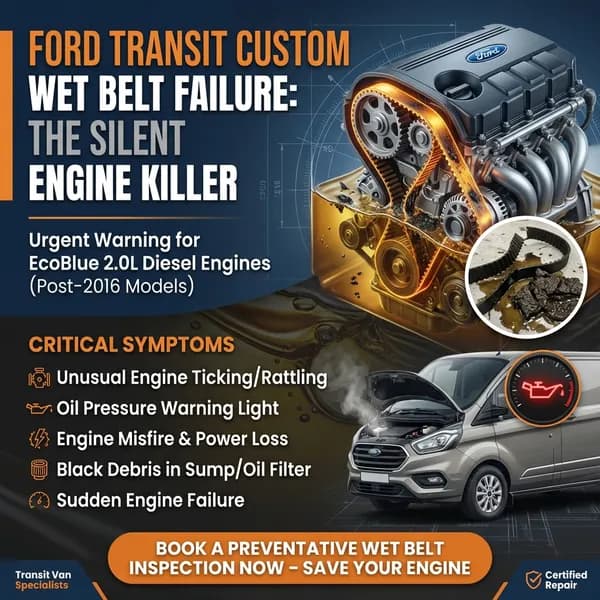
Ford Transit Custom Wet Belt Failure
Ford Transit Custom Wet Belt Failure
Wet belt failure has become one of the most important problems that Ford Transit Custom owners face in the UK. This issue affects vehicle performance and can get pricey when repairs are needed. More cases of wet belt problems keep showing up in these popular commercial vehicles, and drivers need to know the risks and warning signs. See what engines are at risk.
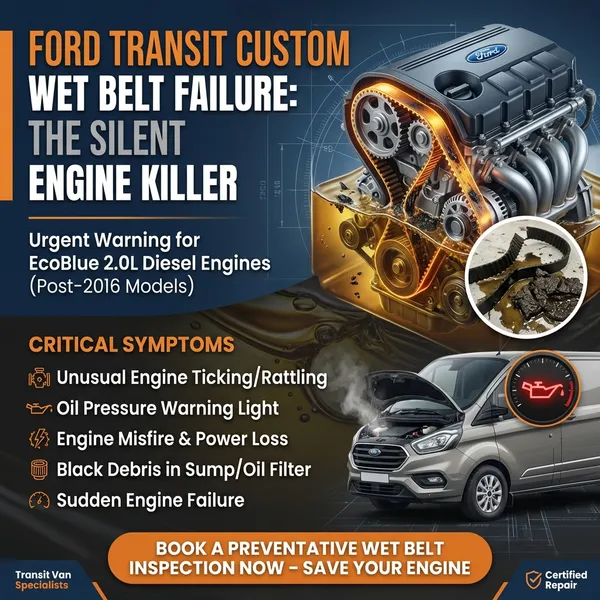
Our complete guide helps you understand why Ford Transit’s wet belt fails, what symptoms you should look for, and what steps will protect your vehicle. You’ll learn practical ways to prevent unexpected breakdowns and keep your Transit Custom reliable. The guide covers everything from the wet belt system’s unique design to early warning signs that could save you from trouble. Vans for sale
Understanding Wet Belt Technology in Ford Transit Custom
Ford Transit Custom’s wet belt system emerged with the EcoBlue diesel engine in 2016 and marked a most important breakthrough in engine design technology 1. This innovative system, also known as a belt-in-oil system, functions inside the engine where engine oil continuously bathes it to improve performance and efficiency 2. Ford vans for sale
What is a wet belt system? Ford Transit Custom Wet Belt Failure
The wet belt system in Ford Transit Custom is a vital timing component that connects the engine’s camshafts to the crankshaft via an idler gear 3. The system blends with the high-pressure fuel pump to ensure proper engine timing and overall performance 3. Its unique design positions the timing belt inside the engine where oil submerges it completely to create a specialised lubrication environment 1. Ford Transit Custom for sale
How it is different from traditional timing belts
The wet belt system runs completely within the engine’s oil environment, unlike conventional dry timing belts that operate outside the engine 4. This fundamental design wants to reduce friction and create a more efficient operating environment. The system’s complexity shows in its maintenance requirements, and Ford has revised the service interval from 150,000 miles to 100,000 miles or six years recently 1. Ford Transit Custom Lease
Potential benefits and drawbacks Ford Transit Custom Wet Belt Failure
The wet belt technology comes with several key advantages:
- Less friction that leads to better engine efficiency
- Runs more quietly than traditional systems
- Better fuel economy due to reduced mechanical resistance
- Better overall engine performance 5
These benefits are great, but you need to think over some important points. Oil contamination makes the system vulnerable, which creates many problems. Some vehicles have reported belt failures at just 32,000 miles 3. Many professional mechanics suggest more frequent maintenance than what’s officially listed. They recommend replacing the belt at 60,000 miles instead of following the manufacturer’s 100,000-mile guideline 3. On top of that, it takes more work to maintain this complex system and it can get pricey compared to regular timing belt setups 5.
Common Causes of Wet Belt Failure
Let’s look at why wet belt failure happens in Ford Transit Custom vehicles and what owners need to watch out for. The system’s complexity makes it vulnerable to damage, especially when you have specific types of wear that can get pricey to fix.
Oil contamination issues Ford Transit Custom Wet Belt Failure
Oil contamination remains the biggest problem for wet belt systems in Ford Transit Custom vehicles. Contaminated oil damages the belt’s performance and durability significantly. The engine oil attracts small impurities such as soot particles and crystalline compounds that speed up belt degradation 2. These contaminants cause the belt material to break away and block the oil sump philtre. This blockage leads to oil starvation and makes the situation worse 2.
Premature wear and tear Ford Transit Custom Wet Belt Failure
Transit Custom vans face a growing problem with their wet belt systems wearing out too early. Many vans experience major problems long before reaching their scheduled service interval. The issue affects relatively new vehicles, and reports show vans as young as three years old developing these problems 4. The damage proves catastrophic and leads to:
- Total engine failures that need complete replacement
- Valves that bend and pistons that sustain damage
- Widespread destruction of engine parts
- Repair bills that can reach £8,500 or more 6
Manufacturing defects Ford Transit Custom Wet Belt Failure
The wet belt crisis we affected Ford Transit Custom vehicles manufactured after 2016 that use the EcoBlue engine 6. The timing belt plays a significant role to synchronise the crankshaft and camshaft, which makes manufacturing inconsistencies problematic especially with engine damage. Engine failures can cause catastrophic damage because valves and pistons collide 6. Ford has acknowledged these issues to such an extent that they have temporarily suspended the sale of certain related parts due to overwhelming demand 6.
Many industry experts recommend more frequent inspections and earlier replacement intervals than originally specified by the manufacturer because of severe wet belt failures. This proactive strategy helps reduce the risk of sudden failure and the extensive engine damage that can result from belt deterioration.
Recognising the Signs of Wet Belt Problems
Transit Custom owners can prevent catastrophic engine failure by spotting wet belt warning signs early. Early detection is significant because it allows timely repairs and saves substantial repair costs.
Engine misfires and performance issues Ford Transit Custom Wet Belt Failure
At the time a wet belt starts to fail, drivers notice irregular engine performance and hesitation during acceleration 2. The engine runs unevenly because timing disruptions occur between the camshaft and crankshaft. These performance problems show up as:
- Difficulty starting the engine or frequent stalling 7
- Inconsistent acceleration response
- Dashboard warning lights, especially when you have the ‘Check Engine’ light 2
- Unexpected engine cutting out during operation
Unusual noises from the engine
A failing wet belt system makes distinctive sounds that act as significant warning signals. The engine typically produces a clear ticking or rattling sound that becomes more noticeable during startup and acceleration 2. These sounds suggest the belt’s teeth have become loose or the tension is incorrect, which causes the belt to hit other engine components.
Oil leaks and contamination Ford Transit Custom Wet Belt Failure
Oil problems reveal a lot about wet belt issues. You should look for oil leaks around the timing cover that point to worn-out seals or gaskets 2. Oil exposure makes the situation worse by damaging the belt. The belt material becomes brittle and fails to keep proper engine timing 2.
Warning Signs to Monitor:
- The belt or engine compartment shows oil contamination 7
- The dipstick releases smoke due to high crankcase pressure 8
- Oil seeps out near the timing cover’s seals or gaskets 8
- Components make rattling sounds because they are not arranged properly 8
These symptoms get worse faster and could destroy your engine if you ignore them. Your engine system needs immediate professional inspection if you notice any of these warning signs together.
Preventative Measures and Maintenance Tips
Regular maintenance is the life-blood of preventing wet belt failures in Ford Transit Custom vehicles. The latest protocol updates highlight these preventative measures and introduce most important changes to service intervals and maintenance requirements.
Regular inspections and oil changes Ford Transit Custom Wet Belt Failure
The wet belt system’s longevity depends on regular maintenance. Ford’s revised service recommendations suggest oil changes at 10,000 miles or 12 months intervals, whichever happens first 9. Vehicles operating in tough conditions might need more frequent service. A complete maintenance schedule should include:
- Oil level checks and top-ups when needed
- Engine checks to detect unusual sounds
- Records of all completed service work
- Confirmation of compatible oil grade
Following manufacturer guidelines
Ford has substantially updated their maintenance recommendations after seeing wet belt problems. The company’s timing belt replacement interval now stands at 100,000 miles or six years, down from the previous 150,000 miles or ten years 10. These changes help prevent premature wear and potential failures 11. Ford’s vehicle health monitoring system and connected apps now track oil life status to keep engines running at their best 1.
Importance of using quality parts and proper oil
Quality components and lubricants play a vital role to prevent wet belt failure. Genuine Ford parts and manufacturer-specified oils are essential for maintaining system integrity 12. A complete maintenance kit has:
The timing belt kit with tensioners, water pump belt, auxiliary belt, and oil pump belt 12. High-quality replacement parts and manufacturer’s oil specifications are significant to extend the wet belt’s service life 2. The oil must meet specific standards that ensure proper lubrication and minimise contamination-related wear risks.
Vehicle owners should keep detailed service records and invoices that show parts and oil grades 10. These documents become important especially when you have warranty claims or want to sell your vehicle. Professional servicing should be conducted by technicians who have access to Ford’s Technical Service Bulletins to ensure proper implementation of recommended checks and updates 10.
Conclusion Ford Transit Custom Wet Belt Failure
UK commercial vehicle operators face serious challenges with Ford Transit Custom wet belt failures. These vehicles just need extra attention because engine damage can be catastrophic and repairs can get pricey. Mechanics have noticed more premature failures lately, which calls for increased alertness from Transit Custom owners, especially when you have vehicles made after 2016.
The best way to prevent wet belt system problems is through regular maintenance. Following Ford’s updated service intervals, choosing the right oil, and using genuine parts will reduce failure risks by a lot. Smart vehicle owners who spot warning signs early and take quick action protect their investment and avoid expensive engine repairs. This hands-on approach will give reliable performance and longer vehicle life through proper care at the right time.
References Ford Transit Custom Wet Belt Failure
[1] – https://www.fleetnews.co.uk/news/ford-ecoblue-timing-belt-change
[2] – https://stedmansgarage.co.uk/engine-transmission/ford-transit-wet-timing-belt-common-issues/
[3] – https://thevandoctor.co.uk/wet-belt-service/
[4] – https://thecaredition.co.uk/blog/2024/08/07/the-hidden-danger-understanding-the-wet-belt-issue-on-ford-transits/
[5] – https://thecaredition.co.uk/blog/2024/08/07/fleet-owners-beware-which-ford-transit-engines-have-wet-belts-and-why-it-matters/
[6] – https://hallcraft-servicing.co.uk/ford-transit-timing-belt-time-bomb/
[7] – https://thecaredition.co.uk/blog/2024/08/07/timing-is-everything-when-and-why-you-should-replace-the-wet-belt-on-your-ford-transit/
[8] – https://www.justanswer.co.uk/car/piroo-just-wet-belt-changed-new-block-put.html
[9] – https://thecaredition.co.uk/blog/2024/08/07/choosing-the-right-oil-for-your-ford-transits-wet-belt-system/
[10] – https://forums.moneysavingexpert.com/discussion/6428787/ford-transit-custom-suspected-wet-belt-failure
[11] – https://palmersgarage.co.uk/2024/01/17/ford-2-0l-ecoblue-timing-wet-belt-replacement-revised-service-interval/
[12] – https://vospersparts.com/products/genuine-ford-transit-custom-2l-fwd-full-wet-belt-kit-includes-castrol-engine-oil?srsltid=AfmBOorShYGN-r-38CUmq-Z00iOuWtdZbv7rG15atkpFHS1pnC9Fbg3I