Are Fiat Ducato Vans Any Good? An Honest UK Buyer's Review
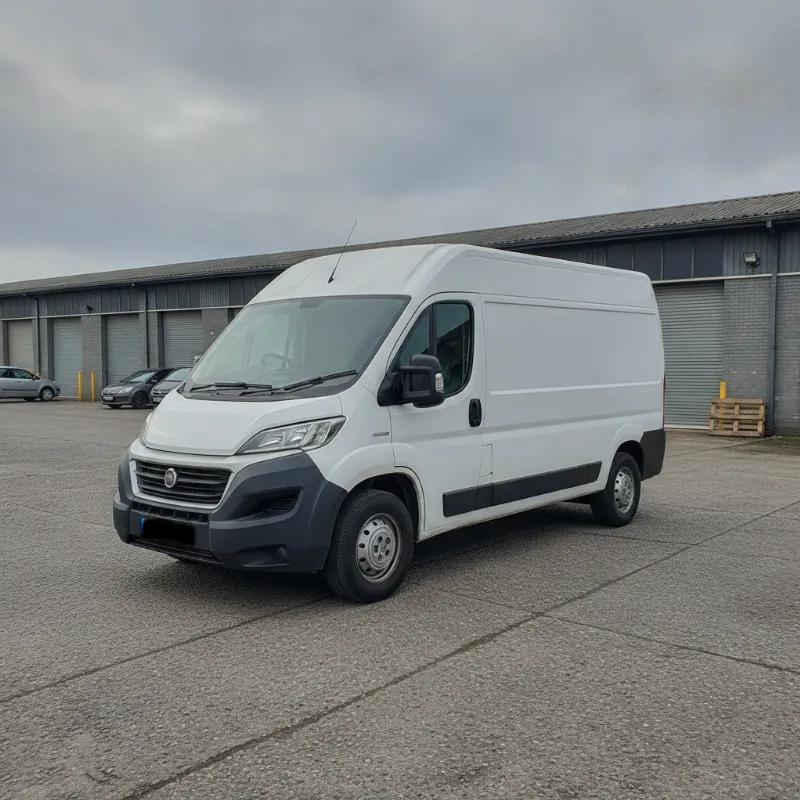
Are Fiat Ducato vans any good? The short answer
Yes — the Fiat Ducato is a genuinely good large panel van, and for many UK operators it's one of the smartest buys in its class. It offers class-leading load volumes, a proven 2.3-litre MultiJet diesel engine, comfortable long-distance driving manners and a huge range of body sizes to match almost any job. It's not without quirks, and it doesn't quite have the plush cabin of a newer Volkswagen Crafter or the badge appeal of a Mercedes Sprinter, but pound-for-pound it's hard to beat on capability and running costs.
The Ducato has also become the default choice for the UK motorhome industry, which tells you a great deal about its reliability over high mileages and its reputation with converters. If you need a spacious, dependable large van without paying a premium, the Ducato deserves a serious look.
Fiat Ducato: a quick history and where it fits in the panel van market
The Fiat Ducato has been around since 1981 and is now in its third generation (known internally as the X250, later updated to the X290 in 2014). It's built in partnership with Stellantis at the SEVEL plant in Val di Sangro, Italy, which is why the Peugeot Boxer, Citroën Relay and — more recently — the Vauxhall Movano and Toyota Proace Max all share the same underpinnings. Mechanically these vans are near-identical twins wearing different badges and grilles.
In the UK large-van sector, the Ducato competes directly with the Ford Transit, Mercedes-Benz Sprinter, Volkswagen Crafter, Renault Master and Iveco Daily. It sits towards the value end of the market on price but towards the top on load volume — the Ducato can swallow up to 17 cubic metres of cargo in its biggest guise, which is more than most rivals can manage without going up a weight class.
Reliability and build quality of the Fiat Ducato van
Fiat's commercial vehicles have a mixed reputation among car buyers, but the Ducato is genuinely well-regarded among van operators and fleet managers. The core mechanicals — engines, gearboxes, chassis — are proven over decades and millions of miles, and it's not unusual to see Ducato-based motorhomes and couriers passing 200,000 miles with the original driveline intact.
Build quality inside the cab is functional rather than plush. The plastics feel hard-wearing rather than premium, and older examples can show wear on the driver's seat bolster and steering wheel. However, the structure feels solid, panel gaps are consistent, and the load area is well finished with a proper bulkhead and useful tie-down points as standard.
Common issues owners report
No van is perfect, and there are a handful of Ducato quirks worth knowing about before you buy. On earlier X250 models (2006–2014), the reverse gear on the six-speed manual can be notchy or reluctant to engage — it's a known trait rather than a fault, but a badly worn selector can indicate a hard life. The AdBlue system and DPF on later Euro 6 engines can throw warning lights if the van has only ever done short urban trips, so a regular motorway run helps.
Electrical gremlins around the door locks, dashboard displays and reversing sensors crop up occasionally, and rust on the lower tailgate, sills and around the rear wheel arches is worth checking on anything over five years old, particularly ex-motorhome examples that have lived by the coast. Turbo actuators and EGR valves are the usual diesel-engine wear items to budget for at higher mileages.
Servicing intervals and running costs
Fiat recommends servicing the Ducato every 30,000 miles or every two years, whichever comes first, which is generous by van standards and helps keep whole-life costs down. Independent specialists can service a Ducato as easily as a franchised dealer, and parts prices are reasonable thanks to the shared PSA/Stellantis platform — filters, brakes and clutches are typically cheaper than the equivalent Sprinter or Crafter items.
Real-world fuel economy from the 2.2 and 2.3-litre diesels sits comfortably in the mid-30s mpg for a mixed-use panel van, dropping to the high 20s if you're running heavily loaded or towing. Insurance groups are competitive, and residual values on well-kept examples — especially motorhome-friendly high-roof, long-wheelbase versions — have held up strongly in recent years.
Engines and performance: is the Fiat Ducato 2.3 MultiJet worth it?
The 2.3-litre MultiJet II diesel is the engine most Ducato buyers should aim for. It's been offered in various outputs from 120bhp up to 180bhp, and even the entry-level version pulls the van cleanly thanks to strong low-end torque. The 140bhp variant is the sweet spot for most buyers, balancing performance with economy, while the 160 and 180bhp versions are worth considering if you're regularly loaded to the maximum or towing a trailer.
There was also a smaller 2.0-litre MultiJet option on some earlier models and, more recently, a 2.2-litre unit introduced with the facelifted range. The 2.2 is a modern, refined engine but the older 2.3 has a strong reputation for durability — many high-mileage motorhome owners specifically seek it out. A nine-speed automatic gearbox is available on later models and transforms the driving experience if you spend a lot of time in traffic. From 2024 onwards Fiat also offers the fully electric E-Ducato for urban operators.
Fiat Ducato dimensions, load space and payload
Load capacity is where the Ducato really shines. Depending on the body configuration, you get anywhere from around 8 cubic metres in the smallest L1H1 up to a genuinely cavernous 17 cubic metres in the L4H3. Payloads range from roughly 1,000kg to over 2,000kg depending on gross vehicle weight (available in 3.0t, 3.3t, 3.5t and heavy-duty 4.0t and 4.25t versions).
The rear load area is a usefully square shape, with a maximum load length of over 4.3 metres in the longest wheelbase — long enough to carry standard 8x4 sheet material flat with room to spare. Side loading doors are wide enough to accept a Euro pallet, and the low load floor makes life easier for couriers and tradespeople loading heavy items by hand.
Fiat Ducato size options (L1 to L4, H1 to H3)
Fiat uses a straightforward size code. L1 is the shortest wheelbase at around 4.96m overall, L2 is the medium wheelbase, L3 is the long wheelbase and L4 is the extra-long "Maxi" variant at around 6.36m. Roof heights run from H1 (standard, around 2.25m tall) through H2 (medium roof) to H3 (high roof), the last of which allows most adults to stand fully upright inside.
For most trades, an L2H2 or L3H2 is the practical sweet spot — big enough for serious cargo, small enough to handle car parks and multi-storeys. Couriers and motorhome converters tend to favour the L4H3, while urban delivery operators often stick with the nimbler L1H1.
Comfort, cab tech and driving experience
The Ducato is a comfortable long-distance van. The high driving position gives excellent forward visibility, the seats are supportive over multi-hour stints and the steering is light enough for tight urban work without feeling vague on the motorway. Wind and road noise are well suppressed for a big box on wheels, and the ride quality is generally settled even when the van is running empty.
Cab tech has improved significantly with the recent facelifts. Later Ducatos get a 10-inch touchscreen infotainment system with wireless Apple CarPlay and Android Auto, a full digital driver display, keyless entry and a proper suite of driver assistance features including adaptive cruise control, lane-keeping assistance and traffic-sign recognition. Older X250 models are far more basic inside, but the fundamentals — driving position, visibility, comfort — remain strong.
Fiat Ducato as a motorhome and campervan base
It's no accident that around three-quarters of all European motorhomes are built on a Ducato chassis. Fiat offers a dedicated "Camper" version of the Ducato with specific gearing, a reinforced rear suspension, an alternator uprated to keep leisure batteries topped up, and a body-mounting system that makes life easier for converters. The result is a base vehicle that drives well when loaded to motorhome weights and copes with long touring trips without complaint.
For DIY campervan builders, the L3H2 and L4H3 panel vans are the most popular starting points. There's a huge aftermarket of pop-tops, conversion kits, insulation panels and furniture modules designed specifically around Ducato dimensions, which makes a self-build far more straightforward than trying to adapt a less common base vehicle. Resale values on well-converted Ducato campers are also famously strong.
Verdict: who should buy a Fiat Ducato van?
The Fiat Ducato is a smart buy if you need a large panel van that offers class-leading load space, sensible running costs and proven reliability without paying premium-brand money. Couriers, removals firms, builders needing to carry long materials, and anyone shopping for a motorhome base vehicle will all find it hard to beat. The 2.3 MultiJet diesel is a genuinely long-lived engine, servicing is affordable, and the sheer choice of body sizes means you can spec exactly what your job needs.
It's less compelling if cab luxury is your top priority — a Volkswagen Crafter or Mercedes Sprinter feels a step above inside, particularly on older Ducatos — or if you plan to do only very short urban trips, where the DPF and AdBlue systems prefer regular longer runs. For most UK van buyers, though, the answer to "are Fiat Ducato vans any good?" is a clear yes: they're practical, dependable and represent excellent value both new and used.
FAQs
Are Fiat Ducato vans reliable in the UK?
Yes, the Fiat Ducato has a strong reliability record, particularly the 2.3-litre MultiJet diesel engine which regularly clocks up 200,000+ miles when serviced properly. The fact that most European motorhome builders use it as their base vehicle is a strong endorsement — motorhomes typically live long, high-mileage lives. Watch for the usual diesel wear items (turbo actuators, EGR valves, DPF issues on short-trip vans) and check for rust on older or ex-coastal examples.
What is the best Fiat Ducato engine to buy?
For most UK buyers, the 2.3-litre MultiJet II diesel in 140bhp form is the sweet spot — strong torque, reasonable economy in the mid-30s mpg, and a proven long-term reputation. If you regularly run fully loaded or tow, step up to the 160 or 180bhp version. The newer 2.2-litre engine in facelifted models is more refined and cleaner but the older 2.3 has the edge on outright durability.
How long does a Fiat Ducato van last?
With regular servicing every 30,000 miles or two years, a Fiat Ducato will comfortably cover 200,000 to 300,000 miles. Motorhome examples routinely last decades because they're generally well cared for and don't work particularly hard. The chassis and engine are the strong points; expect to replace clutches, turbos and suspension bushes as normal wear items over that kind of mileage.
Is a Fiat Ducato better than a Ford Transit?
They're aimed at slightly different buyers. The Ford Transit has a more car-like driving feel, a wider UK dealer network and stronger residual values in the trade. The Fiat Ducato offers more load volume for the money, cheaper parts and servicing, and is the go-to choice for motorhome conversions. For pure cargo carrying and value, the Ducato usually wins; for company-fleet familiarity and dealer support, the Transit often has the edge.
Is the Fiat Ducato good as a campervan base?
It's arguably the best campervan base vehicle you can buy. Around three-quarters of European motorhomes are built on the Ducato platform, Fiat sells a dedicated Camper version with uprated suspension and alternator, and there's a huge aftermarket of Ducato-specific conversion parts. The L3H2 and L4H3 panel vans are the most popular starting points for DIY builds, and finished conversions hold their value very well on the used market.