3 Seater Refrigerated Van: The Complete UK Buyer's Guide
What Is a 3 Seater Refrigerated Van?
A 3 seater refrigerated van is a light commercial vehicle fitted with an insulated load area and an active cooling system, combined with a factory or converted cab layout that seats three people including the driver. In practice this usually means a standard panel van with a bench-style double passenger seat alongside the driver, giving crews room to travel together without needing a second vehicle. The refrigeration element can be a chiller unit for temperatures around 0°C to 8°C, or a full freezer specification capable of holding loads well below zero.
These vans are hugely popular in the UK because they combine the practical footprint of a regular medium or large panel van with the ability to carry a driver, a mate and a supervisor or extra crew member. That makes them ideal for temperature-controlled deliveries where more than one pair of hands is needed at the destination, whether that's unloading heavy pallets, running multiple drops or handling sensitive goods.
Who Needs a Refrigerated Van With 3 Seats?
The three-seat cab is one of the most versatile configurations on the market. It's not just about seating capacity — it's about the flexibility to send different combinations of staff on different routes without swapping vehicles. For any business where a driver may need to be accompanied by additional crew, a three-seat refrigerated van solves a lot of logistical headaches.
Catering, Florists and Food Delivery Crews
Caterers frequently need a chef or event manager to travel with the driver, along with a porter or assistant to help with unloading at venues. A three-seat cab keeps the entire crew together with the food, so there's no juggling of separate cars at wedding venues, corporate events or festivals. Florists benefit in similar ways, especially during peak wedding and Valentine's periods where flowers need to stay cool and multiple staff are needed to set up displays on site.
Food delivery businesses supplying restaurants, cafes and farm shops also make good use of the three-seat layout, particularly where a trainee driver is riding along, or where a route planner accompanies the driver on new rounds. Meal-kit and dark-kitchen operators use them for multi-drop shifts where two runners can hop out at busy stops while the driver stays with the vehicle.
Pharmaceutical and Medical Transport
Pharmaceutical logistics is another area where the extra seats prove their worth. GDP-compliant deliveries of vaccines, clinical trial materials and temperature-sensitive medicines often require a second person for security, chain-of-custody paperwork or lifting heavy containers. NHS courier contracts, blood transport and pathology sample runs sometimes need a trainee or observer in the cab too. In these cases a properly validated chiller or freezer conversion paired with a three-seat cab is the standard configuration.
Popular 3 Seater Refrigerated Van Models in the UK
Most mainstream medium and large panel vans in the UK come with a three-seat cab as standard or as a low-cost option, and virtually all of them can be sent to specialist converters for refrigeration. Below are the most commonly chosen platforms.
Ford Transit Custom Fridge Van
The Ford Transit Custom is the UK's best-selling medium van and unsurprisingly the most popular base for a three-seat refrigerated conversion. Its standard cab layout includes a driver's seat and a double passenger bench, and the load area is well suited to insulation with GRP linings and either an over-cab or under-slung fridge unit. The Custom is easy to drive, has strong residuals and offers a wide dealer network, making servicing and warranty support straightforward.
Vauxhall Vivaro and Peugeot Expert Chiller Conversions
The Vauxhall Vivaro, Peugeot Expert and Citroën Dispatch share the same Stellantis platform and are frequently converted into chiller vans. They tend to be slightly cheaper than the Transit Custom to buy new and offer competitive payloads and load lengths. Standard three-seat cabs are widely available, and there are electric variants for operators focused on low-emission zones and city work.
Mercedes Vito and Volkswagen Transporter Refrigerated Options
At the premium end, the Mercedes-Benz Vito and Volkswagen Transporter are popular with operators who want a smarter cab, quieter refinement and strong brand image — often important for pharmaceutical clients or catering firms delivering to high-end venues. Both come with three-seat cab configurations and are supported by an extensive network of approved refrigerated converters. The Sprinter and Crafter, their larger siblings, are the go-to choice where higher payload or longer load lengths are needed.
Key Features to Look For
Refrigerated vans vary enormously depending on how they've been converted, so it pays to look past the badge and understand the specification in detail before you commit.
Chiller vs Freezer Temperature Ranges
The first decision is whether you need a chiller or a freezer. Chiller conversions typically hold the load area between 0°C and 8°C, which is ideal for fresh produce, dairy, flowers and most pharmaceutical products. Freezer conversions run down to -18°C or below and require thicker insulation, more powerful refrigeration units and often a night-heater to protect the unit when parked. Dual-compartment vans with a moveable bulkhead let you carry chilled and frozen goods at the same time.
Insulation, Load Space and Payload
Insulation thickness has a direct impact on both temperature performance and available cargo space. Typical chiller insulation is around 50mm, while freezer builds may use 75mm to 100mm, which eats into internal load volume. Every kilogram of insulation and refrigeration hardware also reduces payload, so always check the plated weights and the remaining payload figure after conversion. For heavier loads, look at long-wheelbase and high-roof variants.
Van Seats, Cab Comfort and Bulkhead Options
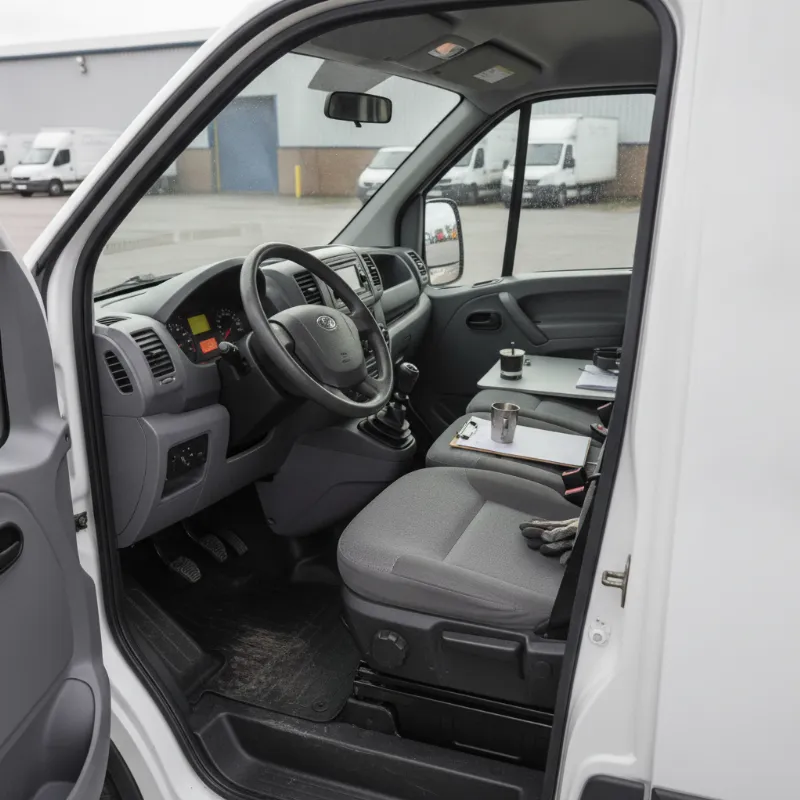
Not all three-seat cabs are equal. Some double passenger seats have a fold-down middle backrest that doubles as a desk or cupholder, which is genuinely useful on long shifts. Check the legroom, whether the middle occupant has a proper three-point seatbelt, and how the bulkhead is arranged. A solid, insulated bulkhead is essential for a refrigerated van — a load-through hatch or window will compromise temperature performance and is generally avoided in fridge conversions.
Buying, Leasing or Financing a 3 Seater Refrigerated Van
There are three main routes into a three-seat refrigerated van: outright purchase, contract hire or lease, and finance agreements such as hire purchase. Buying outright suits businesses with the capital available and a long-term plan to keep the vehicle, since refrigerated conversions hold value reasonably well when maintained. Contract hire spreads the cost into predictable monthly payments and often bundles in servicing and maintenance, which can be attractive for fleets who want to budget cleanly and hand the vehicle back at the end of the term.
Hire purchase and lease purchase let you spread the cost while still owning the van at the end of the agreement, which can be useful if you expect the vehicle to have plenty of working life left after the finance term. Whichever route you choose, factor in the cost of the conversion itself — the fridge unit and insulation can add several thousand pounds on top of the base van — and remember to budget for annual refrigeration servicing, which is separate from the vehicle service. Speak to your dealer about business use options, VAT reclaim on qualifying purchases and any manufacturer support schemes that may apply to your industry.
Frequently Asked Questions
Can you get a small van with 3 seats as a fridge van?
Small vans like the Ford Transit Connect, Vauxhall Combo and Peugeot Partner can be converted to chiller specification, and long-wheelbase versions sometimes offer a three-seat crew-cab layout. However, the payload penalty is more noticeable on a smaller vehicle, and freezer conversions are less common in this class. For most three-seat refrigerated applications, medium vans like the Transit Custom or Vivaro strike a better balance.
How much does a 3 seater refrigerated van cost?
Prices vary widely with age, mileage, conversion quality and specification. A used chiller-converted medium van with three seats typically starts in the mid-teens of thousands of pounds, while a new premium model with a full freezer conversion and standby electric plug-in can reach £40,000 or more before VAT. Always request a full breakdown of the base vehicle price, the conversion cost and any warranty on the refrigeration unit.
Are there 4 or 7 seat refrigerated van options?
Yes. Crew-cab and double-cab conversions are available on most major platforms and offer six or seven seats with a shorter load area behind. These are popular with larger catering teams and event caterers who need to move both staff and stock together. Four-seat configurations are less standard but can be built to order by specialist converters if none of the off-the-shelf layouts fit your needs.
FAQs
Can you get a small van with 3 seats as a fridge van?
Yes. Small vans such as the Ford Transit Connect, Vauxhall Combo and Peugeot Partner can be converted to chiller specification, and some long-wheelbase versions offer a three-seat cab layout. That said, the payload penalty is more significant in a small van and freezer conversions are less common, so most operators end up choosing a medium van like the Transit Custom or Vivaro for three-seat refrigerated work.
How much does a 3 seater refrigerated van cost?
A used chiller-converted three-seat medium van typically starts in the mid-teens of thousands of pounds, while a new premium model with a full freezer conversion and standby power can be £40,000 or more before VAT. The refrigeration conversion itself often adds several thousand pounds on top of the base van price, so ask your dealer for a full itemised quote.
Are there 4 or 7 seat refrigerated van options?
Yes. Crew-cab and double-cab conversions offering six or seven seats are available on most major platforms including the Transit Custom, Vivaro, Vito and Transporter, with a shorter load area behind the second row. Four-seat configurations are less common as standard but can be built by specialist converters on request.
Do 3 seater refrigerated vans need a special driving licence?
No, a standard UK category B car licence covers most three-seat refrigerated vans up to 3.5 tonnes gross vehicle weight, which includes the vast majority of medium and large panel van conversions. Only if you upgrade to a larger 4.25 tonne or 7.5 tonne chassis-cab fridge conversion would you need to check licence requirements more carefully.
How often does the refrigeration unit need servicing?
Refrigeration units should be serviced at least once a year, and many operators service them every six months if the van is in daily use. This is separate from the vehicle's mechanical service and is usually carried out by the conversion company or an approved refrigeration engineer. Regular servicing is essential for food safety compliance and to keep any temperature validation certificates valid.