What Battery Do You Need for a Peugeot Boxer Van? Sizes, Specs & Fitting Guide
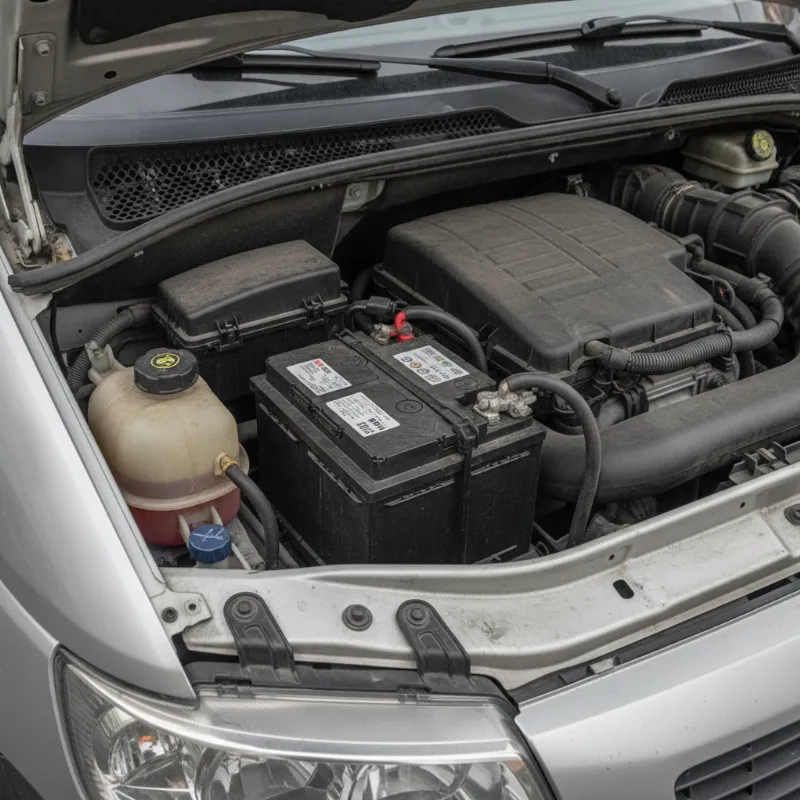
What battery does a Peugeot Boxer van need?
Most Peugeot Boxer vans need a Type 019 or Type 020 battery, typically rated between 90Ah and 100Ah with a cold cranking amps (CCA) figure of around 720A to 850A. The Boxer is a heavy panel van with a diesel engine, plenty of electrical accessories and – on many trims – a Stop/Start system, so it draws a lot more current than a small car battery can handle.
The exact battery you need depends on the year, engine and specification of your Boxer. A pre-2006 2.0 HDi will happily run on a standard flooded lead-acid battery, while a newer Euro 6 Boxer with Stop/Start will require an EFB (Enhanced Flooded Battery) or AGM (Absorbent Glass Mat) unit designed to cope with repeated engine restarts. Fitting the wrong type won't just wear out quickly – it can cause charging faults and warning lights on the dashboard.
Before buying, always cross-check three things: the physical size (usually 353 x 175 x 190mm for a Type 019), the Ah rating, and the terminal layout (Boxer batteries are almost always terminal layout 0, with the positive terminal on the right when looking at the battery from the front).
Peugeot Boxer battery specifications by year and engine
Peugeot has produced the Boxer in several generations since the mid-1990s, and battery specifications have crept up as the vans have grown heavier and gained more electronics. Here's a breakdown of the most common fitments you'll find on UK-registered Boxers.
Battery for 2005 Peugeot Boxer models
A 2005 Peugeot Boxer – whether the 2.0 HDi or 2.2 HDi – typically takes a Type 019 battery, 95Ah with around 800 CCA. Physical dimensions are usually 353 x 175 x 190mm with a standard SAE terminal layout. These pre-facelift Boxers don't have Stop/Start, so a good-quality flooded lead-acid battery is perfectly adequate. There's no need to pay extra for an EFB or AGM unit unless the van has been retrofitted with additional electrical equipment like a large inverter, second alternator or leisure setup.
If your 2005 Boxer is used as a camper conversion or workshop van with heavy accessory loads, you may want to step up to a 100Ah heavy-duty commercial battery for extra headroom.
Battery for 2007 Peugeot Boxer FT 330 2.2 HDi
The 2007 Boxer FT 330 2.2 HDi is part of the third-generation (X250) Boxer launched in 2006, and it uses a Type 019 battery with a 95Ah to 100Ah rating and around 800 to 850 CCA. Dimensions and terminal layout match the earlier model – 353 x 175 x 190mm, positive terminal on the right.
Because this generation introduced more electronic body control modules than its predecessor, it's worth fitting a battery at the upper end of the CCA range to avoid intermittent electrical gremlins during cold winter starts. A quality branded battery from Varta, Bosch or Yuasa is a sensible choice for a working van that has to start reliably every morning.
Battery for newer Peugeot Boxer vans (Euro 5 and Euro 6)
Euro 5 Boxers (roughly 2011 to 2016) still generally use a Type 019 flooded battery, though Stop/Start-equipped models require an EFB with the same 95Ah / 800 CCA rating. Euro 6 Boxers (2016 onwards) with Stop/Start almost always specify an EFB battery as standard, and some higher-spec models – particularly those with additional emissions equipment and AdBlue systems – call for an AGM battery.
If your newer Boxer has Stop/Start, do not fit a standard flooded battery as a replacement. The alternator's charging profile is tuned for an EFB or AGM, and a standard battery will be over-charged, damaged within months and may trigger a battery management warning on the dash.
How to check your existing Boxer battery (CCA, Ah and terminal layout)
The easiest way to find out exactly what battery your Boxer currently has is to open the bonnet and read the label on the top of the existing unit. You're looking for four key figures: the Ah rating (e.g. 95Ah), the CCA rating (e.g. 800A), the physical case size code (usually 019 or 020), and the terminal layout code.
If the label is faded or the battery is tucked under a plastic cover, you can also cross-reference by your registration plate at any battery retailer's website, or by checking the owner's handbook. On most Boxers the battery lives under the driver's seat or in the engine bay on the passenger side – lift the seat base or open the bonnet to access it.
Take a quick photo of the terminals before you buy: the positive terminal position (left or right when facing the battery) determines whether the cables will reach. Fitting a battery with the terminals on the wrong side is a common and easily avoided mistake.
Signs your Peugeot Boxer battery needs replacing
Boxer batteries typically last four to six years in normal service, though this drops for vans that do lots of short urban stop-start deliveries. The classic warning signs are slow, laboured cranking first thing in the morning, dashboard lights that dim noticeably when you turn the key, and Stop/Start systems that stop working or display a fault message.
You may also notice electric windows moving more slowly, the central locking becoming sluggish, or the radio and infotainment system resetting itself. On Euro 6 vans, a failing battery can trigger a range of seemingly unrelated warning lights including ABS, ESP and even AdBlue faults – all because the electronic control units are seeing voltage dips.
If you can, get the battery tested with a proper load tester or conductance meter. Most fast-fit centres and battery specialists will do this for free. A reading of below 12.4 volts at rest, or a failed load test, means it's time for a replacement before the van lets you down on a job.
How to replace the battery on a Peugeot Boxer (and do you need to code it?)
Replacing the battery on a Peugeot Boxer is a straightforward job for anyone comfortable with basic spanner work. Locate the battery (under the driver's seat on most third-generation models, or in the engine bay on earlier vans), disconnect the negative terminal first, then the positive, undo the clamp bar and lift the battery out. Fit the new one in the reverse order, positive first, negative last, and make sure the clamp is tight – a loose battery vibrates itself to death.
The important question on newer Boxers is whether the battery needs to be coded (registered) to the vehicle. Any Euro 5 or Euro 6 Boxer with Stop/Start uses a battery management system that needs to be told about the new battery, otherwise it will keep charging as if the old one were still fitted. This is done with a diagnostic tool such as a Peugeot Diagbox or a good-quality generic tool that supports PSA battery registration. Without coding, the new battery's life will be significantly reduced.
Pre-2011 Boxers without Stop/Start don't need coding – you can fit the battery and drive away. On any van, it's a good idea to have a memory-saver plugged into the OBD or 12V socket during the swap so you don't lose radio codes, window one-touch settings or stored fault codes.
Common Peugeot Boxer electrical issues linked to a weak battery
A tired battery is the single most common cause of "mystery" electrical faults on the Boxer. Because so many systems share the same voltage supply, a battery that drops below the design threshold under load can throw up faults that look mechanical or software-related.
Typical symptoms include the Stop/Start light showing amber and refusing to engage, the AdBlue countdown mysteriously appearing, ABS and traction control lights flickering on rough starts, and the infotainment system freezing or rebooting. Some owners also report the electric handbrake (on models fitted with one) refusing to release until the engine has been running for a few seconds.
Before spending money on diagnostics or replacement modules, always rule out the battery and the charging system first. A ten-minute battery health check can save hundreds of pounds chasing phantom faults, and fitting the correct specification battery – properly coded where required – will keep your Boxer starting first time and its electronics behaving themselves for years to come.
FAQs
What size battery does a Peugeot Boxer van take?
Most Peugeot Boxer vans take a Type 019 battery measuring 353 x 175 x 190mm, with a rating of 95Ah to 100Ah and 800 to 850 CCA. Stop/Start models from around 2011 onwards require an EFB or AGM battery in the same physical size, not a standard flooded lead-acid unit.
Do I need to code a new battery to a Peugeot Boxer?
Any Peugeot Boxer with Stop/Start (typically Euro 5 from around 2011 and all Euro 6 models) needs the new battery registered to the vehicle's battery management system using a Peugeot Diagbox or compatible diagnostic tool. Without coding, the alternator will overcharge the new battery and shorten its life. Older Boxers without Stop/Start do not need coding.
Where is the battery located on a Peugeot Boxer?
On third-generation X250 Boxers (2006 onwards) the battery is usually under the driver's seat – lift the seat base to access it. On earlier Boxers and some later variants it lives in the engine bay, typically on the passenger side. Check your owner's handbook if you're unsure.
Can I fit a standard battery instead of an EFB on a Stop/Start Boxer?
No. Fitting a standard flooded lead-acid battery to a Stop/Start Boxer will cause premature failure, because the alternator's charging profile is designed for an EFB or AGM battery. You'll typically see the battery fail within months and may trigger dashboard warnings. Always match the original specification or upgrade – never downgrade.
How long should a Peugeot Boxer battery last?
A good-quality Boxer battery typically lasts four to six years in normal service. Vans doing lots of short urban journeys, heavy tail-lift use or extended parking with accessories on may see shorter life. Regular voltage checks and keeping the battery fully charged will extend its useful life significantly.