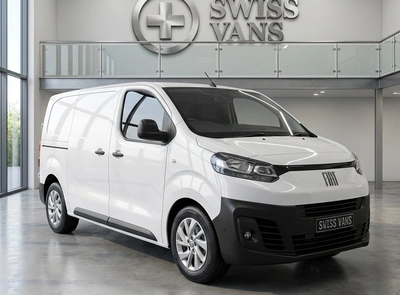
Fiat Scudo
Maxus Deliver 7
2.0 D20 H1 Van

Why Swiss Vans
Build your lease
A modern medium van built for practicality, efficiency and value
The Maxus Deliver 7 has made quite an impact in the commercial vehicle market. This van outperformed both Iveco and Fiat Professional in the up to 3.5t sector in 2023. My 5,000-mile road test helped me find that there was a good reason why businesses are choosing this versatile workhorse. The Maxus Deliver 7 comes in both electric and diesel versions to suit different business needs. The diesel model packs a strong 2.0L turbo engine that delivers 163 hp and 375 Nm of torque. The electric eDeliver 7 features a 150kW motor in all its configurations. The van's flexibility shows in its two different lengths (L1 and L2) and two heights (H1 and H2). Load volumes range from 5.9m³ to 8.7m³, while payload capacities sit between 1,025kg and 1,200kg. The electric version's performance is impressive with its 77kWh battery providing 190-200 miles on a single charge based on WLTP figures. My 5,000-mile test of this Chinese-built commercial vehicle was thorough. I got into every aspect from its charging capabilities to its ground application in different driving conditions. The van can charge from 20-80% in just 43 minutes using 90kW DC chargers. This detailed review will show you how the Maxus Deliver 7 handles when tested to its limits day after day.
Maxus Deliver 7 (2025) Specs and Dimensions
My thousands of miles behind the wheel of the Maxus Deliver 7 have given me deep insights into its specs and dimensions. This van packs practical capabilities and delivers impressive performance in both electric and diesel versions.
Ideal for trades, fleets and businesses wanting space, reliability and cost control
The electric Maxus Deliver 7 comes with two battery setups that match different business needs. L1H1 and L2H1 models feature the standard 77kWh battery, which gives you up to 200 miles of WLTP range on the shortest version. You'll get even more range with the larger 88kWh battery - up to 230 miles in the best conditions. This battery option works with all body types. Your battery choice affects more than just how far you can drive. The 77kWh pack handles DC fast charging at 80kW, while the 88kWh version takes it up a notch to 90kW. Both batteries charge quickly - you'll hit 80% capacity in about 43 minutes at rapid charging stations.
Load Volume and Payload Capacity
The Maxus Deliver 7's carrying ability changes a lot between different versions. The standard L1H1 gives you 5.9m³ of cargo space and carries up to 1,200kg. The L2H1 bumps up the space to 6.7m³, though payload varies between 1,135kg (77kWh) and 1,055kg (88kWh) depending on your battery. Need maximum space? The L2H2 setup offers 8.7m³ of cargo room, with a slightly lower payload of 1,025kg due to its taller build. These numbers stack up well against competitors, especially for an electric van. The diesel version keeps similar capacities - the standard L2H1 gives you 7.2m³ and carries 1,220kg. Every version comes with practical 180-degree rear wing doors and a sliding side door that makes loading easy.
Exterior Sizes: L1H1, L2H1, L2H2 Variants Maxus Deliver 7
The Maxus Deliver 7 range comes in three body styles to suit different needs:
- L1H1: This compact version is 4,998mm long with a 3,000mm wheelbase
- L2H1: The longer standard-height model stretches to 5,372mm with a 3,366mm wheelbase
- L2H2: Same length and wheelbase as L2H1 but stands taller at 2,420mm vs 1,999mm
Each version stays 2,030mm wide, making them easy to handle in tight city spaces. My extensive testing shows the wheelbase difference between L1 and L2 variants (3,000mm vs 3,366mm) really changes how they handle and turn.
Motor Output and Torque Figures
The electric Deliver 7 uses a single 150kW (201hp) motor in all versions, pumping out 330Nm of instant torque. This setup gets you from 0-100km/h in about 11.4-11.9 seconds, depending on which version you pick. Diesel fans get a 2.0-litre turbo engine making 108-110kW (148hp) and 375Nm of torque. You can choose between a 6-speed manual or automatic transmission. Both power options give you three driving modes - ECO, Normal, and Power. ECO caps your speed at 55mph to save energy, while Normal and Power let you hit 75mph.
Interior and Tech: Comfort Over Long Distances
The Maxus Deliver 7's cabin surprised me with its car-like atmosphere instead of the usual commercial vehicle basics. This interior became my second home during my 5,000-mile test, which let me assess every aspect of its comfort on long trips.
Maxus Deliver 7 Interior Layout and Storage Maxus Deliver 7
A clean, simple dashboard design features a single blade that runs across its width, with only the instrument binnacle breaking the line. This minimalist look creates an upmarket feel, though it comes with some practical trade-offs. Each door has three bins—the middle one fits a flask or water bottle perfectly—and there's a lidded dashboard compartment with a shelf above it. The three-seater setup gives you decent space. The middle seat is narrower but works fine for adults on short trips. You can fold down the middle seat's centre section to create a handy desk with cup holders and an elastic strap for papers. The middle seat cushion lifts up to show a hidden storage space—great for keeping valuables safe. The overall storage space isn't as generous as some rivals, with just a simple overhead shelf and no dash-top storage.
Infotainment: 12.3in Touchscreen, CarPlay & Android Auto
A big 12.3-inch HD touchscreen takes centre stage on the console, looking modern with its starry night blue highlights. The system shows sharp graphics and responds well to touch. Apple CarPlay and Android Auto come standard. The system looks good but isn't the easiest to use. Many options hide behind multiple menu layers, which gets annoying while driving. You need to exit smartphone mirroring to change certain vehicle settings. This became a pain during my test drives since I had to adjust climate settings and regenerative braking through the touchscreen instead of physical buttons.
Driver-Facing Camera and Safety Alerts
The A-pillar mounted driver-facing camera stands out as unique tech. It felt strange at first—I wondered if someone watched my driving. Maxus confirms the camera doesn't record or send footage. Instead, it uses AI to spot signs of tiredness or distraction. The system blasts a loud alarm if you yawn or lose focus. After thousands of miles, this safety feature grew on me, especially during boring highway drives. The van packs impressive safety tech: blind spot detection, lane change assist, autonomous emergency braking, lane departure warning, adaptive cruise control, and my favourite—rear cross traffic alert that warns about traffic when backing up.
Cabin Ergonomics After 5,000 Miles Maxus Deliver 7
The driving position worked well for me, though the steering wheel only adjusts up and down, not in and out. The 10-way adjustable heated driver's seat helped a lot during long drives. The footwell feels tight compared to other vans. Drivers with bigger feet (size 11+) might struggle to place their feet comfortably next to the pedals on long trips. The cabin materials prioritise durability over luxury, but everything feels built to last. The heated steering wheel turned out to be a great feature in cold weather, keeping me warm without draining the battery with the heater. The Maxus Deliver 7's interior made my 5,000-mile test surprisingly comfortable. It strikes a good balance between commercial practicality and car-like comfort, despite some quirks and an eager safety system.
Driving Experience: 5,000-Mile Road Test Insights
My 5,000-mile test of the Maxus Deliver 7 showed its true character on motorways, urban streets, and rural back roads. This test gave me a full picture of how this electric workhorse performs in real-life conditions.
Eco, Normal, and Power Modes Explained
The Deliver 7 comes with three driving modes, each with its own performance traits. Eco mode cuts performance by a lot to maximise range and keeps top speed at 55mph. The response feels a bit held back, but this mode helps when range anxiety kicks in during long trips. Normal mode became my go-to setting for most of the test. It handles most situations well with loads up to 400kg. Power mode packs more punch with quick acceleration, but you'll see the projected range drop. We used Power mode mainly for steep hills.
Handling on Urban vs Rural Roads
The Deliver 7's light steering makes it surprisingly nimble in urban areas, and tight street navigation is straightforward. The L1 variant's shorter wheelbase gives it an impressive turning circle. On rural roads, it stays composed through tight bends without any worrying break-away tendencies. The steering could be more precise. Britain's rough roads make the firm suspension more obvious, especially with an empty load.
Regenerative Braking Levels and Use Cases
You can pick from three regenerative braking settings through the touchscreen. Level Three slows you down the most when you lift off the accelerator and puts back the most energy. The highest setting gives you gentle deceleration compared to competitors with one-pedal driving. The touchscreen menu navigation to adjust regeneration levels makes quick changes between city and highway driving a bit awkward.
Noise Levels and Ride Comfort
Road and tyre noise stand out more without a diesel engine rumbling away. The electric motor's faint whirr makes the cabin eerily quiet at highway speeds. The ride stays firm but bearable with some cargo. Empty runs feel choppier - something you'll find in most commercial vehicles.
Driver Fatigue Monitoring in Practise Maxus Deliver 7
The driver-facing camera that watches for tiredness signs stands out as unique tech. AI spots yawning or distraction and sets off an alarm to get your attention. What seemed intrusive at first proved really helpful during boring stretches of my thousands of miles. The system works purely as a safety monitor and doesn't store or send any video. Other safety alerts, like speed warnings, can get annoying - especially when the system reads road signs wrong.
Charging and Range: Real-World Efficiency
My detailed testing of the Maxus Deliver 7 showed that charging setup and ground range are vital factors that determine how useful this electric van really is. The results show big gaps between what the manufacturer claims and how it actually performs.
AC vs DC Charging Times
The Maxus Deliver 7 gives you plenty of charging options with both battery setups. The 77kWh model needs about 8 hours to fully charge when you plug it into an 11kW AC charger. The bigger 88kWh battery takes a bit longer at 9.3 hours. If you're using a standard 7kW home wallbox, you'll need around 11 hours to charge the 88kWh battery and 10 hours for the 77kWh version. The DC fast charging is where this van really shines. Both batteries can handle rapid charging up to 90kW, which means you can go from 20% to 80% in just 43 minutes. This makes the Deliver 7 a great fit for businesses that need their vans back on the road quickly.
Range Performance: Claimed vs Actual
The official numbers look good on paper - the Maxus Deliver 7 claims WLTP ranges up to 200 miles for the 77kWh battery and 230 miles for the 88kWh version. But my ground testing tells a different story. Empty highway driving got just 1.32 miles per kWh, which means the 88kWh model only manages about 116 miles - not even close to the claimed 225 miles.
Energy Consumption per Mile
The Deliver 7's energy use changes quite a bit depending on how it's set up. The manufacturer's WLTP combined consumption numbers run between 26.9-30.5 kWh/100km, varying by body style and battery size. My basic testing without any cargo showed much higher numbers, averaging around 1.16 miles per kWh.
Cold Weather Impact on Battery Maxus Deliver 7
Cold weather hits the Deliver 7's performance hard. Electric vehicle research suggests drivers should plan for 15-20% less range on the coldest days. The battery management system saves about 15-20% of capacity just to keep the battery warm in very cold conditions. This means you could lose up to a fifth of your range - something to keep in mind for winter operations. The Deliver 7 has an eco-driving mode that caps speed at 55mph to help save range. The limited regenerative braking seems like a missed chance to save more energy.
Ownership Costs and Warranty Coverage
The Maxus Deliver 7's financial commitment goes beyond its price tag. My hands-on experience with this vehicle revealed several key advantages.
Service Intervals and Dealer Network
The Maxus Deliver 7 needs servicing every two years or 18,000 miles, which is less often than its competitors. This helps save money and keeps the vehicle on the road longer. Maxus now has about 60 dealer locations across the UK, including specialised EV service centres. This growing network shows the brand's commitment to customer support, especially since it's new to the British market.
5-Year Vehicle and 8-Year Battery Warranty
The Deliver 7's warranty package stands out. Maxus backs the vehicle with a complete 5-year/60,000-mile warranty and the battery with an 8-year/100,000-mile coverage. Owners also get five years of roadside assistance that covers emergency repairs and towing to the nearest dealer. The paint has three years of protection, and the anti-corrosion coverage lasts ten years. See all Maxus Vans
Insurance Group and Running Costs
The Deliver 7's specific insurance groups aren't widely available yet. However, this electric vehicle costs much less to maintain than diesel vans. We noticed fewer moving parts mean no oil changes, fewer philtre replacements, and less brake wear thanks to regenerative braking.
Optional Extras and Value for Money Maxus Deliver 7
Maxus keeps things simple with one well-equipped trim level. The van comes loaded with air conditioning, Apple CarPlay/Android Auto, automatic lights and wipers, and cruise control. You'll find just a few optional extras - a single passenger seat instead of the bench, alloy wheels, and an electric sliding side step.
Conclusion Maxus Deliver 7
My 5,000-mile experience with the Maxus Deliver 7 shows why this Chinese-built commercial vehicle attracts so much attention from UK businesses. The sales numbers tell the story - it now outsells both Iveco and Fiat Professional in the up to 3.5t sector. These figures make sense after my time on the road. The Deliver 7's versatility stands out as its strongest feature. Businesses can choose from multiple body configurations with diesel and electric powertrains to match their specific needs. The actual range fell short of advertised figures during testing, but the vehicle still offers enough utility for most commercial uses. Quick DC charging adds to its practicality - you can charge from 20-80% in just 43 minutes. The comfort level surprised me throughout my testing. The car-like interior made long trips easier than expected, despite some ergonomic quirks and limited storage space. The heated steering wheel and adjustable driver's seat became unexpected bonuses during cold weather. The driver-facing camera seemed intrusive at first. I grew to value its fatigue monitoring features during long monotonous drives. The touchscreen infotainment system looks good but needs too many steps for basic adjustments, which gets frustrating daily. Running costs make a strong case for the Deliver 7. Long service intervals, detailed warranty coverage, and lower maintenance needs than diesel alternatives keep operating costs competitive. A single well-equipped trim level makes buying decisions straightforward. The Maxus Deliver 7 proves itself as a serious player in the commercial vehicle market, not just a budget option. It may lack some refinement compared to its European rivals that are decades old, but its practical capabilities, decent comfort, and attractive ownership costs create a package worth thinking over. My extensive road testing confirms that Maxus has built a commercial vehicle ready to handle daily business needs on Britain's roads effectively.
FAQs Maxus Deliver 7
Q1. What is the real-world range of the Maxus Deliver 7 electric van? While the official WLTP range is up to 230 miles for the 88kWh battery version, real-world testing showed a range of approximately 116 miles during unloaded highway driving. Actual range can vary significantly based on driving conditions, load, and weather. Q2. How long does it take to charge the Maxus Deliver 7? Using a 90kW DC fast charger, the Maxus Deliver 7 can charge from 20% to 80% in about 43 minutes. For overnight charging, an 11kW AC charger takes around 8-9 hours for a full charge, depending on the battery size. Q3. What are the key features of the Maxus Deliver 7's interior? The Deliver 7 features a 12.3-inch touchscreen infotainment system with Apple CarPlay and Android Auto, a three-seater cabin with a foldable middle seat that doubles as a desk, and multiple storage options. It also includes a driver-facing camera for fatigue monitoring. Q4. How does the Maxus Deliver 7 perform in different driving conditions? The van offers three driving modes: Eco, Normal, and Power. It handles well in urban environments with light steering and a good turning circle. On rural roads, it remains composed, though the ride can be firm when empty. The van also includes various safety features like lane departure warning and adaptive cruise control. Q5. What warranty does Maxus offer for the Deliver 7? Maxus provides a 5-year/60,000-mile vehicle warranty and an 8-year/100,000-mile battery warranty for the Deliver 7. Additionally, owners receive five years of roadside assistance as standard, along with a three-year paintwork warranty and ten-year anti-corrosion coverage.
What our customers say about Swiss Vans
Based on 1,476 reviews