Call us on
 Renault Van Electric
Renault Van Electric
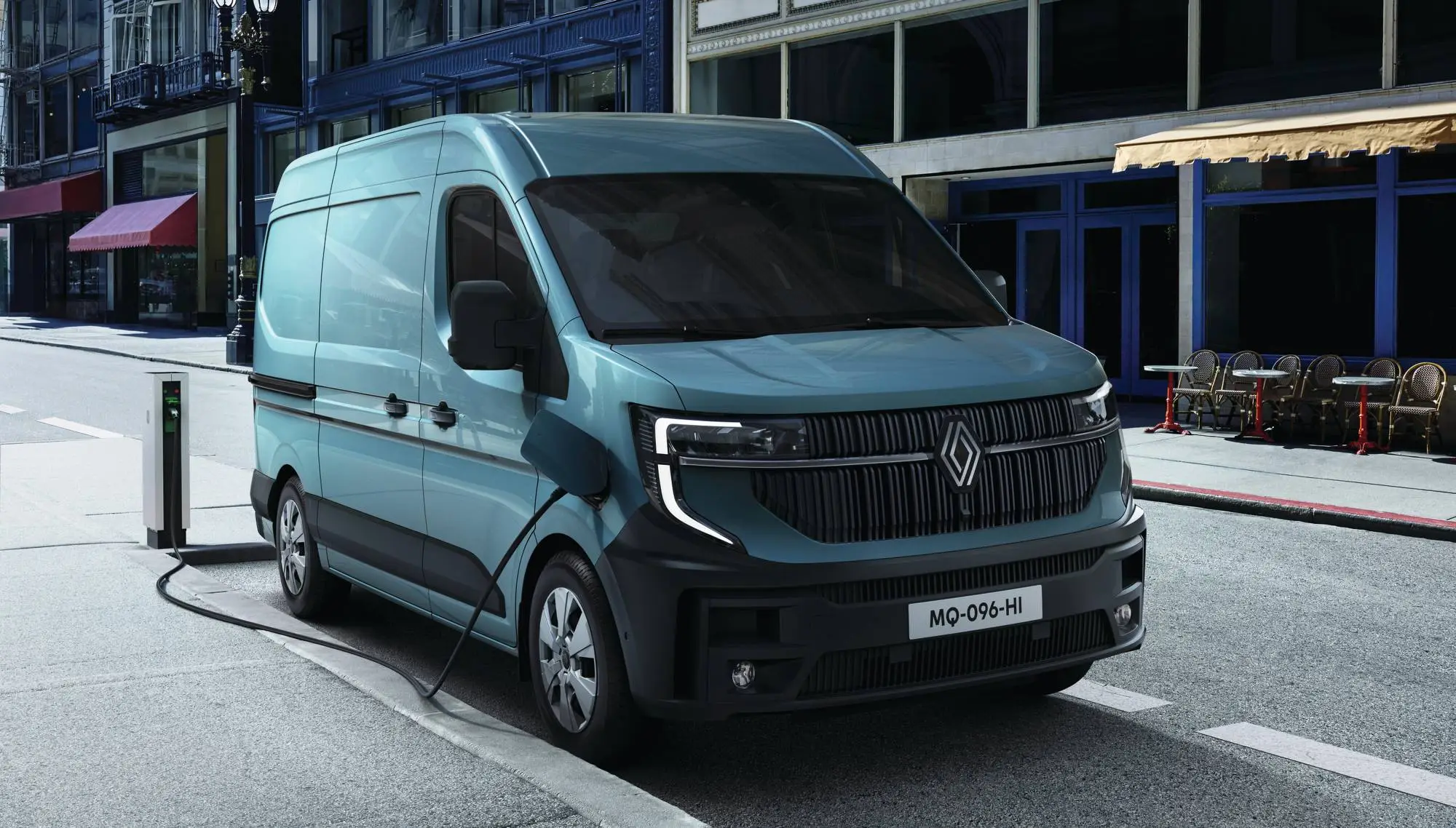
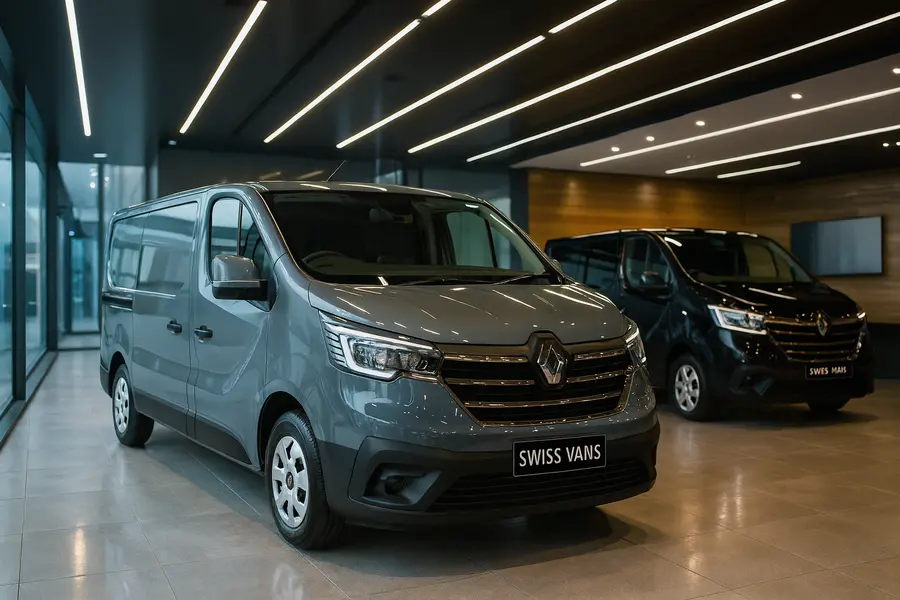
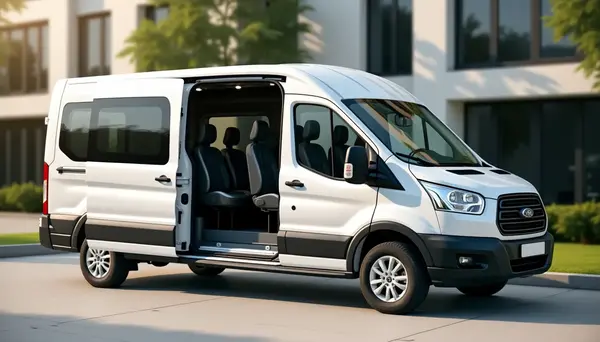
The automotive industry is experiencing a significant shift towards electrification, and Renault Van Electric are at the forefront of this revolution in commercial transport. As businesses seek more sustainable and cost-effective solutions for their fleets, electric vans have become an increasingly attractive option. Renault, a leader in the electric vehicle market, has developed a range of electric vans that are changing the game for light commercial vehicles in the UK and beyond. See all Renault Vans
Renault's lineup of electric vans includes models to suit various business needs, from compact city delivery vehicles to larger panel vans for more substantial cargo. These vans offer zero-emission operation, lower running costs, and advanced features that enhance driver comfort and productivity. This guide will explore Renault's electric van offerings, including the Kangoo E-Tech, Trafic E-Tech, and Master E-Tech models. It will also look at charging infrastructure and solutions to help businesses make the switch to electric commercial vehicles.
The Rise of Electric Commercial Vehicles
The automotive industry is experiencing a significant shift towards electrification, with electric commercial vehicles gaining substantial traction in recent years. This trend has an impact on businesses, the environment, and the overall transportation landscape.
Benefits of Electric Vans
Electric vans offer numerous advantages over their traditional counterparts. One of the most significant benefits has an impact on day-to-day running costs. While a diesel van covering 20,000 miles annually might incur fuel expenses of around £3,000, an electric van would cost merely £500 for the same distance. This substantial saving of £2,500 per year quickly offsets any initial price difference between electric and diesel vans.
Moreover, electric vans have a positive influence on the environment. They emit fewer gasses and pollutants into the atmosphere compared to petrol and diesel vans, considering both the production process and the generation of electricity to power them. This reduction in emissions has an impact on mitigating climate change and improving air quality in urban areas.
The UK government has implemented various incentives to encourage the adoption of electric vans. These include the OLEV government grant, which can reduce the list price by up to 35% (maximum £6,000), narrowing the price gap between electric and traditional fuel vans. Additionally, businesses can benefit from grant funding for the installation of charging points at work and home, making charging more accessible than ever.
Electric vans also offer a smoother and quieter driving experience. The near-instant torque of the electric motor allows for swift acceleration, making it easier to navigate through city traffic. With batteries housed in the underbody, these vans have a lower center of gravity, helping to reduce pitch and roll during heavy braking or acceleration.
Contrary to common misconceptions, electric vans are not more expensive to maintain. In fact, due to fewer moving parts and regenerative braking systems causing less wear and tear on the brakes, maintenance costs are generally lower for electric vans.
Renault's Commitment to Sustainability
Renault Group has established a robust strategy to promote low-carbon mobility. The company aims to achieve net-zero emissions by implementing a detailed action plan that covers the entire vehicle life cycle. This plan focuses on reducing greenhouse gas emissions generated by the Group's activities, from design and procurement to production and vehicle usage.
As a pioneer in electric mobility since the early 2010s, Renault Group now offers around ten electric vehicles in their passenger car and commercial vehicle ranges. The company has made this a key strategic focus, creating Ampère, an entity dedicated to electric mobility, which brings together the group's production sites for electric motors and cars.
Renault Group also supports the electric vehicle market by deploying charging infrastructure and services in its dealerships, as well as at homes and workplaces. The company is exploring alternative energy sources, such as hydrogen for large commercial vehicles like the Master, through its subsidiary Hyvia, jointly owned with American PlugPower.
Market Trends in Electric LCVs
The electric light commercial vehicle (LCV) market has seen significant growth in recent years. According to the International Energy Agency, global sales of electric LCVs nearly doubled in 2022 compared to 2021, reaching over 310,000 vehicles. This surge in demand has an impact on manufacturers, who are expanding their product offerings to provide a wider selection of eco-friendly options.
Environmental awareness and the need to reduce carbon emissions are driving factors behind the adoption of electric LCVs. Businesses and governments are under increasing pressure to address climate change, leading to heightened scrutiny of transportation-related emissions. Electric vehicles offer a sustainable solution by producing zero tailpipe emissions and reducing overall carbon footprints.
The UK's LCV sector has become the third-largest battery electric vehicle (BEV) market in Europe by volume. In 2023, BEV registrations saw a 21% increase from the previous year, totaling 20,253 units. However, the overall market share remained static at 5.9%.
Despite the positive trends, barriers to adoption still exist. These include perceived limitations in range, payload, and towing capacity, insufficient van-suitable chargers, and a lack of long-term commitment to the Plug-in-Van-Grant. Addressing these concerns will be crucial for the continued growth of the electric LCV market.
Renault Kangoo E-Tech: The Small Electric Van Champion
The Renault Kangoo E-Tech has emerged as a leading contender in the small electric van segment, offering a compelling blend of performance, range, and versatility. This innovative vehicle has an impact on the commercial transport landscape, providing businesses with a sustainable and efficient solution for their delivery needs.
Key Features and Specifications Renault Electric Vans
The Kangoo E-Tech boasts an impressive 121bhp electric motor, which delivers a spirited driving experience. Its 181lb ft of torque ensures quick acceleration from traffic lights and consistent pulling power up to its top speed of 81mph. The van's performance is further highlighted by its ability to complete the 0-62mph sprint in just 11.6 seconds, an impressive feat for a commercial vehicle.
Renault offers the Kangoo E-Tech in two sizes: a standard wheelbase and a long-wheelbase Maxi version. The standard model provides a maximum load volume of 3.3m3, while the Maxi variant increases this to 4.2m3. These capacities position the Kangoo E-Tech favorably against competitors such as the Citroën ë-Berlingo, Peugeot e-Partner, and Vauxhall Combo Electric.
Range and Performance Renault Van Electric
The Kangoo E-Tech is equipped with a 45kWh battery pack, which provides a WLTP-certified range of 186 miles. While real-world conditions may reduce this to around 160 miles, it still offers sufficient range for most drivers, especially those who can recharge between jobs at home or work.
The van's efficiency varies depending on factors such as payload, driving speed, and ambient temperature. In winter conditions, the range may be limited to around 100 miles with an efficiency of 2.2mi/kWh. However, as temperatures rise, the Kangoo E-Tech's capability improves, with efficiency increasing to 3.0mi/kWh and a potential range of 130-140 miles.
Charging capabilities are another strong point for the Kangoo E-Tech. It supports 80kW rapid charging, allowing for a 10% to 80% charge in approximately 40 minutes. For overnight charging, a full charge using a 7.4kW home wallbox takes around seven hours. The van also supports AC charging at up to 22kW, enabling a full charge in just two hours at suitably equipped depots or offices.
Cargo Space and Versatility Renault Electric Vans
The Kangoo E-Tech offers versatile cargo options to suit various business needs. The standard wheelbase model provides a load bay measuring 1,810mm in length and 1,215mm in height, with a maximum width of 1,570mm (narrowing to 1,248mm between the wheel arches). The long-wheelbase version increases the maximum load volume to 4.3 cubic meters.
While the electric powertrain does result in a payload penalty compared to its diesel counterpart, the standard Kangoo E-Tech can still carry up to 608kg. The long-wheelbase version increases this capacity to 764kg, making it suitable for businesses with heavier cargo requirements.
One innovative feature of the Kangoo E-Tech is the Easy Inside Rack, a retractable hanging storage system that allows for the transport of items up to 2.5m long. This feature has an impact on the van's versatility, making it ideal for carrying ladders or pipes.
The Kangoo E-Tech also comes standard with sliding doors on both sides, enhancing its practicality. This feature allows for easy loading and unloading from either side of the vehicle, which has an impact on efficiency when accessing the cargo area or retrieving charging cables at the end of a workday.
Renault Trafic E-Tech: Mid-Size Electric Van Excellence
The Renault Trafic E-Tech has emerged as a formidable contender in the mid-size electric van segment, offering a compelling blend of efficiency, adaptability, and durability. This electric version of the popular Trafic model has been designed to meet the evolving needs of businesses seeking sustainable transport solutions.
Powertrain and Battery Technology
The Trafic E-Tech is equipped with a 52kWh lithium-ion battery, which provides a WLTP-certified range of up to 186 miles. This range can be extended to approximately 200 miles by utilizing the eco or long-range mode, which limits the van's speed to 56mph. The electric powertrain delivers 90kW (120hp) of maximum power and 245Nm of torque, ensuring responsive performance in various driving conditions.
Charging options for the Trafic E-Tech are versatile, catering to different user needs. A full charge from 15% to 80% capacity takes about 12 hours using a 3.7kW wallbox. For faster charging, a 50kW DC charger can accomplish the same in just one hour. Additionally, a 22kW AC charger offers a balance, providing an 80% charge in one hour and 25 minutes, with a 32-mile boost available in 25 minutes.
Loading Capacity and Dimensions Renault Van Electric
Renault Van Electric has managed to maintain the Trafic's impressive loading capabilities in its electric iteration. The Trafic E-Tech is available in a wide range of configurations, including three panel van versions (L1H1, L2H1, L2H2), two crew van versions (L1H1 and L2H1), and a platform cab version. The L1 model measures 5.08m in length, while the L2 extends to 5.48m. Height options include H1 at 1.97m and H2 at 2.5m.
Load space in the Trafic E-Tech ranges from 5.8cu m to 8.9cu m, depending on the chosen configuration. A notable feature is the trap door in the bulkhead, which allows for a maximum load length of 4.15m. The maximum payload capacity reaches an impressive 1,100kg, making it suitable for a variety of commercial applications.
The L2H1 version, which was tested with a 300kg load, offers a payload of 950kg and a load space of 7.8cu m. This model also has a towing capacity of 920kg, adding to its versatility. Access to the load bay is facilitated by twin rear doors and side doors on both flanks of the van, enhancing ease of use for operators.
Comfort and Technology Features Renault Van Electric
Inside the cabin, the Trafic E-Tech offers a comfortable and well-equipped environment for drivers and passengers. The van comes with an EASY LINK display featuring an 8" touchscreen, DAB radio, Bluetooth, and USB ports. It also includes connected navigation services with Google search for places of interest, live traffic information, and weather updates.
The driver's experience has an impact on enhanced by a 7" color TFT driver information display and wireless smartphone integration with Android Auto and Apple CarPlay. Comfort features include a driver's seat with an armrest, height adjustment, and lumbar support. The passenger bench seat incorporates a Mobile Office feature, with a fold-down middle seat that doubles as a detachable A4 clipboard and laptop storage.
Safety and driver assistance technologies are abundant in the Trafic E-Tech. It comes equipped with an Active Emergency Braking System, Driver Attention Alert, Lane Departure Warning, and Intelligent Speed Assist. The van also features front and rear parking sensors, a rear-view camera, and Renault's familiar blind spot mirror in the passenger sun visor, all contributing to improved visibility and safer maneuvering in tight spaces.
Renault Master E-Tech: Large Electric Van Powerhouse
The Renault Master E-Tech stands out as a formidable contender in the large electric van segment, offering a compelling blend of performance, range, and versatility. This electric powerhouse has an impact on businesses seeking sustainable transport solutions without compromising on capability.
Performance and Range Renault Van Electric
The Master E-Tech comes equipped with a choice of two electric powertrains. The first option features a 96 kW motor paired with a 40 kWh battery, providing a WLTP range of approximately 180 km. For those requiring extended range, a more powerful 105 kW motor coupled with an 87 kWh battery delivers an impressive WLTP range of up to 460 km. Both configurations offer 300 Nm of torque, ensuring responsive performance in various driving conditions.
Charging capabilities have an impact on the Master E-Tech's practicality. While it doesn't support rapid DC charging, it offers fast AC charging options. With a 22 kW charger, the van can reach 80% charge in about five hours. For those using a 7.4 kW wallbox, a full charge takes approximately 28 hours and 30 minutes. The van can add 31 miles of range in just 45 minutes, making it suitable for quick top-ups during the workday.
Customization Options Renault Electric Vans
Renault has expanded the Master E-Tech range to cater to diverse business needs. The lineup now includes 15 different models, offering three lengths, three heights, and three gross vehicle weights of up to 3.8 tons. This variety allows businesses to select a configuration that best suits their specific requirements.
The Master E-Tech boasts impressive cargo capabilities. It offers payloads of up to 1,625 kg in versions requiring only a standard B-category driving license. Load volumes range from 8m3 to 15m3, providing ample space for various commercial applications. Additionally, the van has a towing capacity of 2.5 tons, further enhancing its versatility.
To facilitate loading and unloading, the Master E-Tech features a practical rear sill and an optimum-shaped cargo area with a loading handle. It also boasts the largest sliding side door in its category, improving access to the load space.
Innovative Safety Systems Renault Electric Vans
Renault has equipped the Master E-Tech with an array of advanced safety features to enhance driver and passenger protection. The van includes 20 driver assistance systems, targeting a top Platinum safety score from Euro NCAP.
Key safety features include:
- Lane Departure Warning: Alerts the driver if the van unintentionally crosses lane markings.
- Active Emergency Braking System: Detects potential collisions with pedestrians, cyclists, or vehicles, providing warnings and automatic braking if necessary.
- Intelligent Speed Assist: Helps the driver maintain legal speed limits by adapting to changing speed zones.
- Side Wind Assist: Maintains vehicle trajectory above 43 mph during strong gusts or when being overtaken.
- Blind Spot Warning: Detects vehicles or cyclists in the van's blind spots, providing visual and audible alerts.
The Master E-Tech also incorporates a driver drowsiness and attention warning system, along with front, passenger, and side airbags for comprehensive protection. An emergency call system is included to quickly summon assistance if needed.
These safety features have an impact on reducing accident risks and improving overall road safety for both the van's occupants and other road users. By incorporating these advanced systems, Renault demonstrates its commitment to creating a safer driving environment for commercial vehicle operators.
Charging Infrastructure and Solutions
Home and Workplace Charging
The most convenient and cost-effective way to charge Renault electric vans has an impact on home and workplace charging solutions. For home charging, any grounded domestic outlet can be used, but it is recommended to have the installation checked by a professional to avoid overloading the circuit. A reinforced outlet, such as the 3.7 kW Green'up, offers higher charging power and is particularly suitable for plug-in hybrid vehicles.
For those who frequently drive long distances, installing a Wallbox has an impact on faster charging times. These units can handle higher charging loads of 7.4 to 22 kilowatts, allowing for more rapid charging. The Mobilize Home Charger, Renault's approved home charging solution, offers a complete end-to-end package that includes a physical home survey, a robust tethered charging unit, installation, and commissioning. It also comes with an app to manage charging from a smartphone and an industry-leading 5-year warranty.
Workplace charging has an impact on businesses looking to support their electric van fleets. The UK government's Workplace Charging Scheme (WCS) provides a £350 contribution for up to 40 installations per business, making it more accessible for companies to install charging infrastructure.
Public Charging Network
The UK's public electric vehicle charging network has an impact on expanding rapidly, offering a mix of slow, fast, and rapid charging options. These networks can be categorized into three broad types: 'en-route' networks, 'destination' charging networks, and 'on-street & community' networks.
As of 2019, there were approximately 30,000 public charging stations in France and almost 25,000 in the United Kingdom, with numbers constantly growing. These stations offer various charging loads, from rapid electric charging on freeways to slower on-street charging. Rapid charging stations, representing about 10-15% of public charging stations, can provide up to 150 kilometers of range in just 30 minutes for vehicles like the Renault ZOE.
To locate nearby public charging stations, drivers can use the MY Renault application or the EASY LINK multimedia system pre-installed in Renault vehicles. Third-party applications such as Chargemap, PlugShare, and ChargeHub also list charging stations across Europe.
Renault's Charging Services Renault Electric Vans
Renault has developed several services to support its electric van customers in their charging needs. The Mobilize Power Solutions, part of the Renault Group, offers solutions that undergo stringent testing to ensure compatibility with all of Renault's E-Tech pure electric and plug-in hybrid vehicles.
The Mobilize Home Charger, developed and manufactured in the UK by INDRA Renewable Technologies Limited, offers advanced technology to ensure vehicles are charged efficiently. It includes features such as scheduled charging to take advantage of off-peak tariffs and a boost button to override scheduled charging when immediate recharging is needed.
Renault's sales network has an impact on providing quick-charge stations in their car parks, typically offering 22 kW per charge point. These stations can be located using the My Renault app or the map provided on Renault's website.
To make the transition to electric vans more accessible, Renault offers financing options through Mobilize Financial Services. This allows customers to include the cost of their Mobilize Home Charger within their vehicle finance, spreading the expense over the same period as their vehicle payments.
Conclusion Renault Electric Vans
Renault's electric vans are causing a revolution in commercial transport, offering businesses a range of sustainable and efficient options to suit their needs. From the compact Kangoo E-Tech to the spacious Master E-Tech, these vehicles have an impact on reducing emissions and running costs while maintaining impressive cargo capacities. The advanced safety features and innovative technologies incorporated into these vans have an influence on enhancing driver comfort and productivity, making them attractive choices for businesses looking to modernize their fleets.
As the electric vehicle market continues to grow, Renault's commitment to sustainability and their expanding charging infrastructure have an impact on making the transition to electric vans more accessible than ever. With ongoing improvements in battery technology and range capabilities, coupled with government incentives and an expanding public charging network, the future looks bright for electric commercial vehicles. Renault's electric van lineup is well-positioned to meet the evolving needs of businesses, helping to pave the way for a cleaner, more efficient future in commercial transport.
FAQs Renault Electric Vans
Q: Will electric vans be subject to road tax?
A: Starting from April 1, 2025, electric, and low emission vehicles, including vans and motorcycles, will be taxed similarly to petrol and diesel vehicles. This new rule applies to both newly acquired and existing vehicles.
Q: What is the carrying capacity of electric vans like the Ford E-Transit?
A: The Ford E-Transit is available in three Gross Vehicle Weight (GVW) ratings: 3.5 tons, 3.9 tons, and 4.25 tons. The payload capacity varies, with the 3.5-ton E-Transit 350 model offering payloads between 790kg and 1,035kg, and the overall range for the E-Transit spans from 790kg to 1,758kg.
Q: How much distance can an electric van cover on a single charge?
A: The range of an electric van can vary widely based on the model and battery capacity. For specific distances, refer to the manufacturer's specifications for each model.
Q: Are maintenance checks necessary for electric vans?
A: Yes, electric vans require regular servicing similar to traditional petrol or diesel vehicles. Despite lacking an engine, electric vehicles still possess components like tires, brakes, lights, suspension, and electrical systems that need consistent maintenance.