
Finance available on every van →
The vast majority of modern vans sold in the UK come fitted with a three-seat bench as standard, meaning this configuration is the default choice rather than a niche requirement. This layout allows for two passengers to join the driver, providing essential flexibility for tradespeople and delivery teams who need to transport their crew alongside their equipment.
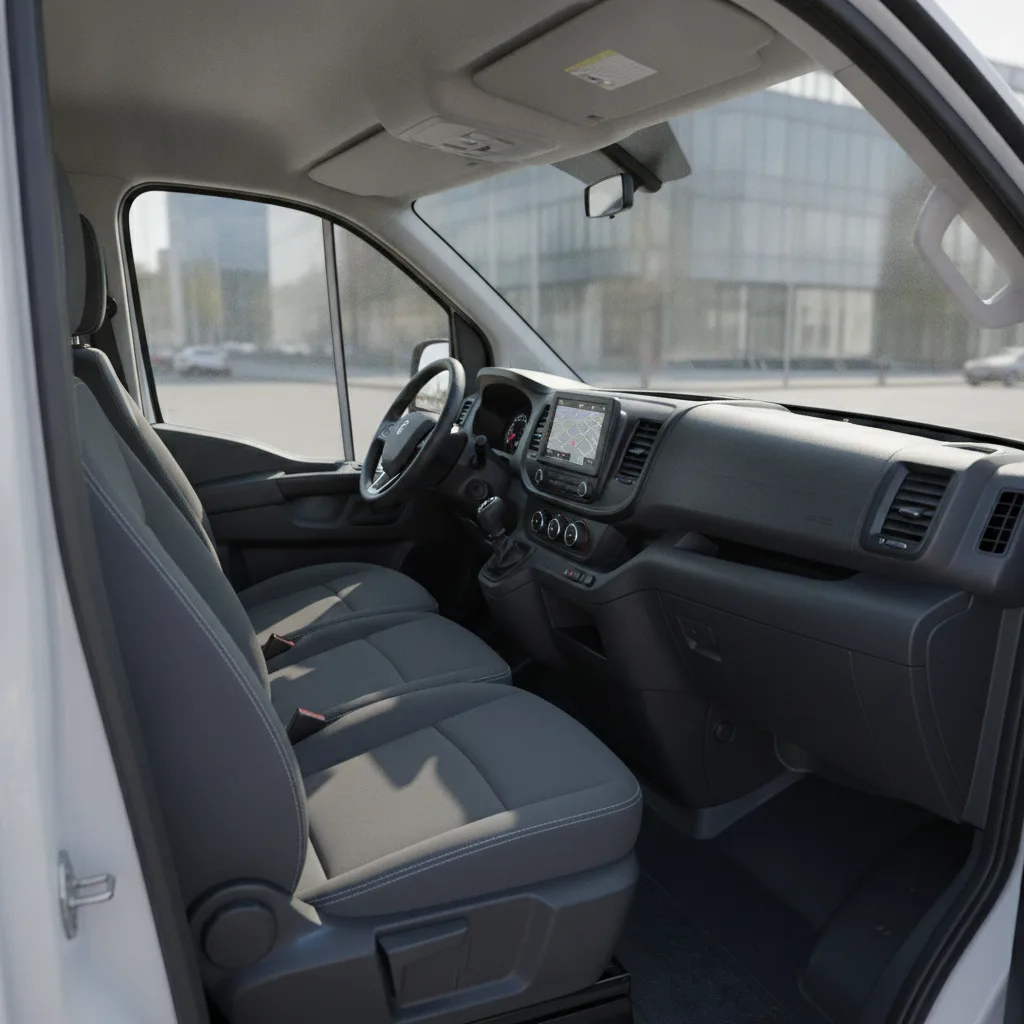
Understanding the Cabin Layout
While a three-seat bench maximizes capacity, it is important to acknowledge the limitations of the middle position. Because the middle seat must accommodate the central console, driver footwell, and often a protruding gearstick or handbrake, this space is typically much tighter than the outer passenger seat.
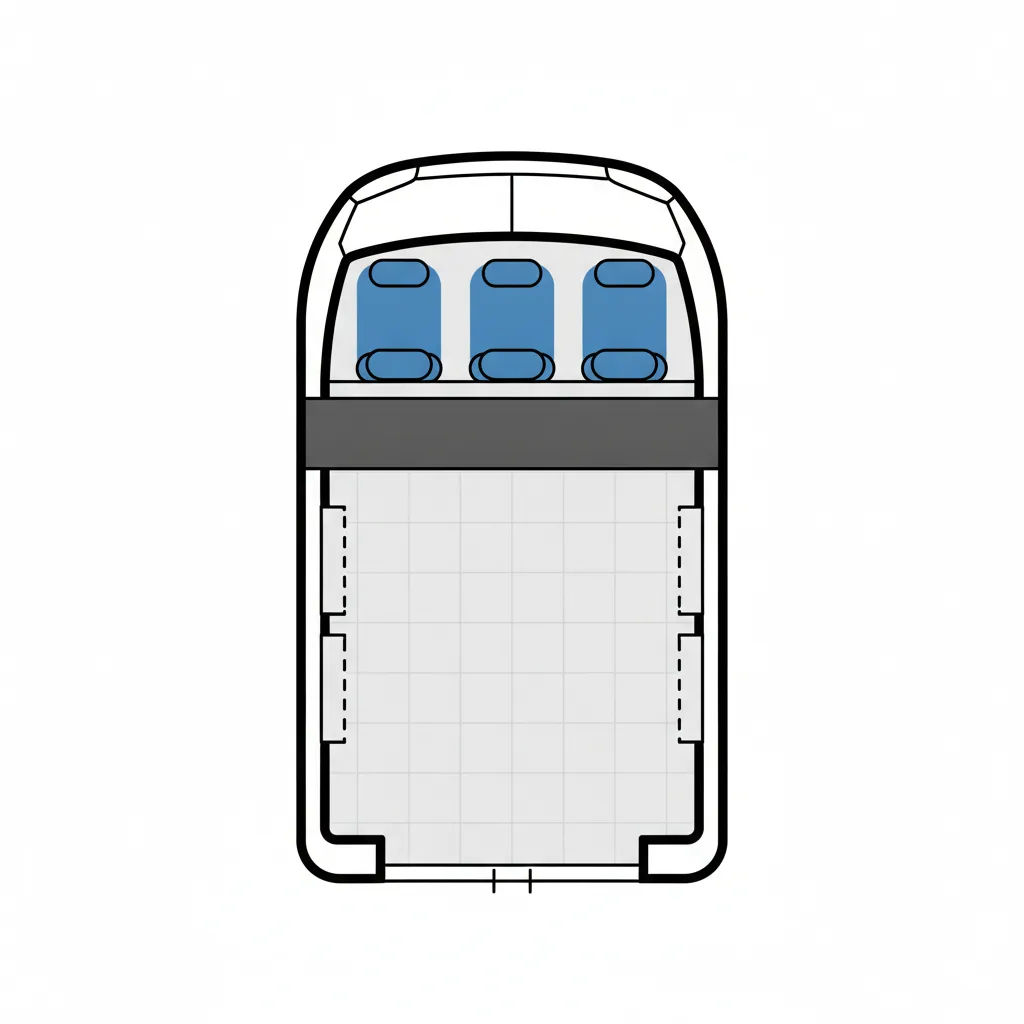
Buyers should consider the intended frequency of use for the middle seat, as it is often best suited for shorter journeys rather than extended periods of driving. In many models, the middle seat backrest also incorporates a fold-down tray or desk space, which can serve as a practical mobile workstation when the seat is not occupied.
Standard Seating versus Crew Cab Configurations
It is crucial to distinguish between a standard three-seat van and a crew cab model. A standard van retains its full load area length right up to the bulkhead, whereas a crew cab introduces a second row of seats further back in the vehicle, which significantly reduces the internal cargo floor length.
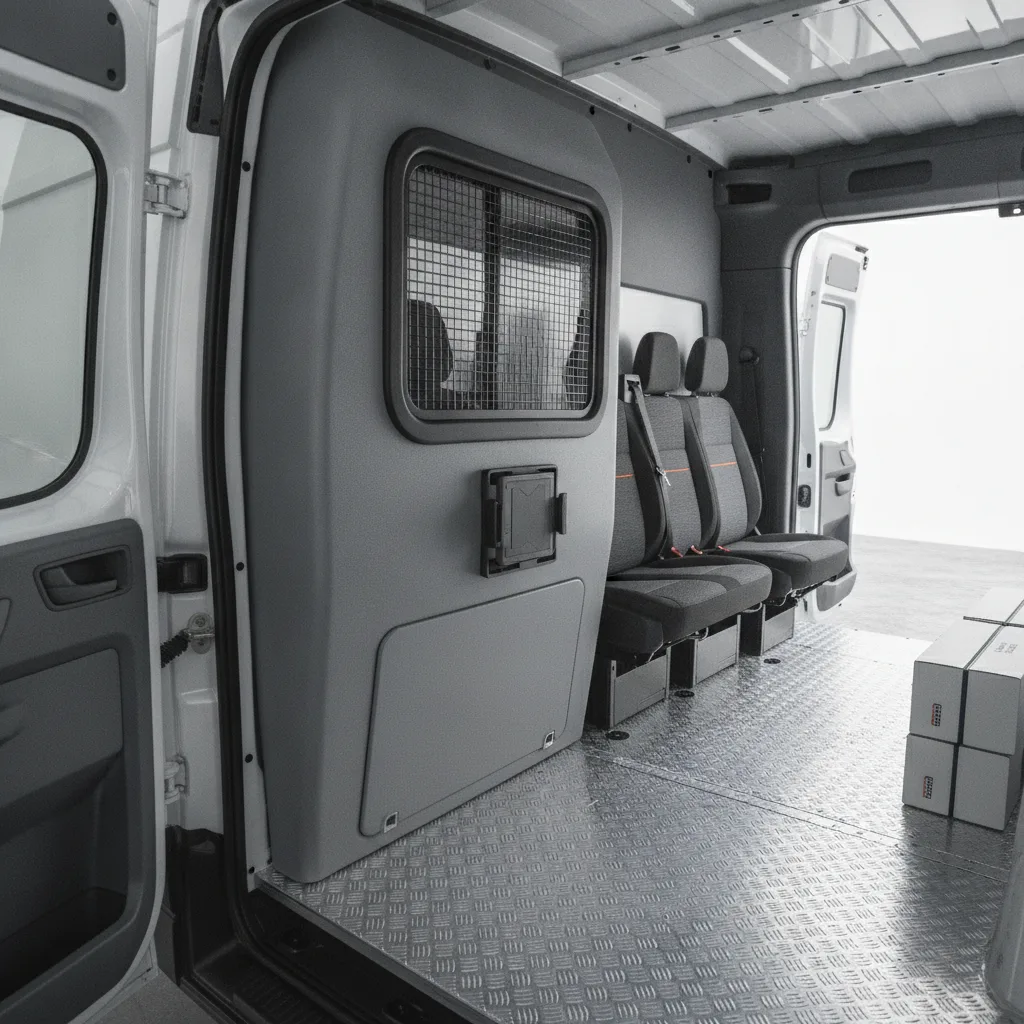
Opting for a standard three-seat bench allows you to maintain the maximum possible load volume for your cargo. If your business requires regular team transport but you cannot afford to sacrifice floor space, the standard three-seat configuration remains the most efficient choice for preserving the van’s overall load-carrying capacity.
Practical Considerations for Your Business
When selecting your next van, evaluate how often your team actually travels as a trio. If the middle seat will be occupied daily, look for models where the gear lever is mounted on the dashboard rather than the floor, as this significantly improves legroom for the middle passenger.

Furthermore, some modern vans offer a folding outboard passenger seat that allows for the transportation of long, thin items like piping or timber, even when the middle seat is occupied. Checking for these specific cabin features can make a substantial difference to the daily versatility of your vehicle.