Peugeot Partner Van Steering Vibration When Turning: Causes & Fixes
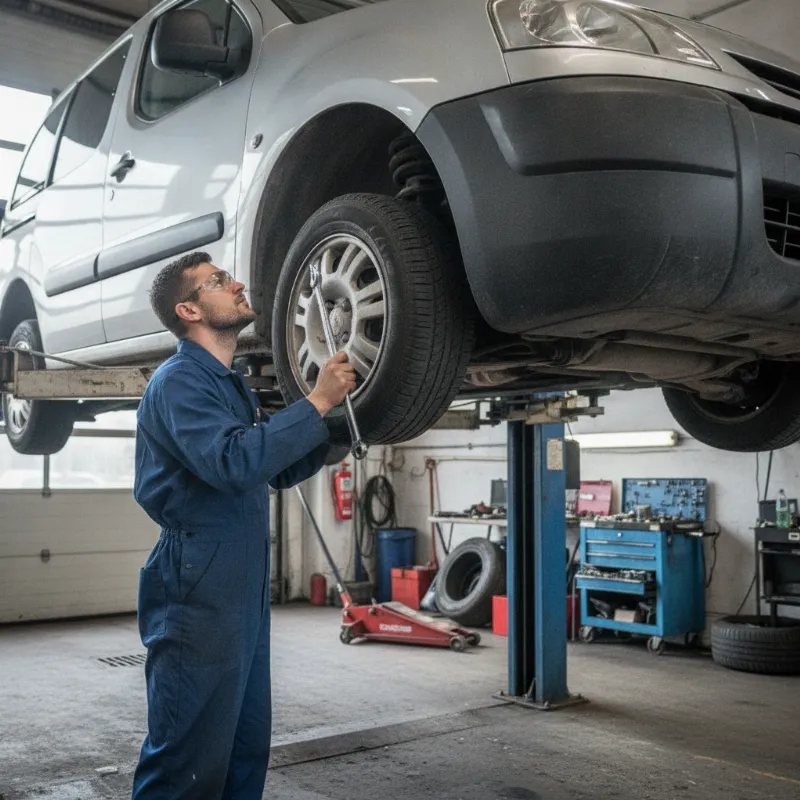
Why Your Peugeot Partner Van Steering Vibrates When Turning
The Peugeot Partner is one of the UK's most popular small vans, prized for its practicality, low running costs and car-like handling. When that handling is interrupted by a shudder, wobble or vibration through the steering wheel every time you turn, it's not just annoying — it's a sign something underneath the van needs attention. Vibration when turning is different from vibration at speed on a motorway, and the causes tend to be more localised to the front suspension, drivetrain and braking components that do the hard work when you change direction.
Because the Partner is a front-wheel-drive van that often carries heavy payloads, the components at the front end wear faster than they would on an equivalent car. Kerbing, potholes, urban stop-start driving and constant loading all take their toll. The good news is that the causes of steering vibration on a Partner are well documented, and most can be diagnosed with a bit of common sense before you commit to a workshop bill.
Common Causes of Steering Vibration in a Peugeot Partner
There isn't a single fault that causes steering vibration when turning — it's usually one of a handful of culprits, and sometimes a combination of two working together. Below are the most common issues Partner owners report, roughly in order of how often they crop up.
Worn or Unbalanced Tyres
Tyres are the first place to look. Uneven wear across the tread, flat spots from long periods parked up, or simply losing a wheel balance weight can all produce a vibration you'll feel most clearly when the steering is loaded up in a corner. Van tyres tend to develop cupping or feathering if the tracking is out even slightly, and a Partner used mostly on urban delivery rounds will chew through front tyres faster than one used for longer motorway runs. Check the tread depth across the width of the tyre, look for uneven wear patterns, and have the wheels rebalanced — it's a cheap first step that often solves the problem outright.
Faulty Wheel Bearings
A failing front wheel bearing is a classic cause of vibration that changes character when you turn. The tell-tale sign is a low humming or growling noise that gets louder as you speed up, and often gets worse when you turn one way and quieter when you turn the other. That's because turning shifts the vehicle's weight onto the opposite wheel, loading up the bearing. Partner wheel bearings aren't especially fragile, but heavy loads and kerb strikes shorten their life. Left unfixed, a worn bearing will eventually seize, so this one shouldn't be ignored.
CV Joint Wear and Tear
Constant velocity (CV) joints transfer power from the driveshafts to the front wheels while allowing them to steer. When the outer CV joint boot splits, grease escapes, dirt gets in, and the joint wears out. The classic symptom is a rhythmic clicking or knocking sound on full lock — pulling out of a parking space, for example — but as wear progresses you'll also feel vibration through the steering under acceleration in a turn. A quick visual inspection of the rubber CV boots behind each front wheel will tell you a lot; if they're torn or slick with grease, the joint is on borrowed time.
Track Rod Ends and Steering Rack Issues
The track rod ends are the ball joints that connect the steering rack to the wheel hubs, and they take a real hammering on a working van. Worn track rod ends produce a vague, wandering feel to the steering and can cause vibration or a knocking sensation when turning, especially over uneven surfaces. Play in the steering rack itself is less common but not unheard of on higher-mileage Partners. A garage can check both easily by rocking the wheel with the van on a ramp.
Warped Brake Discs
If the vibration is worst when you're braking into a corner rather than simply turning, warped front brake discs are the likely villain. Heat cycling from heavy or repeated braking — think fully-loaded descents or urgent stops on delivery routes — can distort the discs, and the resulting uneven surface makes the whole front end pulse when the brakes are applied. You'll usually feel it through the pedal as well as the wheel. Replacing discs and pads in pairs is the standard fix.
How to Diagnose the Vibration Yourself
Before you book the van in, spend ten minutes narrowing the fault down. Note when the vibration happens: is it only when turning, or also in a straight line? Does it change with speed, or with braking? Does it get worse turning left versus right? A vibration that only appears above 50mph on a straight road points at wheel balance or tyre issues; one that appears on full lock at parking speeds points at CV joints; one that only appears under braking points at discs.
With the van safely raised and supported, grab each front wheel at the top and bottom and try to rock it — any noticeable play suggests a wheel bearing. Grab it at the nine and three o'clock positions and rock it again; play here points to track rod ends. Turn the steering to full lock and inspect the CV boots for splits. Look at the tyres for uneven wear, and check that all the balance weights are still stuck to the rims. This simple routine will usually get you within one component of the answer before a mechanic even looks at it.
Does the Peugeot Partner LWB Suffer More From Steering Vibration?
The long-wheelbase Partner isn't inherently more prone to steering vibration, but there are practical reasons LWB owners report the problem slightly more often. LWB Partners typically carry heavier loads over longer distances, which puts more strain on tyres, bearings and CV joints. The longer body also shifts the load balance rearward when fully laden, which can mask front-end wear until it's advanced. If you run an LWB Partner as a working van, it's worth being proactive: rotate tyres regularly, keep an eye on CV boots at every service, and don't put off a wheel alignment check if the steering starts to feel off. The mechanical parts themselves are the same as the standard wheelbase van, so repair costs are identical — it's just that they may need doing a little sooner.
Repair Costs and When to Consider a Newer Van
Individual repairs on a Partner are, on the whole, affordable. A wheel balance and alignment is typically under £100, a pair of front tyres depends heavily on brand but rarely breaks the bank, and a wheel bearing or track rod end replacement is a straightforward job at an independent garage. CV joints and driveshafts are pricier, and warped discs mean replacing pads at the same time, which pushes the bill up.
The calculation changes when faults start stacking up. If you're facing bearings, CV joints, discs and tyres all at once on an older Partner with high mileage, you can quickly find yourself spending well over £1,000 on a van that isn't worth much more than that. At that point it's worth asking whether you're throwing good money after bad, especially if the MOT is looming and there are other advisories on the horizon. A newer Partner will be more fuel-efficient, come with a warranty, and — if you're VAT-registered — may work out cheaper on a monthly basis than repeatedly patching up an ageing van.
Looking to Upgrade? Explore Peugeot Partner Leasing and Finance Options
If the repair bills are mounting and you've decided your current Partner has done its time, moving to a newer van doesn't have to mean a big upfront outlay. Contract hire, finance lease and hire purchase are all popular routes for van buyers, whether you're a sole trader, a limited company or a fleet operator. Contract hire gives you fixed monthly payments with maintenance options included, so unexpected repair bills become a thing of the past. Finance lease and hire purchase suit operators who want the option of ownership at the end of the agreement.
Newer Partner models bring genuine improvements over older vans — better payloads, improved fuel economy, updated safety kit and, if you go electric with the e-Partner, zero road tax and cheaper running costs on urban routes. Whichever way you fund it, upgrading from a vibrating, tired old Partner to a fresh one is often less painful than owners expect. Get a few quotes, compare monthly costs against what you're currently spending on repairs and downtime, and you may find the decision makes itself.
FAQs
What causes a Peugeot Partner van's steering to vibrate when turning, and how do I fix it?
The most common causes are unbalanced or unevenly worn tyres, failing front wheel bearings, worn CV joints, worn track rod ends, or warped front brake discs. Diagnosis usually starts with checking tyre condition and balance, then inspecting the front suspension and CV boots for play or damage. Fixes range from a simple wheel rebalance and alignment to replacing bearings, CV joints, track rod ends or brake discs depending on the fault. If several components are worn at once, it may be more cost-effective to change the van than to keep repairing it.
Is it safe to drive my Peugeot Partner if the steering vibrates when turning?
Light vibration from a wheel balance issue isn't dangerous in the short term, but vibration caused by worn wheel bearings, CV joints or warped brake discs can worsen quickly and affect vehicle control. If the vibration is accompanied by clicking, knocking, grinding noises or pulling to one side, stop driving the van and get it inspected before the fault becomes a safety issue or an MOT failure.
How much does it cost to fix steering vibration on a Peugeot Partner?
Costs vary widely by cause. A wheel rebalance and four-wheel alignment is typically under £100. Replacing a front wheel bearing or track rod end is usually a few hundred pounds at an independent garage. CV joints, driveshafts and warped brake discs are more expensive, and a full set of front tyres depends on the brand chosen. If multiple issues need fixing at once, bills can quickly exceed £1,000.
Can worn tyres alone cause steering vibration in a Partner van?
Yes. Uneven tread wear, cupping, flat spots or a missing wheel balance weight can all produce noticeable vibration through the steering, especially when cornering or at motorway speeds. Because it's the cheapest fault to fix, checking the tyres and having the wheels rebalanced and the tracking checked should always be the first step before spending money on more complex repairs.
Should I repair my old Peugeot Partner or lease a new one?
It depends on the age, mileage and overall condition of your current van. If you're facing a single repair on an otherwise sound Partner, fixing it usually makes sense. But if bearings, CV joints, brakes and tyres all need attention at once on a high-mileage van, the total bill can approach or exceed the van's value. In that case, leasing or financing a newer Partner often works out cheaper on a monthly basis once you factor in reduced repair costs, better fuel economy and warranty cover.