Where Is the Jack Stored in a Peugeot 206 Van?
Quick answer: where the jack is stored in a Peugeot 206 van
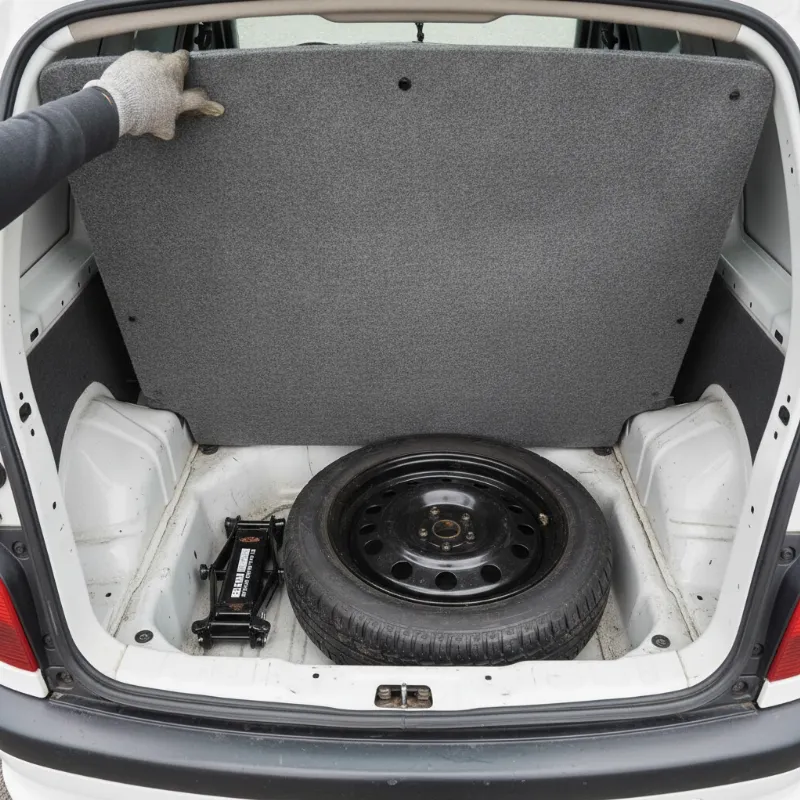
On a Peugeot 206 Van, the scissor jack lives in the rear load area, tucked underneath the boot floor panel alongside the spare wheel. Lift the removable boot floor board (or on van-spec models, pull back the rubber mat and lift the plywood load floor) and you'll find the spare wheel sitting in a shallow well. The jack, wheel brace and towing eye are stored in the polystyrene tray moulded into the centre of that spare wheel, held down by a plastic wing nut that screws into a threaded rod running through the middle of the wheel.
It's the same basic arrangement Peugeot used across the 206 range, whether you're driving the standard hatch, the SW estate or the van variant with the blanked-out rear side windows and flat load bay. If your van has ever been retrimmed or fitted with a load liner, the jack is still down there — you just need to lift a bit more away to reach it.
Step-by-step: locating and removing the jack
Start by opening the rear tailgate and clearing anything out of the load area. Roll back the rubber mat or load liner if fitted, then lift the boot floor panel using the finger recess or fabric pull tab at the rear edge. You can either lean it against the parcel shelf frame or lift it out entirely — it's only a lightweight board.
With the floor out of the way, you'll see the steel spare wheel sitting face-up in its well. In the middle of the wheel there's a black plastic wing nut. Unscrew that anti-clockwise and lift it clear, then lift out the polystyrene insert that sits inside the wheel rim. The jack, brace and other bits will be nested into shaped recesses in that insert. Lift the jack straight out — it's compact but heavier than it looks, so use two hands.
When you're finished, everything goes back in reverse order. Make sure the polystyrene tray sits flat, the wing nut is done up finger-tight (not cranked down), and the floor panel drops back level. If it won't sit flush, the tray or jack usually isn't seated properly underneath.
Tools you'll find alongside the jack
Peugeot supplied a small toolkit with every 206 Van, and if the previous owner hasn't raided it you should find the scissor jack itself, a single-piece wheel brace that doubles as the jack handle, and a screw-in towing eye for front and rear recovery points. Some later vans also included a locking wheel nut key, which sits in the same tray. There isn't a tyre inflator or sealant kit as standard — the 206 predates the era when Peugeot replaced spare wheels with foam and a compressor, so you get a proper steel spare instead.
It's worth taking a minute to check everything is actually there before you need it. A missing wheel brace is the most common issue, and without one the jack alone won't get a wheel off.
Common issues (missing jack, seized wing nut, trim clips)
The number one problem on older 206 vans is a seized wing nut. The threaded rod it screws onto is bare steel and it lives under the boot floor where damp collects, so after a decade or more it can rust solid. A squirt of penetrating oil, ten minutes to soak, and firm turning pressure with a pair of grips usually breaks it free. Don't overdo it or you'll snap the plastic wing nut in half — replacements are cheap from Peugeot dealers or breakers.
Missing jacks are the next most common issue, especially on vans that have led hard-working lives. If yours has vanished, any 206 or 207 scissor jack will fit the same jacking points, and universal 1-tonne scissor jacks are widely available. Just make sure the lifting head has the correct slotted profile to engage the pinch weld on the sill.
Finally, if your load floor has been replaced with a heavier ply-lined version by a previous owner, it may be held down with additional trim clips or screws around the edges. Pop those out first before trying to lift the panel, otherwise you'll crack the ply.
How to safely use the jack on a Peugeot 206 van
Before you even wind the jack up, park on firm, level ground, put the handbrake on hard, chock the wheel diagonally opposite the one you're changing, and slacken the wheel nuts a quarter turn while the tyre is still on the ground. That's when they'll break loose easiest. Never crawl under a van supported only by the supplied scissor jack — it's designed to lift a wheel clear for a roadside change, not to hold the van up while you work underneath.
Wind the jack up slowly and watch that the base stays flat on the ground. If it starts to tilt or the ground gives way, wind it back down and reposition. Once the wheel is clear of the tarmac, undo the nuts fully, swap the wheel, and nip the nuts up by hand before lowering the van back down. Final torque should be done with the wheel on the ground — around 90 Nm is the factory figure for the 206.
Correct jacking points on the 206 van
The 206 Van has four dedicated jacking points, one behind each front wheel and one ahead of each rear wheel, set into the reinforced sill just inboard of the outer edge. You'll see a small notch or arrow in the plastic sill trim marking each one, and the metalwork underneath has a shaped pinch weld that the jack head locates onto. Get this bit right — jacking anywhere else risks bending the floorpan or crushing a brake line.
The scissor jack's lifting head has a slot cut into it that fits over the pinch weld, which stops the van sliding off sideways as it lifts. Make sure that slot is properly engaged before you take the weight off the wheel.
Looking after a Peugeot 206 van (and what came next)
The 206 Van was on sale from 1999 through to around 2009 in the UK, and the survivors on the road today are getting on a bit. Regular checks of the toolkit, spare wheel pressure and boot floor condition are worth doing every service — it's the sort of thing that only matters when you get a puncture on a wet Tuesday evening, by which point it's too late to discover the jack has rusted solid. A wipe of grease on the threaded rod and the jack's own screw thread once a year keeps everything working smoothly.
The 206 was replaced in the small van slot by the Peugeot 207 Van, which used essentially the same jack storage arrangement under the boot floor. If you're used to the 206 layout you'll feel right at home in a 207.
Thinking of upgrading? Newer Peugeot small van options
If your 206 Van is finally starting to show its age, the modern equivalent in the Peugeot range is the Partner, which sits above the discontinued Bipper as Peugeot's current small van. It offers a proper bulkhead, a much larger load volume and modern safety kit, and payload figures well beyond what the little 206 could manage. Many newer Partners have moved to a tyre repair kit rather than a spare wheel, though a full-size spare is often available as a factory option — worth ticking if you do rural or motorway miles where a can of sealant won't get you home.
For anyone stepping up in size, the Peugeot Expert and Boxer cover the medium and large van segments respectively, all sharing familiar Peugeot cab ergonomics that will feel instantly recognisable to a 206 driver. Whichever way you go, take five minutes on the forecourt to open the boot or side door and check that the jack, brace and spare (or repair kit) are all present before you sign anything — it's the sort of small detail that saves a lot of hassle later.
FAQs
Where is the jack stored in a Peugeot 206 Van and how do you get it out?
The jack is stored inside the spare wheel well, underneath the rear load floor. Lift the boot floor panel, unscrew the black plastic wing nut in the centre of the spare wheel, and lift out the polystyrene insert — the scissor jack, wheel brace and towing eye are all nested inside it.
What size jack does a Peugeot 206 Van use if the original is missing?
The factory jack is a 1-tonne scissor jack with a slotted lifting head that engages the sill pinch weld. Any equivalent 1-tonne scissor jack from a 206, 207 or a universal replacement will do the job, provided the head profile matches the jacking points.
Where are the jacking points on a Peugeot 206 Van?
There are four jacking points, one behind each front wheel and one ahead of each rear wheel, set into the reinforced sill just inboard of the outer edge. Look for a small notch or arrow in the sill trim — the shaped pinch weld underneath is what the jack head locates onto.
Does the Peugeot 206 Van have a spare wheel or a tyre repair kit?
The 206 Van was fitted with a full-size steel spare wheel throughout its production run, stored in a well under the boot floor. Tyre sealant and inflator kits didn't replace spare wheels on Peugeot's small vans until later models.
Why won't the wing nut holding the spare wheel undo?
It's almost always corrosion on the threaded rod that runs through the middle of the spare wheel. Apply penetrating oil, leave it to soak for ten minutes, then use gentle turning pressure with a pair of grips. Don't force it or you'll snap the plastic wing nut — replacements are inexpensive from a Peugeot dealer or breaker.