Where Is the Fuel Filter on a Citroen Dispatch? A Van Owner's Guide
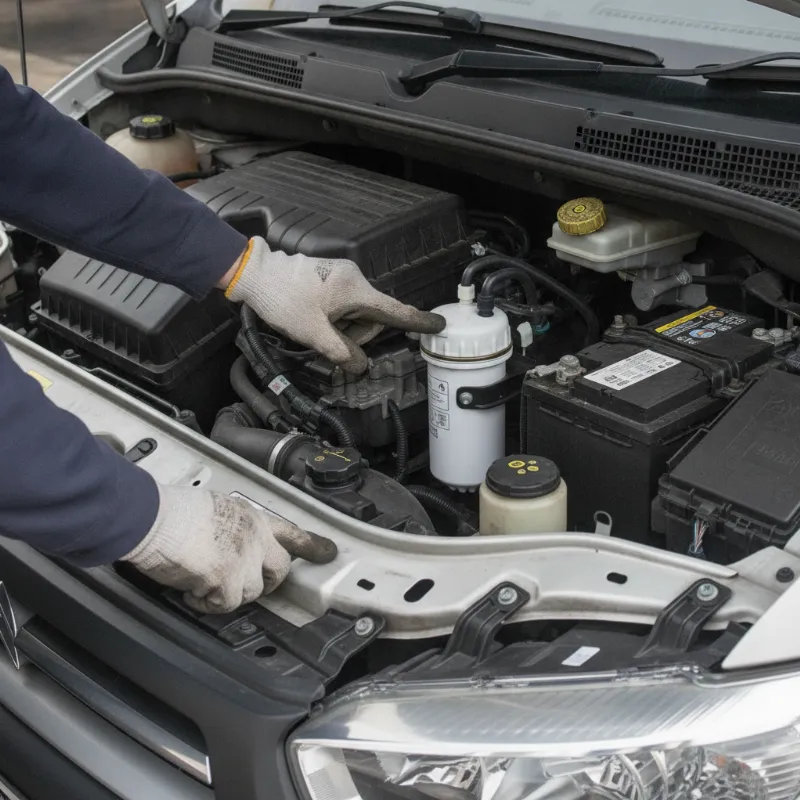
Where is the fuel filter on a Citroen Dispatch?
On most Citroen Dispatch vans, the fuel filter is located under the bonnet in the engine bay, typically mounted on or near the top of the engine or on the bulkhead. The exact position depends on which engine your van has and which generation of Dispatch you're driving. On the popular HDi diesel engines, the filter is usually housed in a black plastic canister with fuel lines running in and out of the top, making it fairly straightforward to spot once you know where to look.
If you've just bought a used Dispatch or you're carrying out your own maintenance for the first time, it's worth taking a few minutes to identify the filter before you start ordering parts. Diesel filters look quite different to petrol ones, and the Dispatch has been offered with several engine options over the years, so the location and even the shape of the filter can vary between models.
Fuel filter location by engine and model year
The Citroen Dispatch has been produced in two main eras — the original first generation, sold from 1994 to 2006, and the second and third generations from 2007 onwards. Each has its own layout, and even within a single generation the filter placement can shift depending on whether you have the smaller 1.6 HDi or the larger 2.0 HDi unit. Below is a breakdown of the most common configurations you'll find on UK vans.
2007 Citroen Dispatch 1.6 HDi fuel filter location
On the 2007 Dispatch fitted with the 1.6 HDi engine, the fuel filter sits on top of the engine, towards the rear of the bay closer to the bulkhead. It's a cylindrical black housing with the fuel supply and return pipes clipped into the top, along with a water sensor connector on the base. Access is generally good — you may need to unclip the engine cover first, but once that's off the filter is clearly visible and can be reached without removing any major components.
Because the 1.6 HDi is a common-rail diesel, it's especially sensitive to fuel contamination, so keeping the filter fresh is important. Make sure you prime the system properly after any change to avoid air locks.
2006 Citroen Dispatch 2.0 HDi fuel filter location
On the first-generation Dispatch with the 2.0 HDi engine, produced up to 2006, the fuel filter is mounted on the bulkhead side of the engine bay, usually on the nearside (passenger side in the UK). It sits in a metal bracket with the housing standing vertically, and the filter itself is a replaceable cartridge or a screw-off canister depending on the exact build date.
You'll need to slide underneath or reach in from the top depending on how much room your particular van gives you. A drain plug at the bottom of the housing lets you empty the old fuel and any water content before removal, which keeps the job cleaner.
Second and third generation Citroen Dispatch (2007 onwards) fuel filter location
For the second generation Dispatch sold from 2007 to 2016, the filter is generally mounted on top of the engine or just behind it, depending on whether you have the 1.6 HDi, 2.0 HDi or the later 2.0 BlueHDi. The third generation, launched in 2016 and shared with the Peugeot Expert and Vauxhall Vivaro, follows a similar pattern — the filter is housed in a plastic canister accessible from above once the engine cover is removed.
On the newer BlueHDi engines you'll also find a water-in-fuel sensor at the base of the filter housing, and it's worth checking this is reconnected properly after any service work.
How to check and change the fuel filter on a Citroen Dispatch
Changing the fuel filter on a Dispatch is a job most competent home mechanics can tackle in under an hour. Start by making sure the engine is cool and the ignition is off. Remove the engine cover if fitted, then place absorbent cloths around the filter housing to catch any spilled diesel. Disconnect the fuel lines — many are quick-release fittings that unclip with light pressure — and unbolt or unscrew the housing from its bracket.
Fit the new filter with fresh seals, reconnect the fuel lines and the water sensor, and prime the system using the hand pump or by cycling the ignition several times before cranking. Check carefully for leaks once the engine is running. If your van has been standing with an empty filter for a while, priming can take patience — don't crank the starter for long periods, as this can damage it.
Signs your Citroen Dispatch fuel filter needs replacing
A blocked or ageing fuel filter will usually make itself known before it causes a total breakdown. Common symptoms include hesitation under acceleration, a noticeable loss of power when climbing hills or carrying a load, difficulty starting from cold, rough idling or occasional stalling. You may also see the engine management light come on if fuel pressure drops below the expected range.
On higher-mileage Dispatch vans, a clogged filter can also cause the injectors and high-pressure fuel pump to work harder than they should, which shortens their life. If you notice any of these symptoms and the filter hasn't been changed for a while, it's usually the cheapest thing to rule out first.
Service intervals and what it costs
Citroen typically recommends changing the fuel filter on a Dispatch every 20,000 to 25,000 miles, or every two years, whichever comes first. If you regularly do short journeys, tow, or fill up at unfamiliar forecourts, changing it more often is sensible. The filter itself is an inexpensive part, and even at an independent garage the labour is usually modest given how quick the job is.
Doing it yourself keeps costs down further, but always use a genuine or reputable aftermarket filter — cheap unbranded units can shed fibres or fail to seal properly, which will cause bigger problems down the line.
Looking for a used or new Citroen Dispatch?
Whether you're after a well-maintained used Dispatch with a full service history or you're weighing up a newer model with the latest BlueHDi engine, it pays to buy from a dealer who understands the van and can tell you exactly when key service items like the fuel filter were last replaced. A good pre-sale inspection should include checking filter condition and confirming the last change interval, so you know what you're taking on. If you're browsing, ask to see the service book and any recent invoices — they'll usually show fuel filter changes as a line item and give you a clear picture of how the van has been looked after.
FAQs
Where is the fuel filter located on a Citroen Dispatch van?
On most Citroen Dispatch vans the fuel filter is located in the engine bay — either on top of the engine or mounted on the bulkhead, depending on the engine and model year. On 1.6 HDi models it sits on top of the engine towards the rear, while on older 2.0 HDi vans it's usually bracketed to the bulkhead on the passenger side. Remove the engine cover if fitted and look for a black plastic canister with fuel lines running in and out of the top.
How often should the fuel filter be changed on a Citroen Dispatch?
Citroen generally recommends changing the fuel filter every 20,000 to 25,000 miles or every two years. If you do a lot of short journeys, heavy loads or use varied fuel sources, changing it more frequently is a good idea.
Can I change the fuel filter on a Citroen Dispatch myself?
Yes, it's a straightforward DIY job for most Dispatch models and usually takes under an hour. You'll need to disconnect the fuel lines and water sensor, swap the filter, then prime the system by cycling the ignition several times before starting the engine. Just take care to catch any spilled diesel and check for leaks once running.
What are the symptoms of a blocked fuel filter on a Citroen Dispatch?
Common signs include hesitation or a loss of power under acceleration, difficulty starting from cold, rough idling, stalling, and sometimes an engine management warning light. If your Dispatch feels sluggish and the filter hasn't been changed in a while, replacing it is often the first fix worth trying.
Is the fuel filter the same on the 1.6 HDi and 2.0 HDi Dispatch?
No, the filters are different between the 1.6 HDi and 2.0 HDi engines, and they can also vary by generation and year. Always check your VIN or model year against a parts catalogue before ordering to make sure you get the correct filter for your specific van.