What Oil for a Mercedes Vito? Grades, Specs & Capacities Explained
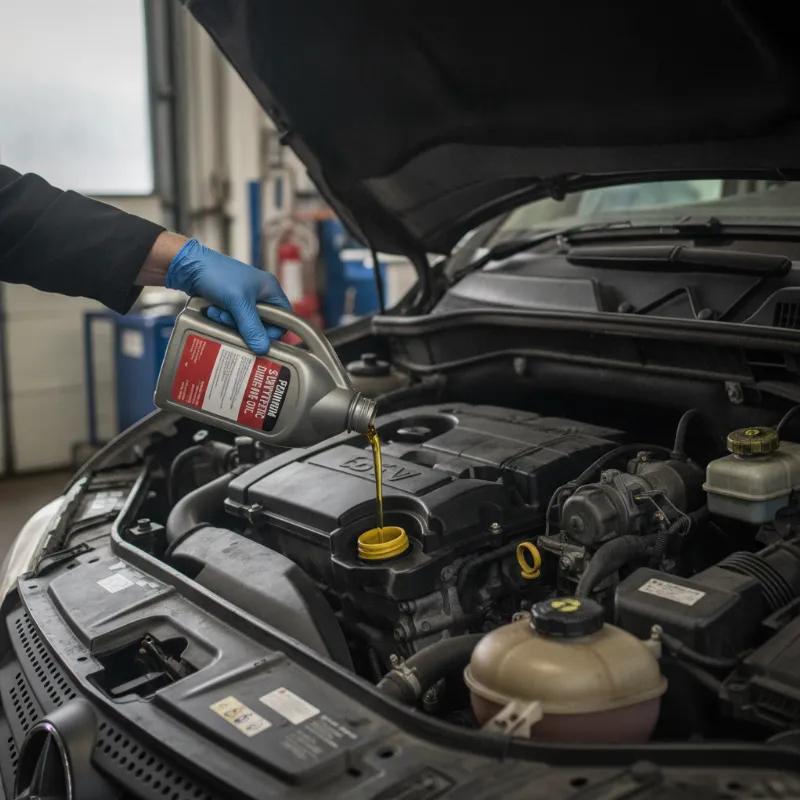
What Oil Does a Mercedes Vito Take?
The Mercedes-Benz Vito is a workhorse van that's been on UK roads in several generations, and the right engine oil depends on which version sits on your driveway. As a general rule, modern Vitos use a low-viscosity fully synthetic oil — typically a 5W-30 — that meets one of Mercedes-Benz's own approval sheets. Older CDI models may run happily on a 5W-40, while the very latest OM654-equipped vans call for a specific low-SAPS grade designed to protect the diesel particulate filter.
Getting the specification right matters more than picking a familiar brand. Mercedes engines are designed around specific oil chemistries, and using a fluid that only "meets" a generic ACEA rating rather than the correct MB approval can shorten oil life, void warranty claims and, in the worst case, damage the DPF or turbocharger. Below we break down exactly what to look for by engine, how much you'll need, and how often to change it.
Recommended Oil Specifications by Vito Engine
Mercedes publishes its oil requirements as MB approval sheet numbers rather than simple viscosity grades. You'll usually find the correct sheet listed in the owner's handbook or on a sticker inside the service booklet. Below is a summary of the most common Vito engines and the oils they need.
Diesel (CDI / OM651 / OM642) Oil Grades
The bulk of UK Vitos are diesel, and the engine family determines the correct oil. The OM651 (a 1.6 and 2.1-litre four-cylinder fitted to W447 Vitos from 2014 onwards) and the earlier OM646/OM640 CDI engines typically require a 5W-30 fully synthetic oil meeting MB approval 229.51 or 229.52. The V6 OM642 3.0-litre CDI, found in higher-spec Vito 122 and Viano models, also runs on MB 229.51-approved 5W-30. For the newest OM654 2.0-litre diesel fitted to the facelifted W447, Mercedes specifies MB 229.52, which is a low-SAPS oil formulated to protect the aftertreatment system.
If your Vito is an older pre-2010 CDI without a DPF, a 5W-40 meeting MB 229.31 or 229.51 is normally acceptable and can offer better protection at higher mileages. Always double-check against your service book, because sub-variants of the same engine sometimes have different requirements depending on emissions equipment.
Petrol Vito Oil Grades
Petrol Vitos are rare in the UK but do exist — mostly the M266 or M271 four-cylinder engines in early W639 vans. These typically use a 5W-30 or 5W-40 fully synthetic oil meeting MB 229.5 or 229.51. Because petrol Vitos don't have a DPF, low-SAPS is not essential, so a broader range of premium synthetics will be suitable. As always, cross-reference with the handbook before topping up.
Mercedes-Benz Approval Sheets (MB 229.x) Explained
MB approval sheets are Mercedes' own quality standards, and they matter far more than a generic API or ACEA rating. In simple terms: MB 229.3 and 229.31 are older high-performance oil standards; MB 229.5 and 229.51 are longer-life fully synthetic grades; and MB 229.52 is the newest low-SAPS standard designed for Euro 6 diesels with DPFs. If you use an oil that only claims to "meet or exceed" these standards without carrying the official approval number on the back of the bottle, you could be gambling with your warranty and your engine. Reputable brands such as Mobil 1 ESP, Shell Helix Ultra Professional AF-L and Castrol Edge Professional list their MB approvals clearly on the packaging.
How Much Oil Does a Mercedes Vito Need?
Capacity varies by engine, but as a rough guide the 1.6 and 2.1-litre four-cylinder CDI engines take around 5.5 to 6.5 litres including filter change. The 3.0-litre V6 OM642 is thirstier and needs approximately 8.5 litres. The newer OM654 2.0-litre diesel sits in the middle at around 6 litres. Petrol four-cylinders are typically 5.5 litres.
When buying oil, it's worth picking up a 5-litre container plus a 1-litre top-up bottle for the four-cylinder engines, or two 5-litre containers for the V6. Always fill in stages, checking the dipstick or electronic level gauge between pours — overfilling a modern diesel can cause just as much damage as running it low, particularly where the DPF regeneration cycle can push extra fuel into the sump.
Oil for the Mercedes Vito Crew Cab Sport
The Vito Crew Cab Sport has become a popular choice for tradespeople who need to carry a team as well as tools, and mechanically it's identical to the equivalent panel van. In practice that means the Sport running the 119 CDI or 124 CDI badge is fitted with the OM651 or OM654 diesel and takes the same 5W-30 fully synthetic oil to MB 229.51 or 229.52 as the standard Vito. Capacity is around 6 litres with a filter change.
Because Crew Cab Sports often live a mixed life — long motorway runs during the week, shorter school-run and weekend duty — it's worth keeping an eye on the service indicator and not stretching intervals to the maximum. Short journeys are harder on oil than long ones, and the Sport's typical duty cycle sits somewhere in between.
Oil Change Intervals and Service Schedule
Mercedes uses its ASSYST flexible servicing system on the Vito, which calculates service intervals based on driving style, mileage and time. In practice, a Vito used for typical UK van duties will call for an oil and filter service every 12 months or around 15,000 to 20,000 miles, whichever comes first. Fleet vehicles running heavier duty cycles may see the indicator trigger sooner.
Our advice for owner-operators is to change the oil at least once a year regardless of what the indicator says. Diesel oil degrades faster than the mileage figures suggest, particularly if the van does a lot of stop-start urban work or short trips where the engine rarely gets fully up to temperature. An annual fresh fill is cheap insurance against turbo wear and DPF trouble.
Choosing the Right Oil: Fully Synthetic vs Semi-Synthetic
For any Vito built in the last fifteen years, fully synthetic is the only sensible choice. Semi-synthetic oils simply don't offer the thermal stability or long-drain performance needed by modern common-rail diesels, and they won't carry the required MB approvals for DPF-equipped engines. The small saving at the till is easily wiped out by shorter oil life and increased engine wear.
If you're running a very early W638 Vito from the late 1990s, a semi-synthetic 10W-40 to ACEA B3 or B4 will do the job, but even here a fully synthetic 5W-40 will offer better cold-start protection and longer service life. When in doubt, spend a few pounds extra on a branded fully synthetic with the correct MB approval printed on the label — it's the single cheapest way to protect a van that could otherwise cost thousands to repair.
Buying, Leasing or Financing a Mercedes Vito
If your current Vito is getting long in the tooth and the servicing bills are mounting, it may be time to consider a replacement. New and nearly-new Vitos are available through outright purchase, contract hire and hire purchase, with monthly payments tailored to business or personal use. Leasing in particular is popular with sole traders and small fleets because it keeps the van under manufacturer warranty for the whole contract, wrapping servicing and maintenance into a single predictable monthly figure — which means never having to worry about buying the right oil yourself.
Whichever route you take, factor running costs into the decision alongside the headline price. A well-serviced Vito on the right oil will typically go well beyond 200,000 miles, so getting the fundamentals right from day one pays dividends whether you own the van or hand it back at the end of a lease.
FAQs
What engine oil grade and specification does a Mercedes Vito require?
Most modern Mercedes Vitos require a 5W-30 fully synthetic engine oil meeting Mercedes-Benz approval MB 229.51 or MB 229.52. The exact specification depends on the engine: OM651 and OM642 CDI diesels typically use MB 229.51, while the newer OM654 diesel calls for the low-SAPS MB 229.52 standard to protect the DPF. Always confirm against your service book before topping up.
How much oil does a Mercedes Vito take with a filter change?
Four-cylinder Vito diesels (OM651 and OM654) take approximately 5.5 to 6.5 litres with a filter change. The 3.0-litre V6 OM642 needs around 8.5 litres. Petrol four-cylinder Vitos take about 5.5 litres. Always fill in stages and check the level between pours, as overfilling a modern diesel can cause serious damage.
How often should I change the oil in a Mercedes Vito?
The Vito's ASSYST service indicator will typically call for an oil and filter change every 12 months or 15,000 to 20,000 miles under normal use. If your van does a lot of short journeys, urban stop-start work or heavy loads, we'd recommend an annual change regardless of mileage to protect the turbo and DPF.
What happens if I use the wrong oil in my Vito?
Using an oil that doesn't carry the correct MB approval can shorten oil life, cause premature turbo and injector wear, block the diesel particulate filter and potentially invalidate warranty claims. The cost of a premium fully synthetic with the right MB approval is trivial compared to the repair bills that can follow using the wrong fluid.