What Is the Height of a Mercedes Sprinter Van? UK Dimensions Guide
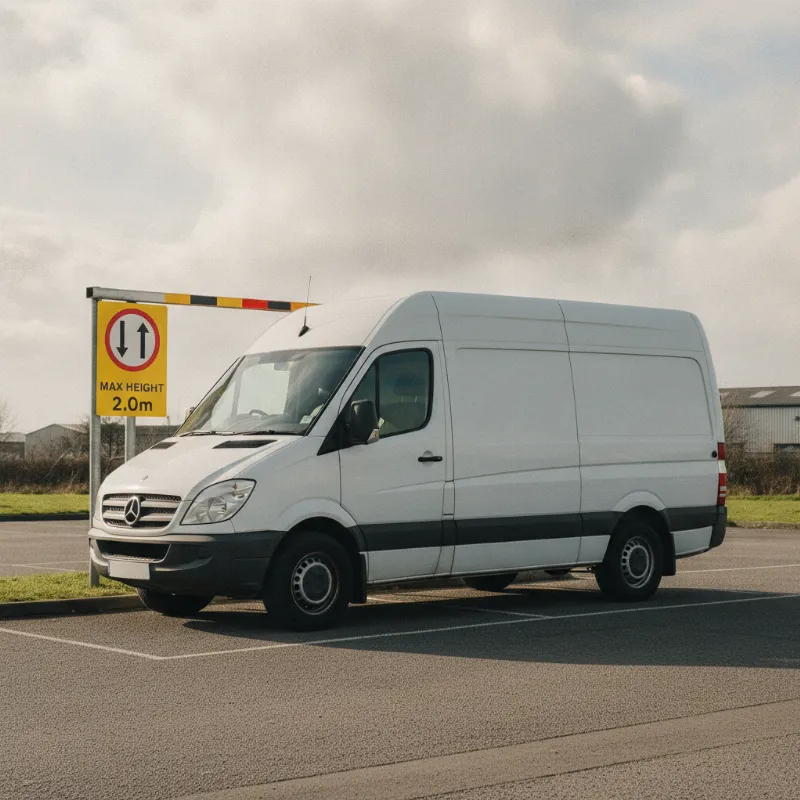
Mercedes Sprinter Van Height Explained
The Mercedes Sprinter is one of the most versatile large panel vans on the UK market, and its height is a key part of what makes it so adaptable. Rather than being a single fixed measurement, the Sprinter's height varies significantly depending on which roof option, wheelbase and drivetrain you choose. Broadly speaking, exterior heights range from around 2.36 metres for the shortest standard roof variants up to approximately 2.82 metres for the tallest super high roof models. That's a difference of nearly half a metre from top to bottom of the range, which has real implications for where you can park, what you can carry and how easy the van is to load.
Understanding these figures matters because van height affects far more than just clearance under a car park barrier. It influences aerodynamics and fuel economy, load volume, standing headroom inside the cargo bay, and even the type of jobs the van is realistically suited to. Whether you're browsing Mercedes Sprinter vans for sale for the first time or upgrading an existing fleet, knowing the exact height of each configuration will save you time and prevent expensive mistakes.
Sprinter Roof Height Options: Standard, High and Super High Roof
Mercedes designates Sprinter roof heights using an H1, H2 and H3 system, corresponding to standard, high and super high roof options. Not every roof height is available with every wheelbase or body length, so it's worth checking specific combinations before committing. The following measurements refer to current third-generation (VS30) Sprinter panel vans, though earlier models are broadly comparable.
Standard Roof (H1) Height
The standard roof Sprinter, badged H1, has an exterior height of approximately 2.36 to 2.42 metres depending on wheelbase and whether the van is front-wheel or rear-wheel drive. This is the lowest Sprinter you can buy and is often chosen by businesses that need regular access to multi-storey car parks, drive-through car washes or premises with height-restricted entrances. The trade-off is reduced load volume and, crucially, no standing headroom in the cargo area.
High Roof (H2) Height
The high roof H2 Sprinter sits at around 2.59 to 2.63 metres tall externally. This is the most popular choice for tradespeople and courier operators because it strikes a strong balance between practical parking access and useful interior space. Most operators can stand upright or near-upright in the cargo area, and the extra volume above the load floor is ideal for stacked parcels, shelving racks and bulky but light items.
Super High Roof (H3) Height
The super high roof H3 Sprinter reaches approximately 2.80 to 2.82 metres in exterior height. It's only offered on the longest wheelbase configurations and is aimed at operators who need maximum cubic capacity, generous standing headroom throughout the load bay, or the extra vertical space needed for tall equipment, mobile workshops and specialist conversions such as ambulances and motorhomes.
Interior Load Height and Headroom by Roof Type
Exterior height only tells half the story. Interior load height — the distance from the cargo floor to the roof lining — is what actually determines whether you can stand up inside and how tall your cargo can be. A standard roof Sprinter offers roughly 1.71 metres of interior height, which is enough to crouch or kneel comfortably but not to stand upright for most adults. The high roof H2 opens this up to around 1.90 metres, allowing the majority of users to work standing without stooping. The super high roof H3 provides an impressive 2.10 metres or so of internal height, giving virtually anyone room to stand fully upright and move around freely.
For businesses where operatives spend significant time working inside the van — mobile mechanics, locksmiths, plumbers with racking systems, delivery drivers sorting parcels between drops — the extra internal headroom of an H2 or H3 pays for itself in comfort, productivity and reduced back strain.
How Sprinter Height Compares to Other Panel Vans
Compared to its direct rivals, the Sprinter is right in the middle of the large panel van pack in terms of height. The Ford Transit L3H2 sits at around 2.55 metres, very close to the Sprinter H2. The Volkswagen Crafter, which shares mechanical DNA with older Sprinters, offers similar H1, H2 and H3 options with near-identical figures. The Peugeot Boxer, Citroën Relay and Fiat Ducato tend to be slightly lower in their tallest H3 configurations, typically topping out around 2.76 metres. The Iveco Daily, meanwhile, offers some of the tallest factory roof options in the class, exceeding 3 metres in certain heavy-duty variants.
What sets the Sprinter apart is the sheer breadth of available combinations, with multiple wheelbases and body lengths available across each roof height. This means you can specify a Sprinter that's tailored very precisely to your load requirements and parking realities.
Why Van Height Matters: Car Parks, Garages and Load Access
Height restrictions are one of the most common headaches faced by van operators. Most UK multi-storey car parks impose a 2.0 or 2.1 metre limit, which rules out every factory Sprinter regardless of roof option. Supermarket car parks often use 2.1 to 2.3 metre barriers. Drive-through restaurants and car washes typically cap at 2.1 metres, and many domestic garages have door heights between 2.0 and 2.2 metres. Even loading bays and delivery yards may impose limits, especially at older industrial estates.
On the other hand, taller vans give you standing headroom, more cubic capacity, and often easier loading via taller rear and side doors. It's a genuine trade-off, and the right answer depends entirely on how the van will be used day to day. If your work involves frequent visits to height-restricted sites, a standard roof may be non-negotiable. If you rarely encounter barriers and value load space above all, a high or super high roof is the smarter buy.
Choosing the Right Mercedes Sprinter Height for Your Business
The best way to choose a Sprinter height is to think through a typical week and list every location the van will visit. Check the height restrictions at each — customer premises, your own yard, fuel stations, wholesalers, storage units — and use the lowest as your ceiling. Then consider what you'll carry: are your loads mainly flat and heavy, in which case a standard roof works fine, or are they tall, bulky and light, where a high or super high roof unlocks far more usable volume?
Also factor in how often you'll be inside the van. Couriers who make hundreds of stops a day benefit enormously from being able to stand up while sorting parcels. Tradespeople with fitted racking often prefer an H2 so they can access tools without stooping. Conversion specialists building campers or welfare units almost always start with an H3 for maximum internal volume. When you're ready to compare specifications side by side, browse the current stock of Mercedes Sprinter vans for sale to see which roof height, wheelbase and body length combinations are available, and don't hesitate to ask for exact measured heights on any specific vehicle you're considering — factory quoted figures can vary slightly with roof rails, aerials and heavy-duty suspension options.
FAQs
What is the exterior height of a Mercedes Sprinter van?
The exterior height of a Mercedes Sprinter ranges from approximately 2.36 metres for the standard roof (H1) up to around 2.82 metres for the super high roof (H3). The high roof (H2) sits in the middle at roughly 2.59 to 2.63 metres. Exact figures vary slightly depending on wheelbase, drivetrain and optional equipment such as roof rails.
Will a Mercedes Sprinter fit in a standard multi-storey car park?
No. Most UK multi-storey car parks have a height restriction of 2.0 to 2.1 metres, which is lower than even the shortest standard roof Sprinter at around 2.36 metres. Sprinter drivers generally need to use surface car parks, dedicated van bays or car parks specifically designated for taller vehicles.
Can you stand up inside a Mercedes Sprinter?
It depends on the roof option. The standard roof (H1) offers around 1.71 metres of interior height, which is not enough for most adults to stand upright. The high roof (H2) provides about 1.90 metres, allowing most people to stand comfortably. The super high roof (H3) gives around 2.10 metres, offering full standing headroom for virtually anyone.
What is the difference between H1, H2 and H3 Sprinter roofs?
H1 is the standard roof, H2 is the high roof and H3 is the super high roof. These designations correspond to progressively taller exterior and interior heights, with H1 being the most car-park friendly and H3 offering the maximum load volume and standing headroom. H3 is typically only available on the longest wheelbase Sprinters.
Does the height of a Sprinter affect fuel economy?
Yes, taller vans generally have slightly worse fuel economy because of increased frontal area and aerodynamic drag, particularly at motorway speeds. The difference between an H1 and an H3 Sprinter can be noticeable over high annual mileages, so if your loads don't require the extra height, a lower roof will typically be more economical to run.