How Big Is a 3.5 Tonne Luton Van? Full Size & Capacity Guide
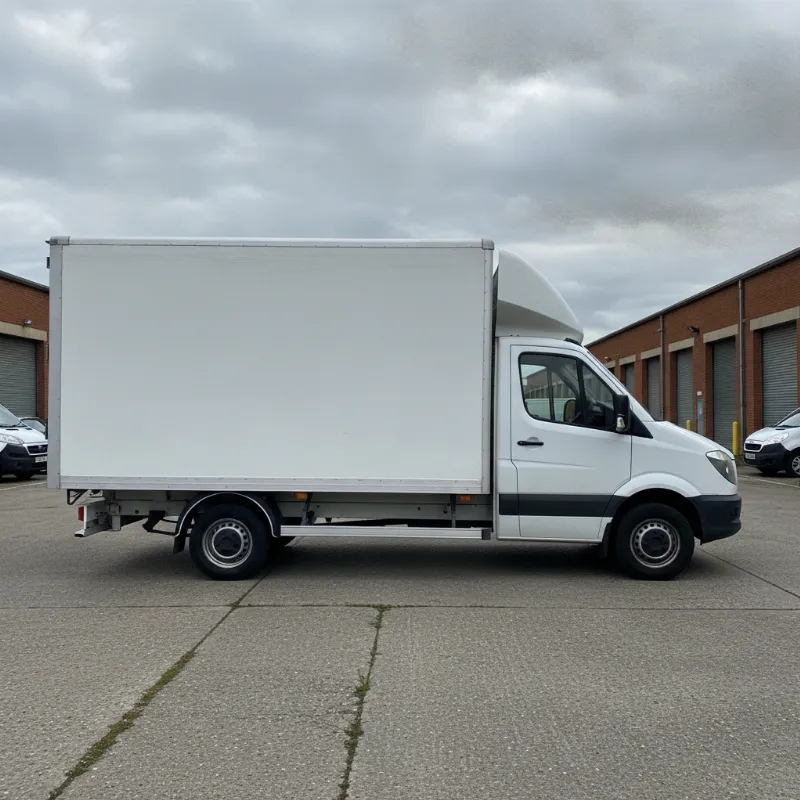
How big is a 3.5 tonne Luton van? Quick answer
A 3.5 tonne Luton van is one of the largest vehicles you can drive on a standard UK car licence, and it's the go-to choice for house moves, courier work and bulky commercial loads. In broad terms, expect an overall external length of around 6.9 to 7.1 metres, a height of roughly 3.2 to 3.5 metres, and a load area offering somewhere between 18 and 20 cubic metres of usable space. Payload — the actual weight you can legally carry — typically sits between 900kg and 1,200kg depending on the exact model and specification.
The defining feature of a Luton is the distinctive box body that extends forward over the cab, giving you extra storage volume without lengthening the wheelbase. Most also come with a tail lift as standard, making loading heavy or awkward items far easier than with a standard panel van.
Typical 3.5 tonne Luton van dimensions
While every manufacturer builds slightly differently, 3.5 tonne Lutons based on chassis cabs like the Ford Transit, Mercedes-Benz Sprinter, Peugeot Boxer, Citroën Relay and Iveco Daily all sit within a fairly narrow size band. Here's what to expect across the key measurements.
External length, width and height
Externally, a 3.5 tonne Luton is a sizeable vehicle. Overall length usually runs from about 6,900mm to 7,100mm (roughly 22ft 8in to 23ft 4in), which includes the cab, the load box and, where fitted, a stowed tail lift. Width across the body is typically between 2,200mm and 2,400mm, and around 2,500mm once you factor in the wing mirrors — worth remembering when negotiating narrow lanes or urban car parks.
Overall height comes in at approximately 3,200mm to 3,500mm (10ft 6in to 11ft 6in). That's tall enough to catch out drivers who aren't used to larger vehicles, so height barriers at supermarkets, multi-storey car parks and older bridges need close attention.
Internal load area dimensions
Inside the box, a typical 3.5 tonne Luton offers a load length of around 4,000mm to 4,300mm, an internal width of about 2,000mm to 2,200mm, and an internal height of roughly 2,200mm. The Luton "peak" over the cab adds an extra 700mm or so of length at the top of the box, which is ideal for long, lightweight items such as mattresses, rolled carpets, ladders or flat-pack furniture.
Rear door apertures — whether roller shutter or barn doors — are usually around 2,100mm high by 2,000mm wide, giving generous access when you're loading larger items via the tail lift.
Load volume in cubic metres and cubic feet
Total load volume in a 3.5 tonne Luton generally lands between 18m³ and 20m³, which converts to roughly 635 to 706 cubic feet. To put that in perspective, it's about double the capacity of a long-wheelbase panel van and comfortably more than a standard box van of the same length, because the over-cab section adds usable volume rather than dead space.
Payload: what can a 3.5 tonne Luton actually carry?
Payload is where things get more nuanced. The "3.5 tonne" figure refers to the vehicle's gross vehicle weight (GVW) — the maximum legal weight of the van plus everything in it, including driver, fuel and cargo. Because a Luton body, tail lift and chassis all add weight, the kerb weight of the vehicle itself is usually around 2,300kg to 2,600kg.
That leaves a payload of roughly 900kg to 1,200kg, depending on the base chassis, engine, body build and any additional equipment fitted. It's essential to check the plated weights on the vehicle itself rather than relying on generic figures, and to remember that overloading — even by a small margin — is a serious offence that can result in fines, penalty points and invalidated insurance.
When planning a load, always factor in the driver, passengers, fuel, and any tools or straps already in the van. If you're carrying dense materials such as tiles, paving, engine parts or building supplies, you'll hit the weight limit long before you fill the load space.
What fits inside a 3.5 tonne Luton van?
Volume-wise, a 3.5 tonne Luton is one of the most versatile vehicles on the road. Here's a realistic look at what it can handle.
House moves and furniture
A 3.5 tonne Luton is widely considered the ideal size for a two- to three-bedroom house move in a single trip. You can typically fit a large sofa, a dining table with chairs, a double or king-size bed and mattress, wardrobes, a fridge-freezer, washing machine, and dozens of boxes, with room to spare. The over-cab Luton peak is perfect for long items like curtain poles, framed pictures and rolled rugs.
For smaller flats or single-room moves, a Luton is often overkill — a long-wheelbase panel van will usually do the job. But if you're moving a family home, the extra volume and the convenience of a tail lift make a real difference on the day.
Pallets and commercial loads
For commercial use, most 3.5 tonne Lutons will accommodate five to six standard UK pallets (1200mm x 1000mm) on the floor, or four Euro pallets (1200mm x 800mm) loaded lengthways. Payload will almost always be the limiting factor before space runs out — six fully loaded pallets can easily exceed 1,000kg, so you'll need to weigh loads carefully.
Lutons are popular for furniture delivery, white goods distribution, event and exhibition logistics, parcel and courier work, and trade removals precisely because they combine large cubic capacity with a practical tail lift and easy rear access.
Driving licence and legal requirements for a 3.5t Luton
The good news is that most UK drivers can legally drive a 3.5 tonne Luton on a standard category B car licence, as it doesn't exceed the 3,500kg GVW threshold. This is a big reason the 3.5 tonne class exists — it's the largest vehicle available to drivers without needing to sit an additional test.
There are a few important caveats. Drivers who passed their test on or after 1 January 1997 are limited to 3,500kg on a standard car licence; anything heavier requires a C1 (up to 7.5 tonnes) or C (LGV) licence. Drivers hiring a Luton usually need to be aged 21 or over (sometimes 25), hold a full licence for at least one or two years, and have no significant recent endorsements. A tachograph isn't required for vehicles at or under 3.5 tonnes used for private purposes, but commercial operators should check the rules around Operator Licensing, driver hours and speed limits, which are lower than for cars on many roads.
Is a 3.5 tonne Luton the right size for you?
If you need to shift a lot of bulky but relatively light items — furniture, boxes, empty packaging, soft furnishings — a 3.5 tonne Luton is hard to beat. It offers close to the maximum load volume you can legally drive on a car licence, plus the huge practical advantage of a tail lift for heavy or awkward loads.
However, if your work involves dense materials, aggregates or heavy machinery, you may hit the payload ceiling quickly, and a 7.5 tonne truck with the appropriate licence could actually be more cost-effective in the long run. Similarly, for tight urban work or smaller loads, a long-wheelbase high-roof panel van is easier to park, cheaper to run and often more than enough.
For most house movers, small removals firms, event crews and general logistics operators, though, a 3.5 tonne Luton hits the sweet spot: maximum accessible capacity, minimum licensing hassle, and a shape that's been proven over decades of British road use.
For a closer look at payload capacities across different Luton models, see our guide to high payload Luton vans.
FAQs
What are the dimensions, load volume and payload of a 3.5 tonne Luton van?
A typical 3.5 tonne Luton van measures approximately 6.9–7.1m long, 2.2–2.4m wide and 3.2–3.5m tall externally. Internally, the load area is around 4.0–4.3m long, 2.0–2.2m wide and 2.2m high, giving a total load volume of roughly 18–20 cubic metres (around 635–706 cubic feet). Payload — the maximum weight of cargo you can legally carry — is usually between 900kg and 1,200kg, depending on the chassis, body and equipment fitted.
Can I drive a 3.5 tonne Luton van on a normal car licence?
Yes, in most cases. A standard UK category B car licence allows you to drive vehicles up to 3,500kg gross vehicle weight, which includes a 3.5 tonne Luton. Drivers who passed their test before 1 January 1997 also have C1 entitlement covering vehicles up to 7,500kg, but anyone who passed after that date is capped at 3.5 tonnes without taking an additional C1 test.
How many pallets fit in a 3.5 tonne Luton van?
You can typically fit five to six standard UK pallets (1200mm x 1000mm) on the floor of a 3.5 tonne Luton, or four Euro pallets (1200mm x 800mm) loaded lengthways. In practice, payload rather than space is usually the limiting factor — six loaded pallets will often exceed the 900–1,200kg payload limit, so weight must be checked carefully.
Is a 3.5 tonne Luton big enough to move a house?
For most two- to three-bedroom homes, a 3.5 tonne Luton is ideal and will usually complete the move in a single trip. It comfortably takes sofas, beds, wardrobes, appliances and dozens of boxes, with the over-cab Luton peak useful for long items. Larger four-bedroom family homes may need two trips or a 7.5 tonne truck instead.
What's the difference between a Luton van and a box van?
Both have a rigid, boxed load area, but a Luton van features an additional storage section that extends forward over the cab — the distinctive 'Luton peak'. This adds extra load length and volume without making the overall vehicle any longer, making Lutons more space-efficient than a standard box van of equivalent size.