Iveco Daily Van Dimensions: Complete Size Guide by Model and Variant
Iveco Daily Van Dimensions Explained: A Quick Overview
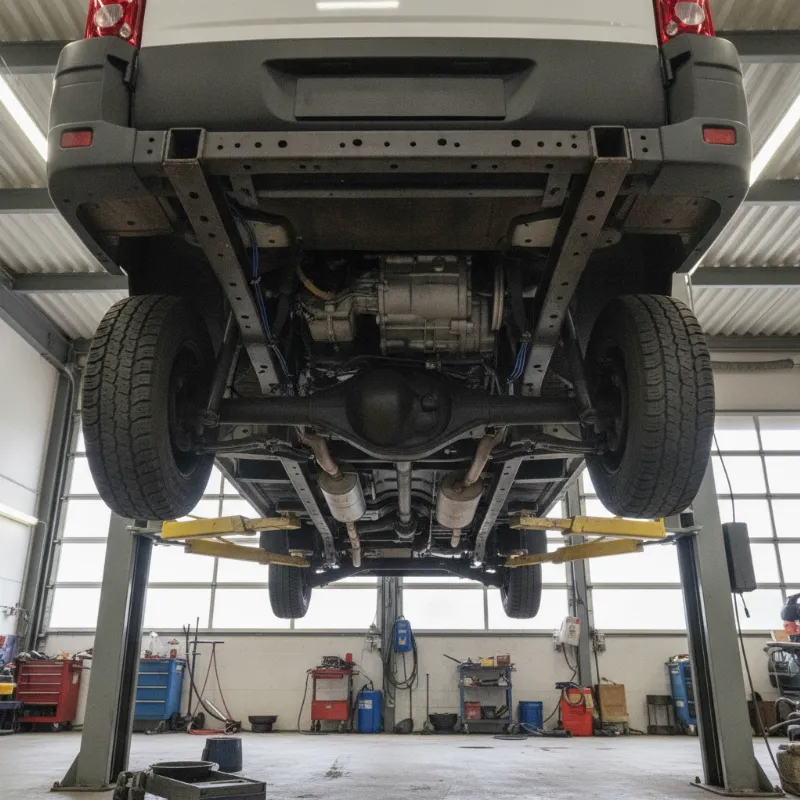
The Iveco Daily is one of the most versatile large vans on the UK market, and its dimensions reflect that flexibility. Unlike most rivals built on a monocoque chassis, the Daily uses a truck-derived ladder frame, which allows Iveco to offer an unusually wide range of lengths, heights, wheelbases and gross vehicle weights (GVWs) from a single model line. That means you can specify a Daily as anything from a compact 3,520kg city panel van right up to a 7.2-tonne chassis cab, all while sharing the same core cab and controls.
Because the Daily spans so many configurations, understanding the dimensions is the first step in choosing the right variant for your business. In this guide we'll break down the exterior measurements, load space, payload, and the specialist body styles including Luton, tipper, minibus and 4x4. Whether you're moving pallets across town or hauling equipment onto a rural site, the right combination of wheelbase, roof height and GVW makes all the difference to how the van performs day-to-day.
Iveco Daily Exterior Dimensions: Length, Width and Height
The panel van version of the Iveco Daily is offered in four overall lengths and three roof heights, giving the range one of the broadest footprints in its class. Overall lengths run from around 5,080mm on the shortest H1 van to approximately 7,545mm on the extra-long-wheelbase H3, while the standard body width sits at 2,032mm without mirrors and around 2,426mm including them. That mirror-out figure is worth noting for anyone regularly navigating narrow yards, multi-storey car parks or older urban loading bays.
Overall heights vary from roughly 2,175mm for the low-roof variant up to about 2,970mm for the extra-high-roof body. The higher-roofed models make the Daily one of only a handful of vans in which most operators can stand fully upright inside the load bay, but they do rule out standard 2.1m height barriers.
Wheelbase Options Across the Iveco Daily Range
Iveco offers the Daily panel van with four principal wheelbases: 3,000mm, 3,520mm, 4,100mm and 4,100mm with rear overhang extension. The shortest is best suited to urban delivery work where manoeuvrability matters more than outright capacity, while the 3,520mm and 4,100mm versions form the backbone of the range for parcel, plant and general haulage operators. The extended-overhang variant is aimed at businesses that need maximum load length without the turning circle penalty of an even longer wheelbase.
Chassis cab and crew cab versions add further wheelbase choices, including 3,450mm, 3,750mm, 4,350mm and 5,100mm, giving bodybuilders scope to mount everything from box bodies and tippers to refrigerated units and specialist conversions.
Overall Length and Roof Height Variants
Panel van lengths are commonly referred to by Iveco as L2 (approximately 5,080mm), L3 (approximately 6,000mm), L4 (approximately 6,650mm) and L5 (approximately 7,545mm). Roof heights are designated H1 (low, around 2,175mm), H2 (medium, around 2,550mm) and H3 (high, around 2,970mm). Not every length is offered with every roof, so it's important to check the specific L/H combination against your intended use before committing.
For operators regularly loading pallets or bulky white goods, the H2 roof strikes a sensible balance between interior standing room and access to typical car park height restrictions. The H3, meanwhile, is popular with mobile workshops, motorhome conversions and courier operators who value the extra cubic capacity.
Iveco Daily Load Space Dimensions and Cargo Volume
Load volume in the Iveco Daily panel van ranges from around 7.3 cubic metres in the shortest L2H1 configuration to a class-leading 19.6 cubic metres in the L5H3. That upper figure puts the Daily in direct competition with 3.5-tonne box vans and gives it a genuine advantage over many rivals whose panel van bodies top out at 17 cubic metres.
The rear barn doors open to 270 degrees as standard on most variants, and a nearside sliding side door with an aperture around 1,250mm wide by 1,800mm tall is fitted across the range. On longer wheelbases a wider 1,500mm side door aperture is available, which makes loading Euro pallets from the kerb considerably easier.
Load Length, Width Between Wheel Arches and Interior Height
Maximum load length behind the bulkhead runs from approximately 2,600mm on the shortest van to around 5,125mm on the L5, with load bay width at floor level of roughly 1,800mm and width between the wheel arches of 1,320mm. That between-arches figure is critical, because it comfortably accommodates a Euro pallet loaded either lengthways or across, meaning the L3 and above can carry up to five Euro pallets in a single trip.
Interior load height sits at around 1,545mm for the H1, 1,900mm for the H2 and 2,100mm for the H3. That H3 interior height is what allows walking upright inside the load bay, and it's also why the Daily is such a popular donor vehicle for camper and workshop conversions.
Payload and Gross Vehicle Weight (GVW) by Model
Gross vehicle weight is where the Daily really separates itself from the pack. GVW options run from 3,500kg on the entry-level 35S models through 5,200kg on the 50C, 6,500kg on the 65C and up to 7,200kg on the 72C. Payloads typically range from around 900kg on a fully specified low-GVW van up to well over 4,700kg on the heaviest chassis cab derivatives.
Bear in mind that anything above 3,500kg GVW requires a category C1 or C driving licence, which affects who in your business can legally drive the vehicle. For drivers who passed their car test after 1 January 1997, an additional test is required for anything above 3.5 tonnes.
Iveco Daily 35C12 LWB Luton Van Dimensions
The 35C12 LWB Luton is one of the most popular Daily conversions in the UK, particularly with removals firms, hire fleets and general courier operators. Built on the 3,750mm or 4,350mm wheelbase chassis cab, a typical Luton body measures around 4,200mm long, 2,100mm wide and 2,200mm internally tall, giving a load volume of roughly 19 to 21 cubic metres depending on the exact conversion.
Overall vehicle length with the Luton body fitted is generally between 6,900mm and 7,400mm, and overall height around 3,150mm, so route planning to avoid low bridges and barriers is essential. Most Luton conversions include a column-mounted or barn-door tail lift rated at 500kg or 750kg, which extends overall length slightly when stowed but makes loading heavy items far more practical.
Iveco Daily Tipper Dimensions and Bed Sizes
Iveco Daily tippers are usually built on 3,450mm or 3,750mm wheelbase chassis cabs, with single-cab, crew-cab and dropside variants all common. A single-cab tipper on the 3,450mm wheelbase typically has a bed measuring around 3,100mm long by 2,070mm wide, while the 3,750mm chassis stretches that to around 3,500mm by 2,070mm.
Crew-cab tippers, which seat up to seven, sacrifice bed length in return for extra passenger space — expect around 2,400mm to 2,700mm of bed length on the same wheelbases. Sideboard height is typically 400mm, giving a useful cubic capacity for aggregate, spoil or landscaping waste, and payloads on 3.5-tonne tipper variants generally sit between 900kg and 1,200kg once the body is accounted for.
Iveco Daily Minibus Dimensions and Seating Layouts
The Iveco Daily minibus is offered in a range of seating configurations from 14 up to 22 passengers, with wheelbases from 3,520mm to 4,100mm and overall lengths between approximately 6,300mm and 7,500mm. Interior headroom typically sits around 1,900mm, so most adult passengers can stand and move comfortably in the aisle.
Seating layouts vary by conversion — school and community transport minibuses often prioritise seat count and luggage capacity, while shuttle and airport variants may include a rear luggage area, PSVAR-compliant wheelchair access and a passenger lift. All 17-seat and above versions are classed as PCVs and require a D1 or D licence to drive commercially.
Iveco Daily 4x4 for Sale: Dimensions of the Off-Road Variant
The Iveco Daily 4x4 is a very different proposition from the standard rear-wheel-drive Daily. Built on a heavier-duty chassis with three lockable differentials and a two-speed transfer case, it's aimed at utilities, forestry, mountain rescue and specialist off-road operators. Overall dimensions are broadly similar to the standard chassis cab, but ride height and approach angles are considerably more generous.
4x4 Iveco Daily for Sale: Ride Height and Ground Clearance
Ground clearance on the Daily 4x4 sits at approximately 275mm under the front axle and 265mm under the rear differential, comfortably ahead of most 4x4 pickups. Approach and departure angles are around 45 and 35 degrees respectively, and the ramp breakover angle is roughly 25 degrees on the shorter wheelbase. Wading depth is quoted at up to 700mm, which is a genuinely useful figure for river crossings and flood response work.
Overall height with the 4x4 chassis is typically 200mm to 300mm greater than the equivalent 4x2 Daily, so operators fitting box or Luton bodies should double-check overall height carefully against depot and route restrictions.
Iveco 4x4 Daily for Sale: Comparing Wheelbase and Body Options
The 4x4 is offered in three main wheelbases — 3,050mm, 3,400mm and 3,780mm — as either a single-cab or crew-cab chassis. GVW options run from 5,500kg up to 7,200kg, and payloads typically sit between 2,500kg and 3,800kg once a body is fitted. Because the vehicle is aimed at specialist operators, most are bodied to order with tipper, dropside, box, welfare or bespoke expedition bodies.
How to Drive a 2008 Iveco Daily Automatic: Dimensions to Be Aware Of
Older Iveco Daily automatics from around 2008 use the Agile robotised manual gearbox, which behaves like a conventional automatic in Drive but with slightly longer shift times. From a dimensional standpoint, these earlier third-generation Dailys are broadly similar in exterior size to today's van, but there are a few important differences to be aware of before setting off.
Turning circles on the longer wheelbase 2008 models can be 15 metres or more between kerbs, which catches out drivers moving up from smaller vans. Mirror-to-mirror width is again around 2,420mm, meaning narrow lanes and older multi-storey car parks require caution. Overall height on high-roof panel vans is close to 3.0 metres, so height restrictions must be checked in advance — the vehicle does not have a factory height warning system on these earlier models.
Comparing Iveco Daily Dimensions With Other Large Vans
Compared to its main rivals — the Mercedes-Benz Sprinter, Ford Transit, Volkswagen Crafter and MAN TGE — the Iveco Daily generally offers greater maximum load volume, higher maximum GVW and stronger payloads at the top of the range. The 19.6 cubic metre L5H3 panel van is the largest available factory-built van in its class, and the option of 5.2, 6.5 and 7.2-tonne GVWs is unique.
Where the Daily gives ground is in on-road refinement and fuel economy on lighter-duty work — its truck-based construction means it feels more commercial-vehicle than car-derived. For operators who genuinely need the extra volume, weight or durability, however, those trade-offs are usually easily justified by the productivity gains.
Choosing the Right Iveco Daily Size for Your Business
Selecting the right Iveco Daily comes down to three practical questions: what are you carrying, how much does it weigh, and where are you driving? A parcel operator on urban routes may find the L2H2 3.5-tonne panel van ideal, while a builder needing to carry plant, aggregate and materials might be better suited by a 5.2-tonne dropside or tipper. Businesses moving light but bulky goods should look at the L5H3 for its class-leading cubic capacity, whereas heavy-load operators will benefit most from a 6.5 or 7.2-tonne chassis.
Don't forget to factor in driver licensing, depot access, height restrictions on your regular routes and the payload needed once any body, racking or equipment is fitted. Getting these details right at specification stage saves considerable frustration — and cost — down the line, and ensures your Daily is genuinely the right tool for the job from day one.
FAQs
What are the exterior and load space dimensions of the Iveco Daily van across its different body styles and variants?
The Iveco Daily panel van is offered in four lengths (L2 5,080mm, L3 6,000mm, L4 6,650mm and L5 7,545mm) and three roof heights (H1 2,175mm, H2 2,550mm and H3 2,970mm). Body width is 2,032mm without mirrors. Load volumes range from 7.3 cubic metres on the smallest L2H1 up to 19.6 cubic metres on the L5H3, with load lengths from 2,600mm to 5,125mm and width between the wheel arches of 1,320mm — enough for a Euro pallet loaded either way. Chassis cab, Luton, tipper, minibus and 4x4 variants expand these figures further, with GVWs from 3.5 to 7.2 tonnes.
How many pallets can an Iveco Daily carry?
Pallet capacity depends on the length variant. The L2 typically carries three Euro pallets, the L3 four, the L4 five, and the L5 up to five Euro pallets with additional space for smaller loads. The 1,320mm width between the wheel arches allows pallets to be loaded either lengthways or across the van floor.
Do you need a special licence to drive an Iveco Daily?
Drivers who passed their car test before 1 January 1997 can generally drive Iveco Daily vans up to 7.5 tonnes on their existing licence. Drivers who passed after that date are limited to 3.5 tonnes on a standard category B licence and will need a C1 licence for vehicles up to 7.5 tonnes or a full C licence above that. Minibuses with 17 or more seats require a D1 or D licence for commercial use.
What is the difference between the Iveco Daily 35S and 35C models?
The 35S is the single-rear-wheel version with a 3,500kg GVW, aimed at operators who want a lighter, more manoeuvrable van with easier city driving characteristics. The 35C uses twin rear wheels on the same 3,500kg GVW, offering greater stability, higher payloads and better load-carrying behaviour when fully loaded. The C designation continues up through the range to the 72C at 7,200kg GVW.
How tall is a high-roof Iveco Daily?
A high-roof (H3) Iveco Daily panel van has an overall external height of approximately 2,970mm — just under 3.0 metres. Internal load bay height is around 2,100mm, allowing most operators to stand fully upright inside the van. This makes the H3 popular for mobile workshops, courier work and camper conversions, but it does rule out standard 2.1-metre height-restricted car parks and barriers.