Can You Drive a 3.5 Tonne Van on a Car Licence? UK Rules Explained
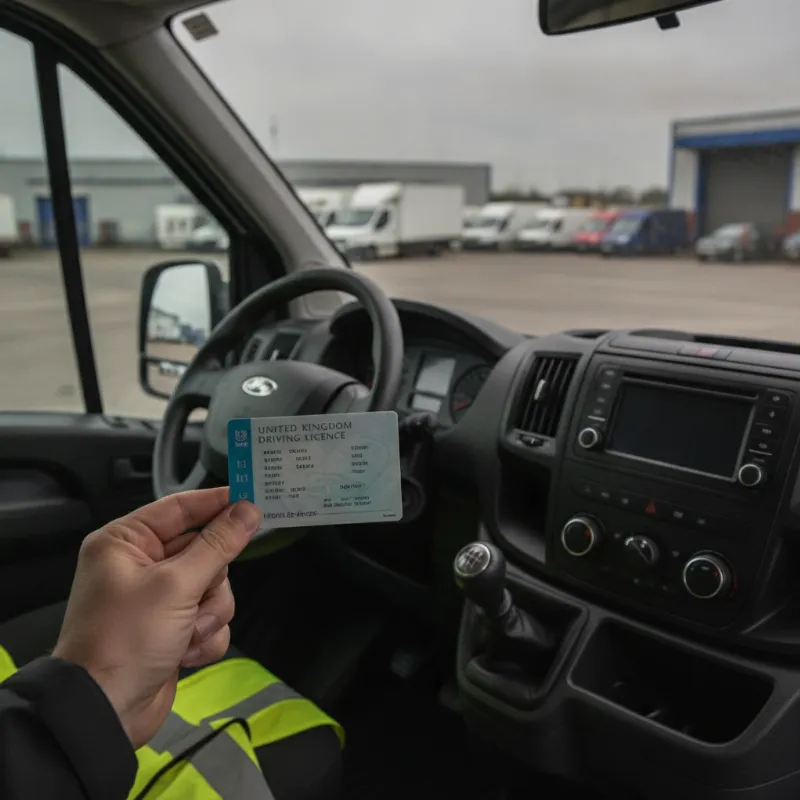
The short answer: can you drive a 3.5 tonne van on a car licence?
Yes — in almost all cases, if you hold a standard UK Category B car driving licence, you are legally allowed to drive a van with a Maximum Authorised Mass (MAM) of up to 3,500kg (3.5 tonnes). This is why so many popular panel vans, Luton bodies and crew cabs on the market are built right up to, but not over, the 3.5t threshold — it keeps them accessible to the widest possible pool of drivers, from tradespeople to house movers to fleet operators.
That said, there are a few important caveats around when you passed your test, what you're towing, how many passengers you're carrying and what the van is being used for commercially. Before you jump behind the wheel of a long-wheelbase Sprinter or Transit, it's worth understanding exactly where the limits sit so you stay on the right side of the law.
What your Category B car licence actually allows you to drive
Your Category B licence — the one you get when you pass a standard UK car driving test — is more versatile than many drivers realise. It covers vehicles with up to eight passenger seats (plus the driver) and a Maximum Authorised Mass of up to 3,500kg. That includes the vast majority of light commercial vehicles on UK roads today, from small city vans right through to full-size 3.5t panel vans and Luton box vans with tail lifts.
One important distinction: if you passed your car test before 1 January 1997, you likely have additional "grandfather rights" on your licence (category C1 and often C1+E), meaning you can drive vehicles up to 7.5 tonnes and tow larger trailers without any extra tests. If you passed on or after that date, you're limited to the standard 3.5t Category B allowance unless you take further training.
Maximum Authorised Mass (MAM) explained
Maximum Authorised Mass — sometimes called Gross Vehicle Weight (GVW) or Gross Vehicle Mass (GVM) — is the total legal weight of the vehicle when fully loaded. That means the weight of the empty van itself (the kerb weight), plus the driver, plus passengers, plus fuel, plus every last bit of cargo, tools and equipment on board.
Crucially, MAM is not the same as payload. A 3.5t van might have a kerb weight of around 2,100kg and a usable payload of roughly 1,400kg — but if you load it beyond that and tip the scales over 3,500kg, you're technically driving outside the terms of your Category B licence, even though the van is badged as a "3.5 tonne" model. Overloading is one of the most common ways drivers unintentionally break the rules, and it can invalidate your insurance as well as attract fines and penalty points. You'll find the MAM printed on the vehicle's VIN plate, usually inside the driver's door frame or under the bonnet.
Passenger and trailer limits under Category B
On a post-1997 Category B licence, you can carry up to eight passengers (nine seats including the driver), which is why crew vans and minibus-style vehicles are popular with tradespeople who need to transport a team as well as tools.
Towing is where things get more nuanced. Following rule changes in December 2021, Category B drivers in Great Britain can now tow a trailer up to 3,500kg MAM behind their van, provided the combined weight of the van and trailer stays within the vehicle manufacturer's stated towing limits. This is a significant relaxation of the previous rules and means most 3.5t van drivers no longer need a separate B+E test to tow a plant trailer, car transporter or box trailer. Northern Ireland's rules differ slightly, so check the DVA guidance if you're driving there.
What counts as a 3.5 tonne van? Popular models that fit
The 3.5 tonne van category is the workhorse of British business, and manufacturers know it. Almost every major large-van model is engineered to come in at exactly 3,500kg MAM in its standard form, meaning it can be driven on a car licence. Familiar names include the Ford Transit, Mercedes-Benz Sprinter, Volkswagen Crafter, Fiat Ducato, Peugeot Boxer, Citroën Relay, Renault Master, Vauxhall Movano, Iveco Daily and MAN TGE.
These vans are available in a huge range of body styles — short, medium and long wheelbase panel vans, high-roof and super-high-roof variants, Luton box vans with and without tail lifts, dropside tippers, crew cabs and refrigerated conversions. As long as the plated MAM reads 3,500kg or below, they're all fair game on your Category B licence. Do note, however, that many of these same models are also sold in heavier 4.25t, 5.0t or 5.5t versions for operators who need more payload — and those absolutely require a C1 or C licence.
When you'll need a C1 or LGV licence instead
You'll need to upgrade beyond a standard Category B car licence in a few specific situations. If the van's MAM exceeds 3,500kg — for example, a 5.0t or 7.2t Luton — you'll need a Category C1 licence (for vehicles between 3,500kg and 7,500kg) or a full Category C (LGV) licence for anything heavier. Both require additional medical checks, theory tests and practical tests through the DVSA.
You may also need a C1 if you're driving one of the newer "electric van derogation" 4.25t models on a post-1997 licence, although the government has introduced allowances that permit Category B drivers to operate certain 4.25t electric vans under specific conditions (typically after completing a short training course and not towing). Rules in this area have been evolving, so always check the latest DVLA guidance before assuming you're covered.
Finally, if you're driving professionally — carrying goods for hire or reward in a vehicle over 3.5t — you'll typically also need a Driver Certificate of Professional Competence (Driver CPC) and the vehicle will fall under Operator Licensing rules.
Driver's hours, tachographs and other rules for 3.5t vans
One of the big advantages of staying at or under 3,500kg is that most 3.5t vans used for general commercial work are exempt from EU/AETR driver's hours rules and tachograph requirements, which apply to vehicles over 3.5t. That said, from July 2026 new rules are being phased in that will bring some 2.5t–3.5t vans used internationally for hire or reward into scope, so operators running cross-border work should keep an eye on the changes.
Even without a tachograph, you're still subject to GB domestic driving hours rules if you're driving for work, plus general road traffic law on breaks, fatigue and safe operation. Speed limits are also different for vans over 2.0t unladen on single and dual carriageways — typically 10mph lower than for cars — so it pays to know the signs. And don't forget the annual MOT: light goods vehicles need testing from their third anniversary, the same as cars.
Choosing the right 3.5 tonne van for your car licence
With the licensing question settled, the real decision is which 3.5t van suits your work. Think about payload first — if your typical load routinely pushes toward a tonne and a half, a van with a lighter kerb weight (and therefore a bigger usable payload within the 3,500kg ceiling) will serve you better than a fully-loaded high-spec model that eats into its own capacity. Load volume, roof height, side door access and whether you need a tail lift or dropside body all come next.
Fuel type is also worth thinking about carefully. Diesel remains dominant in the 3.5t class for range and payload reasons, but the electric van market is growing rapidly, and if you operate in city centres with ULEZ or Clean Air Zone charges, an EV or a Euro 6 diesel can make a real difference to running costs. Just double-check the plated MAM on any van you're considering — especially heavier-duty or converted models — to make sure it sits at 3,500kg or below and stays firmly within what your car licence allows.
FAQs
Can I legally drive a 3.5 tonne van on my standard UK car (Category B) driving licence?
Yes. A standard UK Category B car licence lets you drive any vehicle with a Maximum Authorised Mass (MAM) of up to 3,500kg — which includes almost all mainstream 3.5t panel vans, Luton box vans and crew cabs such as the Ford Transit, Mercedes-Benz Sprinter and Volkswagen Crafter. You just need to make sure the fully loaded weight (van + fuel + driver + passengers + cargo) never exceeds the 3,500kg plated MAM, and that the van itself isn't badged at a higher weight like 4.25t or 5.0t.
Do I need any extra training or a C1 licence to drive a 3.5t Luton van with a tail lift?
No extra licence is required as long as the Luton's MAM is 3,500kg or below — the tail lift doesn't change the licensing category. That said, tail lifts do have their own safe-use requirements under LOLER regulations if the van is used commercially, and many employers will ask for a short familiarisation or in-house tail lift training session before letting you operate one.
What happens if I accidentally overload my 3.5 tonne van?
Overloading is treated seriously. If you're stopped and weighed over 3,500kg you can face fines (typically starting around £100 and rising sharply depending on the overload percentage), a court summons for serious cases, and potentially points on your licence. Just as importantly, driving over MAM can invalidate your insurance and mean you're technically driving outside your Category B entitlement. Weighbridges are cheap to use and a sensible habit if you regularly carry heavy loads.
Can I tow a trailer behind my 3.5t van on a car licence?
Yes — since December 2021, Category B licence holders in Great Britain can tow a trailer up to 3,500kg MAM behind their van without needing a separate B+E test, provided the combined weight stays within the van manufacturer's towing limits. Rules differ slightly in Northern Ireland, and if you're towing commercially you should also check whether Operator Licensing or Driver CPC requirements apply to your work.