Alternator Belt Routing on the Vauxhall Movano: Diagrams & Step-by-Step Guide
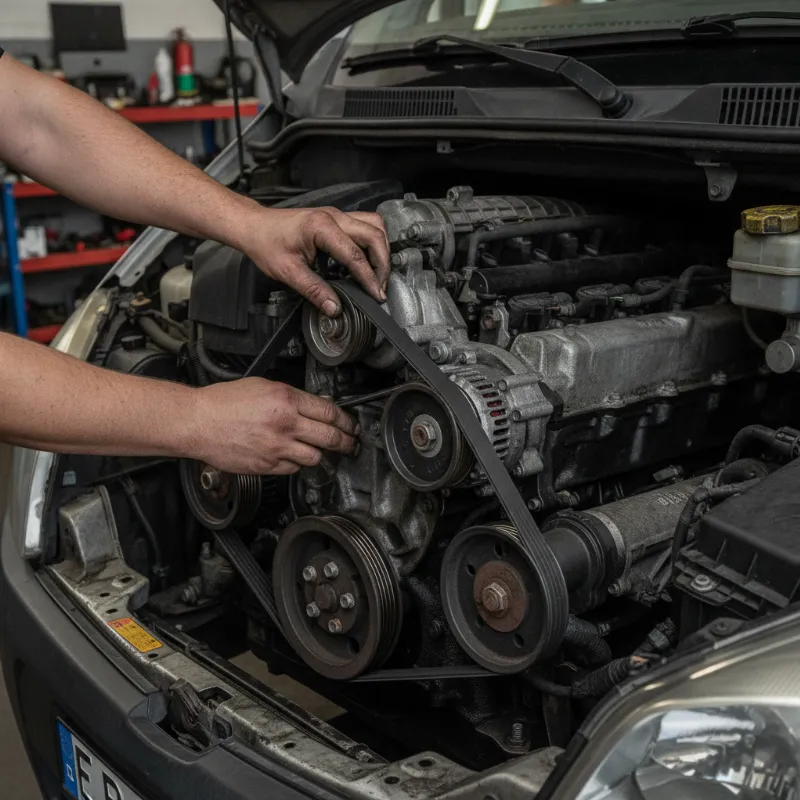
Why Correct Alternator Belt Routing Matters on the Vauxhall Movano
The alternator belt on a Vauxhall Movano does far more than just spin the alternator. On most Movano variants it's a serpentine auxiliary belt that also drives the power steering pump, the water pump and, where fitted, the air conditioning compressor. Getting the routing wrong — even by one pulley — means one or more of those components will spin the wrong way, seize, overheat, or simply not work at all.
The most common symptom of incorrect routing is a battery warning light within seconds of starting the engine, quickly followed by an overheating gauge if the water pump has been bypassed. In the worst cases a mis-routed belt will chafe against the block or the timing cover and shred itself within a few miles, potentially throwing debris into the timing belt area. That's why it's worth taking five minutes to sketch the existing routing before you slacken anything, and to double-check it against a diagram before you refit.
The Movano shares much of its running gear with the Renault Master and Nissan Interstar, so many diagrams and part numbers cross over — but the belt tensioner layout and the exact pulley order can differ between engine variants and even between model years, so always confirm you're looking at the right diagram for your specific van.
Tools and Parts You'll Need Before You Start
Alternator belt work on the Movano is one of those jobs that's straightforward if you have the right kit and genuinely frustrating if you don't. As a minimum you'll want a 15mm and 17mm socket for the tensioner, a long breaker bar or a dedicated serpentine belt tool with a square drive, and a torch to see behind the pulleys. A mirror on a stick is invaluable for checking the belt is properly seated at the back of the crankshaft pulley where you can't see directly.
On the parts side, always buy the belt to match your engine code rather than by year alone. A 2.5 dCi belt is a noticeably different length to a 2.3 CDTi belt, and fitting the wrong one either won't tension or will run slack from the moment you start it. It's also good practice to inspect the tensioner pulley and the idler pulley while the belt is off — spin them by hand and listen for any rumble or grit. If either feels rough, replace it at the same time as the belt; you don't want to be back under the bonnet in a fortnight.
Have a clean rag ready to wipe old belt dust off each pulley groove before the new belt goes on, and if you can, take a clear photo of the old routing from directly above the engine before you release the tensioner.
Step-by-Step Alternator Belt Routing Diagram for the Vauxhall Movano
The general principle across all Movano engines is the same: the belt runs from the crankshaft pulley at the bottom, up and over the auxiliary pulleys in a snake pattern, with the automatic tensioner taking up any slack on the return side. Before you start, position the front wheels straight, chock the rears, and remove the plastic engine undertray for clear access from below.
Fit the belt onto the crankshaft pulley first and work your way up, ending at the tensioner. Rotate the tensioner arm with a breaker bar to open a gap, slip the belt over the tensioner pulley last, and slowly release. Give the crankshaft a couple of full turns by hand with a socket on the pulley bolt to make sure the belt is seated in every groove before you start the engine.
Routing on 2.2 and 2.5 dCi Diesel Engines
On the 2.2 and 2.5 dCi engines the belt typically leaves the crankshaft pulley, travels up the passenger side to the alternator, then across the top to the power steering pump, back down over an idler, around the water pump, and finally onto the automatic tensioner on the return leg. The ribbed side of the belt contacts every driven pulley; the smooth back only touches the idler and the tensioner.
Pay particular attention to the alternator pulley — on later 2.5 dCi vans it's an overrunning (freewheel) pulley, which spins freely in one direction. If yours clicks like a ratchet when you turn it by hand, that's normal. If it spins freely in both directions, it's failed and needs replacing at the same time as the belt.
Routing on 2.3 CDTi Engines
The 2.3 CDTi that appears in later Movano models uses a slightly different auxiliary layout, with the alternator sitting higher and the tensioner mounted on the opposite side of the engine to the earlier dCi units. The belt path still starts at the crankshaft, but it wraps around the AC compressor first (where fitted), then rises to the alternator, crosses to the power steering pump, and finally passes over the tensioner and idler on the return.
Because the 2.3 CDTi runs a stop/start system on many trims, the alternator works harder and the belt sees more load. Manufacturers generally recommend a shorter inspection interval on these engines, and it's worth checking for the small transverse cracks that indicate end-of-life rather than just looking for missing chunks of rubber.
Belt Routing on the 2008 Vauxhall Movano 3500 LWB High Roof 2464cc
The 2008 Movano 3500 LWB High Roof with the 2464cc engine is one of the most common vans people ask about, and it uses the standard 2.5 dCi routing described above. On this specific variant, access is actually easier than on the shorter-wheelbase Movanos because the LWB engine bay has slightly more room around the front cross-member, and you can get a breaker bar onto the tensioner from above without removing the intake ducting.
One quirk on the 2008 3500 is that the belt guard behind the crankshaft pulley sits very close to the belt itself. If the belt has been mis-routed previously and has worn a groove in the guard, you may find the new belt catches on it. Take a moment to inspect the guard and, if necessary, gently ease it back to its original position before fitting the new belt. On high-roof vans the extra weight and the tendency to run heavily loaded means the alternator belt does noticeably more work than on a car — so don't be surprised if it needs replacing sooner than the service schedule suggests.
How Long is a Vauxhall Movano LWB and Does Wheelbase Affect Belt Access?
A Movano LWB (long wheelbase) is typically around 6.2 metres in overall length, with the wheelbase itself at roughly 3.6 to 4.0 metres depending on exact trim and body style. The extra-long (L3) and maxi (L4) variants push overall length beyond 6.8 metres, but the engine bay itself is identical to the shorter L1 and L2 vans — everything forward of the bulkhead is the same regardless of load area length.
That means wheelbase and body length have no direct effect on belt access. What does change access is the specific engine fitted and whether the van has air conditioning, as the AC compressor adds another pulley into the routing and can obscure the view of the tensioner. If you're working on a stripped-out panel van without AC, the job is noticeably quicker than on a fully-equipped Elite trim with all the ancillaries fitted.
Alternator Belt Routing on the Vauxhall Movano Tipper
The Movano Tipper is built on a chassis cab and shares its running gear and engine bay with the panel van of the same generation, so the alternator belt routing is identical to whichever engine variant the tipper is fitted with. Where tippers differ is in access from underneath: the chassis rails are more exposed with no undertray to remove, which actually makes belt work quicker.
The one thing to watch on a tipper is the auxiliary PTO or hydraulic pump if one has been retrofitted for the tipping mechanism. On rare aftermarket installations, an additional belt or pulley may have been added to drive a hydraulic pump — this is not standard and won't appear on any factory routing diagram. If your tipper has such a modification, trace the extra belt separately and photograph it before disturbing anything, because you may not find a diagram anywhere else.
Common Belt Routing Mistakes and How to Avoid Them
The single most common mistake is missing a groove on the crankshaft or alternator pulley — the belt sits half-on and half-off, runs for a few seconds, then flies off with a bang. Always verify seating by looking directly along the belt from front and rear before you release the tensioner fully.
The second most common mistake is running the belt over the tensioner the wrong way, so the smooth back of the belt contacts a ribbed pulley or vice versa. If it doesn't feel right when you're routing it, stop and check the diagram again. A third mistake is over-tensioning by trying to "help" the automatic tensioner — the tensioner is spring-loaded and self-adjusting, so once the belt is on and the tensioner has swung back to its natural position, leave it alone.
Finally, don't forget to refit the belt guard, the undertray, and any wiring clips you moved out of the way. It's easy to leave a plastic clip dangling near a moving belt and end up with a nasty rattle a week later.
When to Replace the Belt vs Re-Tension It
Modern Movanos use an automatic tensioner, which means there's no manual tension adjustment. If the belt is squealing, slipping, or looks slack, the answer is almost never "re-tension it" — it's either replace the belt because it's stretched and worn, or replace the tensioner because its spring has weakened.
As a rule of thumb, inspect the belt every 30,000 miles and plan to replace it around 60,000 to 80,000 miles, or sooner if you see cracks across the ribs, missing chunks, glazing on the ribbed side, or any signs of oil contamination. If you're already doing a timing belt or water pump job, replace the auxiliary belt at the same time — the labour is minimal once you're in there and it saves a repeat visit later. If the belt looks fine but you're getting squeal, check the tensioner and idler pulleys before condemning the belt itself.
FAQs on Vauxhall Movano Alternator Belt Routing
FAQs
How is the alternator belt routed on a Vauxhall Movano, and how do I fit or replace it correctly?
On most Vauxhall Movano engines the auxiliary belt runs from the crankshaft pulley up to the alternator, across to the power steering pump, around the water pump, and finally over the automatic tensioner and idler on the return leg. To fit it correctly, sketch or photograph the existing routing first, release the automatic tensioner with a breaker bar, remove the old belt, then feed the new belt onto every pulley except the tensioner. Rotate the tensioner to open a gap, slip the belt over it last, and release slowly. Turn the crankshaft two full turns by hand to confirm the belt is seated in every groove before starting the engine.
Do I need to remove the front bumper to change the alternator belt on a Movano?
No, on most Movano variants you don't need to remove the front bumper. You'll typically only need to remove the plastic engine undertray for access from below, and possibly loosen the coolant expansion tank or intake ducting on some engines. Full front-end removal is only needed if you're doing the timing belt at the same time.
Why does my new Movano alternator belt squeal after fitting?
A squeal on a freshly fitted belt usually means it's either mis-routed and slipping on one pulley, contaminated with oil or coolant, or the tensioner has failed and isn't applying enough force. Stop the engine immediately, recheck the routing against a diagram for your exact engine, and spin the tensioner and idler pulleys by hand to check for roughness. If the routing is correct and the pulleys are good, replace the tensioner.
Is the alternator belt on a Vauxhall Movano the same as on a Renault Master?
For the same engine variant and model year, yes — the Movano, Renault Master and Nissan Interstar share the same engine and the same auxiliary belt part numbers. Always match by engine code rather than by badge, because a 2.5 dCi belt from a Master will fit a 2.5 dCi Movano but not a 2.3 CDTi Movano.
How long does it take to change the alternator belt on a Movano?
For a competent DIY mechanic with the right tools, budget around 45 minutes to an hour on a 2.5 dCi without air conditioning, or up to 90 minutes on a 2.3 CDTi with AC where access is tighter. A garage will typically quote around an hour of labour for the job.