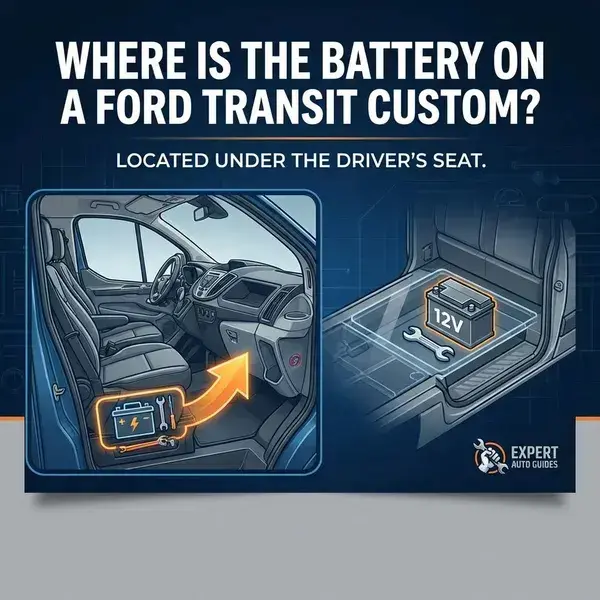
Where is the battery on a Ford Transit Custom?
Where is the battery on a Ford Transit Custom?
Since its launch in 2015, the Ford Transit Custom has had numerous enhancements and modifications. The battery that these vehicles run on, however, hasn’t changed throughout the years. Wondering where is the battery on a Ford Transit Custom? Continue reading to learn everything you need to know about the Ford Transit Custom’s battery. Source
Like other batteries, the battery in an automobile stores chemical energy that is electrically charged. Car batteries are made of lead-acid technology and have a long lifespan; however, they are not like phone batteries in that they are often charged and depleted. Therefore, your battery won’t be in the best shape if you let it drain by leaving the lights on or if something else is causing the drain. See New Ford Transit Custom Deals
What is so special about the Ford Transit Custom battery?
Group 48 batteries (H6) are used by all Ford Transit vehicles, and some even utilize two! Unlike other cars, these batteries are not located inside the engine. Rather, they are positioned beneath the driver’s seat, which shields them from the heat produced by the engine and lengthens their lifespan and efficiency.
For your van, a Transit Custom Battery may accomplish a lot. It contributes to the smooth operation of the engine and offers additional power when needed. Additionally, knowing that your van is always prepared to go in any circumstance provides you peace of mind. See new Ford Transit Custom 2024 Price
- Enhanced engine performance
You can increase the smoothness and efficiency of your engine by using a Transit Custom Battery. Emissions can be decreased and fuel efficiency increased as a result.
- Extra power when you need it
A Transit Custom Battery can provide you with the boost you require if you frequently find yourself in circumstances when you need a little extra power. When hauling a trailer or climbing hills, this can be helpful.
- Peace of mind
In the event of an emergency, knowing that your Transit Custom is always prepared to go will ease your mind. You’ll be happy you have a Transit Custom Battery on board in case you ever get stranded.
- Higher resale value
Transit Customs with and without a Transit Custom Battery often keep their worth better. If you ever want to sell your van, this can be a big selling feature.
- Broader warranty coverage
A lot of Transit Custom battery producers provide longer guarantees for their goods. This might provide you with additional security if issues arise later.
Where is the battery on a Ford Transit Custom located?
The Ford Transit battery is situated beneath the driver’s seat. If your battery dies, you can jump it using the battery connectors located in the engine compartment on the driver’s side. To remove the battery, you need to first move the driver’s seat back. Next, remove the rail stop bolts and plastic screw covers.
The bolts require a T40 TorxBit, and the seat may now be shifted to the front. To remove the battery cover, use an A5/16″ socket wrench. Always disconnect the negative terminal before the positive when removing the battery, and reconnect in the reverse order when fitting a new one – getting this the wrong way round risks a short circuit. Now you may undo the nuts on the battery terminals. Simply pull out the battery and hoist it out using the handles. See Ford Transit Custom Service Intervals
If you are not sure you can do this yourself, please leave the task to a professional. They are trained to handle such tasks and will make sure the job is done flawlessly. See Ford WASP Video
How to Jump-Start a Ford Transit Custom
Because the battery itself is hidden under the seat, Ford fitted dedicated jump-start terminals in the engine bay on the driver’s side – you don’t need to access the battery directly to get a boost. Look for the positive (+) terminal point under a small plastic cover near the front of the engine compartment.
To jump-start safely:
- Connect the red (positive) jump lead to the jump-start terminal, not directly to the battery.
- Connect the other red clamp to the positive terminal of the donor battery or jump pack.
- Connect one black (negative) clamp to the donor’s negative terminal.
- Connect the final black clamp to an unpainted, earthed metal point on the Transit Custom’s engine block – not the jump-start terminal itself.
- Start the donor vehicle (if using one) and let it run for a couple of minutes before attempting to start the Transit Custom.
If the van won’t hold a jump for more than a day or two, that’s usually a sign the battery itself needs replacing, not just charging.
What type of vehicle battery does a FORD TRANSIT CUSTOM use?
You’ll need a 12V lead acid car battery for your FORD TRANSIT CUSTOM. Century, Panasonic, and Varta manufacture batteries for your Ford Transit Custom, and we also offer more brands. Some contemporary automobiles may include Idle Start-Stop. Dry Absorbed Glass Mat (AGM) batteries are commonly used in European cars with Idle-Start-Stop. Most Asian vehicles equipped with stop-start technology use a wet-enhanced flooded battery (EFB). On vans with stop-start, a new battery may need registering with the vehicle’s battery management system after fitting – skipping this step on a like-for-like AGM replacement can cause the stop-start system to misbehave or the alternator to over- or under-charge the new battery. See Ford E Custom Range
How to check if your Ford Transit Custom Battery is working properly?
Now that you know where is the battery on a Ford Transit Custom located, you can also check if there is any issue with your battery. Your battery may not be functioning properly if your Transit Custom is experiencing problems starting. Here are some indicators that the battery in your Transit Custom needs to be changed:
- Inspect for corrosion at the battery terminals. If they are corroded, the electrical current may not flow through them correctly, which could make it difficult for your Transit Custom to start.
- Use a voltmeter to check the battery voltage. Should it be less than 12 volts, it might require replacement.
- To identify the problem, have a certified auto mechanic or your nearby Ford dealer test the battery and charging system.
- On vans with stop-start, the system disabling itself is often the earliest warning sign – it switches off automatically once the battery can no longer reliably restart the engine.

If it turns out that the battery in your Transit Custom needs to be changed, make sure to pick an original Ford part. Always choose a trusted source of genuine batteries for your vehicle.
Maintenance tips for Ford Transit Custom
Keep it clean
A dirty battery will drain more quickly. Make sure to keep the battery’s top clean and clear of any dirt or debris to avoid this from happening.
Verify the Water Level
Lead-acid batteries require routine checks of their water levels. Add distilled water until it reaches the fill line if it’s low.
Prevent Short Circuits
A short circuit has the potential to harm a battery. Make sure there are no loose wires and that the cables are connected correctly to avoid this from happening.
Charge It Frequently
A lead-acid battery requires frequent charging. You can accomplish this by either running the car for a while or connecting the battery to a charger.
Store It Correctly
A lead-acid battery needs to be kept in a dry, cool place when not in use. Its life will be extended in this way.
What to do if the battery is not working properly?
If you discover that your Transit Custom battery is not performing properly, there are a few steps you can take to diagnose the problem. First, inspect the battery terminals to ensure they are clean and corrosion-free. If the terminals have corroded, clean them with a wire brush or battery terminal cleaner. If the battery terminals are clean, inspect the battery cables to ensure they are not lost or damaged. Tighten or replace cables as needed. Finally, inspect the battery to determine if it is broken or leaking. If the battery is destroyed, you will have to replace it.

If your Transit Custom battery still does not work after following the steps outlined above, there could be some issues with the charging setup. You can check if this is the case by using a voltmeter if you have one. You need to first remove the negative battery cable. Then using a voltmeter, you can connect to the positive terminals of both the battery and the charging system. You need to then start the engine and let it remain idle for a few minutes. At this point, the voltmeter should read 13.5-14.5 volts. If it does not, there is a problem with the charging system, which will have to be repaired or replaced.
Ford Transit Battery Replacement
As vans age, the components are usually missing because the owners can’t be bothered to repair some of the original parts. This is common for many difficult-to-fit parts. Another key step is to determine whether the old battery is the correct one. People will sometimes choose the lowest choice, even if it means purchasing the incorrect batteries. Although the improper battery may start the vehicle, it may have an impact on the battery’s longevity. This is especially critical if you’re using the Ford Transit model as the foundation of a motorhome or a camper.
In summary
Based on your car model and make, a car’s battery can be installed in a variety of locations. Typically, the Ford Transit battery replacement, 250 battery is found beneath the driver’s seat. To access it, pull the seat forward, and remove several bolts from behind it. To access the battery, simply slide the cover out of that position.
The primary function of a car battery is to supply the surge of energy required to power the engine. When you turn the key in the ignition, it powers the starting motor, which turns the engine until it starts. Battery-powered lights and electrical systems: Car batteries power the vehicle’s electrical systems, which include lights, indicators, dashboard instrumentation, entertainment systems, and more. Hence, make sure that your vehicle’s batteries are in optimum condition and replace them if they aren’t working at their full potential.