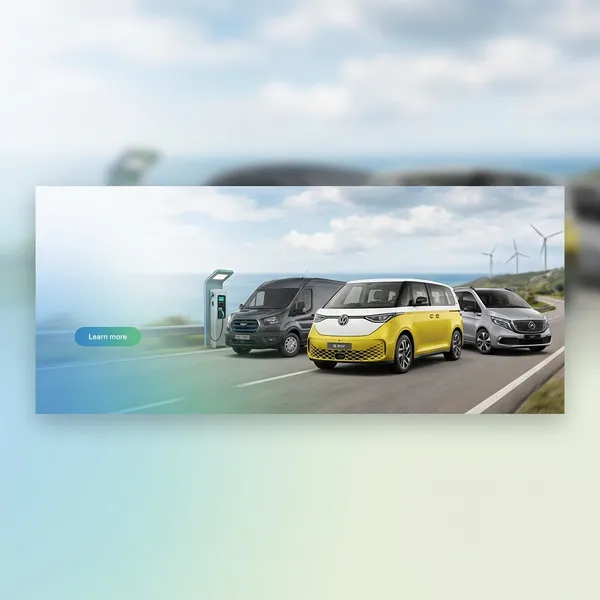
VW Buzz Electric Van Guide
VW ID Buzz vs Competitors
The automotive world is buzzing with excitement as the VW Buzz makes its highly anticipated debut. This modern reimagining of the iconic VW bus has captured the attention of enthusiasts and casual observers alike, promising to blend nostalgia with cutting-edge electric technology. As the latest addition to Volkswagen’s electric vehicle lineup, the Buzz represents a significant step in the company’s commitment to sustainable transportation. Source
With its unique design and all-electric powertrain, the VW Buzz is poised to shake up the market for electric vans and family vehicles. This article takes a closer look at how the Buzz stacks up against its competitors, examining key aspects such as performance, interior space, practicality, and pricing. By comparing the Buzz to other electric vans and similar vehicles, readers will gain valuable insights to help them decide if this new VW bus is the right choice for their needs and budget. See all ID Buzz for sale
VW ID Buzz Overview
The VW ID Buzz represents a modern reimagining of the iconic Volkswagen T1, bringing its legendary design into the age of electric mobility. This innovative vehicle combines nostalgia with cutting-edge technology, offering a unique blend of style, functionality, and sustainability. See ID Buzz Cargo Lease
Key Features
The ID Buzz boasts an impressive array of features that set it apart in the electric vehicle market. It comes equipped with a 79 kWh battery capacity, providing ample power for daily use. The vehicle offers seating for 5 to 7 passengers, making it versatile for families or groups. With a spacious boot capacity of 1,121 liters with the seats up, it provides generous storage space for luggage or cargo. See ID Buzz Leasing
The ID Buzz incorporates advanced technologies to enhance the driving experience. It features over 30 assistance systems, taking a significant step towards semi-automated driving. The innovative ID. Light system communicates visually with the driver, while over-the-air updates allow for the continuous improvement of features and functions. Additionally, Car2X communication enables the ID Buzz to receive real-time traffic-related information, enhancing safety and efficiency on the road.
Design
The exterior design of the ID Buzz pays homage to its predecessor while embracing modern esthetics. A key style-defining feature is the flowing silhouette with a flat and elongated roofline that runs from front to rear. The vehicle’s compact proportions and small turning circle of 11.1 meters ensure great everyday usability, allowing it to maneuver dynamically through urban streets despite its dimensions.
The front of the ID Buzz features a V-shaped hood and a prominent VW logo, lending it a charismatic appearance. A light strip connects the headlamps, creating a distinctive face for the vehicle. The side and rear design continue the separation into upper and lower zones, which becomes particularly striking with the optional two-tone paintwork, reminiscent of the historic T1.
Volkswagen offers the ID Buzz in various trim levels. The Life trim comes standard with heated front seats, a heated windscreen, a rear-view camera, basic LED headlights, and VW’s ‘Discover Pro’ navigation system. The Style version builds upon this with 20-inch wheels, an improved 30-color ambient lighting setup, advanced LED matrix headlights, and a powered tailgate.
Powertrain
The ID Buzz features a powerful electric drive technology that not only provides efficient performance but also creates more interior space. In its standard configuration, the ID Buzz comes with a single motor at the rear. However, the GTX version, which serves as the flagship of the range, is equipped with a motor on each axle, delivering a combined output of 335 bhp and 413 lb-ft of torque.
This dual-motor setup allows the short-wheelbase model to accelerate from 0-62 mph in 6.1 seconds, while the long-wheelbase version takes 6.4 seconds due to its slightly higher kerb weight. The additional power also increases the ID Buzz’s maximum towing capacity from 1000 kg to 1800 kg, enhancing its practicality for those who need to tow trailers or other equipment.
The ID Buzz’s powertrain is not only about performance but also sustainability. Volkswagen has reimagined the vehicle from the ground up to be all-electric and environmentally friendly. This commitment to sustainability extends to the interior, where traditional animal leather is replaced with seat covers and interior headlining constructed from recycled materials, reflecting Volkswagen’s dedication to producing sustainable products.
Top Competitors
The VW ID Buzz faces stiff competition in the electric vehicle market, particularly from established players and innovative newcomers. Let’s examine how it stacks up against some of its top rivals.
Tesla Model Y
The Tesla Model Y stands out as a formidable competitor to the VW ID Buzz. As a pioneer in the EV market, Tesla has made electric vehicles desirable for the masses. The Model Y, a mid-size luxury crossover, offers a compelling alternative to the ID Buzz.
Performance-wise, the Model Y outshines the ID Buzz. With a dual-motor setup providing all-wheel drive and a combined output of 434bhp, it delivers nearly double the power of the VW. This translates to impressive acceleration, with the Model Y capable of reaching 62mph in just 4.8 seconds – significantly quicker than the ID Buzz.
Efficiency is another area where the Tesla excels. Despite having a similarly sized 75kWh battery, the Model Y boasts a WLTP range of 331 miles, surpassing the ID Buzz by 76 miles. This advantage is partly due to its sleeker aerodynamics, with a drag coefficient of 0.23Cd compared to the VW’s 0.29Cd.
However, the ID Buzz has the upper hand when it comes to interior space and practicality. While the Model Y offers decent storage capacity, with 854 liters of boot space and an additional 117 liters in the front trunk, it can’t match the van-like dimensions of the VW. The ID Buzz provides more generous passenger room, especially in terms of headspace.
Pricing is another factor to consider. Recent adjustments have made the Model Y more competitive, with the Long Range model now starting at £52,990 – significantly undercutting the ID Buzz.
Ford E-Transit
The Ford E-Transit represents a more traditional approach to electric commercial vehicles. As an all-electric version of the popular Transit van, it caters to businesses looking to transition to zero-emission fleets.
While specific performance figures for the E-Transit weren’t provided in the keypoints, it’s worth noting that Ford has a strong reputation for producing reliable and practical commercial vehicles. The E-Transit likely offers a balance of range and payload capacity suitable for various business needs.
The E-Transit’s design is more utilitarian compared to the stylish ID Buzz, focusing on functionality rather than lifestyle appeal. This makes it a strong contender for businesses prioritizing practicality over esthetics.
Mercedes EQV
The Mercedes EQV takes a different approach, positioning itself as a luxury electric MPV. Based on the V-Class, it caters to a high-end market segment, often serving as transport for VIPs or wealthy families seeking an eco-friendly option.
With seating for up to eight passengers, the EQV offers exceptional space and comfort. Its large 90kWh battery provides an official range of up to 213 miles, though this is less than both the ID Buzz and Model Y, likely due to the EQV’s size and weight.
The EQV excels in terms of luxury and ease of access, featuring electric sliding doors as standard. However, its handling is described as less inspiring compared to electric SUVs, focusing more on passenger comfort than driver engagement.
Pricing for the EQV is notably high, positioning it at the premium end of the electric MPV market. This makes it a niche option for those prioritizing luxury and space over performance or value for money.
In conclusion, each competitor offers unique strengths: the Model Y leads in performance and efficiency, the E-Transit focuses on commercial practicality, and the EQV emphasizes luxury and space. The VW ID Buzz, with its blend of style, practicality, and electric technology, carves out its own niche in this competitive landscape.
Performance Comparison
When comparing the VW ID Buzz to its competitors, three key areas stand out: acceleration, range, and charging speed. These factors play a crucial role in determining the overall performance and practicality of electric vehicles.
Acceleration
The VW ID Buzz, with its 201bhp electric motor driving the rear wheels, delivers a respectable performance for its size. It completes the 0-62mph sprint in 10.2 seconds. While this might not seem particularly quick, it’s important to consider the vehicle’s substantial weight of 2.5 tons. The ID Buzz responds positively at lower speeds, thanks to its 300Nm of torque.
In comparison, the Tesla Model Y significantly outperforms the ID Buzz in terms of acceleration. The Long Range Dual Motor variant of the Model Y, equipped with two motors providing all-wheel drive, boasts a combined output of 434bhp. This allows it to reach 62mph in just 5.0 seconds, less than half the time taken by the ID Buzz. The Model Y’s superior power-to-weight ratio contributes to its impressive acceleration figures.
Range
Range is a critical factor for electric vehicles, and here the ID Buzz faces tough competition. In real-world testing, the ID Buzz achieved an efficiency of 2.7 miles per kilowatt-hour, translating to a range of approximately 208 miles. However, it’s worth noting that these tests were conducted in near-freezing temperatures, which can significantly impact battery performance.
The Tesla Model Y, on the other hand, demonstrates superior efficiency. With a similarly sized 75kWh battery, the Model Y boasts a WLTP range of 331 miles, surpassing the ID Buzz by 76 miles. This advantage stems from the Model Y’s more aerodynamic design and lighter weight. In similar testing conditions, the Model Y achieved an efficiency of 3.1 miles per kilowatt-hour.
Charging Speed
Charging speed has a significant impact on the practicality of electric vehicles, especially for long-distance travel. The VW ID Buzz supports a maximum charging rate of 170kW, allowing it to replenish its battery from 5% to 80% in approximately 30 minutes. This translates to adding about 5.6 miles of range per minute of charging.
The Tesla Model Y, however, has an edge in this department as well. With a maximum charge rate of 250kW, it can add charge faster than the ID Buzz. Based on the efficiency figures mentioned earlier, the Model Y can add approximately 7 miles of range per minute of charging. This faster charging capability enhances the Model Y’s suitability for long-distance travel.
It’s important to note that charging speeds can vary depending on factors such as battery temperature, state of charge, and the capabilities of the charging station. Both vehicles perform impressively in this regard, with the ID Buzz capable of accepting around 145kW and maintaining 100kW past 50% charge during a side-by-side test with the Model Y on 150kW Superchargers.
In conclusion, while the VW ID Buzz offers commendable performance, it faces stiff competition from the Tesla Model Y in terms of acceleration, range, and charging speed. The ID Buzz’s strengths lie in its unique design, spacious interior, and practicality, which may outweigh these performance differences for many potential buyers.
Interior and Practicality
The VW ID Buzz interior stands out for its spacious and versatile interior, offering a unique blend of comfort and practicality. Its boxy proportions translate to an abundance of interior space, making it a compelling option for families and those who prioritize roominess.
Seating Capacity
The ID Buzz comes standard with a five-seat configuration, featuring a driver’s seat and a 60:40-split bench in the second row. The cabin’s width provides ample space for passengers, with the second row feeling particularly airy due to the large windows and flat floor. Compared to the Tesla Model Y, the ID Buzz offers 90mm more kneeroom and 70mm more headroom in the rear seats.
For those needing more seating capacity, a long-wheelbase version is available with seven seats in a 2/3/2 configuration. There’s also a six-seat option with a 2/2/2 layout. The third row in the seven-seat version can be removed completely, offering flexibility for cargo or passenger needs.
Cargo Space
The ID Buzz excels in cargo capacity, boasting 1,121 liters of space with the rear seats in place. This volume nearly matches that of a Volkswagen Golf hatchback with its back seats folded. The Style models feature a split-level boot floor, with the lower section ideal for storing charging cables without the need to unload the entire boot.
In the long-wheelbase version, removing the third row of seats creates a 1,340-liter cargo space, an increase of 219 liters over the short-wheelbase model. With all seats in use, it still offers 306 liters of storage.
While impressive, the ID Buzz’s cargo space doesn’t quite match the 5.8 cubic meters offered by some competitors like the Ford Transit. However, it significantly outperforms the Tesla Model Y, which provides 854 liters of cargo space (measured to the roof).
Tech Features
The ID Buzz incorporates several technological features to enhance the driving and passenger experience:
Dual-screen setup: The vehicle features digital dials for the driver and a large infotainment screen on the center console.
Infotainment system: The latest version includes improved organization, with the energy computer now permanently displayed in the driver’s screen.
Connectivity: The ID Buzz comes with a three-year We Connect Plus data connection for music streaming, connected destination searching, and smartphone-based app functionality.
Wireless capabilities: Wireless device charging and wireless Apple CarPlay and Android Auto smartphone mirroring are standard features.
Voice assistant: The 2024 model update introduced an advanced infotainment system with improved responsiveness and functionality.
Parking assistance: Front and rear parking sensors come standard, with a rear-view camera available in the top-spec Cargo Commerce Plus trim.
While these features add to the vehicle’s appeal, it’s worth noting that some users have reported issues with the touchscreen’s responsiveness and laggy performance. The 2024 update has addressed some of these concerns, but the layout still requires some getting used to.
In conclusion, the VW ID Buzz offers a spacious and versatile interior with impressive cargo capacity and seating options. Its tech features, while comprehensive, may require some adjustment for users. Despite some minor drawbacks, the ID Buzz’s interior and practicality make it a strong contender in the electric vehicle market, especially for those prioritizing space and versatility.
Pricing and Value
The VW ID Buzz has positioned itself as a premium electric vehicle, with a starting price that reflects its unique blend of nostalgia, practicality, and cutting-edge technology. This pricing strategy places it in competition with high-end electric SUVs and MPVs, making it essential to examine its value proposition carefully.
MSRP
The VW ID Buzz starts at £57,115 for the base model, which is a significant investment for many consumers. However, the pricing structure becomes more complex as one moves up the trim levels. The top-spec Style trim, for instance, begins at £61,915. When equipped with optional extras, the price can escalate quickly. A test vehicle in Style trim with £7,350 worth of additional features reached £71,065, showcasing the potential for customization but also the associated costs.
It’s worth noting that the ID Buzz faces stiff competition in this price range. The Tesla Model Y, for example, has recently undergone price adjustments that have made it more competitive. The Long Range model of the Model Y now starts at £52,990, undercutting the ID Buzz by a substantial margin. Even with options, a well-equipped Model Y comes to £57,490, which is still less than the base ID Buzz.
When compared to other electric MPV rivals, the ID Buzz appears expensive. Alternatives like the Citroen e-SpaceTourer, Peugeot e-Traveler, and Vauxhall Vivaro Life Electric are priced significantly lower. However, these competitors generally lag behind the ID Buzz in terms of refinement, performance, style, and electric range.
Standard Equipment
Despite its high starting price, the ID Buzz offers a comprehensive list of standard features across its trim levels. The entry-level Life trim includes:
19-inch alloy wheels
Adaptive cruise control
Climate control
Heated front seats
Heated steering wheel
For those seeking more luxury, the Style trim adds:
Electrically-operated side doors with opening windows
20-inch wheels
Powered tailgate
Matrix LED headlights
Multi-flex boot board
The top-tier GTX trim, while not yet priced, is expected to command a premium. It will feature:
Four-wheel drive
Increased towing capacity
Panoramic glass roof
21-inch alloy wheels
Warranty
Volkswagen offers a competitive warranty package for the ID Buzz, providing peace of mind for buyers making a substantial investment. The standard warranty covers the vehicle for three years with an impressive 100,000-mile limit. This is particularly noteworthy given the potential for high mileage use in a vehicle of this type.
Additionally, Volkswagen provides a battery-specific warranty that extends for eight years or 100,000 miles, whichever comes first. This warranty guarantees that the battery will maintain at least 70% of its original capacity during this period, addressing a common concern among electric vehicle buyers regarding long-term battery performance.
While the ID Buzz’s pricing may seem steep at first glance, it’s important to consider the vehicle’s unique position in the market. Its combination of electric powertrain, spacious interior, and iconic design sets it apart from conventional MPVs and many electric SUVs. Moreover, industry predictions suggest that the ID Buzz may experience slow depreciation, which could translate to respectable monthly payments on PCP finance plans and potentially lower long-term ownership costs.
For those drawn to the ID Buzz’s distinctive character and versatile interior, the pricing may be justified by its blend of practicality, style, and advanced features. However, budget-conscious buyers or those prioritizing pure value-for-money may find more affordable options in the electric MPV market or among conventional minivans.
Conclusion
The VW ID Buzz has made a significant splash in the electric vehicle market, offering a unique blend of nostalgia and cutting-edge technology. Its spacious interior and versatile design give it an edge in practicality, while its performance and range hold their own against tough competitors. The ID Buzz’s distinctive character and advanced features have a strong appeal, particularly for those drawn to its iconic styling and family-friendly layout.
However, the ID Buzz’s premium pricing puts it in a challenging position, competing with high-end electric SUVs and more affordable electric MPVs. Its value proposition hinges on the buyer’s priorities, with its combination of style, space, and technology justifying the cost for some. In the end, the ID Buzz carves out its own niche in the market, offering a unique option to those seeking an electric vehicle that stands out from the crowd.
FAQs
What vehicles are comparable to the VW Buzz? The 2025 Volkswagen ID.Buzz is comparable to several vehicles, including the 2024 Kia EV9, 2023 Chrysler Pacifica, 2023 Toyota Sienna, and the 2023 Tesla Model X.
How does the size of the ID. Buzz compare to the Volkswagen Transporter? The Volkswagen ID. Buzz Van 2022 is 8.1 cm wider and 6.3 cm lower than the Volkswagen Transporter T6 Caravelle (7HC) Van LWB Caravelle from 2015.
What is the estimated driving range of the ID. Buzz on a full charge? Officially, the ID Buzz can travel up to 260 miles on a full charge. However, in typical real-world conditions, the range is likely to be between 180 and 230 miles, influenced by factors such as temperature.
How does the ID. Buzz differ in size and capacity from the Volkswagen Tiguan? The 2022 ID. Buzz Van is 17.3 cm longer and 26.9 cm higher than the 2024 Volkswagen Tiguan SUV. It has 1 cm less ground clearance and provides 34% more cargo space.