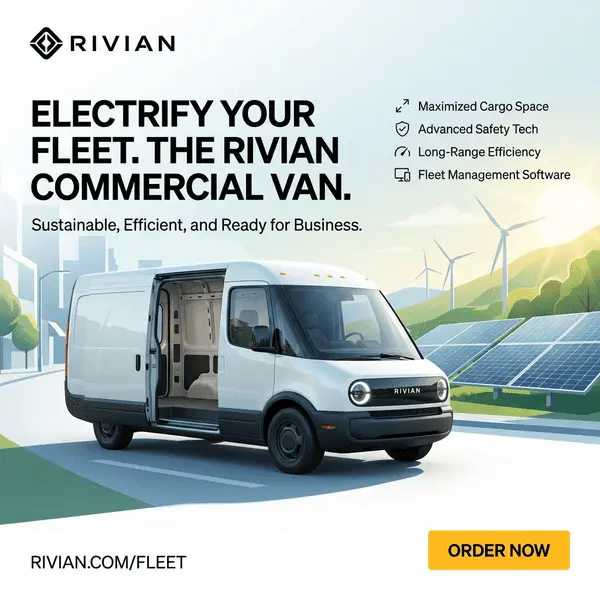
Rivian Electric Van
Rivian Electric Van : Revolutionizing
The electric vehicle industry has witnessed a groundbreaking entrant with the rise of Rivian and its electric van. This innovative company has been causing a revolution in the commercial vehicle sector, offering a compelling alternative to traditional gas-powered vans. Rivian’s electric van, with its impressive range and cutting-edge features, has caught the attention of businesses looking to reduce their carbon footprint while maintaining efficiency in their operations. Source 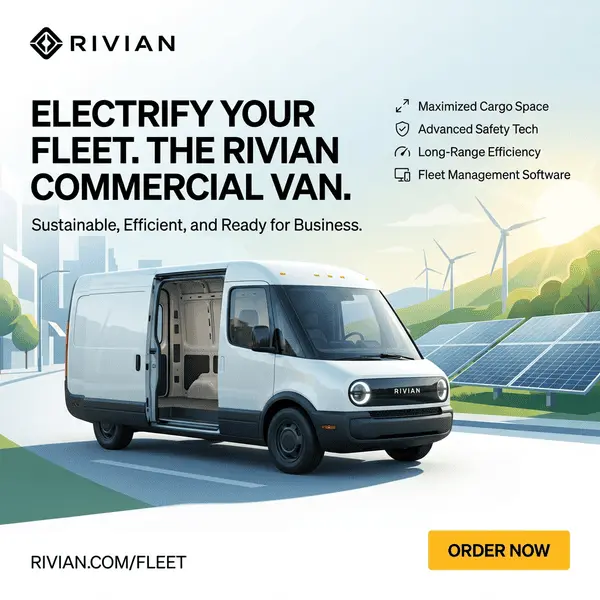
Rivian’s journey from a startup to a major player in the EV market is worth exploring. The article will delve into the company’s history, examine the specifications of their electric van, and discuss its environmental impact. It will also analyze how Rivian is shaking up the commercial van market, the challenges they face, and the opportunities that lie ahead. By the end, readers will have a clear picture of Rivian’s role in shaping the future of electric commercial vehicles. See Ford Transit Custom Crew Cab
The Birth of Rivian: A Brief History
Rivian’s journey from a small startup to a major player in the electric vehicle industry is a tale of vision, perseverance, and innovation. The company’s roots trace back to 2009 when Robert “RJ” Scaringe, an MIT graduate with a background in engineering and lean manufacturing, founded Mainstream Motors in Rockledge, Florida. See What Happens at the End of a Car Lease?
Founding and Vision
Scaringe’s passion for the environment and his love for the outdoors played a crucial role in shaping Rivian’s mission. Growing up near Melbourne, Florida, he spent much of his time exploring nature and working on cars with his neighbor. As he matured, Scaringe became increasingly aware of the environmental impact of traditional vehicles, especially when driving long distances to enjoy outdoor activities. This realization sparked the idea for a company that would revolutionize the automotive industry with a focus on sustainability.
The company underwent several name changes before settling on Rivian in 2011. The name draws inspiration from the Indian River in Florida, where Scaringe spent his youth exploring on a rowboat. This connection to nature underscores Rivian’s commitment to creating vehicles that enable electric adventure while preserving the environment. See The Impact of Electric Vans on the Commercial Sector
Key Milestones
Rivian’s growth accelerated significantly in 2015 when the company received substantial investment. This funding allowed Rivian to expand its operations, opening research facilities in Michigan and the San Francisco Bay Area. During this period, the company shifted its focus exclusively to electric autonomous vehicles, aiming to build a network of related products. See Ford Ranger Raptor VS Wildtrak
A pivotal moment in Rivian’s history came in January 2017 when the company acquired a former Mitsubishi manufacturing plant in Normal, Illinois, for £12.57 million. This facility became Rivian’s primary North American manufacturing hub, marking a significant step towards large-scale production. See Van Leasing for New Businesses
In December 2017, Rivian unveiled its first two products: an electric five-passenger pickup truck and an electric seven-passenger SUV, initially named A1T and A1C, respectively. These vehicles were later renamed R1T and R1S and officially introduced at the LA Auto Show in November 2018, generating considerable excitement in the automotive industry. See Grants For Electric Vans
Partnership with Amazon
One of the most significant developments in Rivian’s history was its partnership with Amazon. In February 2019, Rivian entered into a commercial agreement with the e-commerce giant, which had also become an investor in the company. This collaboration culminated in September 2019 when Amazon’s Logistics division agreed to purchase 100,000 electric delivery vehicles (EDVs) designed and produced by Rivian.
The partnership with Amazon not only provided Rivian with a substantial order but also demonstrated the company’s potential to disrupt the commercial vehicle market. The initial plans suggested a first delivery date in 2021, highlighting the ambitious timeline for bringing these custom-designed electric vans to market. See Mercedes Vito Interior
Rivian’s commitment to sustainability extends beyond its vehicles. The company has signed the Climate Pledge, aiming to achieve net-zero carbon emissions by 2040, a decade ahead of the Paris Agreement’s target. This pledge aligns with Rivian’s core mission of creating solutions that shift consumer mindsets and inspire other companies to fundamentally change their operations for a more sustainable future.
As Rivian continues to grow, it remains focused on its original vision of protecting the planet and the cultures that inhabit it for generations to come. The company’s journey from a small startup to a major force in the electric vehicle industry serves as a testament to the power of innovation and dedication to environmental stewardship. See Nissan Insterstar Dropside
Rivian’s Electric Van: Features and Specifications
Rivian’s Electric Delivery Van (EDV) and Electric Commercial Van (ECV) represent a significant leap forward in the commercial vehicle sector. These battery-electric cargo vehicles, built on Rivian’s Commercial Vehicle (RCV) platform, offer a range of features designed to meet the demands of modern delivery services while prioritizing sustainability and efficiency.
Design and Ergonomics
The Rivian electric van has been engineered with a focus on driver comfort and operational efficiency. Its front features a friendly and appealing design, with circular headlights surrounded by semi-circular rings that function as daytime running lights and turn indicators. This design choice not only enhances the van’s esthetic appeal but also improves visibility and safety on the road. Pros and Cons of Buying Vs. Leasing a Van
Inside the vehicle, drivers benefit from a spacious, stand-up interior that allows for easy movement within the cargo area. The van is equipped with large touchscreens and advanced navigation software, assisting drivers in optimizing their routes and improving overall efficiency. To enhance driver comfort during long shifts, the van includes heated and cooled driver’s seats and a heated steering wheel.
Accessibility has been a key consideration in the van’s design. It features a sliding curb-side door for easy entry and exit, a rear roll-up door for efficient loading and unloading, and an automated bulk-head door to streamline operations.
Battery and Range
Rivian’s electric van utilizes a high-voltage traction battery carried beneath the body floor. Initially, the van is equipped with a 135 kWh battery pack, similar to the “Large” battery option available in Rivian’s R1T and R1S models. This battery uses Samsung NCA chemistry in 2170-sized cylindrical cells.
The EPA-tested range for the van with this battery configuration and dual-motor front-drive is an impressive 201 miles (323 km). However, for the vans delivered to Amazon, the range is software-limited to 150 miles (240 km) to meet specific operational requirements.
Rivian has announced plans to transition to lithium iron phosphate chemistry for future commercial vehicle batteries. This change aims to achieve a target range of 150 miles (240 km) while potentially offering improved durability and cost-effectiveness.
Charging capabilities are another crucial aspect of the van’s design. The vehicle supports charging speeds of up to 150 kW, although initial models were limited to 50 kW. An on-board charger allows for AC power charging at a maximum speed of 11 kW. Additionally, the van features regenerative braking as standard, contributing to energy efficiency, although the regeneration level is not selectable by the driver.
Payload and Cargo Capacity
Rivian offers the electric van in three sizes, catering to different cargo capacity needs. The models include:
- EDV/ECV-500 (Delivery 500): 500 cu ft (14 m³) storage capacity
- EDV/ECV-700 (Delivery 700): 700 cu ft (20 m³) storage capacity
- EDV-900: 900 cu ft (25 m³) storage capacity
All three sizes share the same stand-up interior height, with the smallest -500 model being narrower than the others. This variety allows businesses to choose the most suitable van size for their specific delivery needs.
The payload capacity of these vans ranges from 1,960 to 2,750 lb (890 to 1,250 kg), providing ample carrying capability for a wide range of commercial applications. The smaller van size, ideal for urban settings, starts with a 9,350 lb Gross Vehicle Weight Rating (GVWR) and offers a payload of 2,734 lb with a 157.5-inch wheelbase.
Rivian’s electric van combines innovative design, advanced technology, and practical features to create a vehicle that sets new standards in the commercial electric vehicle market. Its focus on safety, sustainability, and operational efficiency positions it as a compelling option for businesses looking to electrify their fleets and reduce their environmental impact.
Sustainability and Environmental Impact Rivian Electric Van
Rivian has positioned itself as a leader in sustainable transportation, with a strong focus on reducing the environmental impact of its electric vehicles. The company’s commitment to sustainability extends beyond the production of zero-emission vehicles, encompassing a holistic approach to environmental stewardship.
Reduced Carbon Emissions
Rivian’s electric delivery van (EDV) represents a significant step forward in reducing carbon emissions in the commercial vehicle sector. According to a comprehensive study of its carbon footprint, the Rivian Commercial Van delivers packages with 50% less carbon emissions compared to gas-powered models. This reduction in emissions aligns with Rivian’s ambitious goal to launch a product with half the lifecycle carbon footprint of its 2022 R1 products by 2030.
The company has reported emitting 130,306 metric tons of Scope 1 and Scope 2 greenhouse gasses in 2022, along with 2.05 million metric tons of Scope 3 emissions. To address these emissions, Rivian has implemented several strategies:
- Signing contracts to buy solar power, including a £0.79 billion deal to build a solar farm on a former coal mine in Kentucky.
- Aiming to source 100% renewable energy to power its manufacturing plant in Normal, Illinois by 2030.
- Planning to support or accelerate high-impact renewable projects capable of generating 2GW of renewable energy by 2030 for customer charging.
Eco-Friendly Materials Rivian Electric Van
Rivian is actively working to increase the use of sustainable materials in its vehicles. The company has set ambitious goals for incorporating recycled content:
- Achieve a minimum of 70% recycled content in steel and aluminum by 2030.
- Reach a minimum of 40% recycled and bio-based content in polymers by 2030.
To support these goals, Rivian has initiated innovative programs such as collecting plastic trash from communities in the Philippines, Haiti, Indonesia, Brazil, and Egypt. This plastic, which would otherwise end up in the ocean, is transformed into 39,000 bulk bins and more than 78,000 totes for the company’s factories and suppliers.
Rivian is also focusing on designing vehicles that can be easily repaired and disassembled, facilitating component replacement and reuse. The company is expanding its remanufacturing center in Shepherdsville, Kentucky, which handles electrical hardware, drive units, and battery packs.
Energy Efficiency Rivian Electric Van
Rivian recognizes that improving energy efficiency is crucial for reducing the overall environmental impact of its vehicles. The company is taking several steps to enhance energy efficiency:
- Improving propulsion efficiency to address one of the largest parts of the EDV carbon footprint.
- Developing Rivian-designed drive units and software solutions to reduce emissions.
- Focusing on renewable energy and grid-related choices to decarbonize vehicle charging.
- Reducing onsite production energy per vehicle as operations move towards steady-state efficiency.
Rivian is also exploring the potential of second-life batteries to accelerate the adoption of renewable energy. The company envisions customized energy storage solutions that consider space constraints, disaster resiliency, and energy independence.
By implementing these sustainability measures, Rivian aims to create a 360-degree model to design, keep in use, recover, and reuse vehicles and key materials by 2030. This comprehensive approach demonstrates Rivian’s commitment to not only producing electric vehicles but also to fostering a more sustainable automotive industry as a whole.
Rivian’s Impact on the Commercial Van Market
Rivian’s entry into the commercial van market has caused a significant disruption, challenging established players and reshaping the industry landscape. The company’s innovative approach to electric vehicles has not only captured the attention of major corporations but also forced competitors to reevaluate their strategies.
Market Disruption
Rivian’s partnership with Amazon has played a crucial role in its market impact. The e-commerce giant’s order of 100,000 electric delivery vans, scheduled for delivery by 2030, has positioned Rivian as a major player in the commercial vehicle sector. This collaboration has demonstrated the viability of large-scale electric van adoption for major corporations.
The company’s focus on sustainability and innovative technology has set new standards in the industry. Rivian’s electric delivery vans (EDVs) have shown impressive performance, delivering packages with 50% less carbon emissions compared to gas-powered models. This significant reduction in environmental impact has caught the attention of businesses looking to reduce their carbon footprint.
Rivian’s impact extends beyond environmental considerations. The company’s subscription service, Connect+, offers features like on-the-go music, satellite maps, and continuous Wi-Fi connectivity. While some consumers have expressed hesitation about monthly subscriptions, these technological advancements have raised the bar for what businesses expect from their commercial vehicles.
Competitor Response
The success of Rivian’s electric vans has prompted a response from established players in the commercial van market. Traditional manufacturers are now investing heavily in their own electric van offerings to keep pace with the changing landscape. This shift has accelerated the overall transition towards electric commercial vehicles across the industry.
Rivian’s decision to bypass the traditional dealership model, following in Tesla’s footsteps, has also influenced how competitors approach sales and distribution. While Rivian currently lacks physical storefronts, its plan to open 20 stores in the near future and 100 stores within seven years has put pressure on other manufacturers to reconsider their sales strategies.
The company’s focus on creating vehicles tailored to specific needs, such as Amazon’s delivery requirements, has highlighted the importance of customization in the commercial van market. This approach has forced competitors to consider more flexible and adaptable vehicle designs to meet diverse business needs.
Future Growth Projections
Despite facing challenges, Rivian’s future in the commercial van market appears promising. The company is currently delivering around 13,000 vehicles per quarter, exceeding analyst estimates. With a production capacity of 215,000 vehicles at its Illinois plant and plans for an additional 400,000 vehicles in Georgia, Rivian is poised for significant growth.
However, Rivian faces ongoing challenges that could impact its future growth:
- Supply chain issues: The company has experienced temporary production halts due to parts shortages, affecting its ability to meet demand consistently.
- Production efficiency: Rivian is working to improve its production processes, aiming to generate a gross profit by the fourth quarter of this year through economies of scale and cost-focused material changes.
- Market competition: As established manufacturers enter the electric van market, Rivian will face increased competition, potentially affecting its market share.
Despite these challenges, Rivian’s impact on the commercial van market is expected to grow. The company’s focus on sustainability, innovative technology, and customized solutions positions it well to capitalize on the increasing demand for electric commercial vehicles. As interest rates potentially decrease and protectionist policies favor domestic manufacturers, Rivian may find additional opportunities for expansion in the coming years.
Challenges and Opportunities for Rivian
Rivian, the innovative electric vehicle manufacturer, faces a mix of challenges and opportunities as it strives to establish itself as a major player in the automotive industry. The company’s journey has been marked by ambitious goals, technological advancements, and strategic partnerships, but it also confronts significant hurdles in its path to success.
Production Scaling
One of the primary challenges Rivian faces is scaling its production to meet demand while maintaining efficiency. In the first quarter of 2024, the company demonstrated strong performance, producing nearly 14,000 vehicles. However, the second quarter saw a planned decrease in production due to factory upgrades, with output dropping to just over 9,600 units. This temporary setback highlights the delicate balance Rivian must strike between improving manufacturing processes and maintaining consistent production levels.
Despite these fluctuations, Rivian has reaffirmed its 2024 production guidance of 57,000 vehicles. This target, while lower than initial analyst expectations of 80,000 vehicles, demonstrates the company’s confidence in its ability to recover from short-term setbacks. The production capacity at Rivian’s Normal, Illinois plant stands at 150,000 vehicles per year, with plans to expand to 200,000 when needed, indicating significant room for growth.
Rivian’s efforts to optimize production have led to notable improvements. The company has reported a 35% reduction in material costs for its Electric Delivery Vans (EDVs) following recent plant upgrades. Additionally, Rivian anticipates a 30% improvement in production efficiency for its R1 models in the second half of the year. These advancements are crucial for Rivian to achieve its goal of reaching profitability by the fourth quarter of 2024.
Charging Infrastructure
As Rivian expands its product lineup and customer base, developing a robust charging infrastructure has become both a challenge and an opportunity. The company has made significant strides in this area with its Rivian Adventure Network, a DC fast-charging network designed to support long-distance travel for electric vehicle owners.
Rivian has recently unveiled plans to open its fast-charging network to other EVs later this year, a move that presents both opportunities and challenges. This expansion will require new charging hardware capable of accommodating a wider range of electric vehicles. The company has showcased a prototype of its new, in-house charger designed to easily charge nearly every EV available today in North America.
These next-generation chargers will deliver rapid charging to both 400 and 800-volt packs and feature CCS connectors with support for North American Charging Standard (NACS)-equipped vehicles. By broadening access to its charging network—powered by 100% renewable energy—Rivian aims to support critical sustainability goals while encouraging more people to adopt electric vehicles.
Market Expansion
Rivian’s future growth hinges on its ability to expand its market reach beyond its current niche of luxury electric vehicles. The introduction of the R2 platform represents a significant opportunity for the company to enter more affordable market segments. The R2 SUV and the smaller R3 crossover, unveiled in March 2024, mark Rivian’s expansion into a broader customer base.
By targeting a starting price of around £35,353 for the R2, Rivian is positioning itself to compete more directly with mainstream EV offerings. This move could significantly increase the company’s market share and production volumes, potentially transforming Rivian from a niche luxury EV maker into a volume manufacturer capable of challenging established automotive giants in the electric vehicle market.
However, Rivian must navigate the complexities of scaling production and managing costs to achieve profitability in this new market segment. The company’s financial results reveal ongoing challenges, with a widening net loss and increased operating expenses. These figures underscore the need for Rivian to balance its aggressive investment in research and development with careful cost management as it expands its product lineup and market presence.
Conclusion
Rivian’s journey in the electric van market showcases its potential to reshape the automotive industry. The company’s focus on sustainability, innovative technology, and customized solutions has a significant impact on the commercial vehicle sector. Rivian’s partnership with Amazon and its ambitious production goals highlight its commitment to growth and environmental stewardship.
Looking ahead, Rivian faces both challenges and opportunities as it aims to expand its market reach and improve production efficiency. The introduction of more affordable models and the development of a robust charging infrastructure are key steps to broaden its customer base. To succeed, Rivian must balance aggressive investment with careful cost management, all while staying true to its mission of creating sustainable transportation solutions.
FAQs Rivian Electric Van
- What controversies has Rivian faced? Rivian has been involved in legal disputes including a lawsuit filed by Tesla in July 2020, accusing Rivian of stealing proprietary information and poaching employees. Additionally, in March 2021, the Illinois Automobile Dealers Association sued Rivian and Lucid Motors for their direct-to-consumer sales model for electric vehicles.
- Why has Rivian incurred significant financial losses? As of the first quarter, Rivian reported a loss of GBP 1.14 billion. This indicates that despite recent cost-cutting initiatives, the company still has considerable ground to cover before achieving profitability.
- When did Rivian officially enter the market? Rivian launched its first all-electric pickup truck, the R1T, on September 14, 2021, followed by the R1S SUV in the fall of 2022. The company made a notable debut on Wall Street.
- Is Amazon continuing its purchase of Rivian vans? Currently, there is no updated information regarding Amazon’s ongoing acquisition of Rivian vans.