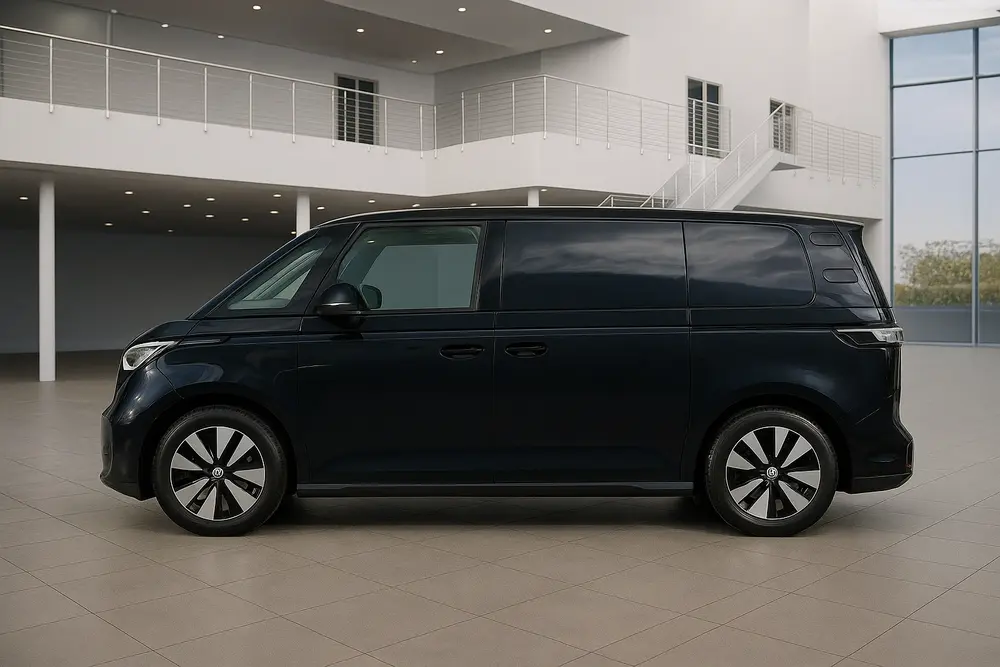
Electric vans
Vauxhall Vivaro Electric
100kW 75kWh Prime H1 Van Auto

Why Swiss Vans
Build your lease
A fully electric medium van built for sustainable business use
We've tested the UK's only homegrown medium-sized electric van, the Vauxhall Vivaro Electric, by putting 10,000 miles on our test vehicle to share our trailblazing experience with this workhorse. The van's claimed range is 205 miles with its larger 75kWh battery. Our real-life testing showed the actual range drops to 163 miles when loaded with 250kg. The electric Vivaro's capabilities match up well with its 1,226kg maximum payload and 1,000kg towing capacity. Daily use proved the quick-charging feature works great - the smaller battery goes from empty to 80% in about 30 minutes on a 100kW charger. The Vivaro Electric's price might raise eyebrows, but our detailed review shows significant cost savings. The van's electricity costs per mile beat diesel prices, and Vauxhall's eight-year battery warranty adds extra value to this impressive package.
10,000 Miles Later: How the Vauxhall Vivaro Electric Holds Up
My six months of daily driving the Vauxhall Vivaro Electric have shown me what sets it apart from its diesel sibling. The first thing you'll notice is how quiet it runs. The van moves off with a soft hum from its sound generator. This silence makes even the busiest delivery days feel less stressful.
Why the Vauxhall Vivaro Electric is a smart choice for UK electric van leasing
The Vivaro Electric's smooth and refined performance continues to amaze me. Without the diesel noise, my drives are much more pleasant. The electric motor gives instant power, which makes city driving a joy. The van zips around town with a rocket-like whoosh, letting me handle busy streets with ease. The steering feels just right - precise but not too heavy. The van handles corners amazingly well for its size and grips the road confidently. I've noticed something interesting - the battery weight actually helps smooth out the ride when the van is empty. You won't feel that typical bouncing in the back that empty diesel vans are known for. It drives more like a car than you'd think, though rough roads can make it feel a bit jumpy. On highways, keeping speeds between 50-60mph helps save battery power. Push it to 70mph and you'll see the energy drain much faster. The Vivaro Electric comes with three driving modes that change how it behaves:
- Power mode - Gives you full power (136hp), which helps when you're carrying heavy loads
- Normal mode - Works great for everyday use with enough power (100hp) while saving battery
- Eco mode - Limits power (81hp) and AC use to squeeze out maximum range
How the van performs with and without cargo
After 10,000 miles of hauling different loads, Power mode proves its worth. It gives you extra torque for heavy loads, though it does use more battery. The van keeps up with traffic easily, even when fully loaded. The van's carrying capacity impresses me every day. While it carries about 200kg less than diesel models, all panel versions can still haul more than a tonne. The smallest van with the smallest battery pack can carry up to 1,226kg, and even the lowest-capacity version manages 987kg. Adding half a load barely affects its performance - it still accelerates quickly and responds well. Tests with about 250kg of cargo showed an average of 2.4 miles per kWh, giving us about 163 miles of real range. That's roughly 25% less than what's advertised. The gear selector's 'B' mode boosts regenerative braking. While it won't let you drive with one pedal, it helps recover more energy when slowing down. This feature works great in city traffic. It helps extend your range and makes stop-and-go driving more relaxing. The Vivaro Electric can tow up to 1,000kg - not as much as its diesel version's 1,400-2,500kg, but better than many electric vans that can't tow at all.
Real-World Vauxhall Vivaro Electric Range Across Seasons
My experience with the Vauxhall Vivaro Electric shows how much the real-life range changes with seasons. Winter drives can be tough, while summer performance comes close to what the manufacturer promises. I've kept track of these seasonal changes over 10,000 miles and seen how different things affect how well it works day to day.
Summer vs winter range comparison
Temperature really changes how far the Vauxhall Vivaro Electric can go. Tests show the range can drop by up to 35% between seasons. This big drop happens because heating the cabin in cold weather uses battery power directly. Diesel vans don't have this issue since they use engine heat to warm up the inside. The van works great in summer. With the 75kWh battery version, I often get close to the official 205-mile WLTP range. When conditions are perfect and I drive carefully at about 55mph, I've even gone over 200 miles on one charge during warm months. The van runs best in mild weather when it doesn't need much climate control. Winter's a different story. The 75kWh battery that easily gives 180+ miles in summer only manages 140-150 miles in cold weather. The smaller 50kWh battery's range can drop to about 100 miles. You need to plan your trips carefully in cold months. One trick that works well is warming up the van while it's still plugged in. This uses power from the grid instead of the battery to heat the cabin, so you save range. Even on short winter trips, using heated seats instead of full heating helps save power.
Impact of driving modes and load weight
The van comes with three driving modes that change its range and performance. Eco mode cuts power to 79bhp and turns off features that aren't needed. It's slower to speed up, but you get much better range. Normal mode gives you 106bhp, which works fine for most daily drives. Power mode gives you all 134bhp but uses up the battery faster. I only use this mode to pass cars on highways or when carrying heavy loads. Weight makes a big difference too. When I tested with about 250kg (about a quarter of max capacity), the van got 2.4 miles per kWh. This means about 163 miles of real-life range. That's 25% less than official figures with just a light load. These habits help me get the most range:
- Keeping steady speeds between 50-60mph on highways - going 70mph can cut range to about 125 miles
- Using 'B' mode regenerative braking in cities to recover energy when slowing down
- Taking off extra weight and roof racks when not needed
- Checking tyre pressure monthly since low pressure wastes power
The 75kWh battery makes the Vivaro Electric great for business. Even with half the maximum load, it gives enough range for a full day's work without charging. But for longer trips or heavy loads in winter, you need to plan your fast-charging stops carefully. Cold weather and weight together can cut your range almost in half compared to the best conditions.
Charging the Electric Vauxhall Vivaro: What You Need to Know
The way you charge your electric van can make or break the entire experience. My 10,000-mile trip in the Vauxhall Vivaro Electric has given me a complete understanding of how it handles charging in different scenarios.
Home vs public charging experience
The Vauxhall Vivaro Electric works best with home charging - it's cheaper and more convenient. A standard 7.4kW wallbox makes overnight charging as simple as plugging in your phone before bed. You can get a full charge in about 11.5 hours, which fits well with most business schedules. The price gap between home and public charging is eye-opening. Public rapid chargers can cost up to 690% more than off-peak home electricity rates. Regular home electricity rates are 450% cheaper than public charging stations. A home wallbox might cost a bit upfront, but the savings quickly add up. Business owners get a free Ohme Wallbox with standard installation through Vauxhall's Plug & Go package. Some power companies also offer special EV rates that can cut your overnight charging costs. Public charging costs more but helps when you need it. You'll find a rapid charge-point every 25 miles on England's motorways and major A roads. Vauxhall's partnership with Octopus Electroverse lets you use over 400,000 chargers across the UK and Europe with one app.
Fast charging vs overnight charging
The Vivaro Electric really stands out with its rapid charging ability. A 100kW public charger fills the 50kWh battery to 80% in 30 minutes, while the 75kWh version takes 45 minutes. This quick charging gives businesses the flexibility they need for fast turnarounds. Here's how charging times vary by power output:
- 3-pin domestic socket: Full charge takes about 22 hours (only for emergencies)
- 7.4kW home wallbox: Complete charge in 7-11.5 hours (varies by battery size)
- 11kW three-phase supply: Optional onboard charger upgrade costs £270
- 50kW public rapid charger: 20-80% takes 40 minutes
- 100kW+ public rapid charger: 20-80% takes 20-45 minutes
Regular operations work best with overnight charging at home or depot. The larger 75kWh battery gets fully charged overnight when plugged in after work. Rapid charging helps extend range on longer trips or handles unexpected journeys. My experience shows that mixing both approaches works best. I rely on cheaper overnight charging for daily runs and use rapid chargers only when needed to keep costs down.
Running Costs Breakdown: Is It Cheaper Than Diesel?
My financial calculations show big savings when comparing the Vauxhall Vivaro Electric to its diesel version. The spreadsheets tell a clear story about the electric van's cost benefits after covering 10,000 miles in daily operations.
Electricity vs fuel cost comparison
The numbers paint a clear picture - a full charge of the Vivaro Electric at home costs about £12.60. Drivers can save nearly £150 monthly by switching from diesel to the electric Vauxhall Vivaro in the expanded London Ultra Low Emission Zone. These savings include both fuel costs and avoided emission charges. Charging at home is cheap, especially with an Economy 7 tariff that brings costs down to 3.4 pence per mile. Standard home electricity rates still offer substantial savings compared to diesel models. My testing shows a full charge gives about 200 miles of range in summer, which makes the cost advantage clear. Public charging costs more at £11.88 for a 20-80% charge, but beats diesel prices in most cases. Many energy companies give EV owners special overnight rates, which leads to more savings.
Maintenance and service costs after 10,000 miles
The Vivaro Electric's simpler mechanical design cuts down maintenance costs by a lot. We saved money because there's no exhaust, fuel systems, oil philtres, gears or clutches to fix or replace. Data shows electric vehicle servicing costs £143.75 on average - about £30 less than diesel vans. Service visits need fewer parts and attention. The van needs servicing every 25,000 miles or two years. An 8-year/100,000-mile battery warranty gives great peace of mind. The regenerative braking system helps reduce wear on mechanical brakes. The absence of a diesel particulate philtre (DPF) eliminates one expensive potential repair. Based on my experience over 10,000 miles and industry data, maintenance costs are 30-40% lower than diesel vans.
Interior Comfort and Tech Usability Over Time
The Vauxhall Vivaro Electric's cabin reveals its true colours after you spend enough time behind the wheel. My time with the van has shown how its interior setup can make or break a driver's satisfaction, especially during those long hours on the road.
Infotainment system reliability and ease of use
Every trim level comes with a 10-inch touchscreen infotainment system that connects to Apple CarPlay and Android Auto. The system's lag and slow responses become quite annoying after a while. These delays really get under your skin when you need quick access while driving. The digital instrument cluster works much better. It shows you the important stuff like remaining range and has a power metre instead of a regular rev counter. A really useful feature is the gauge that tracks how much energy your climate control uses - it's actually practical rather than just for show. The phone storage near the USB port seemed like a good idea at first. Sadly, it just doesn't work well - most modern phones slide right out whenever you take a corner.
Cabin comfort for long drives and daily work
We found the Vivaro Electric's cabin surprisingly tight, and it feels almost suffocating with three people. You'll need time to get used to the high dashboard that creates a letterbox view ahead. The awkward driving position, where your arms point left and legs right, really takes its toll on longer trips. The driver's seat adjusts six ways and supports your lower back, which helps when you're driving solo. However, taller drivers can't push their seat back far enough because the bulkhead gets in the way. The van's best comfort feature is how quiet it runs. Without any engine noise or diesel vibration, you'll feel much less stressed during those long work days. The climate control heats things up quickly even without engine heat. Switching to 'B' mode helps you drive smoothly around town with just one pedal.
Conclusion
Final Verdict: What 10,000 Miles Really Teaches You
The Vauxhall Vivaro Electric proves itself as a genuine contender in the commercial vehicle market after 10,000 miles behind the wheel. Most businesses worry about range anxiety, but proper planning makes it manageable. The van delivers close to its claimed 205-mile range during summer months. Cold weather driving creates challenges, though connecting to power for pre-conditioning helps alleviate some losses. The numbers tell a compelling story. A full charge costs £12.60 at home, which is nowhere near diesel costs. Maintenance costs drop by 40% because there are fewer parts to wear out. The van's practical side shines through as it carries over 1,200kg while performing well in everyday business use. This quiet powerhouse excels at daily urban deliveries. The instant torque makes city driving less stressful than diesel vans. Quick charging adds flexibility - you'll reach 80% in just 30-45 minutes at 100kW chargers. This feature helps businesses that need fast turnarounds during busy days. The Vivaro Electric has its drawbacks. Long trips become tiring due to the cramped cabin and offset driving position. The slow infotainment system gets more annoying over time. The battery range also drops by a lot in winter, so you'll need careful trip planning. My 10,000-mile verdict comes down to this: businesses with predictable daily routes and overnight charging will find the Vivaro Electric makes perfect sense financially and practically. An eight-year battery warranty gives peace of mind. The impressive payload and towing capabilities handle most commercial tasks well. This British-built electric van shows how commercial vehicles can go electric without losing everything in their working capabilities.
FAQs
Q1. What is the actual range of the Vauxhall Vivaro Electric in different conditions? The range varies significantly depending on factors like season and load. In summer, it can achieve close to its claimed 205-mile range, while in winter, this can drop to 140-150 miles with the 75kWh battery. When carrying a 250kg load, the real-world range is around 163 miles. Q2. How does the Vauxhall Vivaro Electric perform in terms of payload and towing capacity? The Vivaro Electric impresses with a maximum payload of 1,226kg for the smallest van with the smallest battery pack. It can also tow up to 1,000kg, which is substantial for an electric van, although less than its diesel counterpart. Q3. What are the charging options and times for the Vauxhall Vivaro Electric? The van offers various charging options. With a 7.4kW home wallbox, it takes 7-11.5 hours for a full charge. Using a 100kW public rapid charger, the 50kWh battery reaches 80% in 30 minutes, while the 75kWh battery takes 45 minutes. Q4. How do the running costs of the Vauxhall Vivaro Electric compare to its diesel counterpart? The electric Vivaro proves significantly cheaper to run. A full charge at home costs approximately £12.60, compared to much higher diesel costs. Maintenance costs are also lower, with potential savings of 30-40% due to fewer wearing components. Q5. What are the main comfort and usability features of the Vauxhall Vivaro Electric's interior? The van features a 10-inch touchscreen infotainment system with Apple CarPlay and Android Auto. It offers a quiet, vibration-free driving experience, which reduces stress during long workdays. However, the cabin can feel cramped with three occupants, and the driving position may cause fatigue on extended journeys.
What our customers say about Swiss Vans
Based on 1,476 reviews