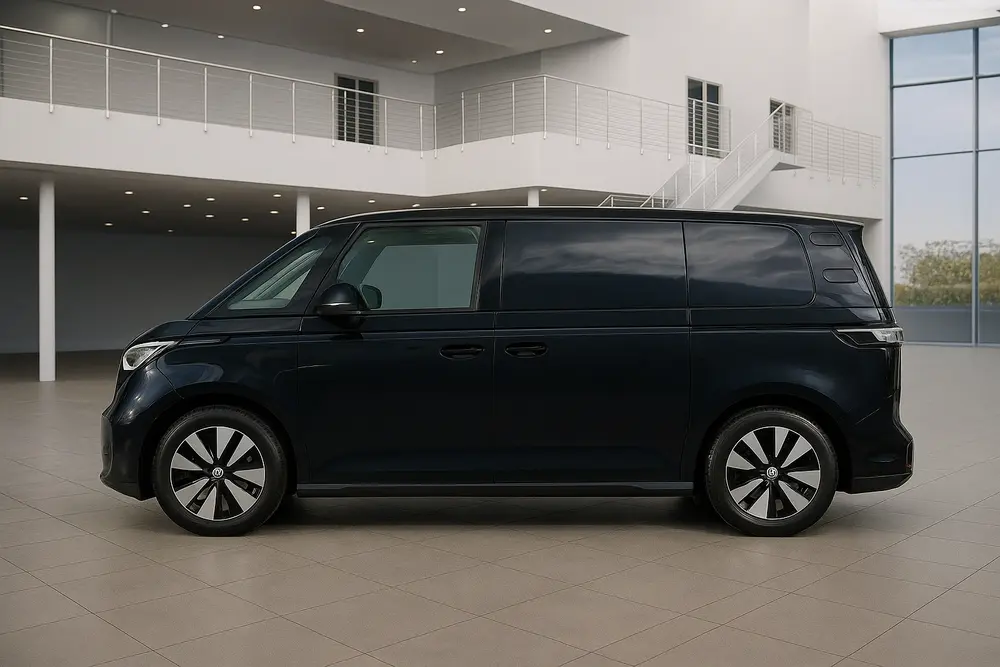
Electric vans
Mercedes E Sprinter
Mercedes E Sprinter Lease

Why Swiss Vans
Build your lease
Zero-Emission Large Van Built for Demanding Business Use
The Mercedes E Sprinter is revolutionizing the commercial vehicle landscape, offering businesses a cutting-edge electric van solution. This all-electric version of the popular Sprinter model combines the reliability and versatility of its predecessor with zero-emission technology, making it an attractive option for companies looking to reduce their carbon footprint. As more businesses prioritize sustainability and seek to comply with stringent environmental regulations, the Mercedes E Sprinter has emerged as a game-changer in the fleet management sector. For businesses considering the adoption of electric vehicles, leasing a Mercedes E Sprinter presents a compelling opportunity. This comprehensive guide explores the benefits of electric leasing, delving into the various lease options available for the E Sprinter. It also examines crucial factors to consider when leasing, such as charging infrastructure for fleets and total cost of ownership analysis. Additionally, the guide showcases real-world case studies of businesses successfully utilizing the E Sprinter, providing valuable insights for companies looking to make the switch to electric vans.
Overview of the Mercedes E Sprinter
The Mercedes E Sprinter represents a significant leap forward in the commercial vehicle sector, offering businesses a cutting-edge electric van solution. This all-electric version of the popular Sprinter model combines versatility with zero-emission technology, making it an attractive option for companies looking to reduce their carbon footprint.
Key Features of the Mercedes-Benz eSprinter
The new eSprinter is built on an innovative modular concept consisting of three main components. The front module houses all high-voltage components and can be universally combined with different vehicle variants. The integrated high-voltage battery module is located in the underbody, saving space and lowering the center of gravity for improved handling and driving safety. The rear module features an electrically driven rear axle, completing the modular design. The eSprinter comes equipped with the MBUX multimedia infotainment system, a first for Mercedes-Benz vans. It also boasts enhanced safety and assistance systems, as well as upgraded standard equipment. An optional trailer coupling is available, adding to its versatility.
Electric Powertrain Mercedes E Sprinter
The eSprinter's electric powertrain is centered around two key innovations: an efficient motor and an innovative electric rear axle. The permanent magnet synchronous motor (PSM) weighs only about 130 kilograms and is characterized by high efficiency and optimized thermal management. It is available in two power levels:
- Standard Output: 100 kilowatts (134 horsepower)
- High Output: 150 kilowatts (201 horsepower)
Both versions deliver up to 400 newton meters of torque. Customers can choose from three battery options with usable capacities of 56, 81, or 113 kilowatt-hours, depending on their range and payload requirements. The largest battery option provides an estimated range of up to 400 kilometers based on the WLTP cycle, or up to 500 kilometers in city driving conditions. The eSprinter supports fast charging up to 115 kilowatts, allowing for a 10% to 80% charge in approximately 42 minutes for the 113 kWh battery.
Cargo Capacity Mercedes E Sprinter
The eSprinter maintains the impressive cargo capacity of its diesel counterpart. With a high roof configuration, it offers a maximum cargo volume of 14 cubic meters (approximately 488.1 cubic feet). This spacious interior makes the eSprinter suitable for a wide range of applications, including:
- Delivery services for packages, parcels, or furniture
- Mobile workshops for various trades
- Conversion into a comfortable living space for van life enthusiasts
The load floor is 3.4 meters long, with a maximum width of 1,787mm and a generous roof height of 2,079mm. These dimensions, combined with wide-opening rear doors and a sliding side door, provide excellent access to the cargo area. The eSprinter's electric drivetrain does not compromise its cargo capacity compared to the standard front-wheel-drive diesel Sprinter. However, it's important to note that while the maximum payload is 731kg, approaching this limit may affect the vehicle's driving range.
Benefits of Leasing for Businesses
Leasing a Mercedes E Sprinter offers numerous advantages for businesses looking to optimize their operations and financial management. This approach to vehicle acquisition provides a range of benefits that can significantly impact a company's efficiency and bottom line.
Lower Upfront Costs
One of the primary advantages of leasing is the reduced initial financial commitment. Unlike purchasing a van outright, which requires a substantial upfront investment, leasing typically involves a smaller initial payment. This approach helps preserve a business's cash flow, allowing companies to allocate funds to other critical operational needs. Leasing agreements often structure payments as consistent monthly fees throughout the lease term. This predictability enables better budgeting and cash flow management, as businesses can accurately forecast their vehicle-related expenses. The stability of these payments contributes to more effective financial planning and resource allocation.
Tax Advantages
Leasing a Mercedes E Sprinter can offer significant tax benefits for businesses. VAT-registered companies have the opportunity to reclaim the VAT paid on both initial and monthly rentals, provided the van is used exclusively for business purposes. This tax reclamation can result in substantial savings over the lease term. Furthermore, the cost of leasing a van can be claimed as an allowable business expense on tax returns. This deduction can help reduce a company's overall tax liability, potentially leading to considerable savings. The tax benefits associated with leasing can make it a more financially attractive option compared to outright purchase for many businesses.
Flexibility Mercedes E Sprinter
Leasing provides businesses with unparalleled flexibility in managing their vehicle fleet. At the conclusion of the lease term, companies have the option to simply return the vehicle to the funder. This arrangement allows businesses to adapt to changing needs and market conditions without the long-term commitment associated with vehicle ownership. The flexibility of leasing enables companies to upgrade their vehicles every 2-5 years, ensuring access to the latest technology, safety features, and fuel efficiency improvements. This regular renewal cycle can be particularly beneficial for businesses operating in dynamic industries or those with evolving transportation requirements. Additionally, flexible hire options offer even greater adaptability. Businesses can quickly add or remove vehicles from their fleet to meet fluctuating demand without being bound by long-term contract clauses. This agility allows companies to scale their operations up or down as needed, optimizing resource allocation and operational efficiency. By choosing to lease a Mercedes E Sprinter, businesses can enjoy the benefits of lower upfront costs, tax advantages, and increased flexibility. These factors combine to create a compelling case for leasing as a strategic approach to fleet management, particularly for companies seeking to maximize their financial resources and operational agility.
Lease Options for the E Sprinter
Businesses looking to incorporate the Mercedes E Sprinter into their fleet have several leasing options to choose from, each offering unique benefits tailored to different operational needs and financial strategies.
Business Contract Hire Mercedes E Sprinter
Business Contract Hire is a popular leasing solution for companies seeking flexibility and fixed monthly costs. This option allows businesses to drive a Mercedes E Sprinter for a specific term without the commitment of ownership. Key features include:
- Fixed monthly rentals, aiding in budget planning and cash flow management
- The vehicle can appear as an asset on the company's balance sheet
- Potential tax advantages, as rental payments may be tax-deductible
- Option to return the vehicle at the end of the lease term
This leasing option is particularly attractive for businesses that prefer to regularly update their fleet with the latest models, as it provides the opportunity to switch to newer vehicles at the end of each contract period.
Finance Lease
A Van Finance Lease offers businesses a way to access the Mercedes E Sprinter with minimal upfront costs while building equity in the vehicle. Under this arrangement:
- The finance company owns the vehicle and hires it out to the business
- Monthly payments are typically lower due to the option of a balloon payment
- Up to 100% of monthly rentals may be tax-deductible
- Multiple end-of-contract options are available
At the conclusion of a Finance Lease, businesses have several choices:
- Return the vehicle to the lessor, who sells it and refunds a percentage of the surplus sale proceeds
- Act as an agent for the finance company and arrange the sale of the vehicle to a third party
- Extend the lease with a low-cost yearly "peppercorn rental"
This option provides significant flexibility and the potential for businesses to benefit from any increase in the vehicle's value over the lease term.
Operating Lease Mercedes E Sprinter
An Van Operating Lease is a solution that combines elements of both Business Contract Hire and Finance Lease. This option is suitable for businesses that:
- Want to use the vehicle without the risks and rewards of ownership
- Prefer off-balance sheet financing
- Seek lower monthly payments compared to outright purchase
Under an Operating Lease, the leasing company assumes the residual value risk, which can be advantageous for businesses uncertain about future market conditions or vehicle depreciation rates. Regardless of the chosen lease option, businesses leasing a Mercedes E Sprinter can expect access to a range of benefits, including:
- A choice of battery sizes (81 kWh or 113 kWh) and motor outputs
- Class-leading range of up to 271 miles between charges
- Rapid charging capability, with 10-80% charge in approximately 42 minutes
- Advanced safety features and driver assistance systems
- The latest MBUX infotainment system with a 10.25-inch display
By carefully considering their specific needs and financial objectives, businesses can select the most appropriate leasing option for integrating the Mercedes E Sprinter into their operations, benefiting from its advanced electric technology and versatile capabilities.
Factors to Consider When Leasing
When businesses contemplate leasing a Mercedes E Sprinter, several crucial factors require careful consideration to ensure the best fit for their operational needs and financial goals.
Mileage Allowance
The mileage allowance is a significant aspect of any lease agreement. It represents the total distance a vehicle can be driven during the lease term without incurring additional charges. For the Mercedes E Sprinter, as with other commercial vehicles, the minimum annual mileage is typically higher than that of passenger cars, reflecting the expectation of increased usage. Key points to consider regarding mileage allowance include:
- The agreed-upon mileage affects the monthly lease price, as higher mileage leads to increased wear and potential maintenance needs.
- Overmiles charges apply if the vehicle exceeds the total mileage allowance at the end of the lease term.
- Most funders allow for mileage allowance amendments after the first year of the lease, but this option may be limited to a single adjustment.
To avoid unexpected costs, businesses should accurately estimate their annual mileage requirements before entering into a lease agreement.
Lease Term Mercedes E Sprinter
The lease term is another critical factor that impacts both the monthly payments and the flexibility of the agreement. When considering the lease term for a Mercedes E Sprinter, businesses should take into account:
- The duration of their project or operational needs
- The rate at which technology in electric vehicles is advancing
- The potential for changes in their business requirements
Shorter lease terms offer more flexibility to upgrade to newer models or adjust fleet size, while longer terms may result in lower monthly payments. Businesses should balance these considerations against their long-term strategies and financial projections.
Maintenance Packages
Maintenance is a crucial aspect of operating any commercial vehicle, and the Mercedes E Sprinter is no exception. Mercedes-Benz offers a ServiceCare Maintenance Plan, which provides several benefits:
- Fixed costs for up to six services, helping with budget planning and cash flow management
- An average saving of £101 compared to pay-as-you-go servicing for a new Sprinter Panel Van
- The ability to arrange immediate services when needed
- Automatic renewal of MobiloVan breakdown cover for 12 months with each service, up to 30 years
When considering a maintenance package, businesses should evaluate:
- The potential cost savings over the lease term
- The convenience of pre-planned servicing
- The impact on vehicle downtime and operational efficiency
It's worth noting that the ServiceCare Maintenance Plan can be canceled within 14 days of receiving the contract, or at any time thereafter for a £40 administration fee, providing flexibility if circumstances change. By carefully considering these factors – mileage allowance, lease term, and maintenance packages – businesses can make informed decisions when leasing a Mercedes E Sprinter, ensuring that the arrangement aligns with their operational needs and financial objectives.
Charging Infrastructure for Fleets
Depot Charging
Fleet depot charging is a crucial component for businesses operating electric van fleets of all sizes. Mercedes-Benz Vans has partnered with ChargePoint to meet the charging needs of their fleet customers. This collaboration offers a comprehensive suite of solutions, including charging hardware and vehicle telematics software, designed to elevate electric fleet operations. As a Mercedes-Benz customer, businesses can benefit from a waived registration fee of $1,500 and a 20% reduction on monthly conditions. The all-new eSprinter has been developed with customer needs in mind, rolling off the production line ready to interact with ChargePoint Fleet Management Software. This flexible solution allows customers with multi-brand fleets to monitor all their fleet operations in a single, convenient platform.
Public Charging Networks Mercedes E Sprinter
The UK has a large number of public EV charging networks, offering both national coverage and regional options. Major charging networks include bp pulse, GeniePoint, GRIDSERVE, InstaVolt, Pod Point, and ubitricity. These networks are rapidly expanding, with 68,512 charging points at 24,909 locations around the country as of April 2023, representing a 35% increase compared to the previous year. Public charging for Mercedes-Benz electric vans is made easy through the Mercedes me connect service. This integrated system allows users to locate charging stations through the Mercedes-Benz User Experience (MBUX) multimedia system in their van or via the Mercedes me connect App on their mobile device. Additional filters enable users to sort charging stations by charging speed and availability. Mercedes me Charge is an essential service for Mercedes-Benz electric van owners, integrating multiple charge point operators (CPOs) into one network. With access to over 80,000 publicly available charging stations nationwide, it is one of the largest charging networks in the US. The service offers features such as charging cost and duration calculation, easy start of charging sessions via Plug n Charge, Remote Start, or Mercedes RFID Card, as well as access to charging and payment history.
Home Charging for Employees
For many electric vehicle owners, home charging is the most convenient and cost-effective way to keep their eSprinter fully charged. Setting up a home charging station requires a Type 2 connector and an AC power source. This option is particularly beneficial for employees who take their work vehicles home. The UK government offers grants to accelerate the provision of EV charge points in flats and rented accommodation. Additionally, numerous companies offer fully installed charge points for a fixed price, making it easier for businesses to support home charging for their employees. To maximize the benefits of home charging, businesses should consider:
- Educating employees on the advantages of home charging
- Providing guidance on installing home charging stations
- Implementing a reimbursement system for electricity costs incurred during home charging
By implementing a comprehensive charging infrastructure strategy that includes depot charging, access to public charging networks, and support for home charging, businesses can ensure their Mercedes E Sprinter fleet remains operational and efficient.
Total Cost of Ownership Analysis
When considering leasing a Mercedes E Sprinter, businesses must carefully evaluate the total cost of ownership (TCO) to make an informed decision. This analysis encompasses various factors that contribute to the overall expenses associated with operating the vehicle over its lease term.
Lease Payments
The starting price for the Mercedes E Sprinter is over £73,000, which is more than 50% higher than the original starting price. This significant increase underscores the importance of carefully considering lease options. Businesses can opt for various leasing solutions, such as Business Contract Hire, which offers fixed monthly rentals to aid in budget planning and cash flow management. These lease payments form a substantial part of the TCO and should be weighed against the potential benefits of operating an electric vehicle.
Energy Costs Mercedes E Sprinter
One of the primary advantages of the E Sprinter is its impressive range, which can help reduce energy costs over time. The 414 version boasts a theoretical range of 271 miles, while the 420 model offers 263 miles on a single charge. This extended range can lead to significant savings on energy costs compared to traditional fuel-powered vehicles. However, businesses should consider the charging infrastructure and associated costs. The E Sprinter can charge at 115kW, which is a notable feature. Yet, public chargers offering this speed tend to be expensive to use. For cost-effective operation, overnight charging at the business premises might be the more economical option on a regular basis.
Maintenance Expenses
Maintenance costs play a crucial role in the TCO analysis. Mercedes-Benz offers a ServiceCare Maintenance Plan starting from £11.50 per month, providing an affordable way to ensure the van's high standards are maintained by experts. This plan can help businesses budget for maintenance expenses more effectively. The Mercedes E Sprinter has service intervals set at 12 months or 40,000 miles, which can help reduce downtime and associated costs. However, businesses should factor in additional maintenance expenses such as:
- Tire replacements
- Brake services
- Battery maintenance
- Potential drivetrain repairs
It's worth noting that some maintenance tasks can be performed in-house to save on costs. For instance, changing cabin filters and performing basic checks can be done relatively easily, potentially saving hundreds of pounds in labor costs compared to dealer services. By carefully considering these factors - lease payments, energy costs, and maintenance expenses - businesses can gain a comprehensive understanding of the total cost of ownership for the Mercedes E Sprinter. This analysis will help them make an informed decision on whether the benefits of this electric van align with their operational needs and financial objectives.
Case Studies: Businesses Using the E Sprinter
Delivery Companies
The courier, express, and parcel services market has been experiencing significant growth, with an annual increase of 6-8%. This trend has become a strong driver for fully electric intra- and inter-urban mobility solutions. Mercedes-Benz Vans has recognized this opportunity and is focusing on the upper price bands of the CEP industry. To meet the specific needs of this sector, the company intends to offer a VAN.EA CEP-specific version directly from the factory for the first time. One notable example of a company embracing electric delivery vehicles is Ocado Group. Stuart Skingsley, head of Fleet at Ocado Group, shared their ambitious goal: "We have set ourselves a target to be carbon neutral by 2035." Ocado Group has been an early adopter of electric vehicles, putting their first electric fleet vehicle on the road back in 2010. They choose to work with partners like Rygor Commercials, a Mercedes-Benz Vans Dealer group, because of their commitment to making environmentally friendly choices.
Service Fleets
Rygor Commercials has taken a significant step towards sustainability by incorporating electric vehicles into their service fleet. The company has started operating a pair of electric mobile fleet servicing vans, specifically the Mercedes eSprinter models. These vehicles are used by Rygor's technical team to help keep their customers' fleets operational. John Keogh, Rygor sales director, explained their commitment to sustainability: "As a business, we are working on enhancing our greener-future plan. Moving more of our team into electric vans is just one part of this objective." In addition to using eSprinter service vehicles, some of Rygor's sales team are already utilizing eVito vans as their company vehicles. This transition to electric service fleets aligns with the growing importance of environmental responsibility in business relationships. A recent Mercedes-Benz Vans UK Business Barometer revealed that 61% of SMEs would cease working with businesses that were not living up to their green strategy commitments.
Construction Firms Mercedes E Sprinter
The construction industry is also beginning to recognize the benefits of electric vehicles like the Mercedes E Sprinter. The new eSprinter's design, based on three modules, allows for the greatest possible freedom in developing various conversions and superstructures. This flexibility makes it ideal for construction firms that require versatile vehicles for different job site needs. Key features that make the E Sprinter attractive to construction firms include:
- Electrically driven rear axle, enabling cab chassis variants in addition to the classic panel van
- Multiple vehicle lengths (A2 and A3) and maximum gross vehicle weight options (up to 4.25 tons)
- Trailer load capacity of up to 2 tons
- Choice of three different batteries with usable capacities of 56, 81, or 113 kilowatt hours
These features allow construction companies to customize the E Sprinter to their specific needs, whether for transporting materials, equipment, or personnel to job sites. The vehicle's electric drivetrain also helps construction firms reduce their carbon footprint and comply with increasingly stringent environmental regulations in urban areas.
Conclusion
The Mercedes E Sprinter is causing a revolution in the commercial vehicle sector, offering businesses a cutting-edge electric van solution that combines versatility with zero-emission technology. This comprehensive guide has explored the benefits of electric leasing, various lease options, and crucial factors to consider when leasing, such as charging infrastructure for fleets and total cost of ownership analysis. Real-world case studies of businesses successfully using the E Sprinter provide valuable insights for companies looking to switch to electric vans. As businesses prioritize sustainability and seek to comply with stricter environmental regulations, the Mercedes E Sprinter stands out as a game-changer in fleet management. Its advanced features, impressive range, and flexible leasing options make it an attractive choice for a wide range of industries, from delivery services to construction firms. By carefully weighing the factors discussed in this guide, businesses can make informed decisions about incorporating the E Sprinter into their operations, potentially leading to significant cost savings and environmental benefits in the long run.
FAQs Mercedes E Sprinter
1. How does leasing a Mercedes work? Leasing a Mercedes involves signing a contract where you agree to pay a fixed monthly fee to use the car for a specified time and mileage. This monthly payment primarily covers the vehicle's depreciation during the lease term. When the lease expires, you simply return the car to the dealership. 2. What advantages does leasing a Mercedes offer? Leasing a Mercedes-Benz provides several benefits:
- Lower Payments: Generally, lease payments are lower or equal to those of buying a vehicle.
- Lease-End Flexibility: At the end of your lease, you have the option to return the vehicle, purchase it, or possibly extend the lease.
- Gap Waiver: Offers financial protection in certain situations.
- Ride in Style: Regular upgrades mean you drive a newer model.
- Sales Tax Savings: You might save on sales tax as you only pay tax on your monthly payments.
3. What is the cost of an eSprinter in the UK? The starting price of an eSprinter in the UK is over £73,000, especially after the 2024 facelift. This price is more than 50% higher than its original starting price, making the decision to purchase one dependent on your ability to justify the investment based on usage. 4. What is the driving range of an electric Mercedes Sprinter van? The electric Mercedes Sprinter van can travel up to 248 miles on a single charge according to the WLTP (Worldwide Harmonized Light Vehicle Test Procedure) cycle. In city driving conditions, the range can extend up to 310 miles, making it well-suited for longer journeys.
What our customers say about Swiss Vans
Based on 1,476 reviews