 Call us on
Electric Van Finance
Electric Van Finance
The rise of electric vehicles has ushered in a new era for businesses looking to reduce their carbon footprint and operating costs. Electric van finance has emerged as a game-changer, offering companies a path to modernize their fleets while aligning with sustainability goals. Source
This shift towards eco-friendly transportation solutions has an impact on how businesses approach their logistics and delivery operations, prompting many to explore van finance options tailored for electric vehicles. See all van lease deals
As the market for electric vans continues to grow, businesses are presented with a range of choices to consider. From new van finance deals to specialized commercial van finance packages, companies can now access various ways to fund their transition to electric fleets. This article delves into the world of electric van finance, examining the benefits for businesses, top electric van models, and tools like van finance calculators to help decision-makers compare rates and determine the total cost of ownership. It also addresses common concerns, such as range anxiety, to provide a comprehensive guide for businesses looking to power their operations with green solutions. See all electric vans for sale
Understanding Electric Van Finance Options
Lease vs. Buy
When considering electric van finance, businesses have two primary options: leasing or buying. Leasing has become an increasingly popular choice for many companies. It allows them to use a van for a fixed period, typically 2-3 years, with affordable monthly payments. This option provides several advantages: See all electric van lease deals.
- Fixed Monthly Cost: Leasing offers predictable expenses, helping businesses manage cash flow more effectively.
- Access to New Models: Companies can drive the latest electric van models every few years, benefiting from advancements in technology and features.
- No Depreciation Worries: Unlike buying, leasing eliminates concerns about the vehicle’s declining value over time.
- Maintenance Packages: Many lease agreements include maintenance packages, reducing administrative burdens and costs.
Buying an electric van outright, on the other hand, means the vehicle belongs to the company. While this provides full ownership, it often requires a significant upfront investment and may impact cash flow. Additionally, businesses must consider depreciation costs when purchasing. See electric Ford Transit Custom
Government Incentives Electric Van Finance
To encourage the adoption of electric vehicles, the UK government offers various incentives for businesses transitioning to electric vans:
- Plug-In Van Grant: This grant covers 35% of the purchase price, up to a maximum of £5,000 for eligible electric vans.
- Workplace Charging Scheme: Businesses can receive up to £350 off the cost of each charging point installation, for up to 40 charge points.
- Small Van Discount: For vans under 2,500 kg gross vehicle weight, a maximum discount of £2,500 is available if the vehicle meets specific criteria, including CO2 emissions below 50g/km and a minimum range of 96km without emissions.
- Large Van Discount: Vans between 2,500kg and 4,250kg gross vehicle weight can qualify for a maximum discount of £5,000, subject to similar emissions and range requirements as small vans.
Tax Benefits
Electric vans offer significant tax advantages for businesses: See used van finance
- Vehicle Excise Duty (VED) Exemption: Electric vans are completely exempt from road tax until April 2025.
- Congestion Charge Exemption: Electric vans are exempt from charges in Clean Air Zones (CAZs) across the UK.
- Capital Allowances: Businesses can claim 100% capital allowances for the cost of a new electric van against profits before tax in the first year of purchase.
- Benefit in Kind (BIK): Electric vans have a much lower BIK rate of 2% compared to up to 37% for petrol or diesel vehicles.
- Charging Point Installation: The cost of installing charging facilities at workplaces may be eligible for tax exemptions.
For VAT-registered businesses, leasing an electric van has additional tax benefits. They can claim back 100% of the VAT on lease and maintenance payments, provided the van is used exclusively for business purposes. Lease payments are also tax-deductible expenses against a business’s profit and loss accounts. See low cost finance
It’s important to note that these incentives and tax benefits are subject to change, and businesses should consult with financial advisors to understand the most current regulations and how they apply to their specific situations.
Benefits of Electric Vans for Businesses
Lower Operating Costs
Electric vans offer significant cost savings for businesses, making them an attractive option for companies looking to reduce their expenses. One of the primary advantages is the lower operating costs compared to traditional fuel-powered vans. With fewer moving parts, electric vans require less maintenance, which translates to reduced service expenses. Businesses can save on routine maintenance tasks such as oil changes, as electric vehicles don’t require them.
The cost of charging an electric van is considerably lower than fueling a diesel or petrol vehicle. For instance, a 100-mile journey in an electric CITROEN e-Berlingo Crew Van could save up to £19 in fuel costs compared to its diesel counterpart. Over a 12-month period, driving 100 miles daily in a diesel CITROEN Berlingo Crew Van would cost an estimated £9,059 in fuel, while the same distance in an electric version would cost approximately £2,139. This substantial difference in fuel costs can have a significant impact on a business’s bottom line.
Additionally, electric vans benefit from regenerative braking systems, which recycle energy typically lost through heat and use it to recharge the battery. This feature not only increases the vehicle’s range but also reduces wear and tear on the brakes, leading to less frequent brake maintenance and further cost savings.
Reduced Environmental Impact
The shift towards electric vans has a considerable positive impact on the environment. As the transportation sector is one of the largest contributors to greenhouse gas emissions, switching to electric vehicles allows businesses to significantly reduce their carbon footprint. Electric vans produce zero tailpipe emissions during operation, contributing to improved air quality and reduced noise pollution in local communities.
This reduction in emissions aligns with the growing global focus on sustainability and environmental responsibility. By adopting electric vans, businesses demonstrate their commitment to combating climate change and improving the overall health and well-being of the communities they serve. This commitment to sustainability can enhance a company’s reputation and position it as a responsible member of society.
Improved Brand Image Electric Van Finance
Incorporating electric vans into a business fleet can have a substantial positive impact on brand image and customer perception. As consumers become increasingly environmentally conscious, they actively seek out brands that align with their values. When customers see electric vehicles on the road, they associate the brand with eco-friendliness and sustainability, creating a positive perception of the company.
This sustainable branding can attract new customers who are looking to support environmentally responsible businesses, giving companies a competitive edge in the market. The use of electric vans serves as a visible demonstration of a company’s commitment to reducing its environmental impact, which can enhance customer loyalty and attract environmentally conscious consumers.
Moreover, the adoption of electric vans can contribute to a company’s corporate social responsibility (CSR) efforts and environmental, social, and governance (ESG) initiatives. These factors are becoming increasingly important to investors and stakeholders, who view sustainable practices as crucial for long-term business success.
By embracing electric van technology, businesses not only benefit from cost savings and environmental advantages but also position themselves as forward-thinking, responsible organizations committed to a sustainable future. This positive brand image can lead to increased customer trust, loyalty, and ultimately, business growth. See Toyota Hilux Finance
Top Electric Van Models for 2023
Small Electric Vans
The small electric van market has seen significant growth in 2023, with several models offering impressive features and capabilities. The Citroen e-Berlingo, Peugeot e-Partner, and Vauxhall Combo Electric share similar specifications, providing a range of up to 171 miles on a single charge. These vans offer a payload capacity of up to 800kg and are available in two body lengths, making them versatile options for various business needs.
The Renault Kangoo E-Tech has garnered praise from industry experts, boasting an official range of up to 186 miles. It can carry up to 764kg and features two rear and two side doors for easy access. The Nissan Townstar EV, successor to the e-NV200, offers the longest range in its class at 183 miles and has a payload capacity of up to 800kg.
For businesses prioritizing warranty coverage, the Toyota Proace City Electric stands out. While it shares many features with other small electric vans due to a commercial agreement with Stellantis, it offers an extended warranty of up to 10 years or 100,000 miles when serviced annually at a Toyota dealer.
Medium Electric Vans
Medium-sized electric vans have become increasingly popular among UK fleets in 2023. The Stellantis group, which includes models like the Citroen e-Dispatch, Peugeot e-Expert, and Vauxhall Vivaro-e, offers vans with a range of up to 205 miles when equipped with the 75kWh battery option. These vans provide a cargo volume of up to 6.6 cubic meters and can handle payloads of up to 1,275kg.
Another notable entry in this category is the Volkswagen ID. Buzz Cargo. This stylish van offers a 3.9 cubic meter load bay with a 752kg payload capacity. It has an impressive WLTP range of 258 miles and can charge from 10-80% in just 30 minutes using a fast charger. The ID. Buzz Cargo is praised for its maneuverability and ease of driving, making it an attractive option for businesses looking to combine practicality with a modern esthetic.
Large Electric Vans Electric Van Finance
In the large electric van segment, several models stand out for their impressive capabilities. The Ford E-Transit has emerged as a leader, offering a range of up to 196 miles between charges and agile handling that belies its size. It has been recognized as the Overall Van of the Year for 2023, setting a new standard for electric vans in this category.
The Fiat E-Ducato provides a wide variety of options, with 28 body styles available across three lengths and three heights. It offers a choice of 47kWh or 79kWh batteries, providing ranges of 146 miles and 230 miles respectively. The E-Ducato can handle payloads of up to 1.9 tons, making it suitable for heavy-duty applications.
Mercedes-Benz has updated its eSprinter model for 2023, now featuring a 113kWh battery that allows for a maximum range of 248 miles. This significant improvement addresses previous range limitations and makes the eSprinter a more viable option for longer-distance operations.
The Renault Master E-Tech, while offering a more modest official range of 115 miles, is designed with last-mile deliveries in mind. It provides maximum cargo volume for package deliveries and is well-suited for urban operations where long-range capabilities are less critical. See no deposit van finance
These top electric van models for 2023 demonstrate the rapid advancements in electric vehicle technology, offering businesses a wide range of options to suit various operational needs while contributing to sustainability goals.
Calculating Total Cost of Ownership
When considering electric van finance, businesses need to evaluate the total cost of ownership (TCO) to make informed decisions. This calculation involves several factors, including initial costs, running costs, and maintenance expenses. By analyzing these elements, companies can gain a comprehensive understanding of the financial implications of transitioning to electric vans.
Initial Costs Most Van Lease
The upfront investment for an electric van leasing varies significantly based on the make, model, and size. Small electric vans, such as the Renault Kangoo, start at around £20,000. While electric vans generally have a higher purchase price than their diesel or petrol counterparts, they come with several benefits that can offset this initial expense.
To mitigate the higher upfront costs, businesses can take advantage of government incentives. The UK government offers grants and tax reductions to encourage the adoption of electric vehicles. For instance, the Plug-In Van Grant covers 35% of the purchase price, up to a maximum of £5,000 for eligible electric vans. Additionally, businesses can claim up to £350 off the total cost of purchasing and installing a new EV ChargePoint at their premises.
Running Costs
Electric vans typically have lower running costs compared to traditional fuel-powered vehicles. The cost to charge an electric van with a 45 kWh battery is approximately £16 for a full charge. However, the actual charging cost depends on factors such as battery size, local electricity pricing, and charging frequency and timing.
To illustrate the potential savings, let’s compare the cost per mile of an electric van to its diesel equivalent:
- Kangoo electric: 8p per mile
- Kangoo diesel: 15p per mile
This comparison shows a significant saving of 7p per mile for the electric van.
Another advantage of electric vans is the exemption from road tax. Battery electric vehicles (BEVs) are entirely exempt, while plug-in hybrid electric vehicles (PHEVs) pay a reduced rate. However, it’s worth noting that the UK government has announced plans to introduce road tax for electric vehicles starting in 2025. See Ford Ranger Finance
Insurance costs for electric vans average around £654 per year, according to research by NimbleFins. While historically, insurance for electric vehicles has been more expensive due to higher purchase prices and specialized repair needs, the market is adapting, and premiums are becoming more competitive as the EV market matures.
Maintenance Costs Electric Van Finance
Electric vans generally have lower maintenance costs due to their simpler design and fewer moving parts. The absence of components like manual clutches, gearboxes, and transmissions reduces the potential for wear and tear. Additionally, electric motors recover energy during deceleration, resulting in longer-lasting brake pads and disks.
Annual servicing for an electric van costs approximately £150. According to WhoCanFixMyCar, the average full electric vehicle service costs £143.75, compared to £174.23 for petrol or diesel variants. This represents an average annual saving of just over £30 on servicing costs.
The MOT test for electric vans, required for vehicles over three years old, has a maximum charge of £54.85 for vehicles up to 3 tons as of April 2023.
While maintenance costs are generally lower, it’s essential to consider potential battery replacement expenses. The cost to replace an electric van’s battery can range from £4,000 to £10,000, depending on the make and model of the vehicle.
By carefully considering these factors – initial costs, running costs, and maintenance expenses – businesses can make a well-informed decision about electric van finance. While the upfront investment may be higher, the potential long-term savings in running and maintenance costs can make electric vans an attractive option for many companies looking to reduce their total cost of ownership while contributing to sustainability goals.
Overcoming Range Anxiety Electric Van Finance
Range anxiety, a common concern among electric vehicle (EV) users, has become less of an issue as technology and infrastructure continue to advance. Businesses transitioning to electric vans can address this challenge through various strategies and advancements in the EV ecosystem. See Vauxhall Van Finance
Charging Infrastructure
The rapid expansion of charging infrastructure has played a crucial role in alleviating range anxiety. As of January 2024, the UK boasted 55,301 electric vehicle charging points, with 10,541 being rapid or ultra-rapid charging devices. This represents a significant 46% increase from January 2023, demonstrating the rapid growth of the charging network.
Fast-charging infrastructure is particularly essential for fleet owners, who are conscious of costs related to recharging time. The availability of rapid and ultra-rapid charging devices allows for quick recharging, minimizing downtime for electric vans. This is crucial whether vans operate within cities or travel long distances.
The UK government has set ambitious targets to support this growth, aiming for 280,000 to 720,000 public charging points by 2030 to accommodate the expected 10 million zero-emission cars and vans on the road. This commitment to expanding the charging network provides reassurance to businesses considering the switch to electric vans.
Route Planning Electric Van Finance
Efficient route planning has emerged as a key solution to maximize EV range and overcome range anxiety. Advanced route planning platforms and apps can help businesses optimize their electric van operations:
- Holistic approach: By analyzing the entire operation and required stops, businesses can plan logical routes that reduce overall mileage.
- Asset optimization: Route planning helps find the balance between maximizing vehicle usage and avoiding battery depletion during operations.
- Real-time adjustments: Advanced software can recalculate routes in real-time, accounting for unexpected road closures, traffic congestion, or last-minute changes.
- Charging integration: Route planners can incorporate charging stops into schedules, ensuring vehicles have sufficient charge to complete their shifts.
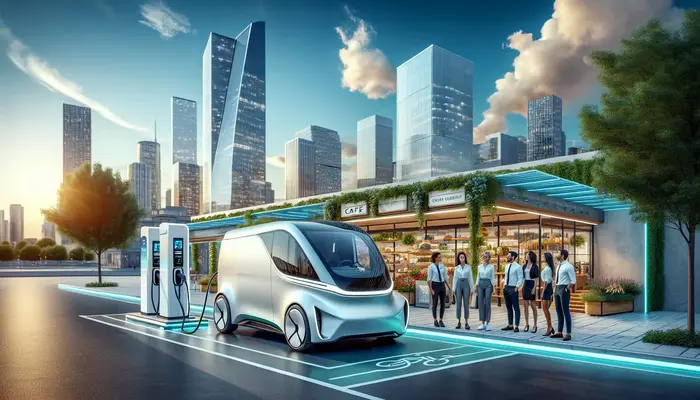
By utilizing these tools, businesses can transition to electric vans more smoothly, identifying which routes and vehicles are suitable for EVs without major operational changes.
Battery Technology Advancements
Ongoing research and development in battery technology have an impact on range anxiety. Current electric vehicles primarily use lithium-ion batteries, which, while effective, have limitations in terms of weight and sustainability due to their reliance on critical minerals like cobalt, copper, nickel, and lithium.
Promising advancements in battery technology include:
- Solid-state batteries: These batteries use solid electrolytes instead of liquid ones, offering several advantages:
- Smaller and lighter design, allowing for increased range
- Enhanced safety due to their solid nature
- Higher thermal stability and temperature tolerance
- Improved thermal management: Research is focused on enhancing cell chemistries and thermal management systems to mitigate battery degradation caused by rapid charging.
These advancements of Electric Van Finance have the potential to increase the range of electric vans, reduce charging times, and improve overall battery lifespan, further alleviating range anxiety for businesses.
As charging infrastructure continues to expand, route planning technologies improve, and battery technology advances, range anxiety is becoming less of a barrier for businesses considering the adoption of electric vans. These developments are making electric vans an increasingly viable and attractive option for companies looking to reduce their environmental impact while maintaining operational efficiency.
Conclusion Electric Van Finance
The shift towards electric van finance has a significant impact on the business landscape, offering companies a path to modernize their fleets while aligning with sustainability goals. This move to eco-friendly transportation solutions changes how businesses approach their logistics and delivery operations, prompting many to explore van finance options tailored for electric vehicles. The benefits of lower operating costs, reduced environmental impact, and improved brand image make electric vans an attractive choice for forward-thinking companies.
As the electric van market continues to grow, businesses have access to a wide range of models and finance options to suit their needs. By carefully considering factors such as total cost of ownership, charging infrastructure, and route planning, companies can overcome challenges like range anxiety and make informed decisions about transitioning to electric fleets. This shift not only helps businesses to reduce their carbon footprint but also positions them as responsible organizations committed to a sustainable future, potentially leading to increased customer trust and business growth.
FAQs Electric Van Finance
1. How is the market performing for electric vans?
As of May, the market share for battery electric vans (BEVs) slightly increased by 3.5%, reaching a market share of 4.2%, which is nearly the same as the previous year’s 4.1%. However, the overall uptake of BEVs this year has decreased by 2.1%, resulting in a market share of 4.8%, down from 5.2%. Each brand is targeted to achieve a 10% market share under the Vehicle Emissions Trading Scheme for this year.
2. Which type of vans does Octopus Energy use in its operations?
Octopus Energy Services, the engineering division of Octopus Energy, utilizes PEUGEOT e-Expert vans for its London-based fleet. These vans are primarily used for installing electric vehicle (EV) charging stations throughout London