 Call us on
 Mercedes Vito Engine
The Mercedes Vito engine stands as a testament to automotive engineering excellence, combining power and efficiency in a compact package. This versatile powerplant has become the heart of Mercedes-Benz’s popular van series, offering a range of options to suit various commercial and passenger needs. From the fuel-efficient Mercedes Vito 109 CDI to the robust Mercedes Vito 114 CDI, these engines deliver reliable performance while meeting stringent emission standards. Mercedes Vito
At the core of the Mercedes Vito’s success is its advanced diesel technology, which enhances fuel economy without compromising on power. The engine lineup includes various configurations, each designed to optimize performance for specific applications. Key components such as the Mercedes Vito alternator and water pump work in harmony to ensure smooth operation, while features like the turbocharger boost power output when needed. For van owners and operators, understanding the Mercedes Vito engine diagram and maintaining proper engine oil levels are crucial to ensure long-term reliability and avoid issues with the engine management light. Mercedes Wiki

Overview of Mercedes Vito Engine Lineup
The Mercedes-Benz Vito has been a success story since its debut in 1996, known for its extreme versatility and popularity among small and medium-sized enterprises. The engine lineup of the Vito has evolved significantly over the years, offering a range of options to suit various commercial and passenger needs.

Evolution of Vito Engines
The first generation Mercedes-Benz Vito, produced between 1996 and 2003, featured a front-wheel drive drivetrain with both diesel and gasoline engine options. The diesel engines offered up to 120 bhp (89 kW; 122 PS), while the gasoline engines provided up to 140 bhp (104 kW; 142 PS). This generation included old 2.3-liter engines with and without turbo, as well as modern CDI 2.2 engines for diesel options. The gasoline range consisted of two old Mercedes units (113 and 114) and a Volkswagen 2.8 VR6 engine, designated as the M104.900.
The second generation, introduced in 2004, brought significant changes to the Vito lineup. This generation saw the introduction of the Viano name for passenger variants. In 2010, a facelift improved the vehicle’s esthetics and performance, featuring restyled front and rear bumpers and lights, upgraded interiors, and more efficient diesel engines adapted from the Mercedes-Benz Sprinter range. See all Mercedes vans for sale
Current Engine Options
As of 2024, the Vito’s engine range has been streamlined to focus on efficiency and performance. The current lineup offers a 2.0-liter diesel engine with three power output options: See all Mercedes Vito for sale
- 136 hp
- 163 hp
- 190 hp
These engines are available in rear-wheel drive configuration, a departure from the previous availability of front-, rear-, and four-wheel drive layouts. The most powerful version, badged as the 119, comes standard with a nine-speed automatic gearbox, as does the 163 hp variant (116). The 136 hp version (114) is the only option that comes with a manual transmission. See al Mercedes Sprinter for sale
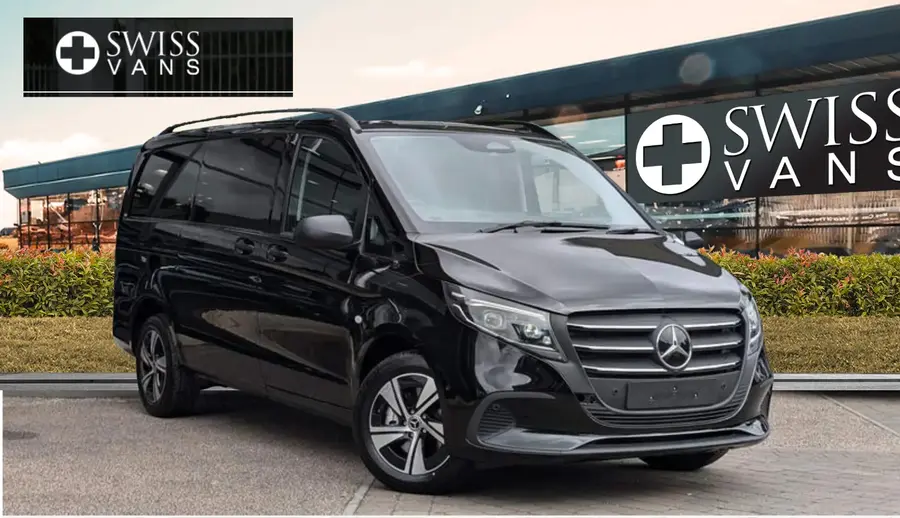
In addition to the diesel options, Mercedes-Benz has introduced an all-electric variant, the eVito. This impressive model shares the same exterior design as its internal combustion engine counterparts but is equipped with a 90 kWh lithium-ion battery, enabling a range of up to 421 kilometers. The eVito can be charged from 10% to 80% in under 45 minutes at a rapid charging station, making it a viable option for businesses looking to reduce their carbon footprint.
Power and Torque Specifications
To better understand the performance capabilities of the Mercedes Vito engine lineup, let’s examine the power and torque specifications of various models:
| Model | Engine Type | Power Output | Torque |
|---|---|---|---|
| Vito 110 CDI | Diesel | 101 HP / 75 kW | N/A |
| Vito 114 CDI | Diesel | 136 HP / 100 kW | N/A |
| Vito 116 CDI | Diesel | 163 HP / 120 kW | N/A |
| Vito 119 CDI | Diesel | 190 HP / 140 kW | N/A |
| eVito (41 kWh) | Electric | 116 HP / 85 kW | N/A |
| eVito (60 kWh) | Electric | 116 HP / 85 kW | N/A |
It’s worth noting that the older models, such as the Mercedes-Benz Vito I W638 2.2 MT (1996-2003), had different specifications. For instance, this model featured a 2,148 cm³ diesel engine with 82 hp (60 kW) of power and 200 Nm of torque at 3800 rpm. See New Mercedes Vito
The evolution of the Mercedes Vito engine lineup demonstrates the brand’s commitment to improving performance, efficiency, and environmental sustainability. From the early days of front-wheel drive options to the current rear-wheel drive configuration and the introduction of electric variants, the Vito continues to adapt to the changing needs of businesses and consumers alike. See New Mercedes Sprinter
Advanced Diesel Technology
The Mercedes Vito engine showcases cutting-edge diesel technology, combining power and efficiency with environmentally conscious design. This advanced technology is evident in three key areas: BlueTEC emission control, common rail direct injection, and turbocharging innovations.
BlueTEC Emission Control
BlueTEC, Mercedes-Benz Group’s marketing name for their advanced NOx reducing technology, represents a significant leap forward in vehicle emissions control for diesel-powered vehicles. This system employs a multi-step process to minimize harmful emissions:
- A diesel oxidation catalyst reduces carbon monoxide (CO) and hydrocarbons (HC) in the exhaust.
- A DeNOx catalytic converter initiates preliminary removal of nitrogen oxides.
- A particulate filter traps and burns off soot particles.
- If necessary, a Selective Catalytic Reduction (SCR) catalytic converter converts remaining nitrogen oxides to nitrogen and water using diesel exhaust fluid.
This complex emission-control system ensures robust exhaust-gas cleaning during varying driving conditions and throughout the vehicle’s lifetime. It allows diesel engines to operate at lean air-fuel ratios while still meeting stringent emissions regulations without significantly compromising fuel economy.
Common Rail Direct Injection Mercedes Vito Engine
The Mercedes Vito engine utilizes Common Rail Direct Injection technology, a crucial component in its advanced diesel system. This technology, supplied by Bosch, plays a vital role in optimizing fuel efficiency and performance.
Key components of the Common Rail Direct Injection system include:
| Part Number | Description | Engine Code |
|---|---|---|
| 0445010345 | Fuel Injection Pump | OM642990, OM642DE30LA |
| 0445115063 | Fuel Injector | OM642990, OM642DE30LA |
| 0445010356 | High-Pressure Pump | OM642990, OM642DE30LA |
These components work together to deliver precise amounts of fuel at high pressure, resulting in improved combustion efficiency and reduced emissions. The system requires coding to each cylinder by an authorized workshop with the correct diagnostic equipment, ensuring optimal performance.
Turbocharging Innovations
To further enhance the Mercedes Vito engine’s performance and efficiency, Mercedes-Benz has implemented innovative turbocharging technologies. These advancements contribute to increased power output and improved fuel economy.
The turbocharging system in the Vito engine features:
- Made-to-order turbochargers optimized for fuel consumption and performance.
- Variants tailored to different performance levels, including high-power options for construction applications.
- Reduced friction losses and improved pressure control with low-viscosity oil.
These turbocharging innovations, combined with other engine improvements, have led to significant reductions in fuel consumption. For instance, the OM 471 engine family has achieved fuel savings of up to 4% for lower and medium performance levels, and up to 3.5% for upper performance levels compared to previous generations.
The advanced diesel technology in the Mercedes Vito engine demonstrates Mercedes-Benz’s commitment to sustainable mobility. By optimizing modern internal combustion engines alongside hybrid and electric vehicles, Mercedes-Benz aims to meet challenging global climate targets while maintaining the popularity and efficiency of diesel engines, particularly in Europe.
This technology not only improves individual vehicle performance but also has a direct impact on Mercedes-Benz’s fleet consumption. The modular family of engines finds broad application across the entire range of Mercedes-Benz cars and vans, with plans for various output variants and installation options to suit different vehicle configurations.
Fuel Efficiency Features Mercedes Vito Engine
The Mercedes Vito engine incorporates several innovative features designed to optimize fuel efficiency without compromising performance. These advancements not only reduce operational costs but also contribute to a more environmentally friendly vehicle.
Start-Stop Function Mercedes Vito Engine
One of the most significant fuel-saving technologies in the Mercedes Vito is the start-stop function. This system automatically shuts off the engine when the vehicle comes to a stop, such as at traffic lights or in heavy traffic, and restarts it when the driver releases the brake pedal. Studies have shown that this technology can reduce fuel consumption by 3-10% in urban driving conditions where frequent stops are common.
The effectiveness of the start-stop function depends on various factors:
- Engine and transmission type
- Driving conditions
- Frequency of stops
It’s important to note that the system only operates under optimal conditions. For instance, it won’t activate when the engine is too cold or hot, or when there’s a heavy electrical load on the vehicle. For maximum benefit, drivers are advised to use this feature when they anticipate being stopped for 30 seconds or more.
Energy Recovery Systems
The Mercedes Vito employs advanced energy recovery systems to further enhance fuel efficiency. One notable feature is the regenerative braking system, which recovers energy during deceleration and braking. This recovered energy is then used to charge the vehicle’s battery, reducing the load on the alternator and, consequently, the engine.
In electric variants like the eVito, this system is even more sophisticated. Drivers can adjust the recuperation mode using gearshift paddles, allowing them to control how much energy is recovered when decelerating. The latest eVito models introduce the DAUTO recuperation mode, which intelligently determines whether the van should glide with minimal resistance or decelerate to recover energy into the battery.
Another innovative feature is the heat recovery system, which significantly reduces energy consumption:
- Ventilation system with heat recovery technology
- Heat recovery efficiency: 72% – 87%
- Effective air exchange even when all windows and doors are closed
This system not only improves fuel efficiency but also enhances comfort by maintaining optimal cabin temperature with less energy expenditure.
Aerodynamic Optimizations
The Mercedes Vito’s design incorporates various aerodynamic optimizations to reduce drag and improve fuel efficiency, especially at higher speeds. These features become particularly important when traveling at speeds above 45 mph, where air resistance increases considerably.
Key aerodynamic considerations include:
- Rolled-up windows: Keeping windows closed at higher speeds maintains the vehicle’s aerodynamic profile.
- Streamlined body design: The van’s shape is optimized to minimize air resistance.
- Underbody panels: These help smooth airflow beneath the vehicle.
To maximize fuel efficiency related to aerodynamics, drivers should:
- Keep windows rolled up when traveling at highway speeds
- Avoid unnecessary roof racks or external cargo that can disrupt airflow
- Maintain the vehicle’s exterior to ensure optimal aerodynamic performance
By combining these fuel efficiency features with mindful driving habits, Mercedes Vito owners can significantly reduce their fuel consumption. This not only leads to cost savings but also contributes to reduced emissions and a smaller environmental footprint.
Performance Capabilities
The Mercedes Vito engine demonstrates impressive performance capabilities, offering a balance of power and utility across various driving conditions. This section explores the van’s acceleration, top speed, towing capacity, and payload ratings, showcasing its versatility in meeting diverse commercial needs.
Acceleration and Top Speed Mercedes Vito Engine
The Mercedes Vito’s performance varies depending on the specific model and engine configuration. For instance, the Vito 116 LWB Crew Cab can accelerate from 0-100km/h in approximately 10-11 seconds, demonstrating respectable acceleration for a vehicle in its class. This performance level ensures that the Vito can handle urban environments and highway driving with ease.
When it comes to top speed, the Mercedes-Benz Vito 114 CDI W447 (2019) model showcases impressive capabilities. Equipped with a 2.2L Inline 4-cylinder diesel engine producing 129 kW (175 PS / 173 HP) and 420 Nm of torque, this variant has achieved a GPS-verified top speed of 202 km/h (126 mph) on the German Autobahn. Such high-speed performance is noteworthy for a commercial vehicle, highlighting the Vito’s engineering prowess.
Key specifications of the high-performance Vito 114 CDI W447 include:
| Specification | Value |
|---|---|
| Engine | 2.2L Inline 4Cyl Diesel |
| Power | 129 kW / 175 PS / 173 HP |
| Torque | 420 Nm @ 2000 rpm |
| Transmission | 6-Speed Automatic |
| Drive | Front Wheel Drive |
| Weight | 1523 kg |
It’s important to note that while this model demonstrates impressive top speed capabilities, the Vito’s performance can vary across different configurations and model years.
Towing Capacity Mercedes Vito Engine
The Mercedes Vito Towing boasts a robust towing capacity, making it suitable for a wide range of commercial applications. The maximum towing capacity for the latest models reaches up to 2,500 kg with a braked trailer. However, this maximum capacity is typically available only for rear-wheel drive models equipped with the upgraded towing pack.
Here’s a breakdown of the Vito’s braked towing capacities over recent years:
| Year | Braked Capacity Range |
|---|---|
| 2024 | 2500 kg |
| 2023 | 2000 kg – 2500 kg |
| 2022 | 2000 kg – 2500 kg |
| 2021 | 2000 kg – 2500 kg |
| 2020 | 2000 kg – 2500 kg |
It’s worth noting that without the upgraded towing pack, the maximum towing capacity is generally limited to 2,000 kg. Additionally, the maximum load for any vehicle without using trailer brakes is standardized at 750 kg, provided the vehicle is rated to tow that much in the first place.
Payload Ratings
The Mercedes Vito offers competitive payload ratings, though they may not be the highest in its class. The maximum payload capacity varies depending on the specific model, trim level, and vehicle configuration. For the Vito L2 variant, the maximum payload rating reaches 978 kg, while the Vito L3 can carry up to 951 kg.
To achieve these maximum payload ratings, users need to opt for the lowest trim level (Pro) and the highest gross vehicle weight (GVW) rating of 3,000 kg (3.0 tons). It’s crucial to note that any additional extras or modifications will reduce the available payload capacity.
While the Vito’s payload ratings are respectable, they are approximately 400 kg less than some of the top competitors in the medium van segment. This means that the Vito may not be the ideal choice for businesses requiring maximum heavy hauling capabilities.
The Mercedes Vito’s performance capabilities demonstrate its versatility as a commercial vehicle. With its combination of acceleration, top speed, towing capacity, and payload ratings, the Vito caters to a wide range of business needs. However, potential buyers should carefully consider their specific requirements, especially regarding payload capacity, to ensure the Vito meets their operational demands.
Maintenance and Reliability
The Mercedes Vito engine has earned a reputation for its reliability and durability, making it a popular choice among commercial vehicle operators. However, to maintain its performance and longevity, proper maintenance is crucial. This section explores the service intervals, common issues, and long-term durability of the Mercedes Vito engine.
Service Intervals
Mercedes-Benz has implemented an intelligent service system called ASSYST (Active Service System) for the Vito. This system monitors various factors such as oil quantity and quality, engine load, temperature, and speed to determine the optimal time for servicing. The ASSYST system displays a spanner symbol on the dashboard instrument panel approximately one month or 1,864 miles (3,000km) before the next service is due.
For the Mercedes Vito, the maximum service interval is up to 24,000 miles or 2 years, whichever comes first. This applies to both diesel and electric (eVito) models. However, it’s important to note that individual van service intervals may vary depending on driving conditions and style.
The ASSYST system differentiates between two types of services:
- A single spanner indicates a lubrication service is required.
- Two spanners signify a maintenance service is needed.
This system ensures that vans are neither over-serviced nor under-serviced, helping to maintain optimal performance and efficiency.
Common Issues Mercedes Vito Engine
While the Mercedes Vito Lease is generally reliable, there are some common issues that owners and operators should be aware of:
- Suspension problems: These typically start to arise around 170,000km in a Sprinter and 200,000km in a Vito. Regular checks of the front lower arms, track rods, road springs, and shock absorbers are recommended.
- Brake system wear: Regular inspection of brake pads, disks, and fluid levels is essential to ensure safe and effective braking.
- Turbo system: Regularly inspect turbo hoses and connections for signs of wear or damage to prevent leaks and maintain performance.
- Transmission: For manual transmissions, clutch replacement may be necessary around 100,000 miles. Automatic transmissions should be checked for smooth gear changes.
- Electrical issues: The indicator/wiper switch is prone to failure and should be checked regularly.
- Tire wear: The Vito can be prone to wearing more on the outer edges of the front tires. Regular alignment checks can help mitigate this issue.
To address these common issues, it’s recommended to have routine maintenance performed by qualified technicians familiar with Mercedes-Benz vans.
Long-Term Durability Mercedes Vito Engine
The Mercedes Vito has demonstrated impressive long-term durability when properly maintained. Many fleet operators report Vitos running reliably with 200,000 to 300,000 miles on the odometer. This longevity is attributed to several factors:
- Regular servicing: Adhering to the ASSYST-recommended service intervals is crucial for maintaining the engine’s performance and reliability.
- Quality components: Mercedes-Benz uses high-quality parts that contribute to the van’s durability.
- Proactive maintenance: Addressing minor issues before they become major problems helps extend the vehicle’s lifespan.
- Driving habits: Avoiding aggressive driving and maintaining proper operating conditions can significantly impact the engine’s longevity.
To maximize the Vito’s durability, owners should:
- Use high-quality diesel fuel and additives to keep injectors clean
- Regularly check coolant levels and inspect the cooling system
- Address any warning lights promptly
- Perform routine suspension maintenance, especially after reaching higher mileages
By following these guidelines and maintaining a consistent service schedule, Mercedes Vito owners can expect their vehicles to provide reliable service for many years and miles to come.
Conclusion
The Mercedes Vito engine stands as a testament to the fusion of power and efficiency in modern automotive engineering. Its advanced diesel technology, coupled with innovative features like BlueTEC emission control and common rail direct injection, has a significant impact on both performance and fuel economy. The engine’s versatility shines through its impressive towing capacity and payload ratings, making it a go-to choice for businesses across various sectors. What’s more, the Vito’s start-stop function and aerodynamic optimizations further enhance its fuel efficiency, contributing to reduced operational costs and a smaller environmental footprint.
To wrap up, the Mercedes Vito engine’s reliability and durability have made it a favorite among commercial vehicle operators. With proper maintenance and adherence to service intervals, these engines can provide dependable service for hundreds of thousands of miles. While there are common issues to watch out for, proactive maintenance and regular checks can help ensure the engine’s longevity. In the end, the Mercedes Vito engine represents a well-rounded powerplant that meets the demands of modern businesses while keeping an eye on efficiency and environmental responsibility.
FAQs
1. What is the fuel efficiency range of the Mercedes Vito?
The Mercedes-Benz Vito has a fuel efficiency that generally ranges between 37mpg and 39mpg. This indicates a moderate fuel economy, with no specific model standing out as exceptionally economical or inefficient.
2. What is the horsepower range for the Mercedes Vito?
The Mercedes Vito is available with different engine options, offering horsepower that ranges from 120 bhp (89 kW; 122 PS) with the diesel engine, to 140 bhp (104 kW; 142 PS) with the gasoline engine. All models feature a front-wheel-drive system.
3. Which Mercedes Vito model is the most fuel-efficient?
The 116 CDI variant of the Mercedes Vito is the most fuel-efficient, boasting an official fuel consumption rate of 49.6mpg. Another efficient model is the 111 CDI, which has a commendable fuel consumption of 45.6mpg.
4. Does the Mercedes Vito use Renault engines?
Yes, several Mercedes models including the Vito, as well as the A-Class, B-Class, C-Class, CLA, GLA, and Citan, incorporate engines from Renault as part of a strategic partnership.