 Call us on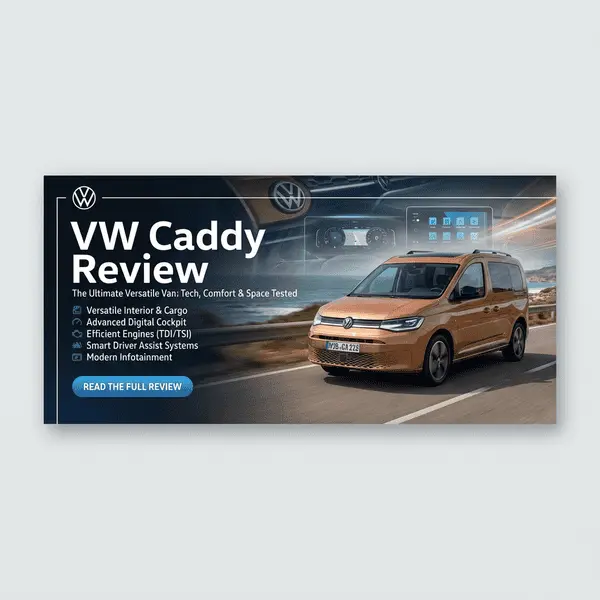
VW Caddy Review
In this article, we’ll explore the VW Caddy‘s key features, including its cargo space, fuel efficiency, and overall performance. We’ll also compare the Caddy to its main rivals, examining factors such as price, specifications, and reliability. Additionally, we’ll delve into the Caddy’s running costs, towing capacity, and resale value to give readers a clear picture of what to expect from this versatile van. By the end, readers will have a solid understanding of where the VW Caddy stands in today’s competitive market.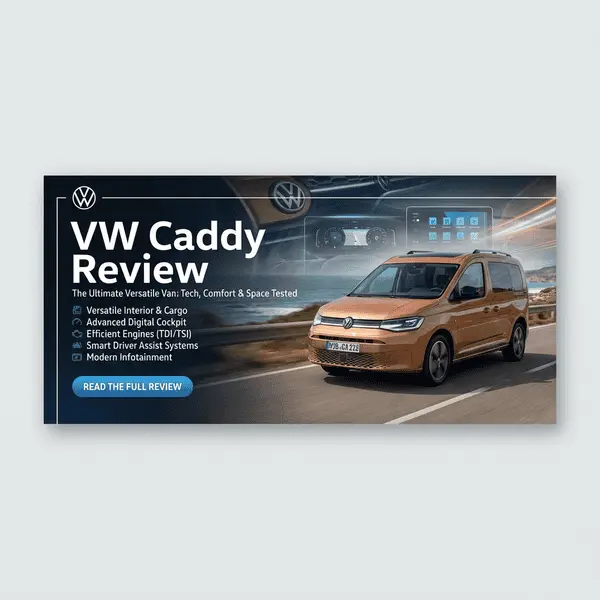
Comprehensive Review of VW Caddy Practicality and Performance
The Volkswagen Caddy has established itself as a versatile and reliable choice in the compact van segment. This popular vehicle has evolved significantly since its introduction, with the latest generation offering a blend of practicality and modern features that appeal to both commercial users and families alike. See VW Caddy Accessories
Ideal for business owners, families and van buyers seeking insight
The VW Caddy stands out for its impressive build quality and trendy Volkswagen image. It offers an appealing sense of modernity that sets it apart from many competitors in the small van market. The latest generation, launched in 2020, is built on the MQB platform, which is shared with many of Volkswagen’s passenger cars. This new foundation has allowed for significant improvements in design and functionality.
One of the Caddy’s most notable features is its enhanced interior, which now resembles that of a passenger car more than a traditional van. The dashboard layout is more sophisticated, featuring an infotainment unit with a touchscreen up to 10 inches in size. This upgrade significantly improves the user experience and brings a touch of luxury to the compact van segment.
Available Models
The VW Caddy comes in two main body sizes to cater to different needs:
- Standard Caddy: The regular wheelbase model, suitable for most urban and suburban applications.
- Caddy Maxi: A longer wheelbase version, offering increased cargo capacity.
Both versions are available in various configurations:
- Panel Van: Ideal for businesses requiring maximum cargo space.
- Window Panel Van: Offers improved visibility with additional windows.
- Kombi: A basic passenger version with a more utilitarian interior.
- Caddy Life: A family-oriented version with improved comfort features.
- Caddy Tramper/Life Camper: A camping version for outdoor enthusiasts.
The Caddy Life and Kombi models can seat up to five passengers in two rows, while the Maxi versions of these models can accommodate up to seven passengers in three rows. See New VW Caddy
Engine Options
The VW Caddy offers a range of engine options to suit different needs and preferences:
- Diesel Engines:
- 2.0-liter TDI turbodiesel engines available in three power outputs: 75hp, 102hp, and 122hp.
- These engines use AdBlue with a unique ‘twin dosing’ system to reduce harmful emissions further.
- Petrol Engines:
- 1.5-liter TSI turbo petrol engine producing 114hp.
- Features Active Cylinder Technology (ACT) that can disable two cylinders to improve fuel efficiency when full performance isn’t required.
- Natural Gas Engine:
- A turbocharged natural gas engine (TGI) is available in some markets.
It’s worth noting that while there are no current plans for an all-electric Caddy in the UK, Volkswagen offers the ID Buzz Cargo as its electric van option. Additionally, a Caddy Cargo eHybrid is available in some European markets, though not currently in the UK.
These engine options are designed to meet the strictest 2021 emission standards, reflecting Volkswagen’s commitment to environmental responsibility while maintaining performance and efficiency. see Modified VW Caddy
Driving Experience
The Volkswagen Caddy offers a driving experience that combines practicality with a touch of car-like refinement. Built on the MQB Evo platform, which underpins many of Volkswagen’s passenger cars, the Caddy benefits from improved handling and comfort compared to its predecessors. See all VW Caddy for sale
Handling and Comfort
The Caddy’s handling is notably agile for a van, thanks to its Golf underpinnings. It features an electronic differential lock as standard, enhancing traction out of corners and boosting overall agility. The steering is positive and responsive, providing good feedback to the driver.
Suspension-wise, the Caddy has moved from leaf springs to a coil-sprung rear axle, resulting in a more comfortable ride. While there’s a bit more body roll than in a typical car due to its height, it’s less than one might expect from a van. The ride quality on standard 16-inch wheels is pleasantly supple, comparable to that of the Dacia Jogger. Source
For long-distance driving, the Caddy can be equipped with ergoComfort seats, certified by German authorities to promote healthy backs. This feature makes the Caddy a top choice for those who spend extended periods behind the wheel.
Performance VW Caddy Review
The Caddy comes with a range of engine options to suit different needs. The petrol lineup includes a 1.5-liter TSI engine producing 114 horsepower, while the diesel options feature a 2.0-liter TDI engine available in 75hp, 102hp, and 122hp variants.
Performance-wise, the Caddy is not designed for speed but for practicality. The 0-62 mph acceleration takes around 11.8 seconds for the diesel and 11.9 seconds for the petrol versions. Despite these modest figures, the Caddy provides sufficient power for motorway journeys, even when fully loaded.
Transmission options include a six-speed manual gearbox as standard, with a seven-speed DSG twin-clutch automatic available for the petrol and the most powerful diesel variants. The manual gearbox offers a solid, familiar feel, while the DSG provides smooth shifts, although it can be slightly hesitant when starting from a standstill.
Fuel Efficiency VW Caddy Review
Fuel efficiency is a strong point for the Caddy, particularly in its diesel variants. Volkswagen quotes economy figures in the mid to low-40s mpg for the 1.5 TSI petrol models, while the 2.0 TDI diesels can achieve figures approaching 60 mpg.
Real-world fuel economy will vary depending on driving conditions and style. Urban driving will naturally yield lower figures, while smoother driving on country roads and highways will get closer to the quoted numbers. All models come equipped with start-stop technology as standard, helping to improve efficiency in stop-and-go traffic.
It’s worth noting that the petrol engine features Active Cylinder Technology (ACT), which can disable two cylinders to improve fuel efficiency when full performance isn’t required. This technology helps bridge the gap between petrol and diesel efficiency, making the petrol Caddy a viable option for those who prefer gasoline engines but still want reasonable fuel economy.
Interior and Technology
Cabin Design
The Volkswagen Caddy’s interior has undergone a significant transformation, adopting a more car-like design that enhances both esthetics and functionality. The angular dashboard layout resembles that of VW’s passenger cars, offering a modern and sophisticated feel. This design shift has resulted in improved quality, setting a new standard in the small van sector.
One of the standout features is the electronic handbrake, which frees up additional space in the center console. However, the cabin’s practicality extends beyond mere esthetics. The Caddy Cargo’s clever interior provides ample loading space, capable of transporting up to 700kg with ease, including up to 100kg on the roof. For added security, six lashing rings and a separate load compartment locking system are included, allowing drivers to lock the cab while loading.
The seating arrangement in the Caddy is versatile and adaptable. The two-part bench seat in the second row can be easily folded down, double-folded, or even removed completely. Additionally, the bench and single seat can be removed independently, offering flexibility for various cargo needs.

Infotainment System
At the heart of the Caddy’s technological offerings is the central touchscreen infotainment system. Every model comes equipped with this feature, with higher-spec versions boasting a larger display. The system runs on VW’s latest MIB3 software, which is generally logical and responsive. See VW Caddy Maxi
The entry-level Caddy comes with a DAB radio and Bluetooth connectivity. Upgrading to the Life trim adds an 8-inch touchscreen with Android Auto and Apple CarPlay smartphone connectivity. A larger 10-inch screen with built-in navigation is available as an option.
The infotainment system supports voice control, allowing drivers to perform tasks such as answering phone calls, selecting radio stations, or setting navigation destinations hands-free. The system also includes Volkswagen We Connect, which brings additional functionality like Breakdown Call and Automatic Accident Notification. See VW Caddy Lease
However, the touchscreen-centric approach has its drawbacks. Many controls that were previously physical buttons have been moved to the touchscreen, which can be less intuitive and more distracting while driving. The touch-sensitive buttons for lighting and climate controls have also faced criticism for their laggy response.
Driver Assistance Features VW Caddy Review
The Caddy comes equipped with an impressive array of driver assistance features, many of which have been borrowed from the current VW Golf. Standard safety aids include:
- Automatic Emergency Braking (AEB) with cyclist and pedestrian detection
- Lane-keeping assistance
- Front Assist with Pedestrian Monitoring and City Emergency Braking System
- Traffic Sign Recognition
Optional features include:
- Adaptive Cruise Control (ACC)
- Park Assist with parking sensors
- Emergency Assist
- Voice control for climate settings
These systems work together to enhance safety and convenience. For instance, the Front Assist system detects potential hazards and can initiate emergency braking if necessary. The Adaptive Cruise Control maintains a pre-set distance from vehicles ahead, while the Park Assist feature aids in maneuvering in tight spaces.
While these technological advancements significantly improve the driving experience, some users may find the learning curve steep, particularly when it comes to navigating the touchscreen-based controls. Nonetheless, the Caddy’s interior and technology package represents a substantial leap forward in the compact van segment.
Cargo Capacity and Practicality
The Volkswagen Caddy Pickup has long been known for its practicality, and the latest generation continues to impress with its enhanced cargo capacity and versatile design. This section examines the key aspects that make the Caddy a standout choice in the compact van segment.
Load Space Dimensions VW Caddy Review
The new Caddy Cargo has seen significant improvements in its load space dimensions. The standard-length Caddy Cargo now offers a load length of 1,797mm, an increase of 20mm from its predecessor. More notably, the width between the rear wheelarches has expanded by 60mm to 1,230mm, allowing for a Euro pallet to be loaded sideways – a feature that enhances its practicality for many businesses.
The Caddy Maxi, while slightly smaller than its previous iteration, still offers impressive dimensions. Its maximum loading length is 2,150mm, and it benefits from increased loading height and width between the wheelarches. This allows the Maxi to accommodate two Euro pallets, a significant advantage for businesses requiring more substantial cargo capacity.
Payload Capacity
The Caddy’s payload capacity varies depending on the model and configuration:
- Standard Caddy Cargo: Payload ranges from 606kg to 687kg
- Caddy Maxi: Offers a maximum payload of 700kg for the entry-level 1.5-liter petrol model
It’s worth noting that Volkswagen includes a 75kg allowance for the driver in its unladen weight figures, which may differ from some competitors’ calculations. When comparing payload capacities, buyers may need to add 75kg to the Caddy’s figures for a true comparison with other vans.

Versatility
The Caddy’s versatility is one of its strongest selling points. The van is available in two body lengths – the standard Caddy Cargo and the longer Caddy Cargo Maxi. Both versions offer a single roof height, but the increased internal loading heights and wider gaps between the rear wheel arches significantly enhance their practicality.
For those requiring passenger capacity alongside cargo space, the Caddy Kombi offers a flexible solution. Based on the Maxi version, it provides up to 4.1 cubic meters of cargo capacity with the seats removed, or 1.6 cubic meters with all seats in place.
The Caddy’s load area is designed for easy access, featuring side sliding doors and rear doors that open to 180 degrees. The flat, level load floor facilitates the loading and unloading of heavy items, while tie-down points ensure cargo remains secure during transit.
In terms of towing capacity, most Caddy models offer a 1,500kg braked towing limit, with the 75hp diesel and 114hp petrol variants limited to 1,400kg. The unbraked towing capacity stands at 750kg across the range.
Caddy vs Key Competitors
The Volkswagen Caddy faces stiff competition in the small van segment, with key rivals including the Ford Transit Connect, Citroen Berlingo, and Peugeot Partner. Each of these vehicles has its own strengths and weaknesses, making the choice dependent on specific needs and preferences.
Ford Transit Connect
The Ford Transit Connect has been a strong contender in the small van sector for over a decade. It offers a spacious cab with a funky styling approach borrowed from Ford’s passenger cars. The Transit Connect boasts a larger payload capacity of 825kg compared to the Caddy’s 668kg, making it suitable for heavier loads. Its load area, while slightly smaller at 2.9 cubic meters, has a longer load length of 1,831mm.
In terms of performance, the Transit Connect is powered by a 1.6-liter Duratorq engine, producing 94bhp and 230Nm of torque. While this is slightly less powerful than the Caddy, the Transit Connect excels in fuel economy, achieving an impressive 58.9mpg combined figure compared to the Caddy’s 49.6mpg.
The Transit Connect also has an advantage in terms of running costs. It offers more frequent service intervals (one year or 20,000 miles) compared to the Caddy’s two years or 18,000 miles. Additionally, Ford’s parts and labor costs tend to be lower than Volkswagen’s.
Citroen Berlingo VW Caddy Review
The Citroen Berlingo shares its platform with the Peugeot Partner and offers a more van-like appearance compared to the car-like Caddy. It excels in space utilization, particularly in its XL trim, which provides a maximum load volume of 4.4 cubic meters. The Berlingo can accommodate a Europallet sideways, matching the Caddy’s capability.
One of the Berlingo’s standout features is its versatile seating arrangement. In seven-seat form, it offers a boot capacity of 322 liters, which expands to 1,538 liters with the rear seats folded. The tall roofline provides ample headroom, and clever storage solutions abound throughout the cabin.
The Berlingo is available with a range of 1.5-liter diesel BlueHDi engines, offering outputs of 76hp, 102hp, or 130hp. There’s also a 1.2-liter PureTech petrol option producing 110hp. While these engines may not match the Caddy’s performance, they offer a good balance of power and efficiency for urban and light-duty use.
Peugeot Partner
The Peugeot Partner, a close relative of the Citroen Berlingo, offers a similar package with some unique features. It shares the same platform and engine options as the Berlingo, including the 1.5-liter diesel and 1.2-liter petrol engines.
The Partner stands out with its impressive payload capacity, able to carry up to 1000kg in some configurations. This matches the capacity of larger vehicles, making it an attractive option for businesses requiring substantial carrying ability in a compact package.
In terms of comfort and technology, the Partner offers features such as air conditioning, electric front windows, a color touchscreen infotainment system with smartphone mirroring, cruise control, and automatic headlight operation. Safety features include six airbags and rear parking sensors, although it’s unclear if stability control is standard.
The Peugeot Partner is priced competitively, with a list price of R 484,900 in some markets. This includes a comprehensive warranty, service plan, and roadside assistance package, all valid for 5 years or 100,000 km, which may appeal to fleet managers looking for fixed-cost operations.
Pricing and Value Proposition
The Volkswagen Caddy offers a range of trim levels, each catering to different needs and budgets. The pricing structure reflects the vehicle’s position as a premium option in the small van segment.
Trim Levels VW Caddy Review
The Caddy is available in three main trim levels:
- Startline: Priced from £16,545 plus VAT, this entry-level model provides essential features such as a single side loading door (twin on Caddy Maxi), 15-inch steel wheels, and a Composition Color DAB+ radio.
- Trendline: Starting at £18,135 plus VAT, this mid-range option adds climatic air conditioning, cruise control with speed limiter, and enhanced seat adjustability.
- Highline: The top-tier trim, priced from £19,670 plus VAT, includes the Lights & Vision pack, front fog lights, and a heated windscreen.
Each trim level builds upon the previous one, offering increased comfort and functionality. The asymmetric rear wing doors and black bumpers are standard across all models, maintaining the Caddy’s practical appeal.
Running Costs VW Caddy Review
While the Caddy’s initial purchase price may be higher than some competitors, its long-term value proposition is compelling. The vehicle boasts competitive running costs and excellent fuel efficiency, particularly in its diesel variants. Volkswagen quotes economy figures in the mid to low-40s mpg for the 1.5 TSI petrol models, while the 2.0 TDI diesels can achieve figures approaching 60 mpg.
To assist customers in managing expenses, Volkswagen offers fixed-price servicing plans for both new and used models. These plans help spread the cost of essential maintenance, making budgeting more predictable. Additionally, Volkswagen has introduced interest-free loans on van repairs, servicing, and accessories, further easing the financial burden on owners.
The Caddy’s strong residual values are a significant factor in its overall value proposition. Typically boasting the best second-hand values in the small van market, the Caddy can prove cost-effective in the long run despite its higher initial price.
Warranty VW Caddy Review
Volkswagen provides a comprehensive warranty package and maintenance for the Caddy, offering peace of mind to buyers. See all VW Caddy Lease Purchase DealsThe standard warranty covers the vehicle for three years or 100,000 miles, whichever comes first. This warranty is structured as follows:
- The first two years offer unlimited mileage coverage.
- The third year extends coverage up to 60,000 miles.
For those requiring additional protection, Volkswagen offers the option to purchase an Extended Warranty. This can be particularly beneficial for vehicles likely to exceed 60,000 miles in the last year of the original warranty. The Extended Warranty provides continued coverage for an additional year, ensuring uninterrupted protection.
It’s worth noting that the warranty covers a wide range of components, but excludes wear and tear items such as brake pads, wiper blades, and tires after six months or 6,500 miles. Regular servicing in accordance with manufacturer recommendations is crucial to maintain warranty validity.
Conclusion VW Caddy Review
The Volkswagen Caddy has proven itself as a strong contender in the compact van market. Its blend of practicality, comfort, and modern features has a significant impact on both commercial users and families. The Caddy’s car-like interior, versatile cargo space, and range of efficient engines make it a compelling choice to consider for those in need of a reliable and adaptable vehicle. The cheapest way to buy is usually a VW Caddy lease deal
While the Caddy’s initial price may be higher than some rivals, its long-term value proposition is worth noting. Strong residual values, competitive running costs, and a comprehensive warranty package contribute to its appeal. In the end, the Caddy’s combination of quality, versatility, and advanced technology puts it in a strong position in the ever-changing landscape of small commercial vehicles.
FAQs VW Caddy Review
Q: What vehicles are considered competitors to the VW Caddy?
A: The VW Caddy primarily competes with the Opel Combo Life in its passenger vehicle form. Other practical and similarly priced options include the Mahindra XUV500. The Peugeot Partner and Renault Kangoo were previously competitors but are no longer available.
Q: Which vehicle is comparable to the VW Caddy in terms of size and utility?
A: The Citroen Berlingo is comparable to the VW Caddy in size, with both vehicles catering well to commercial needs. However, the VW Caddy offers a slightly larger load volume, making it more suitable for those needing extra space.
Q: Between the Ford Transit Connect and the VW Caddy, which is more fuel-efficient?
A: The Ford Transit Connect outperforms the VW Caddy in fuel economy, achieving 58.9 miles per gallon combined, compared to the Caddy’s average of 49.6 mpg.
Q: What Mercedes model competes with the VW Caddy?
A: Mercedes has introduced the T-Class mini-MPV, which competes with the Volkswagen Caddy and Ford Tourneo Connect. This model aims to add a touch of luxury to the small van-based MPV segment.