 Call us on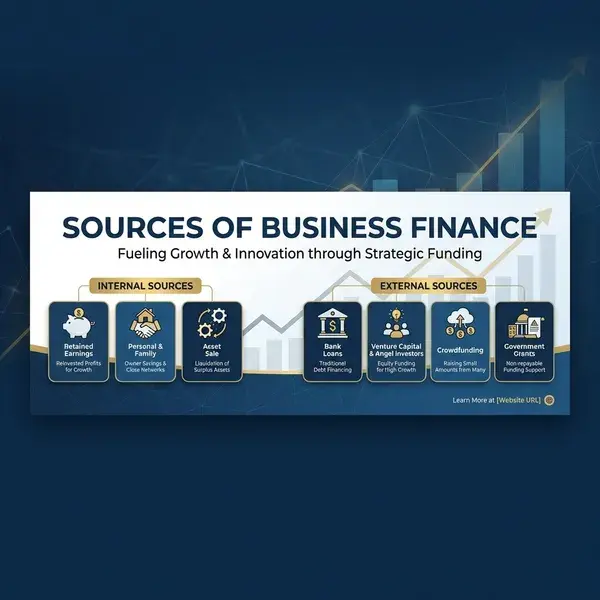
Sources Of Business Finance
Sources of Business Finance Guide
UK businesses accessed sources of business finance £516 billion in lending across various finance sources during 2023 – a figure that demonstrates the substantial capital flowing through the British business ecosystem. Source
Your startup’s survival depends on securing appropriate financing sources. Bank loans represent traditional external finance, requiring repayment with interest over predetermined periods. Alternative business financing includes crowdfunding, which generated £550 million in equity-based funding during 2020. These diverse options create complexity, especially considering 61% of smaller firms seek finance primarily for working capital management. See business financial planning

Government-backed Start-Up Loans provide up to £25,000 for new businesses, while venture capital investments typically begin at £250,000. This financing landscape offers unprecedented variety. Success requires knowing which funding source to approach first – a decision that determines how efficiently you deploy your time and resources. See business vehicle financing
This guide examines the essential business finance sources every startup founder must understand for Funding For Small Businesses In Wales. You’ll gain practical knowledge about each option’s requirements, advantages, and application processes. The information is presented without unnecessary complexity, allowing you to make informed financing decisions that support your business objectives. See business partnering finance
Each funding source serves specific business needs and growth stages. Understanding these distinctions enables you to match your requirements with the most suitable financing approach, ultimately supporting your startup’s development and long-term success. See business finance rates
Understanding Internal vs External Finance
Business finance operates through two fundamental categories that determine how startups access capital and manage their growth trajectory.
Internal vs External Finance: The Foundation of Business Funding
Business funding operates through two fundamental channels: internal sources generated within your company and external sources obtained from outside parties. See funding for a small business in Wales
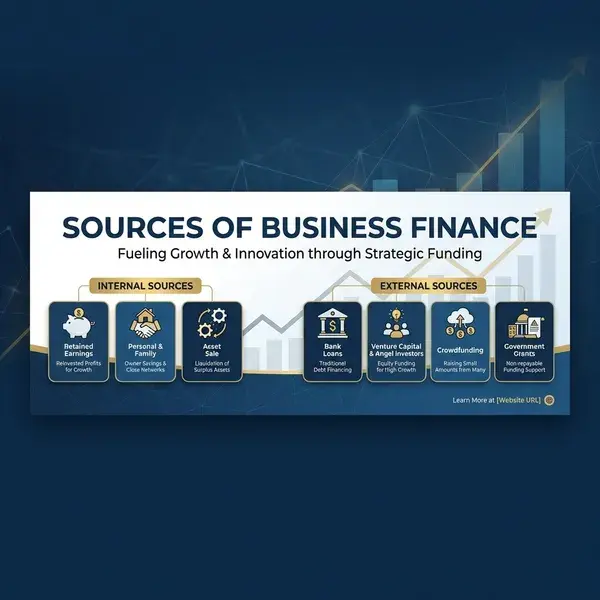
Internal sources of finance explained sources of business finance
Your business generates internal finance through its own operations and resources then Funding For Small Businesses In Wales. These funds require no external approval, application processes, or third-party agreements.
Internal funding sources comprise:
- Retained profits – Business earnings reinvested rather than distributed to owners or shareholders
- Asset sales – Liquidating business property, equipment, or inventory to generate immediate cash
- Owner financing – Personal capital injection from founders or directors
This funding approach provides complete operational control without external interference. Small businesses frequently favour internal sources during economic uncertainty or when pursuing conservative growth strategies.
External sources of finance defined Sources Of Business Finance
External finance enters your business from third parties and typically requires either debt servicing or equity sharing arrangements. These sources generally offer substantially larger capital amounts than internal options.
External funding encompasses bank loans and overdrafts, equity investments from business angels or venture capitalists, government grants, and alternative platforms including crowdfunding or peer-to-peer lending.
Startups pursue external funding to access capital volumes necessary for expansion, high-value asset purchases, or growth opportunities that exceed internal capacity.
Strategic implications for startup founders Sources Of Business Finance
This distinction carries significant strategic weight for startup operations. Internal financing maintains complete business autonomy and ownership retention, yet scope remains constrained because new businesses typically lack substantial profit reserves for reinvestment.
External financing delivers access to substantial capital that can accelerate business development. However, these arrangements include obligations – interest payments on debt or ownership dilution with investors.
Successful startups typically employ hybrid financing strategies, maximising internal resources while strategically accessing external funding for specific growth initiatives or seasonal requirements.
Equity Finance Options for Startups
Equity financing enables startups to exchange ownership percentages for capital investment. This approach delivers substantial funding without immediate repayment obligations, making it particularly valuable for businesses requiring significant growth capital.
Angel investors and business angels Sources Of Business Finance
Angel investors constitute the primary investment source for UK startups and early-stage businesses. These high-net-worth individuals deploy personal capital to acquire minority ownership stakes, typically ranging from 10% to 25%. Angel investment extends beyond monetary contribution – investors provide strategic mentorship, industry expertise, and professional networks accumulated through their business experience.
Individual angel investments span £5,000 to £500,000 per business. Angel syndicates frequently collaborate to pool resources, enabling larger investments that can exceed £1.5 million. This collaborative approach allows startups to access both increased capital and diversified expertise from multiple experienced investors.
Venture capital funding sources of business finance
Venture capital firms target high-growth potential startups, particularly those operating within life sciences, IT, and FinTech sectors. VC investment originates from professionally managed funds rather than individual investors, creating a more structured investment process.
VC funding typically progresses through sequential rounds – Series A, B, and C – with each round potentially securing millions in investment. Early-stage venture capitalists target 10-15x returns on their investments, reflecting their focus on businesses with exceptional growth trajectories and scalable business models.
Equity crowdfunding platforms Sources Of Business Finance
Equity crowdfunding platforms such as Crowdcube and Republic Europe (formerly Seedrs) enable multiple investors to acquire small ownership stakes through online investment portals. This approach particularly benefits consumer-focused businesses – 76% of crowdfunded companies serve consumer markets compared to 40% of venture-backed businesses.
The median crowdfunding round reached £500,000 in 2024, considerably lower than the £1.72 million median for traditional equity transactions. This difference reflects crowdfunding’s accessibility to smaller businesses and individual investors seeking modest investment amounts.
Share issues for limited companies
Limited companies can raise capital through direct share issuance to investors. This method enables businesses to expand their ownership base while retaining operational control. EIS/SEIS schemes limit angel investors to maximum 30% equity stakes, ensuring founders maintain majority control.
Most businesses exchange 15% to 30% of equity for investment capital. Companies must evaluate their share structure, business valuation, and future funding requirements before issuing shares. Proper planning ensures adequate equity reserves for subsequent funding rounds while maintaining founder control and investor confidence.
Debt Financing Options sources of business finance
Debt financing enables startups to secure capital while retaining full ownership control – a significant advantage over equity-based funding methods.
Bank loans and overdrafts
Traditional bank loans serve as the primary external financing source for established businesses with proven credit profiles. Banks evaluate repayment capacity through consistent cash flow patterns and typically require collateral security. Startups lacking trading history face significant challenges accessing these facilities, with SME loan acceptance rates declining from 80% in 2018 to 50% in 2023.
Government-backed startup loans
The Start Up Loans scheme provides government-backed personal loans designed specifically for new businesses. Loan amounts range from £500 to £25,000 at a fixed 6% annual interest rate, with repayment terms spanning 1-5 years. Successful applicants receive 12 months of complimentary mentoring support. Eligibility requires businesses to be less than three years old and UK-based.
Peer-to-peer lending platforms
Peer-to-peer (P2P) lending connects businesses directly with individual investors through online platforms, eliminating traditional banking intermediaries. This alternative financing source offers rapid decision-making and streamlined online application processes. The Financial Conduct Authority regulates P2P platforms operating within the UK.
Credit unions and responsible lenders sources of business finance
Credit unions operate as not-for-profit financial cooperatives owned by their members, providing valuable alternatives to mainstream financing. Membership requirements grant access to personalised support, flexible lending terms, and reduced fees compared to traditional lenders. Credit unions typically provide small to moderate loans with minimal collateral demands.
Hire purchase and leasing agreements
Hire purchase agreements allow businesses to spread asset acquisition costs through monthly instalments over predetermined periods. The arrangement involves hiring the asset until completing all payments. This structure protects cash flow while ensuring eventual full ownership, making it particularly suitable for startups requiring essential equipment without substantial capital expenditure.
Alternative and Grant-Based Funding
Non-repayable funding sources provide capital without equity dilution or debt obligations, yet many startups fail to explore these valuable options.
Government grants and subsidies Sources Of Business Finance
The UK government allocates over £12 billion annually through various grant programmes. These funds target specific business outcomes including innovation, sustainability, and job creation. Innovate UK grants support technology-driven enterprises, while the Smart Grants scheme provides up to £2 million for disruptive projects demonstrating high growth potential.
The UK’s Find a Grant service catalogs opportunities from woodland creation grants to electric vehicle infrastructure support. Application windows for many programmes extend to 2026-2027, providing startups sufficient time to develop strong proposals.
Local authority schemes sources of business finance
Local authorities operate region-specific funding programmes designed to stimulate economic growth within designated areas. Examples include grants supporting the Elmbridge economy and schemes assisting businesses relocating to Scarborough.
Local Enterprise Partnerships (LEPs) distribute funding to support business growth and job creation at regional levels. These programmes typically focus on businesses operating within specific postcodes or counties.
Enterprise agencies and support networks Sources Of Business Finance
Support networks including the National Enterprise Network and Enterprise Nation provide practical resources alongside financial assistance. The Prince’s Trust Enterprise Programme delivers support and funding specifically for entrepreneurs aged 18-30.
These organisations offer mentoring, training workshops, and networking opportunities in addition to funding access.
Crowdfunding for product-based startups
Product crowdfunding operates differently from equity crowdfunding – backers receive tangible rewards rather than company shares. This approach enables startups to pre-sell products while raising capital.
Platforms such as Kickstarter, Indiegogo, and Patreon help businesses with consumer-facing products validate market demand before full production. Major brands including Allbirds and Peloton launched through product crowdfunding campaigns.
This method provides capital without equity dilution or debt obligations, making it particularly valuable for early-stage startups.
Conclusion sources of business finance
Your startup’s financing strategy requires precise alignment with business objectives and growth requirements. This guide has examined the funding landscape available to UK startups, covering internal finance options, external debt sources, equity investments, and grant opportunities.
Financing decisions sources of business finance fundamentally impact your business trajectory. Equity financing delivers substantial capital without immediate repayment obligations, though ownership dilution remains a key consideration. Debt financing suits businesses with predictable cash flow patterns who prefer retaining full operational control.
Grant funding and alternative sources merit serious consideration. Government grants, local authority programmes, and product crowdfunding deliver capital without equity dilution or debt creation. These options frequently include additional benefits such as mentoring support, professional networks, and market validation opportunities.
The UK’s current funding environment provides startups with extensive options across different development stages. New businesses can begin with personal investment or government-backed Start-Up Loans, then advance to angel investment or venture capital during scaling phases. Product-focused startups often find crowdfunding platforms particularly suitable for their requirements.
Successful startups typically employ multiple funding sources throughout their development cycle. Each growth phase presents different capital requirements and strategic priorities. Understanding individual funding mechanisms enables informed decisions about timing, amounts, and optimal source selection.
Securing appropriate sources of business finance represents one component of your entrepreneurial strategy. Quality funding partners deliver value beyond capital provision – offering industry expertise, professional connections, and strategic guidance that supports long-term business success in competitive markets.
Your financing approach should evolve alongside your business development. The most effective strategy combines thorough market understanding with careful assessment of each funding option’s requirements, benefits, and potential business impact.
Key Takeaways Sources Of Business Finance
Understanding your sources of business finance options is crucial for startup success, as the right funding choice can accelerate growth whilst the wrong one may hinder progress.
• Distinguish between Sources Of Business Finance internal finance (retained profits, asset sales) and external finance (loans, investors) to make strategic funding decisions • Government-backed Start-Up Loans offer £500-£25,000 at 6% interest with mentoring support for businesses under three years old • Angel investors provide £5,000-£500,000 plus valuable mentorship, typically taking 10-25% equity stakes in early-stage businesses • Equity crowdfunding democratises investment through platforms like Crowdcube, with median rounds of £500,000 in 2024 • Over £12 billion in government grants are available annually, offering non-repayable funding for innovation and growth projects • Most successful startups combine multiple funding sources throughout their growth journey rather than relying on a single option
The key of Sources Of Business Finance is matching your financing strategy to your business stage, growth plans, and willingness to share ownership or take on debt obligations.