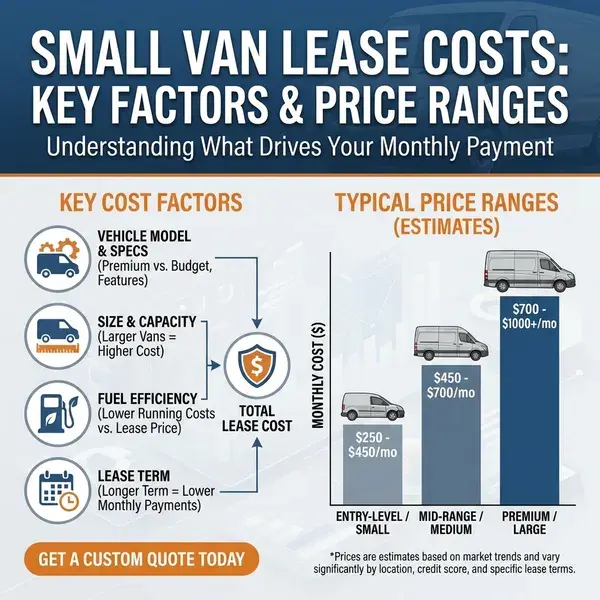
Small Van Lease Costs
Small Van Lease costs vs Buying
When it comes to small van lease costs, businesses and individuals face a crucial decision: to lease or to buy? This choice has a significant impact on finances, operations, and long-term planning. Understanding the pros and cons of each option is essential for making an informed decision that aligns with specific needs and goals. Source
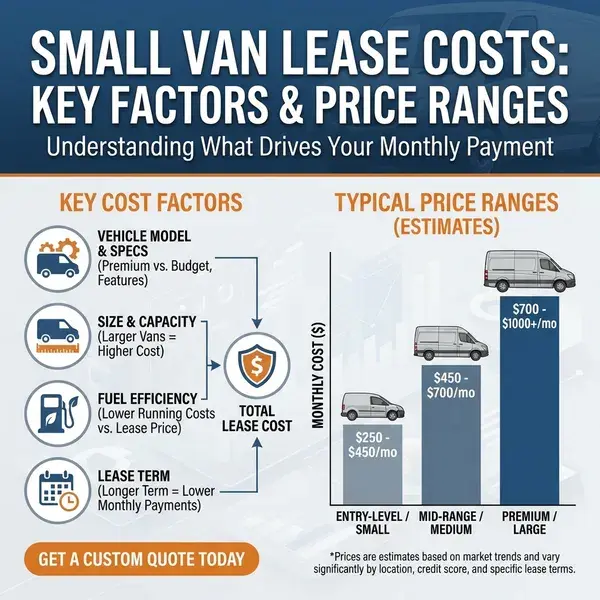
This article explores the advantages and disadvantages of leasing versus buying a small van. It delves into the intricacies of van leasing contracts, including factors like annual mileage and fuel efficiency. The piece also examines the financial aspects of van ownership, such as upfront costs and long-term value. By weighing these factors, readers will gain valuable insights to help them choose the most suitable option for their unique circumstances. See all van lease deals
Understanding Small Van Leasing
What is Small Van Leasing?
Small van leasing is a flexible and cost-effective way for businesses and individuals to access new vehicles without the burden of ownership. It’s essentially a long-term rental agreement where the lessee pays a fixed monthly fee to use a brand-new small van for a set period, typically ranging from 2 to 5 years. This arrangement allows users to drive the latest models with minimal upfront costs, making it an attractive option for those looking to manage their small van lease costs effectively.
How Does Small Van Leasing Work?
The process of Small Van Lease Costs is straightforward. It begins with selecting a suitable vehicle from a wide range of options offered by leasing companies. The lessee then agrees to terms such as the lease duration, annual mileage limit, and monthly payments. An initial rental payment, often equivalent to a few months’ installments, is usually required at the start of the contract.
Throughout the Small Van Lease Costs period, the lessee is responsible for the van’s day-to-day running costs, including fuel and insurance. However, many lease agreements include road tax, breakdown cover, and sometimes even maintenance packages, which can help businesses better predict their overall expenses.
At the end of the Small Van Lease Costs term, the van is returned to the leasing company. This eliminates concerns about depreciation and selling the vehicle, which are common issues when owning a van outright. It’s important to note that the van must be returned in good condition, adhering to fair wear and tear guidelines to avoid additional charges.
Types of Small Van Leasing Agreements
There are primarily two types of small van leasing agreements available:
- Business Contract Hire (BCH): This is the most common type of van lease for businesses. It offers fixed monthly payments, which can be advantageous for budgeting purposes. BCH agreements often come with the option to include maintenance packages, further simplifying cost management for businesses.
- Personal Contract Hire (PCH): Similar to BCH, but designed for individuals rather than businesses. This option allows private individuals to enjoy the benefits of leasing a small van for personal use.
Both types of agreements offer the flexibility to choose lease terms and mileage limits that suit the lessee’s needs. This customization helps in optimizing small van lease costs based on individual or business requirements.
One key advantage of leasing is the opportunity to drive a new van every few years, ensuring access to the latest technology and fuel-efficient models. This can be particularly beneficial for businesses looking to maintain a modern fleet while keeping their carbon footprint in check.
Moreover, leasing can provide significant tax benefits for businesses. In many cases, lease payments can be deducted as a business expense, potentially reducing the company’s tax liability. However, it’s always advisable to consult with a tax professional to understand the specific implications for your business.
While Small Van Lease Costs offers many advantages, it’s important to consider factors such as mileage restrictions and potential excess wear and tear charges. Exceeding the agreed-upon mileage or returning the van in poor condition can result in additional fees at the end of the lease term.
The Benefits of Small Van Lease Costs
Small van leasing offers numerous advantages for businesses and individuals looking to manage their vehicle needs effectively. This option provides a cost-effective solution that allows access to modern vehicles without the burden of ownership. Let’s explore the key benefits of small van leasing.
Lower Upfront Costs
One of the most significant advantages of leasing a small van is the reduced initial expense. Unlike purchasing a van outright, which requires a substantial upfront payment, leasing typically involves a much smaller initial outlay. This lower upfront cost is particularly beneficial for businesses with limited capital or those wanting to preserve their cash flow for other essential expenses. See Citroen Berlingo lease
For example, when leasing a small van, businesses often only need to pay an initial rental fee, which is usually equivalent to a few months’ worth of lease payments. This amount is considerably less than the down payment required when buying a van, making it easier for businesses to acquire the vehicles they need without straining their finances. See Renault Kangoo lease
Fixed Monthly Payments Small Van Lease Costs
Leasing a small van offers the advantage of predictable, fixed monthly payments. This aspect of van leasing is particularly helpful for businesses looking to manage their budgets effectively. The fixed nature of these payments allows for better financial planning and cash flow management. See Peugeot partner lease
These monthly lease payments are often lower than the repayments associated with financing a van purchase. This is because lease payments are based on the van’s depreciation over the lease period rather than its full purchase price. As a result, businesses can enjoy lower monthly expenses, freeing up capital for other areas of operation. See VW caddy lease
Access to Newer Models
One of the most appealing aspects of small van leasing is the opportunity to drive the latest models with up-to-date features and technology. Lease agreements typically last between two to five years, after which lessees can choose to lease a new vehicle. This means businesses can regularly upgrade their vans without the hassle of selling or trading in older vehicles. See Ford Connect lease
Newer models often come with improved fuel efficiency, which has a significant impact on small van lease costs over time. They also feature the latest safety technologies and comfort features, enhancing driver satisfaction and potentially improving productivity. Additionally, driving newer vans can project a professional image to customers, which is particularly important for businesses that rely on their vehicles for client interactions or deliveries.

Tax Advantages
Leasing a small van can offer substantial tax benefits for businesses. In many cases, lease payments can be deducted as a business expense on tax returns, potentially reducing the company’s overall tax liability. This tax treatment of lease payments can result in significant savings compared to the tax implications of purchasing a van outright.
Moreover, businesses that lease vans may be able to reclaim a portion of the VAT on their lease payments. The exact amount of VAT that can be reclaimed depends on how the van is used, but this can represent a considerable saving over the life of the lease.
For vans with lower CO2 emissions, businesses may also benefit from higher levels of tax relief. This incentive encourages the use of more environmentally friendly vehicles, aligning with many companies’ sustainability goals while also providing financial benefits.
It’s important to note that tax regulations can be complex and may vary depending on specific circumstances. Therefore, it’s advisable for businesses to consult with a tax professional to fully understand the tax implications of leasing a small van for their particular situation.
In conclusion, small van leasing offers a range of benefits that make it an attractive option for many businesses. From lower upfront costs and fixed monthly payments to access to newer models and potential tax advantages, leasing provides a flexible and cost-effective solution for managing vehicle needs. By carefully considering these benefits, businesses can make an informed decision about whether leasing is the right choice for their small van requirements.
The Drawbacks of Small Van Leasing
While small van leasing offers numerous benefits, it’s essential to consider the potential drawbacks before making a decision. Understanding these limitations can help businesses and individuals make informed choices about their vehicle needs.
Mileage Restrictions Small Van Lease Costs
One of the most significant drawbacks of small van leasing is the mileage restrictions. Most lease agreements come with a set mileage limit, which can be problematic for businesses that require extensive travel or transportation. These limits are established at the beginning of the lease and have a direct impact on pricing.
Exceeding the agreed-upon mileage can result in additional fees, typically charged on a per-mile basis. These excess mileage charges can range from 3p to 24p per mile, depending on the leasing company. For example, if a business goes over its limit by 1,000 miles with a 5p per mile charge, they would incur an extra £50 in fees. To avoid these costs, it’s crucial to carefully consider anticipated driving needs before agreeing to a particular mileage allowance.
Lack of Ownership
Another significant disadvantage of leasing is the lack of ownership. When leasing a small van, the lessee doesn’t own the vehicle at the end of the term. This means they don’t build equity or have an asset to sell or trade-in for value. For businesses looking to build their asset base or those who prefer owning their vehicles, leasing may not be the ideal choice.
The absence of ownership also limits the lessee’s ability to make significant modifications to the van. This can be restrictive for businesses that require specific customizations or branding on their vehicles to meet operational needs or enhance their professional image. Any changes made to the van must be reversible before returning it at the end of the lease to avoid additional charges.
Potential Additional Fees Small Van Lease Costs
Leasing a small van can come with various potential additional fees that lessees should be aware of. These may include:
- Processing fees: Some leasing companies charge a processing fee to cover the costs of arranging and marketing lease deals. For instance, some providers may charge a fee of £249 plus VAT.
- Early termination penalties: Ending a lease agreement before its agreed-upon end date can result in significant financial consequences. Most leasing companies impose penalties and fees for early termination.
- Wear and tear charges: If the van is returned in a condition that exceeds normal wear and tear, as defined by industry guidelines, additional charges may apply. It’s often more cost-effective to repair any damage before inspection rather than letting the leasing company handle repairs.
- Contract amendment fees: If a lessee needs to change their contract terms, such as adjusting the mileage allowance, they may incur fees. Some companies charge around £100 for such amendments.
Less Flexibility
Leasing a small van often comes with less flexibility compared to owning one outright. This lack of flexibility manifests in several ways:
- Limited customization options: Lessees are restricted in their ability to modify the van to suit specific business needs or brand image. This can be a disadvantage for businesses that require particular features or modifications to their vehicles.
- Fixed contract terms: Once a lease agreement is signed, the lessee is committed to its terms. Making changes or terminating the contract early can be expensive and complicated.
- Frequent vehicle transitions: Short-term leasing typically involves more frequent vehicle changes compared to long-term leasing or ownership. This can be disruptive for businesses that prefer consistency in their fleet.
- Limited availability: Not all leasing companies offer short-term van leasing options, which can limit choices for businesses seeking more flexible arrangements.
In conclusion, while small van leasing can offer advantages in terms of small van lease costs and access to newer models, it’s essential to weigh these benefits against the potential drawbacks. By carefully considering factors such as mileage restrictions, lack of ownership, potential additional fees, and reduced flexibility, businesses can make informed decisions about whether leasing aligns with their specific needs and long-term goals. See all Ford Van Lease deals
Buying a Small Van: Advantages
Full Ownership
When purchasing a small van outright, the buyer gains full ownership of the vehicle. This ownership brings a sense of freedom and control that leasing doesn’t offer. The owner has the liberty to use the van as they see fit, without any contractual restrictions. This flexibility is particularly beneficial for businesses that require specific modifications or have unique operational needs. See all Van leasing deals
Full ownership also means that the van becomes an asset for the business. As the owner pays off any loans associated with the purchase, they build equity in the vehicle. This can be advantageous in the long run, as the van can be sold or traded in when it’s no longer needed, potentially recouping some of the initial investment.
No Mileage Limits Small Van Lease Costs
One of the most significant advantages of buying a small van is the absence of mileage restrictions. Unlike leasing agreements that often come with strict mileage limits, owning a van allows for unlimited use without the fear of incurring additional charges. This is particularly beneficial for businesses that cover extensive distances or have unpredictable travel requirements.
The freedom from mileage constraints can lead to more efficient operations and potentially lower fuel costs in the long run. Businesses can focus on their work without constantly monitoring their mileage, which can be especially advantageous for those in industries like delivery services or mobile repairs. See all
Customization Options
Owning a small van provides the freedom to customize the vehicle to suit specific business needs. This level of customization is often not possible with leased vehicles due to contractual limitations. Owners can modify both the exterior and interior of the van to align with their brand image and operational requirements.
For example, businesses can install specialized racking systems, add extra seating, or even create a mobile office space within the van. The ability to wrap the van with company branding or unique designs is another advantage that can significantly enhance a business’s visibility and professional image.
Potential Long-term Savings Small Van Lease Costs
While the initial outlay for purchasing a small van can be substantial, there’s potential for long-term savings. Once the van is paid off, the owner no longer has ongoing monthly payments, which can significantly reduce operational costs over time. This can be particularly advantageous for businesses with stable, long-term vehicle needs.
Additionally, owning a van offers tax benefits. Businesses can claim capital allowances against the purchase of a van used for business purposes, which can help lower their income tax bill. It’s important to note that these tax advantages may vary depending on specific circumstances and local regulations.
Furthermore, as the owner has control over maintenance and repairs, they can potentially save money by choosing cost-effective service options or even performing some maintenance tasks in-house. This level of control over costs is not typically available with leased vehicles.
In conclusion, while small van lease costs may seem attractive in the short term, buying a small van offers distinct advantages in terms of ownership, unlimited usage, customization options, and potential long-term savings. These benefits make purchasing a viable option for businesses looking for complete control over their vehicles and those with specific operational needs that require a more personalized approach to their vehicle fleet.
Buying a Small Van: Disadvantages
Higher Initial Costs
Purchasing a small van outright involves a significant upfront investment. Brand new vans typically start at around £18,000 for basic smaller models like a Ford Transit Courier or Renault Kangoo. Larger panel vans often begin at £25,000, with high-end models reaching up to £50,000. This initial expense can be a substantial burden for businesses, especially when compared to small van lease costs, which often require lower upfront payments.
For those considering used vehicles, vans generally retain their value better than cars, making them more expensive even in the second-hand market. This higher cost can impact a business’s cash flow and potentially limit other investments or operational expenses.
Depreciation Small Van Lease Costs
One of the most significant drawbacks of buying a small van is depreciation. The value of a van typically decreases over time, with the most substantial drop occurring in the first few years of ownership. On average, a new vehicle can lose 15-35% of its value in the first year alone, and up to 50% within three years.
This rapid depreciation has a considerable impact on the overall cost of ownership. For businesses, it means that the asset loses value quickly, affecting the company’s balance sheet and potentially leading to a lower return on investment when it’s time to sell or trade in the vehicle.
Maintenance Responsibilities
When you own a small van, you’re responsible for all maintenance and repair costs. This includes regular servicing, MOTs, and any unexpected repairs that may arise. The cost of these responsibilities can add up quickly, especially as the van ages and becomes more prone to wear and tear.
For example, a full service for a campervan in the UK can range from £200 to £400 or more, depending on the vehicle’s size, age, and any additional services required. Major services, which are typically recommended at longer intervals, can cost between £300 to £600 or more. These expenses can significantly impact a business’s budget, especially when compared to leasing options that often include maintenance packages.
Obsolescence Risk
As technology in the automotive industry advances rapidly, there’s a risk that owned vans may become outdated more quickly than anticipated. This obsolescence can manifest in various ways, including reduced fuel efficiency compared to newer models, outdated safety features, and less advanced technology for navigation or fleet management.
For businesses, this can mean higher fuel costs, potential safety concerns, and reduced efficiency in operations. Additionally, as environmental regulations become stricter, older vans may face restrictions or additional charges in certain areas, further impacting their usability and value.
The risk of obsolescence is particularly relevant in industries where having up-to-date vehicles is crucial for maintaining a competitive edge or meeting customer expectations. This can lead to pressure to replace vehicles more frequently, incurring additional costs and potentially negating any long-term financial benefits of ownership.
Conclusion Small Van Lease Costs
The decision to lease or buy a small van has a significant impact on a business’s operations and finances. Both options come with their own set of pros and cons, ranging from upfront costs and long-term expenses to flexibility and control. The choice ultimately depends on a company’s specific needs, financial situation, and long-term goals. Factors such as mileage requirements, customization needs, and cash flow considerations play a crucial role in making this decision.
Businesses should carefully weigh these factors to determine which option aligns best with their objectives. Leasing might be more suitable for companies seeking lower initial costs and regular vehicle upgrades, while buying could be better for those needing unlimited mileage or extensive customization. Regardless of the choice, it’s essential to consider the long-term implications and to revisit the decision periodically as business needs evolve. By making an informed choice, companies can optimize their vehicle strategy and support their overall business success.
FAQs Small Van Lease Costs
There are no specific FAQs provided related to the article “The Pros and Cons of Small Van Leasing vs Buying: Making the Right Choice.” If you have any questions about small van leasing or buying, feel free to ask!