 Call us on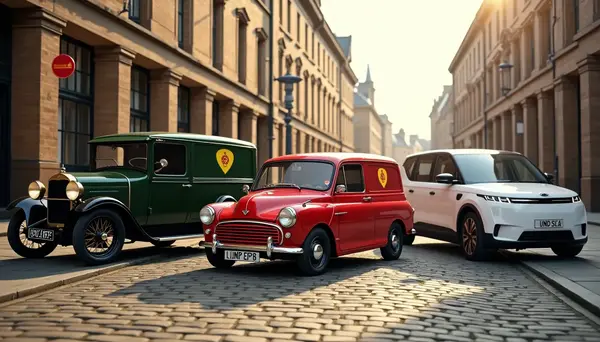
Royal Mail Van
Royal Mail Van: Journey Time
The iconic red Royal Mail vans make their daily rounds through British streets and neighbourhoods. These familiar vehicles tell an amazing story that goes back more than 100 years in British postal history.
Simple post office vans have grown into today’s modern royal mail fleet, showing British breakthroughs at their best. The postal service has used various vehicles – from horse-drawn carriages to advanced electric vehicles. Royal mail vehicles have evolved with Britain’s technological progress. Source
Let’s discover how these workhorses of British postal delivery have changed through different eras. These remarkable vehicles have adapted to meet our society’s changing needs. See all parcel vans
From Horse-Drawn to Horsepower: The Early Years
Royal Mail’s delivery fleet started its remarkable journey in the late 1700s with horse-drawn carriages serving as the foundation of postal service. In 1784, the first mail coach service connected Bristol and London via Bath. This service marked the start of Britain’s organised postal transport system. See all courier vans
Our postal transport’s development brought unexpected benefits to British society. Mail coaches helped create a standardised time across the UK, replacing the previous system of different regional times. The postal service even employed a River Postman who delivered mail to ships in the Pool of London throughout the 19th century. see all vans for sale
A major breakthrough came in 1907 with the arrival of our first motor vehicle – the Maudslay Stores Number 1. This innovative van cost £727 and proved its value by covering 300,000 miles during its 18-year service life. See van leasing
Several innovations shaped our early postal service:
- Steam-driven packet ships in the early 1800s
- Introduction of trains in 1911
- First overseas airmail flight in 1918
The switch from horse-drawn to motorised transport happened gradually. Horse-drawn mail coaches still delivered parcels in 1887, mainly to reduce railway company payments. Royal Mail now operates the UK’s largest fleet with approximately 47,000 vehicles. This massive fleet shows how far we’ve advanced since those early horse-drawn carriage days.

The Golden Age of British-Made Mail Vans
British-made postal vehicles enjoyed a golden era from the 1950s through the 1970s. Our royal mail fleet featured iconic manufacturers. The legendary Morris Minor van became our postal service’s backbone when the General Post Office bought over 50,000 of these reliable workhorses between 1953 and 1971. See all delivery vans
The distinctive Bedford CA van arrived in the 1950s and became Royal Mail’s signature vehicle. These vans had rounded edges and practical sliding doors that matched our post-war delivery needs perfectly.
Royal Mail’s steadfast dedication to British manufacturing continued through the 1970s and 80s with Leyland and Ford Escort vans joining the fleet. The Leyland transformed our operations with its versatility and reliability.
These vehicles stood out because of their custom features built specifically for postal work:
- Specialised internal partitions and additional locks on doors
- Round depressions in the door moulding for security bars
- Distinctive rubber wings that could withstand minor scrapes
Post Office patronage kept the Morris Minor in production almost exclusively. These vans became more than delivery vehicles – they turned into symbols of reliability and service. Many covered over 300,000 miles during their service life.
Our fleet has grown by a lot since then. We now operate approximately 48,000 vehicles as Europe’s largest commercial vehicle fleet. Yet we still honour that proud tradition of reliable service from the golden age of British-made mail vans.
Modernisation and Technological Revolution
Royal Mail’s fleet leads the vanguard of tech innovation today. This marks our biggest change since we first used motorised vehicles. We’re pushing ahead with environmentally responsible delivery and plan to add 2,100 new electric vans to our fleet. These will join our existing 5,000 electric vehicles.
Our improvements go well beyond just vehicles. Smart technology now powers our 850,000 roll containers through IoT integration. Each container has tiny computers and Bluetooth devices that create a live digital map of its movements. This has streamlined our operations by a lot.
Our tech investments have paid off well:
- Fuel usage reduced by more than 10%, saving £4.4 million
- Accident rates decreased by 20%
- Instances of speeding reduced by 60%
- Harsh braking incidents down by 70%
We take pride in our green achievements. Our electric van fleet runs on 100% renewable electricity. We’ve also switched to hydrotreated vegetable oil (HVO) for our heavy goods vehicles. This produces up to 90% less direct carbon emissions than diesel and has saved more than 30,000 tonnes of carbon dioxide equivalent.
GPS technology now powers our same-day deliveries. Customers can track their parcels live with amazing accuracy. This tech upgrade isn’t just about staying current – it sets new benchmarks for postal delivery services in the 21st century.
Conclusion Royal Mail Van
Royal Mail’s vans have evolved remarkably since their humble beginnings as horse-drawn carriages in the 1700s. British breakthroughs and steadfast dedication to service have kept these vehicles at the heart of our nation’s postal system for more than 200 years. The shift from Morris Minors to modern electric vans demonstrates our commitment to preserve tradition while embracing progress.
Our postal fleet’s future shines bright. We lead the way in green delivery solutions with thousands of electric vehicles on the road and bold sustainability targets ahead. Royal Mail’s smart tracking systems and smaller environmental footprint show that we deliver more than just letters and parcels – we bring positive change to Britain’s future.
These iconic red vans that cruise British streets daily mean more than just postal delivery. They serve as moving tributes to our rich heritage and reinforce our promise to serve UK’s communities with greater efficiency and environmental responsibility.
FAQs Royal Mail Van
Q1. When was the Royal Mail founded and how has it evolved? The Royal Mail was founded on July 31st, 1635, by King Charles I. It has evolved from using horse-drawn carriages in the late 1700s to introducing its first motor vehicle in 1907. Today, it operates Europe’s largest commercial vehicle fleet with approximately 48,000 vehicles, including electric and hybrid models.
Q2. What types of vehicles does Royal Mail currently use? Royal Mail uses a diverse fleet of vehicles, including traditional vans and trucks, as well as modern electric and hybrid vehicles. They have recently added 2,100 new electric vans to their fleet, which already includes 5,000 electric vehicles. The company also uses heavy goods vehicles that run on hydrotreated vegetable oil for reduced carbon emissions.
Q3. How has technology improved Royal Mail’s operations? Royal Mail has implemented various technological advancements, including computerised tracking systems and modern fleet management technologies. They’ve equipped 850,000 roll containers with IoT technology, creating a live digital map of each container’s journey. This has led to significant improvements in fuel efficiency, accident rates, and overall operational effectiveness.
Q4. What were some iconic British-made mail vans used by Royal Mail? During the 1950s to 1970s, Royal Mail primarily used British-made vehicles. The Morris Minor van was particularly iconic, with over 50,000 purchased between 1953 and 1971. Other notable models included the Bedford CA van, Leyland vans, and Ford Escort vans, all of which were customised for postal work with specialised features.
Q5. How is Royal Mail addressing environmental concerns? Royal Mail is actively working to reduce its environmental impact. They’ve introduced a large number of electric vehicles, which are charged using 100% renewable electricity. Additionally, they’ve begun using hydrotreated vegetable oil in their heavy goods vehicles, which produces up to 90% less direct carbon emissions compared to diesel. These initiatives have already saved more than 30,000 tonnes of carbon dioxide equivalent.