How Many Seats Are in a Peugeot Partner Van?
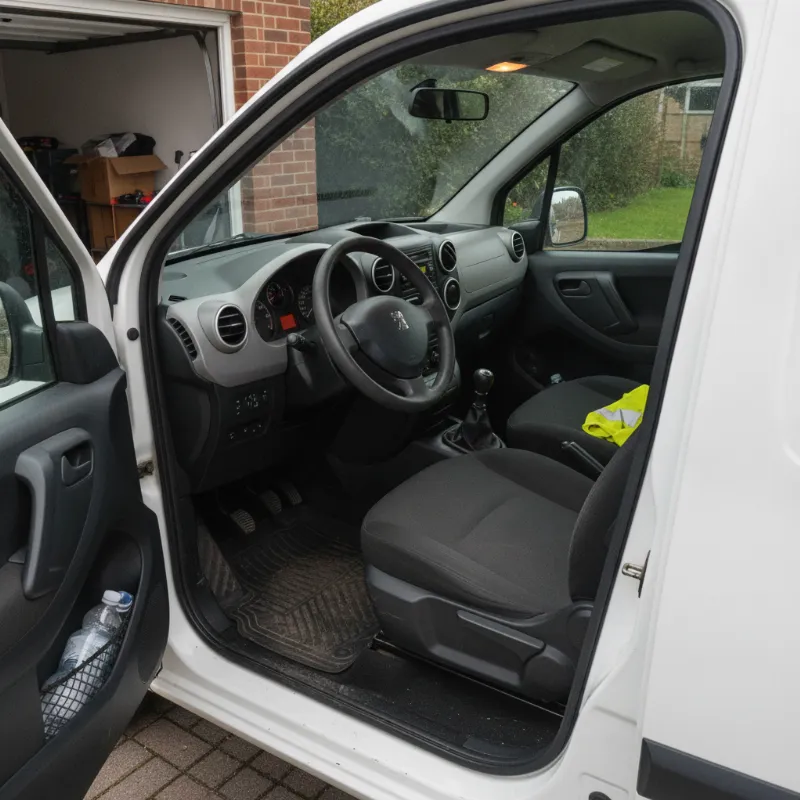
How Many Seats Does a Peugeot Partner Van Have?
The Peugeot Partner is one of the most popular small vans on UK roads, and its seating capacity depends on the trim level and body style you choose. In its standard panel van form, the Peugeot Partner comes with either two or three seats in the cab, while the Crew Van version stretches that to five seats across two rows. Understanding which layout suits your working day is the first step to picking the right Partner for your business.
Peugeot has designed the Partner cab to be flexible, so whether you're a sole trader carrying tools and stock or a small team travelling to site together, there's a configuration to match. Below we break down each option in detail.
Standard 2-Seat Configuration
The most common Peugeot Partner setup is a two-seat cab, comprising the driver's seat and a single front passenger seat. This layout is ideal for drivers who spend most of their time alone on the road and want maximum comfort, elbow room and easy access to the cabin controls. It also frees up space for a fold-down worktop or additional in-cab storage on higher trims, turning the passenger area into a mobile mini-office.
3-Seat Configuration with Middle Seat
Many Peugeot Partner models are available with a three-seat cab, adding a slim middle seat between the driver and outer passenger. This is a popular choice for tradespeople who occasionally need to bring an apprentice or colleague along. The centre seat backrest often folds down to reveal a work surface with a clip for paperwork or a tablet, so you don't lose practicality when travelling solo. It's a smart compromise between everyday functionality and the ability to carry an extra passenger when needed.
Peugeot Partner Crew Van: 5-Seat Option Explained
If you regularly need to transport a small team, the Peugeot Partner Crew Van is the answer. This variant seats five people in total, with three up front and a second row of two seats behind. The rear bench is separated from the load area by a fixed bulkhead and provides proper three-point seatbelts and headrests, making it a genuine passenger-carrying option rather than a compromise.
The Crew Van layout is particularly popular with construction firms, landscapers, event crews and utility teams who need to move both people and equipment to the same job. While adding rear seats does reduce the maximum load length, you still retain a usable cargo area behind the second row, so the van remains a true dual-purpose workhorse.
Peugeot Partner LWB Seating and Load Space
The Peugeot Partner is offered in two body lengths: the standard wheelbase and the longer LWB (also badged as Long). Seating capacity itself doesn't change between the two — you can still choose two, three or five-seat configurations — but the LWB gives you noticeably more room behind the cab or crew seats, making it a strong pick if payload volume is a priority.
How the Long Wheelbase Affects Cabin and Payload
Choosing the LWB Peugeot Partner adds around 190mm to the overall length, virtually all of which goes into the load area rather than the cab. That means seating comfort in the front row stays the same, but you gain useful extra load length — enough to accommodate longer pipes, timber or additional Euro pallets. On Crew Van LWB models, this extra length is especially valuable, as it offsets the space taken up by the second row of seats and keeps the van practical for larger loads. Payload figures also tend to be higher on LWB versions, giving you more headroom for heavier cargo.
Peugeot Partner Dimensions and Interior Layout
The standard Peugeot Partner measures approximately 4.40m long, while the LWB stretches to around 4.75m. Both share a width of just under 1.92m (excluding mirrors) and a height of around 1.88m, which keeps them compatible with most height-restricted car parks and multi-storeys — a real advantage for urban operators.
Inside, the cab has been designed with the driver in mind. You'll find Peugeot's i-Cockpit dashboard on most trims, with a compact steering wheel, elevated instrument cluster and a central touchscreen. Storage is generous, with overhead shelving, deep door bins, under-seat compartments and, on three-seat models, the fold-down centre worktop. In the load area, you can expect a load volume of around 3.3 to 3.9 cubic metres depending on body length, with a payload capacity typically between 650kg and 1,000kg.
Which Peugeot Partner Seating Setup Is Right For You?
Deciding between two, three and five seats comes down to how you actually use your van day-to-day. If you almost always drive alone and want the most comfortable cab environment, the two-seat layout is hard to beat. If you occasionally need to carry a passenger but still want the flexibility of a fold-down worktop, the three-seat configuration offers the best of both worlds.
For teams and businesses that regularly move multiple people between jobs, the five-seat Crew Van is the obvious choice — particularly in LWB form, where you don't have to sacrifice too much load space. It's also worth thinking about how seating affects resale value, insurance and tax classification, so consider your typical usage over a full working week before deciding.
Buy or Lease a Peugeot Partner Van
Once you've settled on the right seating configuration, the next decision is how to fund your new Peugeot Partner. Buying outright gives you full ownership from day one and no mileage restrictions, which suits high-mileage operators or businesses that keep vans for many years. Leasing, on the other hand, spreads the cost into predictable monthly payments and often includes options for maintenance packages, making budgeting simpler and cash flow more manageable.
Contract hire and finance lease agreements are particularly popular for VAT-registered businesses, as they can offer tax-efficient ways to run a fleet without tying up capital. Whichever route you choose, our team can talk you through the available two-seat, three-seat and five-seat Peugeot Partner options in stock, and help match a specification and funding plan to your business needs.
FAQs
How many seats does a Peugeot Partner van have?
A Peugeot Partner panel van typically has either two or three seats in the cab, depending on the trim and specification chosen. The Peugeot Partner Crew Van version increases this to five seats, with three in the front row and two in a second row behind a fixed bulkhead.
Does the Peugeot Partner come with a middle seat?
Yes, many Peugeot Partner models are available with a three-seat cab that includes a slim middle seat between the driver and outer passenger. The centre seat backrest often folds down to reveal a work surface, so you can use it as a mobile desk when travelling alone.
How many people can fit in a Peugeot Partner Crew Van?
The Peugeot Partner Crew Van seats up to five people — three in the front cab and two in the rear row. Each rear seat has a three-point seatbelt and headrest, making it a practical option for transporting small teams to and from site.
Does adding rear seats reduce load space in the Peugeot Partner?
Yes, the Crew Van's second row of seats takes up some of the load area compared with the standard panel van. However, choosing the LWB (Long) version offsets much of this loss by providing extra length behind the seats, keeping the van practical for carrying tools, materials and equipment.
What's the difference between the standard and LWB Peugeot Partner?
The LWB Peugeot Partner is roughly 190mm longer than the standard version, with virtually all of that extra length added to the load area rather than the cab. Seating options remain the same across both, but the LWB offers greater load volume and typically a higher payload capacity.