
Commercial Van Leasing
Commercial Van Leasing
Commercial van leasing gives businesses a smarter way to manage their fleet without buying vehicles outright. Companies looking for new vehicles are finding that leasing comes with great advantages for their bottom line. Source
Leasing a business van creates predictable monthly payments rather than locking up capital in a vehicle that loses value. The typical 2-3 year Commercial van leasing contracts let businesses upgrade to new models without dealing with ownership issues. Companies with VAT registration can claim their monthly lease payments as tax-deductible expenses, which makes the deal even better. Leasing works differently from buying – purchase loans usually cost more each month, but leasing helps maintain cash flow and removes worries about depreciation. This piece will get into why partnering with commercial van leasing companies could be your smartest business move for 2025. See business van lease
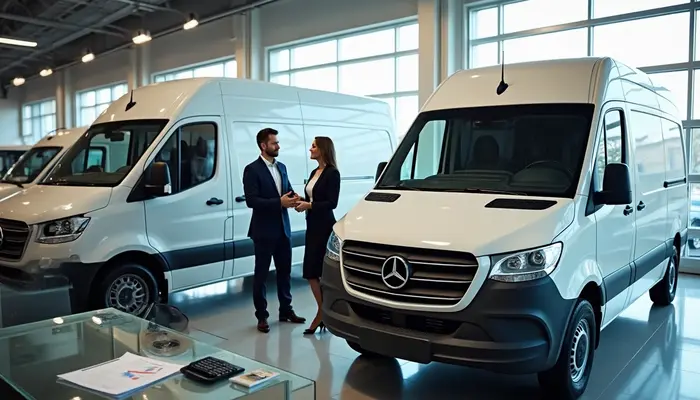
Understanding the difference: lease or buy a van
The basic choice between Commercial van leasing and buying a commercial van comes down to one simple difference: Do you want to own the asset or just use it for a while? Your decision affects everything from your first costs to your long-term finances. See van lease long term
Ownership vs usage rights Commercial Van Leasing
Buying a van outright makes it your property with Commercial van leasing. You get complete freedom to change it, use it any way you want, and sell it when you’re done. Full ownership means full control – you can add your own shelving, put on roof racks, or brand it with your company’s logo without any limits. See cheap van lease
Leasing a commercial van means you pay for the right to use the vehicle for a set time, usually 2-4 years. The leasing company stays the legal owner and keeps the van’s registration. You’ll need to follow their rules about changes and how you use it. See van lease insurance
Upfront cost vs monthly payments
Buying a van needs a lot of money upfront. You either pay the full price right away or get a loan with a big deposit. This large cash investment can hurt your cash flow, especially if you run a small business or startup. See commercial vehicle lease
Business van leasing needs much less money to start – usually just 3-9 months of rental payments. You spread the rest across fixed monthly payments during your agreement. Your budget becomes easier to manage, especially if your business income changes with seasons. See van leasing companies
Leasing also keeps your money free instead of tying it up in something that loses value. You can put that money into other parts of your business that might give you better returns. See get a van on finance
End-of-term outcomes
The end of your Commercial van leasing agreement looks very different based on what you chose:
If you bought the van and paid off any loan, it’s yours completely. It becomes a business asset, but one that’s worth much less than before. You’ll need to sell or get rid of it when you don’t need it anymore – this takes time and might get pricey. See business van finance
With leasing, what happens next depends on your agreement type. Contract Hire, which most people choose, lets you just give the van back at the end with no extra payment. Some agreements also offer:
- Formal extensions (6-12 months with new terms)
- Informal extensions (continuing month-to-month)
- Opportunities to upgrade to a newer model
In the end, pick what lines up with what matters most to your business – whether that’s owning assets or staying flexible with newer vehicles. See van finance
Why leasing a van for business is financially smarter
The advantages of commercial van leasing over purchasing are substantial from a financial point of view. Businesses can maximise their resources in 2025 through leasing. See van finance deals
Lower original investment Commercial Van Leasing
Leasing has strong financial appeal due to its minimal upfront cost. Buying requires either full payment or a substantial deposit, while leasing just needs a small original payment. This frees up valuable capital that you can use for other business priorities. Your preserved cash flow can go toward inventory, marketing, recruitment, or other activities that generate revenue instead of being tied up in a depreciating asset. See guaranteed van finance
Fixed monthly costs for better budgeting
Monthly lease payments are the most practical financial benefit. Your payments stay consistent throughout the lease term and create a stable expense that makes financial planning simple. Ownership can bring unexpected repair bills that disrupt cash flow, but leasing gives you certainty in your outgoings. Companies can forecast expenses accurately with this fixed-cost approach, especially when you have seasonal income variations.
No depreciation risk Commercial van leasing
Depreciation is one of the hidden costs when you own a van. A new van’s value can drop by 50% within just three years on the road. Commercial van leasing eliminates this financial burden completely. The leasing company takes on the depreciation risk while you pay for usage during your contract term. You can simply return the vehicle and upgrade to a newer model when done, avoiding the hassle and potential losses of selling a used commercial vehicle.
Tax benefits for VAT-registered businesses
VAT-registered companies find leasing particularly attractive due to its tax advantages. Monthly lease payments count as allowable business expenses, making them fully tax-deductible against your profits. Companies can reclaim 100% of the VAT on lease payments when the van is used only for business. Mixed personal/business usage still allows you to reclaim between 50-100% of the VAT based on your business mileage ratio. These tax benefits boost the already strong financial case to choose leasing over buying outright.
Operational advantages of commercial van leasing
Commercial van leasing offers great operational advantages that make business vehicle management easier, beyond just saving money.
Access to the latest van models
Leasing lets you drive newer vehicles with innovative technology. You won’t get stuck with old vans. Your fleet will have advanced safety features, smooth connectivity options, and better fuel efficiency. The upgrade cycle happens every 2-4 years and will give your business a professional image. Your vans will have state-of-the-art features like autonomous heavy-traffic driving assistance and improved GPS systems. Delivery businesses and mobile services see direct benefits in efficiency from these technological improvements.
Maintenance and repair packages
The best operational benefit comes from complete maintenance packages. You pay a fixed monthly fee with your lease that covers routine servicing, MOTs, mechanical repairs, and breakdown assistance. Many packages include tyre replacements, batteries, and exhaust repairs from normal wear and tear. Some companies even provide replacement vehicles if yours needs repairs for more than 24 hours. This approach removes surprise repair bills and keeps your van running perfectly.
Flexible contract terms
Your business needs unique solutions, and commercial van leasing adapts well. Contracts usually run 2-5 years, but seasonal businesses can find short-term options starting at 84 days. You choose the original payment amounts, mileage limits, and maintenance packages based on what works for you. Your vehicle strategy grows as your business changes.
No resale or disposal hassle
The lease end is simple – just return the van to the leasing company. You won’t need to find buyers or negotiate prices. The administrative work of selling used vehicles disappears, along with advertising costs and negotiation time. You can focus on your core business and plan your next lease without worrying about resale.
Common concerns about leasing and how they compare to buying
Many businesses shy away from commercial van leasing because they worry about certain limits. Let’s look at these concerns and see how they stack up against buying a van outright.
Mileage limits and how to manage them Commercial van leasing
Lease agreements come with yearly mileage limits between 5,000 and 30,000 miles. You’ll pay extra charges per mile if you go over these limits. The good news? The total mileage gets pooled across your entire contract. A 3-year contract with 10,000 yearly miles gives you 30,000 miles to use any way you want during that time.
Here’s how to keep track of your mileage:
- Work out your monthly usage and multiply by 12
- Check old MOT certificates to see your past mileage patterns
- Think about how your business changes with seasons
- Pick a slightly higher limit if you’re not sure
Remember to call your finance provider early if you think you’ll go over your limit.
Customisation restrictions Commercial Van Leasing
Leased vans don’t give you as much freedom to make changes as owned ones. You can still do these things:
- Put on vinyl wraps and decals (as long as they come off)
- Use magnetic signs for your brand
- Install internal racking and shelving systems
You’ll need special permission to make permanent changes like repainting, drilling holes, or modifying the engine. These changes must be reversed before you return the van. Make sure to get written approval for any changes to avoid penalties or having your contract ended.
What happens at the end of the lease
Contract Hire makes things simple at the end of your lease. The company picks up the van and checks it against their wear and tear guidelines. They usually accept small scratches, light wear inside, and minor scuffs. Clean the van well and take off any modifications before they collect it.
You won’t face any big final payment – just hand over the keys and start planning your next lease.
Long-term cost vs value Commercial van leasing
Monthly payments are lower with leasing and you don’t need much money upfront. Buying might save you more money if you plan to keep the van for many years. Once you’ve paid off a van you own, you just pay for maintenance and insurance. Lease payments keep going as long as you need the van.
The best choice depends on how you use your vehicles. Leasing gives you fixed costs and new vans regularly, while owning builds value but comes with the risk of depreciation.
Conclusion
Final thoughts on van leasing versus buying
Commercial van leasing emerges as the better option for most businesses heading into 2025. Looking at both approaches, leasing offers clear benefits that make perfect business sense.
Cash flow drives every business, whatever its size. Minimal upfront costs help your company invest money elsewhere instead of locking it into assets that lose value faster. Monthly payments that you can count on help with forecasting and budgeting. You won’t need to worry about depreciation costs weighing down your balance sheet.
Tax advantages give you another reason to choose leasing. VAT-registered businesses can reclaim tax on payments and use lease costs as deductible expenses. The government helps pay for your vehicles this way.
Money isn’t everything – the practical benefits make leasing even more attractive. Your business stays competitive with access to advanced vehicles. Detailed maintenance packages remove any surprise repair costs. You simply hand back the vehicles when the lease ends, which saves you paperwork hassles.
Buying might work better if you plan to keep vans longer or need lots of customization. Most companies find leasing arranges better with their needs. Your business deserves the flexibility, better cash flow, and smooth experience that commercial van leasing offers.
Talk to your accountant about specific tax implications for your situation before you decide. Once you know all the options, commercial van leasing will probably be your best choice for fleet management in 2025 and beyond.
FAQs Commercial Van Leasing
Q1. Is leasing a commercial van more cost-effective than buying? Leasing a commercial van is often more cost-effective due to lower monthly payments, no depreciation risk, and potential tax benefits. It also provides access to newer models with advanced technology and fixed maintenance costs, making it a financially smarter choice for many businesses.
Q2. What are the main advantages of commercial van leasing? The main advantages include lower initial investment, fixed monthly costs for better budgeting, access to the latest van models, comprehensive maintenance packages, and no resale hassle at the end of the lease term. These benefits allow businesses to focus on their core activities while enjoying operational flexibility.
Q3. Are there any restrictions when leasing a commercial van? Yes, there are some restrictions. Leased vans typically have mileage limits, though these can be managed effectively. There are also limitations on permanent modifications to the vehicle. However, removable branding and internal racking systems are usually permitted with the lessor’s approval.
Q4. How does van leasing impact tax efficiency for businesses? Van leasing can be highly tax-efficient for VAT-registered businesses. Monthly lease payments are often fully tax-deductible as business expenses, and companies can reclaim up to 100% of the VAT on lease payments when the van is used exclusively for business purposes. This can lead to significant tax savings.
Q5. What happens at the end of a commercial van lease? At the end of the lease term, you simply return the van to the leasing company. They will inspect the vehicle against fair wear and tear guidelines. There’s no need to worry about selling the van or negotiating prices. You’re then free to arrange a new lease, often upgrading to a newer model with the latest features.