 Call us on
Camper Van Finance
Camper Van Finance: Affordable Options
Embarking on a camper van adventure has become increasingly popular, with more people seeking the freedom and flexibility of life on the road. However, the cost of purchasing a camper van can be substantial, making camper van finance a crucial consideration for many aspiring adventurers. Understanding the various finance options available has an impact on making this dream a reality without breaking the bank. Van Finance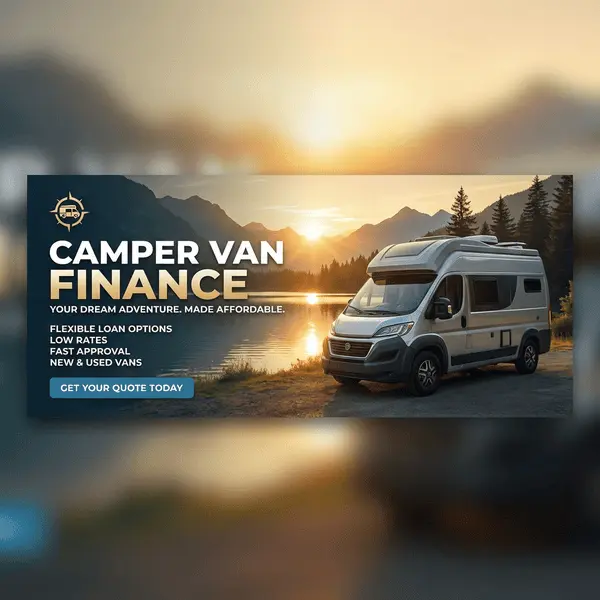
Securing affordable camper van finance involves exploring different avenues such as personal contract purchase, hire purchase, and finance lease agreements. Factors like credit score, deposit amount, and proof of income play a role in determining the most suitable finance options. This article delves into the world of camper van finance, offering insights on finance calculators, monthly payments, and tips to get the best van finance deals. Whether you’re looking at new or used vans, or even considering a Ford custom camper van, we’ll guide you through the process to help you hit the road in your dream van.
Understanding Camper Van Finance Options
When it comes to financing a camper van, there are several options available to suit different needs and financial situations. These options provide flexibility in terms of ownership, monthly payments, and long-term commitments. Let’s explore the three main finance options for camper vans: Personal Contract Purchase (PCP), Hire Purchase (HP), and Personal Contract Hire (PCH). If leasing rather than financing to eventual ownership suits you better, see our guide on whether you can lease a camper van. See VW Transporter Finance
Personal Contract Purchase (PCP)
PCP has become a popular choice for those seeking flexibility and lower monthly payments. Here’s how it works: Source
- Initial Deposit: Buyers typically pay a deposit of 10-20% of the camper van’s price.
- Monthly Payments: Fixed monthly payments are made over a set period, usually 2-4 years.
- Guaranteed Future Value (GFV): At the end of the agreement, buyers have three options:
- Return the camper van and walk away (subject to mileage and condition terms)
- Pay the GFV to keep the camper van
- Use the camper van’s value towards a new PCP agreement
PCP is essentially a loan, but unlike a standard loan, buyers don’t pay off the full value of the camper van. The amount borrowed depends on how much value the vehicle is predicted to lose over the term of the deal. The GFV, also known as the ‘balloon payment’, represents the amount the dealer expects the camper van to be worth at the end of the term. See Used Van Finance
Advantages of PCP include lower monthly payments and the flexibility to change vehicles every few years. However, it’s important to be aware of potential additional charges, such as over-mileage fees if the agreed mileage is exceeded. See Can You Modify a Car on Finance in the UK?
Hire Purchase (HP)
Hire Purchase is a straightforward financing option that leads to full ownership. Here’s how HP works: See Business Vehicle Finance
- Initial Deposit: Similar to PCP, an initial deposit is required.
- Monthly Payments: Fixed monthly payments are made over an agreed term, typically 2-5 years.
- Ownership: At the end of the agreement, the buyer becomes the outright owner of the camper van. See Van Finance For New Business
With HP, the loan is secured against the camper van, so the buyer doesn’t own the vehicle until the last payment has been made. This option spreads the cost of the camper van across fixed monthly payments, making it easier to manage finances.
Advantages of HP include a clear path to ownership, no mileage restrictions, and no balloon payment at the end. It’s usually quick and easy to arrange, but it can be expensive for short-term agreements. Also Van Lease
Personal Contract Hire (PCH)
Personal Contract Hire, also known as leasing, is a long-term rental agreement. Here’s how PCH works:
- Fixed Monthly Cost: PCH allows for control over costs without spending a large sum upfront.
- Contract Period: Agreements typically range from 2 to 5 years, tailored to specific budget needs.
- Low Initial Deposit: PCH often requires a lower initial deposit compared to other options.
PCH is similar to Business Contract Hire but is designed for individuals. The main difference is that individuals can’t recover VAT. This option provides fixed monthly costs, making it easier to manage finances. See Renault Vans Finance
Advantages of PCH include low initial deposits and monthly rentals, making it one of the most cost-effective van finance options. However, there are some considerations: See Bad Credit Van Finance
- Early termination can be expensive
- Accurate mileage estimation is crucial, as exceeding the agreed mileage incurs charges
- There’s no option to own the vehicle at the end of the agreement
PCH could be ideal for those looking for a new van with fixed monthly costs, whether they’re sole traders, need a family vehicle, or simply want a new van without the commitment of ownership. See VW Commercial Finance
When choosing between these options, it’s important to consider personal preferences and financial situations. PCP might suit those who prioritise lower monthly payments and enjoy changing vehicles frequently. HP could be better for those aiming for eventual ownership. PCH is ideal for those who prefer a hassle-free, fixed-cost option without the responsibility of ownership.
Factors Affecting Camper Van Finance Affordability
When considering camper van finance, several key factors have an impact on affordability. Understanding these elements helps potential buyers make informed decisions and secure the best possible deal for their dream van. See Toyota Hilux Finance
Credit Score Impact
A person’s credit score plays a pivotal role in determining the affordability of camper van finance. Lenders typically require a FICO score of at least 670 to qualify for an RV loan, with some allowing scores below this threshold. However, a higher credit score can unlock lower interest rates, making financing options more affordable.
For those with lower scores, there are still possibilities. Some lenders offer financing for credit scores in the 500 to 600 range, though this may result in higher monthly payments. It’s worth noting that some finance providers, like Southeast Financial, look at credit history as part of the application process without setting a minimum score requirement. See Renault Trafic Finance
To improve chances of approval and secure better rates, individuals should consider:
- Paying down existing debt
- Correcting any inaccuracies on their credit report
- Building credit history if it’s limited
Deposit Amount Camper Van Finance
The deposit amount has a significant impact on the overall affordability of camper van finance. Typically, lenders require a deposit of around 10% of the campervan’s cost. However, paying a larger deposit has several benefits: See Buy A Van On Finance
- It reduces the amount that needs to be borrowed
- It may lead to lower monthly payments
- It could result in more favourable interest rates
For those unable to pay a large deposit, some finance options allow for smaller upfront payments. However, this usually means higher monthly instalments or a larger balloon payment at the end of the agreement. VW Crafter Finance
Loan Term
The length of the loan term has an impact on both monthly payments and the total cost over time. Camper van finance terms can extend up to 15 years, depending on the lender and finance type. When considering the loan term, buyers should weigh the following factors: See Ford Transit Custom Finance
- Longer terms result in lower monthly payments but higher overall interest costs
- Shorter terms mean higher monthly payments but less interest paid over the life of the loan
- The intended period of ownership should align with the loan term
It’s important to note that most lenders offer options to settle the loan early, although the terms for early repayment can vary.
When choosing a loan term, buyers should also consider their financial readiness. This includes maintaining an emergency fund that covers three to six months of living expenses, even after purchasing the campervan.
Other factors to consider when assessing camper van finance affordability include:
- Income and proof of income requirements
- Debt-to-income ratio (DTI), which lenders typically want to see under 36% even after taking on the RV loan
- The type of finance agreement (e.g., hire purchase, personal contract purchase, or personal loan)
- Additional fees or charges, such as early repayment penalties or balloon payments
By carefully considering these factors, potential camper van owners can make informed decisions about their financing options. This approach helps ensure that the dream of owning a camper van aligns with their financial reality and long-term goals.
Tips for Securing the Best Camper Van Finance Deal
Securing the best finance deal for a camper van requires careful consideration and research. By following these tips, potential buyers can improve their chances of obtaining favourable terms and affordable monthly payments.
Compare Multiple Lenders Camper Van Finance
One of the most crucial steps in securing a good camper van finance deal is to compare offers from various lenders. This approach helps buyers find the most competitive rates and terms. Here’s how to go about it:
- Research traditional banks and credit unions that offer auto loans, as they may also provide camper van financing.
- Explore online comparison sites like Money Supermarket, Compare the Market, and Money Saving Expert to get an overview of interest rates at a glance.
- Check with your bank first, as they might offer special customer rates for loans.
- Look into supermarkets, AA, and the Post Office for potential loan options.
- Aim for an interest rate between 3-7% APR, which is considered a good ballpark figure.
By casting a wide net and comparing multiple lenders, buyers can identify the most favourable terms and potentially save a significant amount over the life of the loan.
Consider Specialist Lenders
While traditional financial institutions offer viable options, specialist lenders often have a deeper understanding of the recreational vehicle (RV) market and may provide tailored solutions for camper van financing. Here’s why considering specialist lenders can be beneficial:
- Expertise in financing van conversions and pre-built camper vans.
- Potentially better RV loan rates due to their specialised knowledge.
- Ability to guide buyers through the process smoothly, regardless of whether they’re purchasing a pre-built camper van or converting one themselves.
Some specialist lenders to consider include:
- Black Horse Finance (works with motorhome supply companies like Marquis, Webbs, Viscount Leisure, and Oaktree Motorhomes)
- Southwest Motorhomes
- CVSL
- Auto Trader
- Pegasus Finance
These lenders often offer flexible repayment periods, sometimes up to 10 years, and may even provide 0% deposit options.
Negotiate Terms Camper Van Finance
Once buyers have identified potential lenders, it’s essential to negotiate the terms to secure the best possible deal. Here are some strategies to consider:
- Don’t accept the first offer from a car dealer, as it’s unlikely to be the best available.
- If using a credit card for a portion of the payment, limit the amount to what can be paid off quickly, ideally within a month or two.
- For those with excellent credit scores, consider a personal loan as an effective way to finance the motorhome.
- Negotiate the loan term to balance between affordable monthly payments and overall interest costs. Shorter terms mean higher monthly payments but less interest paid over the life of the loan.
- Be aware of additional charges, such as over-mileage fees or early repayment penalties, and negotiate these terms if possible.
When negotiating, buyers should also consider their financial readiness. This includes maintaining an emergency fund that covers three to six months of living expenses, even after purchasing the campervan.
By comparing multiple lenders, considering specialist options, and negotiating terms effectively, buyers can significantly improve their chances of securing an affordable and suitable camper van finance deal. Remember that the goal is not just to get approved for a loan, but to find a financing solution that aligns with long-term financial goals and the dream of owning a camper van.
Conclusion
Securing affordable camper van finance has a significant impact on turning the dream of life on the road into reality. By exploring various options such as personal contract purchase, hire purchase, and finance lease agreements, aspiring adventurers can find a solution that fits their budget and lifestyle. Factors like credit score, deposit amount, and loan terms play crucial roles to determine the most suitable finance options, allowing individuals to make informed decisions.
To get the best deal, it’s key to compare offers from multiple lenders, including specialist providers who understand the RV market. Negotiating terms and considering factors like loan duration and additional charges can lead to more favourable agreements. By taking these steps and carefully weighing the financial implications, more people can hit the road in their dream van without breaking the bank.
FAQs Camper Van Finance
What are the typical costs involved in financing a camper van?
Our interest rates vary from 7.9% to 29.9% APR, designed to accommodate a range of financial situations. When you finance a camper van, you secure the loan against the vehicle, which often allows for more favourable rates. Every customer at AA Motor Finance is assigned a personal finance adviser to help navigate the process.
What’s the most cost-effective method to acquire a campervan?
The most economical way to gain full ownership of a campervan is to pay for it outright in cash. This approach avoids any additional costs such as interest charges that come with other financing methods.
Which van is the most affordable to convert into a camper?
For budget-friendly camper conversions, older models like the Chevy Express or Ford E-Series are typically the most cost-effective choices. These models might have higher mileage but are valued for their durability and conversion ease. The Nissan NV200 also offers a more economical option for smaller conversions.
Which camper van offers the best fuel efficiency?
The most fuel-efficient camper vans as of the latest 2024 update include:
- Toyota Sienna (Hybrid)
- Ford Transit Connect
- Ram ProMaster City
- Nissan NV200
- Mercedes Metris
- Honda Odyssey
These models are known for their impressive fuel economy, making them ideal choices for those looking to minimise fuel costs.